Загрузка видео...

Не удалось загрузить видео

На главную

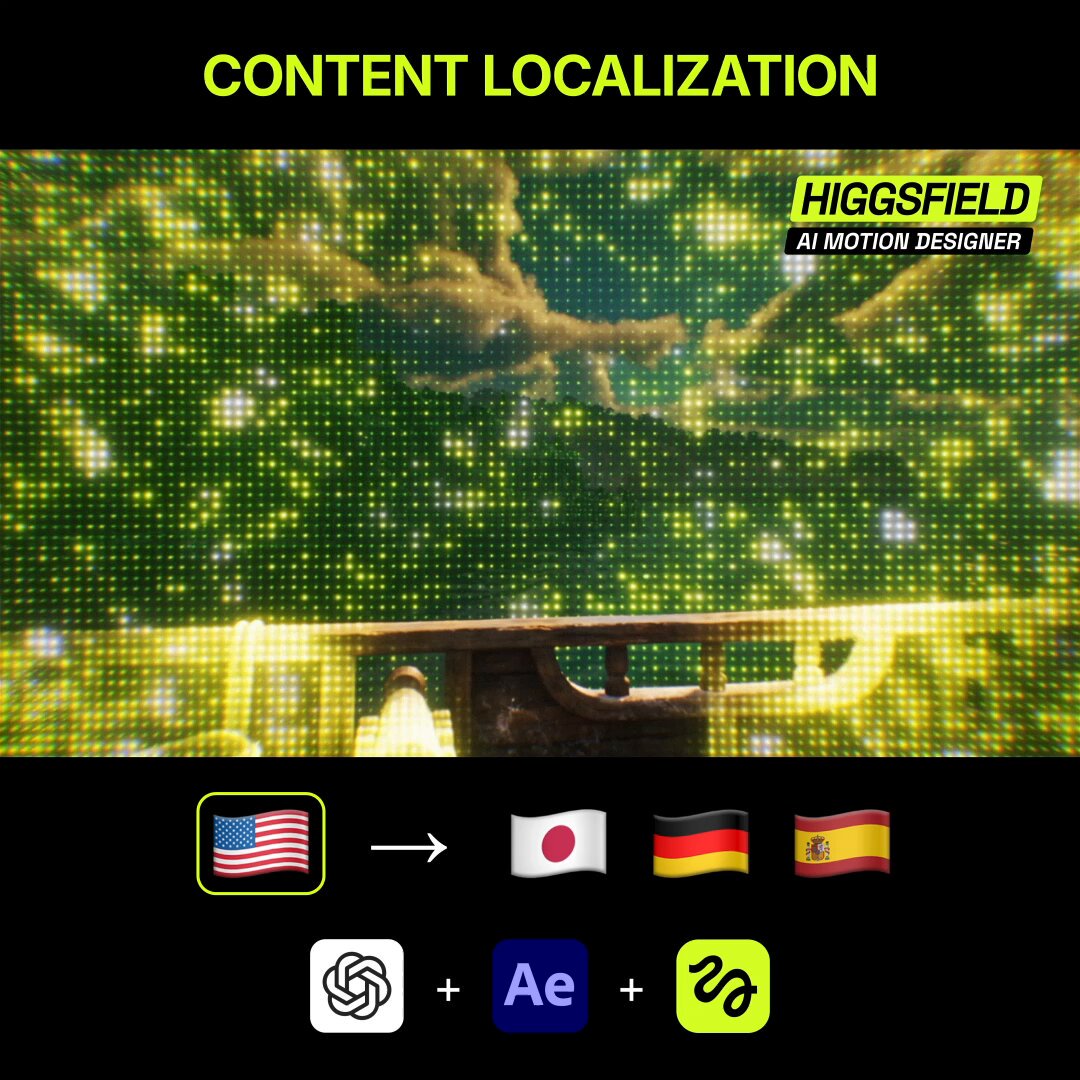
Motion design in 2026: > Open Claude Opus 5.5. > Launch After Effects. > Let Claude run the scripts through Higgsfield. > Come back in 30 minutes. Then review the render, adjust the pacing, make fixes and give it another pass. Repeat until you’re satisfied.

24,785 просмотров • 7 дней назад •via X (Twitter)

Комментарии: 0

Нет доступных комментариев

Здесь появятся комментарии из оригинального поста

Похожие видео

FABLE 5 + HIGGSFIELD CAN BUILD A $35,000 ANIMATED WEBSITE. IN ONE AGENTIC SESSION. FOR ~$12 IN CREDITS. stop paying a web studio $6,000-$35,000. stop wiring GSAP, Lenis, and frame extraction by hand. Claude Code writes it. Higgsfield renders it. WHAT THE BUILD PRODUCES: → a fully animated, scroll-driven site → cinematic motion clips from 30+ generative models → GSAP ScrollTrigger timelines - zero hand-coded keyframes → Lenis smooth-scroll, tuned pacing → automated frame extraction + asset optimization → six cinematic effects baked in: film grain, particles, vignette, glass cards, color tints, scroll pacing → responsive layout + copy THE STACK: → Claude Code - concept, scaffolding, scroll code, QA → Higgsfield (MCP) - hero clips, transitions, ambient loops, thumbnails → GSAP + Lenis - the motion layer, written for you CONNECT HIGGSFIELD (MCP): add it as a custom connector in Claude Code: mcp_servers: higgsfield: url: " one OAuth flow. done. now Claude can generate and pull clips directly - no manual exporting. WHAT TO PROMPT: concept + scroll: "read this brief, script the scroll - what the visitor feels at second 3, 15, 40. scaffold the site with GSAP ScrollTrigger + Lenis." motion assets: "generate the hero sting and one b-roll clip per section from the story. 3–5s, high-res." polish pass: "bake in film grain, particles, vignette, glass cards, color tints, scroll pacing. no config." QA: "check load speed, mobile breakpoints, and whether the scroll actually lands. rewrite whatever doesn't." WHAT THIS REPLACES: → web studio build: $6,000-$35,000+ → motion artist: $800-2,000/project → front-end dev: $2,000-10,000/project → weeks of handoffs: gone Fable 5 + Higgsfield: a subscription + a few dollars of credits. one session. SETUP IN 10 MINUTES: - install Claude Code - add the Higgsfield MCP + authenticate - drop your brief + references - let it scaffold, generate, and animate in one pass - preview, send fixes in plain English, ship the pipeline was the moat. it just became a prompt. Follow me, comment "WEB" and I'll send you the full step-by-step Playbook. full breakdown in the article 👇

ZEUS⚡️

569,837 просмотров • 3 месяцев назад

FABLE 5 + HIGGSFIELD JUST KILLED THE $35,000 WEB STUDIO. WEEKS AND A TEAM OF FOUR → ONE SESSION, $12. stop paying a studio $6,000-$35,000. stop wiring GSAP, Lenis, and frame extraction by hand. Claude Code writes it. Higgsfield renders it. WHAT SHIPS OUT OF ONE SESSION: → a fully animated, scroll-driven site → cinematic motion clips from 30+ generative models → GSAP ScrollTrigger timelines - zero hand-coded keyframes → Lenis smooth-scroll, tuned pacing → automated frame extraction + asset optimization → six cinematic effects, no config: film grain, particles, vignette, glass cards, color tints, scroll pacing → responsive layout + copy THE STACK: → Claude Code - concept, scaffolding, scroll code, QA → Higgsfield (MCP) - hero clips, transitions, ambient loops, thumbnails → GSAP + Lenis - the motion layer, written for you CONNECT HIGGSFIELD (MCP): add it as a custom connector in Claude Code: - mcp_servers: - higgsfield: - url: " one OAuth flow. done. now Claude generates and pulls clips directly - no manual exporting. WHAT TO PROMPT: concept + scroll: "read this brief, script the scroll - what the visitor feels at second 3, 15, 40. scaffold with GSAP ScrollTrigger + Lenis." motion assets: "generate the hero sting and one b-roll clip per section. 3-5s, high-res." polish pass: "bake in film grain, particles, vignette, glass cards, color tints, scroll pacing. no config." QA: "check load speed, mobile breakpoints, and whether the scroll actually lands. rewrite whatever doesn't." WHAT THIS REPLACES: → web studio build: $6,000-$35,000+ → motion artist: $800-2,000/project → front-end dev: $2,000-10,000/project → weeks of handoffs: gone Fable 5 + Higgsfield: a subscription + a few dollars of credits. one session. SETUP IN 10 MINUTES: - install Claude Code - add the Higgsfield MCP + authenticate - drop your brief + references let it scaffold, generate, and animate in one pass preview, send fixes in plain English, ship the pipeline was the moat. it just became a prompt. Follow me, comment "PAGE" and I'll send you the full step-by-step Playbook. full breakdown in the article 👇

ZEUS⚡️

27,102 просмотров • 2 месяцев назад

FABLE 5 + HIGGSFIELD JUST KILLED THE $35,000 WEB AGENCY. The same animated website that used to cost between $6,000 and $35,000 can now be built in a single session for around $12 in AI credits. Claude Code handles the website. Higgsfield creates the visuals. Together, they can build a complete scroll-driven website from a simple prompt. Claude writes the layout, GSAP ScrollTrigger animations, Lenis smooth scrolling, responsive pages, and checks everything before you ship. Higgsfield generates the hero videos, cinematic transitions, ambient loops, thumbnails, and every visual asset you need. By the end of one session, you have a fully animated website with cinematic motion, smooth scrolling, optimized assets, responsive layouts, and polished visual effects like film grain, particles, vignette, glass cards, and color tints. Getting started only takes a few minutes. Add Higgsfield as an MCP server inside Claude Code, complete the OAuth login once, and Claude can generate and pull videos directly into your project without manually exporting anything. The prompts are simple. Give Claude your project brief and ask it to script the entire scroll experience. Tell it to generate a hero video and supporting clips for every section. Ask it to add the finishing touches like film grain, particles, glass cards, and scroll pacing. Then let it review the site, improve loading speed, fix mobile layouts, and rewrite anything that doesn’t work. This replaces work that usually looks like this: A $6,000-$35,000 web agency. An $800-$2,000 motion designer. A $2,000-$10,000 front-end developer. And weeks of back-and-forth before launch. Now it’s Fable 5, Higgsfield, a subscription, a few dollars in AI credits, and one session. The pipeline used to be the advantage. Now it’s just a prompt. Full breakdown in the article below.

MIKE

142,931 просмотров • 2 месяцев назад

FABLE 5 + HIGGSFIELD TURN A $35,000 ANIMATED SITE INTO A ONE-SESSION, $12 BUILD. HERE'S EXACTLY HOW. a studio runs this across four people and three weeks. you run it across one chat window and one afternoon. THE BUILD, STAGE BY STAGE: STAGE 1 - THE CONCEPT Claude reads your brief and scripts the scroll before a line of code exists - what the visitor feels at second 3, 15, 40. prompt: "read this brief. script the scroll beat by beat, then scaffold the project with GSAP ScrollTrigger + Lenis." STAGE 2 - THE VISUALS (Higgsfield) every hero shot, transition, and ambient loop comes out of 30+ generative models - matched to the story, not pulled from a stock library. prompt: "generate the hero sting and one b-roll clip per section. 3-5s, high-res, cinematic." STAGE 3 - THE MOTION (Claude Code) Claude writes the ScrollTrigger timelines and Lenis smooth-scroll, extracts frames, optimizes every asset. zero hand-coded keyframes. prompt: "wire the scroll: pin the hero, scrub the video, reveal each section on scroll. keep it 60fps on mobile." STAGE 4 - THE POLISH six cinematic effects baked in, no config: film grain, particles, vignette, glass cards, color tints, scroll pacing. prompt: "bake in the cinematic layer, then QA load speed, mobile breakpoints, and whether the scroll actually lands - rewrite what doesn't." CONNECT HIGGSFIELD (MCP): add it as a custom connector in Claude Code: mcp_servers: higgsfield: url: " one OAuth flow. Claude generates and pulls clips directly - no exporting by hand. THE MATH: → what a studio charges: $6,000-$35,000+ → what it costs you: a Claude sub + a few dollars of Higgsfield credits → what it takes: 4 people + 3 weeks → 1 operator + 1 session the pipeline was the moat. it just became four prompts. Follow me, comment "MATH" and I'll send you the full step-by-step Playbook. full breakdown in the article 👇

ZEUS⚡️

47,174 просмотров • 2 месяцев назад

jev + opus 5.5 for design is insane... a launch video used to mean an agency, weeks of back and forth and a fat invoice. now Opus 5.5 makes the video, the ad cuts and the landing page from one brief. the video below: made in 3 minutes. at 0:09 it drops into edit mode - dot grid, selection handles, pixel sizes on every card - so you see exactly how it was built. but most people get the same mid result: centered text, gradient background, everything fading in. That's Opus's default look when it has nothing to copy. here's the pipeline that makes it look like an agency did it: 1. Build the brand brain first → logo, colors, fonts, screenshots of your real product, your best ad copy → have Opus turn it into a DESIGN.md. The video and the site both follow it 2. Steal a reference, don't describe one → pick 1-2 launch videos with the pacing you want → "make it like this" beats "make it modern and punchy" every time 3. Give it a renderer → install HyperFrames or Remotion: every scene is code, rendered straight to mp4 → a change = one line and a re-render, not starting over 4. Use real components → buttons, cards and UI from 21st_dev instead of empty placeholder boxes → fake-looking UI is the fastest way to look cheap 5. Storyboard before motion → 3 storyboard options, you pick one, then one still per scene → fixing a still takes seconds, fixing a render takes a re-render 6. Run it as a 4-person team + jev → breakdown: pull pacing, type and transitions from the reference → storyboard: the 3 options and the stills → build: every scene in code, music, draft render → review: watch it second by second, list the problems, touch nothing → jev: scores every review note against DESIGN.md (fix now / later / skip) in milliseconds, so build only touches what matters 7. Cut the ads from the same project → same scenes, different hooks: pain first, result first, offer first → 9:16 for reels, 1:1 for feed, 16:9 for YouTube. No reshoots 8. Ship the landing page from the same DESIGN.md → the hero is a looping cut of the launch video → before launch: mobile, every button state, zero placeholder text 9. Give notes like a director → "slow this zoom by half", "hard cut here", "push in on the button" → "make it better" gets random changes paste this into Claude Code 👇 "Read my brand folder and write DESIGN.md. Break down the reference video I give you: pacing, type, transitions. Show me 3 storyboards, then one still per scene for the one I pick. Build every scene in HyperFrames, add music, render a draft. Review it second by second without editing and list the problems. Pass every note to Jev and have it score each one against DESIGN.md: fix now / later / skip. Fix only "fix now". After I approve: cut 3 ad variants with different hooks in 9:16, 1:1 and 16:9, then build the landing page from the same DESIGN.md with the video loop as the hero." everyone has the same model. bookmark this and start using the edge.

Archive

39,253 просмотров • 4 дней назад