Загрузка видео...

Не удалось загрузить видео

На главную

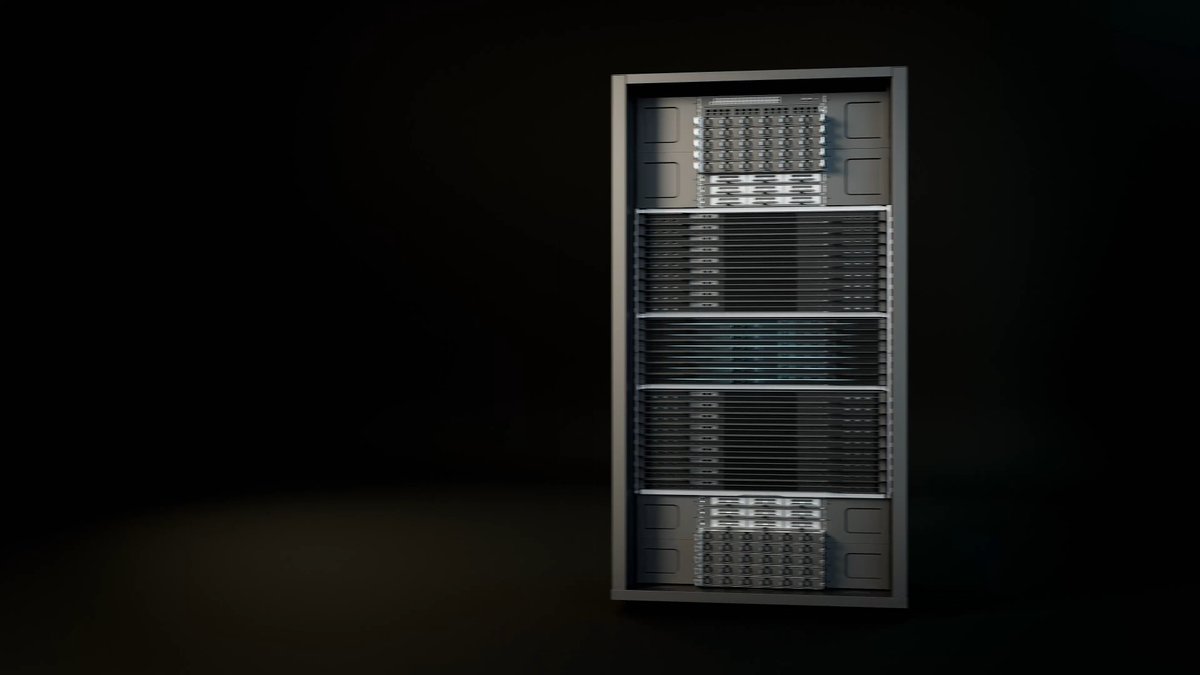
My biggest question heading into $NVDA earnings is whether demand keeps broadening beyond $MSFT, $AMZN and $GOOGL into ACIE and newer buyers like $SPCX. I also want to see whether Rubin can replace Blackwell at a higher system value allowing Nvidia to capture more of the rack across CPUs,...

49,916 просмотров • 8 дней назад •via X (Twitter)

Комментарии: 0

Нет доступных комментариев

Здесь появятся комментарии из оригинального поста

Похожие видео

$NBIS and $CRWV growing like crazy shouldn't be surprising. Satya Nadella publicly explained 6 months ago on a podcast that $MSFT would be leasing a lot of capacity going forward rather than building all itself. Here is what I think is happening: These neo-cloud businesses, both $NBIS and $CRWV, exist solely because $NVDA wants them to exist. Nvidia has an equity stake in both companies, and they are both members of the Nvidia Partners Program. Nvidia grants early access to its chips to the partners. Nvidia does that because it knows all hyperscalers, especially $MSFT and $AMZN, are racing to develop their own cutting-edge GPUs, as this is their biggest cost in scaling cloud operations. Nvidia knows that if they are allowed to control the supply, it will prolong the upgrade cycles and reduce orders to gain time to develop its own chips. This is why it's providing early access to the neo-clouds that are 100% dependent on Nvidia chips. Hyperscalers know that if they delay orders for the fresh capacity, the demand will shift to the neo-clouds that can build capacity fast with the support of $NVDA. Thus, $NVDA corners hyperscalers and strategically compels them to put new orders and cripples their ability to focus on their own chips. $MSFT sees this and says, "If this is the case, I'll just lease the capacity from the neo-clouds." It's basically a strategic response to $NVDA. It leases the bulk of their capacity, making them dependent on it. So, if $MSFT backs down, they'll have a really hard time staying alive. There is a small window of opportunity here for neo-clouds. If they can scale beyond hyperscalers and form a fragmented customer base, they may keep thriving even if hyperscalers reduce leases. Currently, $NBIS has a better shot at it than $CRWV, as $MSFT already makes up 72% of its revenue. I am long $NBIS, and I have already made 4x of money in the stock. I'll remain long $NBIS and even grow my position, but I'll remain skeptical of $CRWV for its unfavorable strategic position, as I explained above.

Oguz Erkan

180,198 просмотров • 11 месяцев назад

Jensen Huang just admitted Nvidia is paying for BOTH ends of its own $500 billion deal. Every outlet ran the same headline: Nvidia is putting half a trillion dollars into Korea. The largest AI infrastructure commitment ever announced with a single partner. But when asked what was actually inside that number and whether this is Nvidia spending money in the Korean economy, or SK fronting the capital themselves, Jensen said this: "We're gonna be purchasing memories from them for many years to come. In order to build a trillion dollars worth of Vera Rubin systems, you're gonna have to buy a lot of system memories to go with it. And so we have large purchase agreements and large purchase intentions with SK Hynix. Meanwhile, SK Telecom is gonna become an AI cloud. And in that agreement, we will be selling AI supercomputers to them. So between us, we're gonna do $500 billion worth of business." He literally described two completely different transactions and added them together. Nvidia pays SK Hynix for memory chips. SK Telecom pays Nvidia for supercomputers. Both directions get stacked into one figure and handed to the market as demand. A large share of that half trillion dollars is Nvidia's own money going OUT the door. This is the CEO of the most important chip company on Earth. His silicon runs every serious AI system on the planet. If anyone alive could announce a clean half trillion in customer demand, it's him. Instead he announced a number that counts his own supplier payments as "business." But now this is where it gets genuinely crazy... Bloomberg asked how badly Nvidia needs Korean supply to grow. Jensen said Nvidia does not have enough bits. He said the company is constrained in HBM memory, constrained in LPDDR memory, and constrained in just about every part of the supply chain. Then he named the bottleneck nobody expected: "We're even constrained now with land and power and construction workers to set up the data centers." The company announcing the biggest AI deal in history cannot hire enough people to pour concrete. Then he capped the entire industry. He said the industry has the ability to double each year, and will have a hard time growing much faster than that. Now hold that against the target he set at the top of the same interview: He said the semiconductor industry probably has to become 10x larger than it is today over the next decade. Doubling annually clears that on a spreadsheet. But in reality it only happens if land, power and construction crews cooperate every single year for ten years straight. And the demand justifying all of it is a number most people have not heard yet. Jensen is planning for 100 BILLION AI agents and billions of robots using computers. That is the actual bet. 10x the industry, financed by deals where the vendor is also the customer, and gated by how fast you can find electricians. Korea's market did not celebrate any of this by the way. The KOSPI has been falling hard and SK Hynix and Samsung both slumped while the half trillion dollar headline was running. Jensen listed both directions of money and totaled them on camera because he does not think there is anything wrong with it. Maybe there isn't. Chips have to be bought before systems can be sold. But the market is pricing these announcements as demand, and at least half of this one is spending.

Ricardo

35,609 просмотров • 1 месяц назад

Nvidia's Jensen Huang on Fox Business: * Asked for a single word on the rest of the year, Huang says "demand accelerating" * Says the reason is AI does productive work and the tokens labs generate are "profitable tokens," so what's holding it back now is just compute. * Next year is already sold out and supply-constrained at 70% growth. * "Every single [chip] that we can make has already been sold." * Customers commit a year-plus ahead because "you're not buying a computer, you're building a factory," at $50-60 billion each. * With memory prices way up, Nvidia reset margin guidance this quarter to "rip the band-aid off." * Margins fall from 75% to 72 - 73% next year after absorbing memory cost increases and repricing, to clear what he called "a cloud on our stock." * Next year's Vera Rubin will ramp even faster than Blackwell did, which Huang calls "the fastest product launch we've ever had in history." * Bottlenecks "literally everywhere," the biggest buildout in history. * Constraints span TSMC CoWoS packaging, wafers, memory, networking, silicon photonics, power generation, and "high-quality land that's powered," plus a skilled-labor shortage in the US * Says scarcity is not a bad thing. This quarter's 100% growth and next year's 70% are both supply-constrained, which can be healthy because it "causes the best technologies to emerge and rise" and makes everybody sharper. * AWS alone is set to add 2 million GPUs across 2027 and 2028. Half of revenue comes from about six hyperscalers, much of it rented onward to "Nvidia developers all over the world" * Says on hyperscalers, the Nvidia platform is "the most rentable" and "captures the highest pricing" of anything hyperscalers own. * After Bill Gates suggested taxing tokens over AI job losses, Huang says: "I see things very differently than he does." * Argues AI is "a net job creator at a scale that we've never seen" because productive companies hire more people not lay people off Plus, more. See video link in reply. Bookmark & watch: _____ More on why Nvidia needed to "rip the band-aid" due to memory makers:

Fireside Alpha

13,018 просмотров • 4 дней назад