Loading video...

Video Failed to Load

Go Home

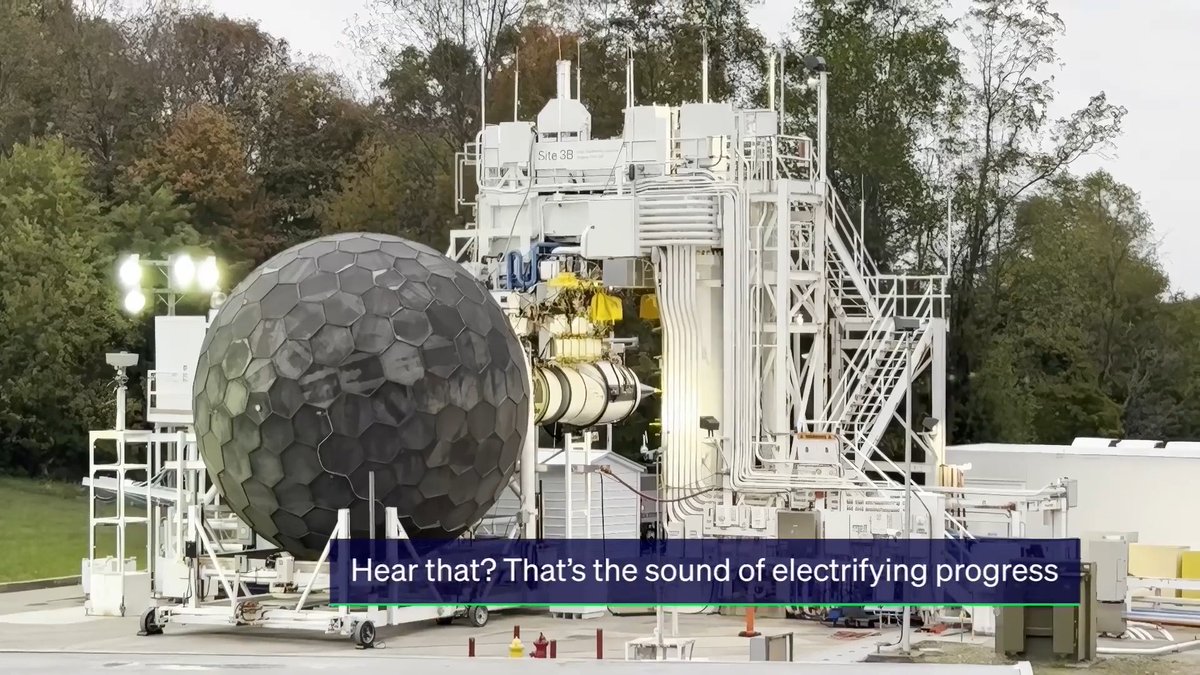
NASA has developed and tested this Rotating Detonation Rocket Engine (RDRE). Engineers at NASA’s Marshall Space Flight Center in Huntsville, Alabama, successfully tested a novel, 3D-printed RDRE for 251 seconds (or longer than four minutes), producing more than 5,800 pounds of thrust. That kind of sustained burn emulates typical...

3,958,559 views • 2 years ago •via X (Twitter)

0 Comments

No comments available

Comments from the original post will appear here

Related Videos

NEWS: SpaceX has released a statement after today's successful 11th Starship test flight. "Every major objective of the flight test was achieved, providing valuable data as we prepare the next generation of Starship and Super Heavy. The flight test began with Super Heavy igniting all 33 Raptor engines and ascending over the Gulf. The successful first-stage ascent was followed by a hot-staging maneuver, with Starship’s upper stage igniting its six Raptor engines to continue its flight to space. Following stage separation, the Super Heavy booster completed its boostback burn to put it on a course to a pre-planned splashdown zone off the coast of Texas using 12 of the 13 planned engines. Under the same angle of attack tested on the previous flight, the booster descended until successfully igniting all 13 planned engines (including one that did not relight during the boostback burn) for the high-thrust portion of the landing burn. The booster successfully executed a unique landing burn planned for use on the next generation booster. Super Heavy hovered above the water before shutting down its engines and splashing down. After completing a full-duration ascent burn, Starship achieved its planned velocity and trajectory. During flight, Starship successfully deployed eight Starlink simulators and executed the third in-space relight of a Raptor engine, demonstrating a critical capability for future deorbit burns. Starship re-entered the Earth’s atmosphere and was able to gather extensive data on the performance of its heatshield as it was intentionally stressed to test the limits of the vehicle’s capabilities. In the final minutes of flight, Starship performed a dynamic banking maneuver to mimic the trajectory that future missions returning to Starbase will fly. Starship then guided itself using its four flaps to the pre-planned splashdown zone in the Indian Ocean, successfully executing a landing flip, landing burn, and soft splashdown. Focus now turns to the next generation of Starship and Super Heavy, with multiple vehicles currently in active build and preparing for tests. This next iteration will be used for the first Starship orbital flights, operational payload missions, propellant transfer, and more as we iterate to a fully and rapidly reusable vehicle with service to Earth orbit, the Moon, Mars, and beyond."

Sawyer Merritt

273,302 views • 8 months ago

🚨 A FORMER NASA ENGINEER CLAIMS HE’S DISCOVERED A “NEW FORCE” THAT CAN OVERCOME EARTH’S GRAVITY WITHOUT ANY PROPELLANT. Charles Buhler, who spent years leading NASA’s Electrostatics and Surface Physics Laboratory at Kennedy Space Center, says his private company Exodus Propulsion Technologies has found a way to generate thrust using only electric fields. In vacuum chamber tests, their device reportedly produced enough force to counteract Earth’s gravity a claim that would completely rewrite the rules of propulsion. Why this matters: For over a century, every rocket we’ve ever launched has had to carry massive amounts of fuel. If this “New Force” is real, spacecraft could one day maneuver indefinitely without expelling mass potentially making deep space travel, satellite station-keeping, and even atmospheric flight dramatically cheaper and more efficient. The deeper implication is staggering: We may be looking at the first real breakthrough in propellantless propulsion since the invention of the rocket. If verified, this wouldn’t just change space travel it could reshape how we think about energy, momentum, and the fundamental laws of physics. Of course, extraordinary claims require extraordinary evidence. As of now, the work is still awaiting independent replication by outside laboratories. But if this holds up… What changes first space travel, energy production, or something we haven’t even imagined yet? Follow for more frontier physics and emerging technologies.

TheNewPhysics

122,021 views • 1 month ago