正在加载视频...

视频加载失败

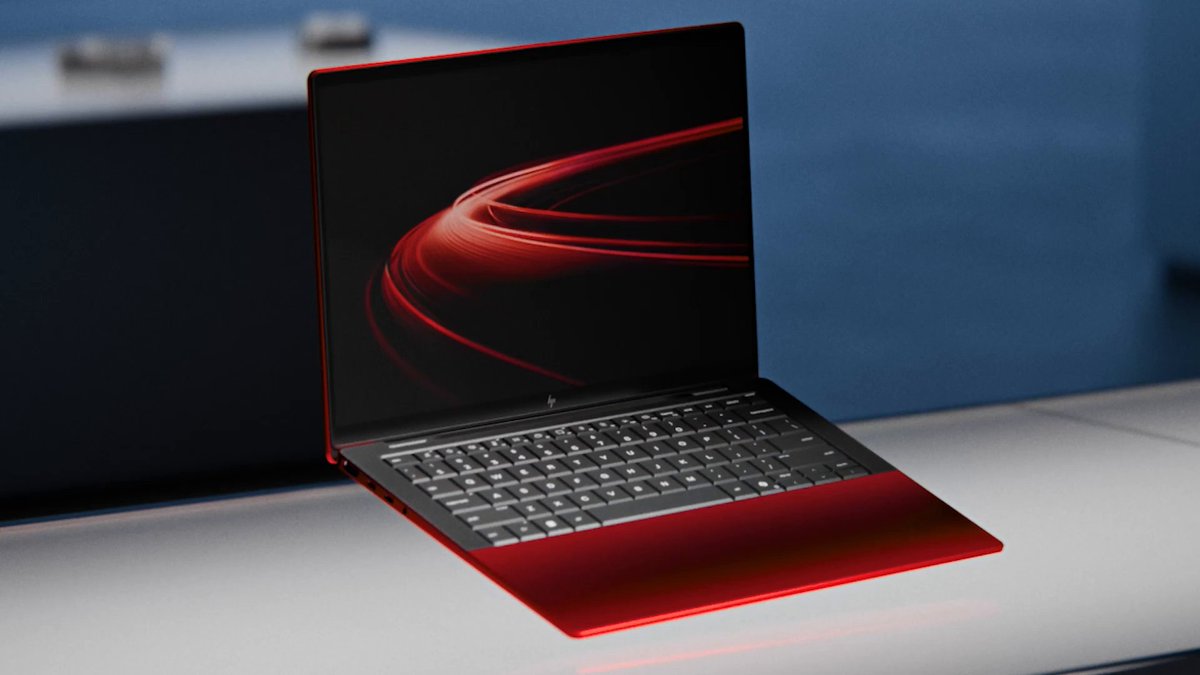
"Nebius reduced the friction between idea and execution." Cambrium designs new polymers from first principles and shipped a molecule to market in under 24 months vs. an industry norm of ~7 years. On Nebius, its protein design campaigns run 4x faster, turning 2–3 week cycles into less than one week.
16,488 次观看 • 1 个月前 •via X (Twitter)

0 条评论

暂无评论

原始帖子的评论将显示在这里

相关视频

Jim Cramer just went on Mad Money and told investors to stay away from Nebius and that alone might be the strongest buy signal of the week (Save this). "Nebius is at the nexus of the craziness right now," Cramer said. "This stock is not done going down. There will be another time to buy it, but that time is not now." If you were waiting for one more confirmation, this week handed you several and the fundamentals moved the opposite direction from the stock price. Job postings in Singapore for Data Center Project Development, Site Selection & Colocation and Technical Due Diligence show Nebius actively scouting a new market, following similar signals in Wales and India within the same four day window. Job postings are a leading indicator that typically show up before a formal data center announcement, not after. Now here is the actual fundamental news from this week and it matters. Nebius announced a brand new business model, asset light infrastructure partnerships. Instead of financing every data center itself, outside partners will finance, own and operate the physical facilities. Nebius supplies the systems architecture, hardware design, software stack and its global sales organization. This is the same playbook major cloud providers and chipmakers have used for years, outsource the capital heavy physical layer, keep the high margin design and customer relationship layer. This directly addresses Nebius's biggest historical risk, the capital intensity of building GPU data centers fast enough to keep pace with demand. Nebius has already signed initial partnership deals under the new structure, meaning capacity can now scale globally without spending its own capital on land, steel, and power. None of this guarantees the stock stops falling in the short term, momentum is negative and the stock sits roughly 40% below its June all time high. The stock may keep falling but the thesis just got stronger and I am buying the company Nebius is becoming. Extremely bullish on Nebius and make sure to follow me Melvin for more underrated gems.

Melvin

27,692 次观看 • 1 个月前

Mark my words, Nebius will be the first Trillion dollar Neo-cloud company and here is why (Save this). Roman Chernin, CEO of Nebius just said on 20VC that Nebius raised prices and demand didn't move. When a company can raise prices and still have more demand than supply, that's the opportunity. Chernin also explained why he is deliberately not charging the maximum. As AI shifts from training, a one time cost to inference, which is the ongoing cost of serving every user and every query, compute pricing becomes the cost structure of the entire AI economy. If Nebius prices customers out, those customers cannot grow, and Nebius cannot grow with them. That is the compounding flywheel built directly into the revenue model. The numbers are already confirming it. Q1 2026 revenue came in at $399 million, up 684% year over year. The AI cloud segment grew 840% and represented 98% of total revenue. Adjusted EBITDA flipped positive to $129.5 million. And Nebius signed a long-term agreement with Meta worth up to $27 billion over five years, a hyperscaler outsourcing its own AI compute stack to a neocloud, which tells you that even companies with $50 billion capex budgets cannot build fast enough. Goldman Sachs says the consensus is underestimating 2027 hyperscaler capex by $500 billion. Every dollar hyperscalers cannot provision themselves flows to neoclouds like Nebius. As that gap widens, Nebius captures the overflow with 3 gigawatts of contracted power already secured and a CEO who just told you raising prices did not dent demand. Our subscribers are already up massively on Nebius and come join Milk Road Pro for our full breakdown, how to size Nebius against the broader neocloud opportunity, and our full AI thesis. Link below!

Milk Road AI

15,677 次观看 • 3 个月前

Nebius is going to be a Trillion-dollar company! Twelve months ago, Nebius was trading near $18 per share with roughly $55 million in quarterly revenue. Today the stock trades above $225, quarterly revenue just came in at $399 million, up 684% year over year and the company has a contracted revenue backlog that would make most Fortune 500 companies envious. But the current market cap, sitting around $56 billion, prices in almost none of what is actually coming. The first reason Nebius reaches a trillion is the Meta deal alone. In March, Nebius signed a five year agreement with Meta worth up to $27 billion, one of the largest infrastructure contracts Meta has ever signed with any company under which Nebius will provide $12 billion in dedicated AI capacity across multiple locations, with Meta also having committed to purchase up to an additional $15 billion in third-party capacity over the same period. That contract barely starts until 2027, which means the revenue impact is not yet reflected in any trailing metric. The second reason is Microsoft, which is currently receiving its first deployment phases from Nebius and is expected to contribute at full annual run rate starting in 2027. Between Meta and Microsoft alone, Nebius has signed agreements worth more than $46 billion in total contracted value before a single additional customer is counted. The third reason is the ARR trajectory, which is the fastest revenue ramp of any infrastructure company in the public markets. Nebius ended 2025 at $1.25 billion in ARR and is guiding to $7–9 billion ARR by year-end 2026. Wall Street analysts project revenue growing 523% in 2026 and another 206% in 2027. One of the company's own institutional shareholders has already suggested the year-end ARR could come in more than twice the guided range if the Meta and Microsoft ramps hit their timelines. The fourth reason is Nvidia's direct involvement. Nvidia made a $2 billion strategic equity investment in Nebius and has given Nebius early access to the Vera Rubin platform, its next generation GPU architecture as part of the delivery commitments to Meta. The fifth reason is the capacity buildout, which is being funded by the revenue itself. Nebius invested $2.5 billion in capex in Q1 alone, CEO Arkady Volozh has guided for $16–20 billion in total investment for 2026, and contracted capacity is now on track to exceed 4 GW by year end with new owned sites in Pennsylvania at 1.2 GW and Finland at 310 MW now under development. The more capacity they build, the more they can sell and demand continues to outpace supply at every stage of the buildout. When you run the math on a business with $7–9 billion in ARR exiting 2026, a $27 billion Meta contract that begins in earnest in 2027, a Microsoft relationship at full run rate, 206% analyst projected growth in 2027, and a structural relationship with Nvidia that gives it hardware access no competitor can match, a trillion-dollar valuation within three to four years is not a moonshot. It is the base case if the compounding holds, and every data point so far suggests it is. Milk Road Pro called this one early. Our analysts added Nebius to the portfolio when it was still flying under the radar, and we are sitting on a massive gain on that position right now. If you want to see what else we are building conviction on before the rest of the market catches up, come join us at Milk Road Pro at the link in bio/below!

Milk Road AI

48,673 次观看 • 4 个月前

Nebius will be a trillion dollar company (Save this). The neocloud market, purpose-built AI cloud infrastructure, separate from legacy hyperscalers generated roughly $25 billion in revenue in 2025, up 223% year over year. Synergy Research projects it will approach $400 billion by 2031, compounding at 58% annually one of the fastest sustained growth rates ever recorded for an infrastructure category of this scale. The CEO's explanation for why they win is worth understanding in detail. GPU compute is scarce and that part everyone knows but Nebius is not simply renting GPUs by the hour and marking them up, which is what most neocloud imitators do. They have built their own physical capacity for inference, optimized the full technology stack from the software layer all the way down to the rack hardware and recently acquired a company called Agen specifically to push inference latency even lower and throughput even higher. The CEO frames the core problem directly that in 2026, every product you build is powered by tokens, AI intelligence and while you can get those tokens from OpenAI or Anthropic via a simple API call, the moment you want to run open source models, specialized vertical models, or anything other than the two dominant frontier labs, you run into a wall. You can download the weights from Hugging Face and assemble the pieces. But getting those workloads to run at scale, at the economics you need, with the reliability your product requires, is an extraordinarily complex engineering challenge that most companies cannot staff or afford to solve in-house. That is the problem Nebius is solving, and that is why their inference product called Token Factory exists. The financial results are among the most dramatic growth numbers reported by any public company this year. In Q1 2026, Nebius posted $399 million in revenue, a 684% increase from the same quarter a year earlier. In the span of twelve months, the company swung from a $104 million net loss to $621 million in net income. Cash from operations went from negative $184 million to positive $2.26 billion in the same period meaning this is not growth funded by burning investor capital, it is growth that is now generating its own fuel. For the full year 2026, Nebius is guiding for an annualized revenue run rate of $7 billion to $9 billion, with pipeline creation tracking to surpass $4 billion. The contracted backlog sits at $49 billion, anchored by a $27 billion agreement with Meta, a deal worth up to $19.4 billion with Microsoft, and a public endorsement from Jensen Huang at NVIDIA's GTC conference in 2026. The current market cap is approximately $56 billion. A company with $7 to $9 billion in annualized revenue, growing at 684%, turning cash-flow positive, sitting on $49 billion in contracted backlog, operating in a market compounding at 58% annually toward $400 billion, that company has a credible path to 20x from its current valuation if execution holds. That is the trillion dollar case, and it does not require any heroic assumptions and it requires Nebius to keep doing what it is already demonstrably doing. Milk Road Pro called this one early. Our analysts added Nebius to the portfolio when it was still flying under the radar, and we are sitting on a massive gain on that position right now. If you want to see what else we are building conviction on before the rest of the market catches up, come join us at Milk Road Pro using the link below!

Milk Road AI

28,622 次观看 • 3 个月前

This is why Nebius will be a trillion dollar hyperscaler (Save this). Nebius is not building another GPU rental shop but rather building a vertically integrated hyperscaler that owns everything from the physical data center, to the server rack hardware it designs in house, to the software stack, to the inference delivery layer. Nearly every other neocloud is essentially a reseller of someone else's infrastructure but Nebius owns the full stack end to end and that distinction is the entire thesis. Here is why vertical integration is the winning architecture for the inference era. AWS and Azure were architected for general purpose computing and every AI workload they run sits on top of infrastructure that was never designed for it, patched, adapted and optimized after the fact. Nebius was built from day one specifically for AI which means every layer of the stack is purpose built and co optimized. The rack design, the networking topology, the cooling systems and the software that orchestrates it all are engineered together as a single system rather than assembled from parts that were never meant to work together. That architectural difference compounds with every passing quarter as AI workloads grow more complex and the performance gap between purpose built and general purpose infrastructure widens. The software layer is where the real competitive moat lives. Most infrastructure companies think of software as a wrapper around hardware while Nebius thinks of software as the product with hardware as the substrate it controls. The company is building an AI native cloud platform where the software layer handles model serving, inference optimization, fine tuning pipelines and developer tooling as first-class primitives. This matters because inference efficiency is almost entirely a software problem. Two companies running identical GPUs can deliver dramatically different performance and cost per token depending on how intelligently the software schedules, batches and routes inference requests across the cluster. Nebius is also building for a fundamental shift in how AI infrastructure gets consumed. Today, enterprise developers navigate massive cloud service catalogs spinning up clusters, managing configurations and building deep expertise in AWS or GCP-specific tooling. The next generation of builders will simply provision agents to interface with infrastructure directly. Nebius is architecting its software layer for that future , one where the interface between the developer and the compute abstraction layer looks nothing like what AWS built in 2006. The entire available capacity has been sold out every quarter. And that is the best possible validation that what Nebius is building is exactly what the market needs and that the market is willing to commit at a scale that makes the current valuation look like the beginning of a much longer story. Long Nebius and make sure to follow me Melvin for more overlooked AI stocks.

Melvin

34,306 次观看 • 2 个月前

The majority of neoclouds will eventually go out of business but here is the winning formula if you want to win. (Save this). The core problem for the industry is that the economics of running GPU infrastructure only work at massive scale, with cheap financing and investment grade customers backing long term contracts. A lot of the names crowding the middle column of that chart are Bitcoin miners who converted their rigs into GPU racks chasing the AI trend, rather than companies built from the ground up for this business, which is exactly the kind of opportunistic entrant that gets wiped out when capital tightens or utilization dips. Nebius sits in the Neocloud Giants tier alongside CoreWeave, Lambda and Crusoe, and today's Q2 2026 print showed exactly why it's pulling away from the pack rather than getting lumped in with the 78 emerging players facing consolidation risk. Revenue hit $582 million, up 454% year over year, with annualized recurring revenue reaching $3.0 billion by the end of June, up 58% quarter over quarter. The company won four separate customer agreements each worth over $1 billion in total contract value and total contract value won during the quarter jumped 4x versus the prior period, a growth rate most of the smaller neoclouds on that chart simply can't match without hyperscaler grade balance sheets. Here's the vertical stack that sets Nebius apart from most names on that chart. Unlike pure GPU rental shops that lease space in someone else's data center, Nebius designs its own data centers, builds its own server racks and motherboards, procures its own compute, and runs a proprietary AI specific cloud platform layer on top of all of it. That full stack control, from silicon to software, is precisely what most of the emerging neoclouds in the chart's middle column lack, since converting a Bitcoin mining facility gives you power and cooling, but not in house rack engineering or a purpose built cloud software layer. Nebius has also been shifting from leased to owned infrastructure, with more than 75% of its contracted power now sitting at facilities it directly controls, up sharply from a mostly leased model just a year ago. That ownership shift is the difference between capturing margin over the long run versus being at the mercy of a landlord's lease terms, which is a structural advantage over neoclouds still renting third party space. Now for the pricing power piece. Nebius disclosed today that it's now charging $40-50 million per megawatt on new capacity deals, already signing its first one at that price this week, up from roughly $12 million per megawatt on its 2026 base contracts. Management also said it could sell its entire 2027 capacity right now on these terms but is deliberately holding some back for near term customer needs, a level of pricing leverage that tells you demand is outstripping supply for anyone offering real scale and reliability, exactly the customer profile the smaller, undercapitalized neoclouds struggle to attract. Nebius isn't a single product company either, which matters given how many names on that chart have no other legs to stand on if GPU rental margins compress. The company owns Avride, an autonomous driving and delivery robotics business with partnerships with Uber and Hyundai, TripleTen, a tech re skilling edtech platform and holds equity stakes in ClickHouse, the database company it spun out and recently backed in a funding round, and in Toloka, an AI data-labeling platform that sold a majority stake to Bezos Expeditions and Shopify in 2025. Those side businesses give Nebius optionality and diversified cash flow that a converted mining rig operator simply doesn't have. Bullish on Nebius, make sure to follow Melvin for more AI infrastructure insights, and if you want to see exactly what I'm buying as an analyst at Milk Road Pro, you can check out the link below for more.

Melvin

37,428 次观看 • 1 个月前

Nebius will be a TRILLION dollar company and here is exactly why (Save this). Brad Gerstner's Altimeter just said on camera that they are invested in ClickHouse, and explained exactly why in one sentence: "If you're in the data infrastructure layer, then token consumption is driving a lot more consumption of your basic services." The flip side of that point is equally important. Gerstner added that the closer you are to a point solution, a single use app built on top of AI, "that feels like you're on the front of the conveyor belt heading toward the guillotine." Models get better, apps get commoditized and the companies that own the foundational infrastructure that every AI application must run through keep compounding. ClickHouse is exactly that foundational layer. It is a real time analytical database engine originally built inside Yandex, optimized for the exact query patterns that AI agents, LLM observability pipelines, and machine learning infrastructure generate, massive write volumes, complex aggregations, and sub-second response at scale. It processes hundreds of billions of rows per second, serves over 2,000 enterprise customers including Cloudflare, Uber and ByteDance, and grew 300% in a single year. In January 2026, a $400 million Series D valued ClickHouse at $15 billion more than double its $6 billion valuation just eight months prior. Here is where Nebius comes in. Nebius holds a 28% stake in ClickHouse, an asset that traces back to its Yandex origins. At ClickHouse's current $15 billion valuation, that stake is worth approximately $4.2 billion, sitting largely unrecognized on Nebius's balance sheet while most market coverage focuses entirely on the AI cloud business. A ClickHouse IPO, which the company is actively positioning toward, would force the market to mark that position to full public market value for the first time and could alone reprice Nebius meaningfully. But that hidden asset is just one layer of the bull case. The core AI cloud business just printed 684% year over year revenue growth, $399 million in Q1 2026 against $50 million a year prior. AI specific revenue grew 841% and now represents 98% of total revenue. The moat underneath those numbers is 3.5 gigawatts of secured power capacity, a $27 billion five year contract with Meta, a $2 billion strategic investment from Nvidia, and a Microsoft partnership ramping to full run rate in 2027, all stacked on top of a ClickHouse stake that the market is still not fully pricing in. Milk Road Pro remains massively bullish on Nebius, we called it early, we are up huge on the position, and we continue to track every development across AI infrastructure before it becomes obvious to the rest of the market. Come join us to see our full Nebius thesis and every other position in the portfolio, link below!

Milk Road AI

216,498 次观看 • 3 个月前

Nebius is one of the most undervalued AI infrastructure companies in the public markets right now (Save this). Leopold Aschenbrenner, the former OpenAI researcher who wrote the 165-page essay predicting AGI within this decade and then launched the $13.7 billion Situational Awareness Fund around that thesis just filed a 13G disclosing a 5.6% stake in Nebius, representing 12.41 million Class A shares. This is the man whose entire investment framework is built on one core conviction, AI will advance faster than anyone expects, and the binding constraint will not be algorithms or model architectures, it will be physical computing infrastructure, data center capacity, and energy. Now look at what Nebius actually is and why this conviction is justified by the numbers alone. Nebius is a GPU native AI cloud platform, a neocloud built from the ground up specifically for AI training and inference workloads, founded by Arkady Volozh, the former CEO of Yandex who divested all non-Russian assets and left Russia in direct opposition to Putin before relisting the company on Nasdaq. In Q1 2026, Nebius reported $399 million in revenue, a 684% increase year over year from just $50.9 million while also delivering EBITDA and adjusted EPS that beat consensus estimates by 43% and 50% respectively, in a quarter where analysts had already built in aggressive assumptions. The scale of the infrastructure buildout is what makes the valuation argument so compelling. Nebius has raised its contracted power capacity guidance to over 4 gigawatts for 2026, with a target of 5 gigawatts of AI computing capacity deployed by 2030, including multiple gigawatt-scale AI factories across the United States and Europe. The Finland campus coming soon to Lappeenranta will be 310 megawatts powered by low-carbon energy, making it one of the largest AI data centers in Europe, specifically located in a cold-climate, energy-stable region that dramatically reduces cooling costs and carbon intensity. The 2026 capacity is already effectively sold out according to management disclosures, which means every megawatt Nebius brings online has a revenue contract attached to it before the facility opens. The strategic backing validates the thesis at every level. NVIDIA committed a $2 billion strategic investment in Nebius by 2030, with the two companies co-developing an inference stack, implementing NVIDIA's GPU health monitoring systems, and deploying next-generation architectures including Rubin GPUs, Vera CPUs, and Bluefield storage systems meaning Nebius gets preferential access to the hardware that every other AI company is begging Jensen Huang for. Meta signed a $27 billion agreement with Nebius, with $12 billion in dedicated computing resources confirmed and up to $15 billion in additional capacity over the coming years. And Nebius just partnered with Bloom Energy on a $2.6 billion deal guaranteeing 328 megawatts of installed capacity through modular fuel cell systems behind the meter power that eliminates grid dependency and accelerates deployment timelines. The forward valuation math is where the undervaluation case becomes undeniable. Nebius is pricing in $3.5 billion in revenue for 2026 and $11 billion for 2027, which puts the forward price-to-sales ratio at 16.6 times for this year and just 5.3 times for next year for a company growing revenue at 684% year over year with sold out capacity, NVIDIA backing, a $27 billion Meta contract, and a path to 4+ gigawatts of contracted power. Milk Road has been positioned in Nebius and we believe the convergence of Leopold's conviction stake, NVIDIA's $2 billion endorsement, Meta's $27 billion commitment, and a physical infrastructure buildout that is sold out before it opens represents one of the highest-quality risk-reward setups in AI infrastructure today. Come join Milk Road Pro and get our full Nebius thesis including the exact framework we use to think about neocloud valuation, the power capacity math that determines when revenue accelerates, and every catalyst we are watching through 2027. Link in bio/below.

Milk Road AI

61,932 次观看 • 3 个月前

Chamath Palihapitiya just dropped the number that explains the entire AI infrastructure trade (Save this). A gigawatt of compute now costs $100 billion and when he started his Arizona data center project it was $4 to $5 billion, it has gone up 20x in a single investment cycle. The implication is not just that AI infrastructure is expensive but rather that the capital barrier to owning meaningful compute has become so high that only a handful of entities in the world can actually build it and the companies who got there early are sitting on what may be the most durable pricing power in the history of the technology industry. This is the neocloud trade. The neocloud market, purpose-built GPU cloud providers like CoreWeave, Nebius, and Lambda Labs was worth $35 billion in 2026 and is projected to reach $236 billion by 2031, compounding at 46% annually. For context, that is faster growth than cloud computing itself posted in its first decade. The reason is very simple, hyperscalers like AWS, Azure, and Google are building for everything, storage, databases, enterprise software, networking and their GPU pricing reflects the overhead of that full-stack infrastructure. Neoclouds build for one thing only, AI compute. The result is a 60% to 85% cost advantage on the same Nvidia silicon, bare metal H100s at $0.78 to $2.79 per GPU-hour on a neocloud versus $3.43 to $5.07 per GPU-hour on a hyperscaler. That spread does not close as AI demand scales but rather it widens, because hyperscalers have to amortize legacy infrastructure and margin expectations that neoclouds do not carry. Gartner projects that by 2030, neoclouds will capture 20% of the $267 billion AI cloud market, and Vultr's own analysis says at least 80% of GPU market share by end of 2026 will be held by a small group of scaled neocloud providers. Now zoom into Nebius specifically, because it is the most interesting publicly traded proxy for this trade. Nebius is the infrastructure arm of the former Yandex Russia's equivalent of Google rebuilt from the ground up after Russia's invasion of Ukraine by Arkady Volozh and relisted on Nasdaq in October 2024. The team that built it already knew how to run internet-scale infrastructure at the lowest possible cost, which is exactly the operational DNA a neocloud requires. In Q1 2026, Nebius reported revenue of $399 million and already generating serious cash on a young business with revenue growing nearly eightfold year-over-year. Then in March 2026, Meta signed a five-year infrastructure agreement with Nebius worth up to $27 billion, $12 billion in committed dedicated GPU capacity deployments beginning early 2027, plus up to $15 billion more tied to Meta purchasing Nebius's unsold third-party capacity. The deal will be executed on one of the first large-scale deployments of Nvidia's Vera Rubin platform, the next-generation architecture after Blackwell making Nebius one of a tiny number of operators in the world with confirmed priority access to the most advanced AI hardware available. Following the contract, Nebius guided to $7 to $9 billion in annualized recurring revenue for 2026 representing 540% year-over-year growth. Chamath Palihapitiya point about the $100 billion capital moat is the bear case for new entrants and the bull case for incumbents. No one can afford to build the next CoreWeave or Nebius from scratch at current hardware and power costs. The companies that are already built, already contracted, and already deploying Nvidia's latest silicon have a moat that compounds with every GPU generation cycle because they get allocations first, they deploy fastest, and their customers re-sign rather than wait for a new operator that does not yet exist. Come join Milk Road Pro for our full breakdown, the complete neocloud competitive landscape, how to think about Nebius's valuation versus CoreWeave and AI entire thesis. Link below.

Milk Road AI

139,047 次观看 • 2 个月前