Загрузка видео...
Не удалось загрузить видео
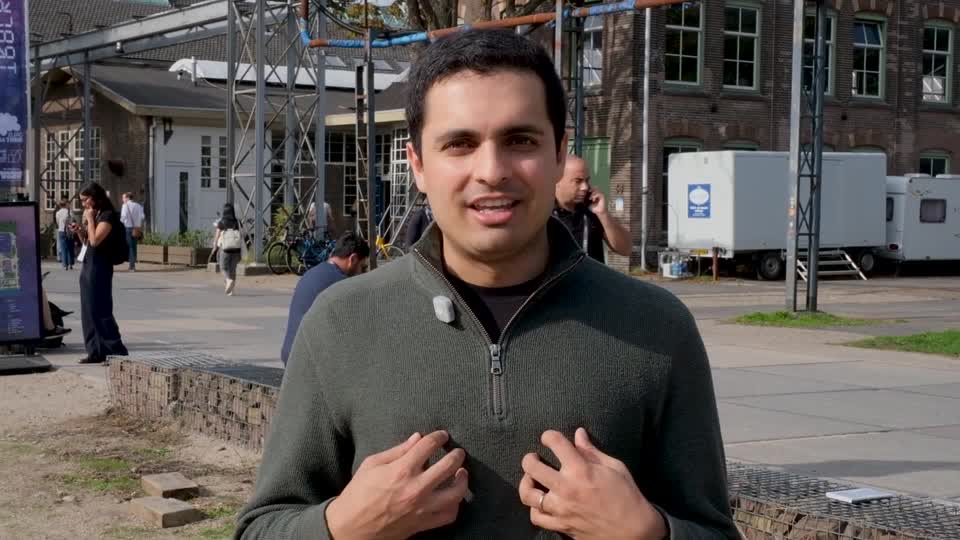
NEW: Chamath predicts a 2-5 year window before quantum computing becomes advanced enough to potentially break Bitcoin’s encryption.

3,350,333 просмотров • 1 год назад •via X (Twitter)
Комментарии: 10

If what he says becomes true, Bitcoin is the least of our worries. Every nuclear silo launch code and bank account is up for grabs.

Chamath thinks he’s smart but he’s really just a scammer. Look at the sol marketplace rn. Also his spacs were a spectacular failure as well. No one should listen to this sh*tcoining loser

Let’s generate as much FUD as possible.., without stating neither the extent of the issue, nor the solution. The threats are much greater for other systems such as banks, airlines etc..

Stay ahead in the crypto game! 🪙 Get the latest news, insights, and expert analysis on the ever-evolving world of cryptocurrency. Subscribe now! #CryptoNews #Blockchain

This has Y2K Hysteria written all over it. Post-quantum cryptography is already being worked on and Bitcoin developers are already working on solutions. Bitcoin can be forked or updated to change its current algorithm. The world literally will have bigger problems than Bitcoin if we don't find a solution to this . . .WHICH WE WILL. 🙄

These all-in guys are sounding dumber by the day 🤦

Seems like what was mentioned is only part of the picture. Both logical and physical qbits are required. Let's assume we want to break SHA-256 in one day. 1) Qbits required. Estimates suggest that between 3000 and 5000 logical qubits would be needed to run Grover's algorithm on SHA-256, assuming an efficient error correction system. 2) Quantum Gate Speed. For current quantum computers, gate speeds are typically in the range of microseconds. To break SHA-256 in one day, the quantum computer would need to perform 21282^{128}2128 operations in about 86,40086,40086,400 seconds. This requires a quantum computer with extremely high gate speeds and massive parallelism. 3) Error Correction Overhead. Quantum computers are prone to noise and errors. To achieve a fault-tolerant quantum system, the number of physical qubits needed would far exceed the number of logical qubits — potentially in the range of millions or billions of physical qubits. What's possible today? Physical - IBM's Condor Processor: 1,121 qbits - Atom Computing's Quantum System: 1,180 qbits Logical - Google's Willow Chip: 105 qbits - IBM's Quantum Error Correction: not published. Nutshell and take away: We're a long way out from breaking SHA-256, on the scale of orders of magnitude. QC is an important development for lots of reason but it isn't going to break #bitcoin any time soon.

hard forking bitcoin takes 10min how long does it take to update global critical infrastructure including thensousands of nukes? stop FUDing bitcoin

It’s 2024 and people still listen to whatever Chamath has to say ? Thought everyone understood he’s an absolute retard at this point

I just unfollowed the pod. If your a real Bitcoiner you should do the same