Video wird geladen...

Video konnte nicht geladen werden

Zur Startseite

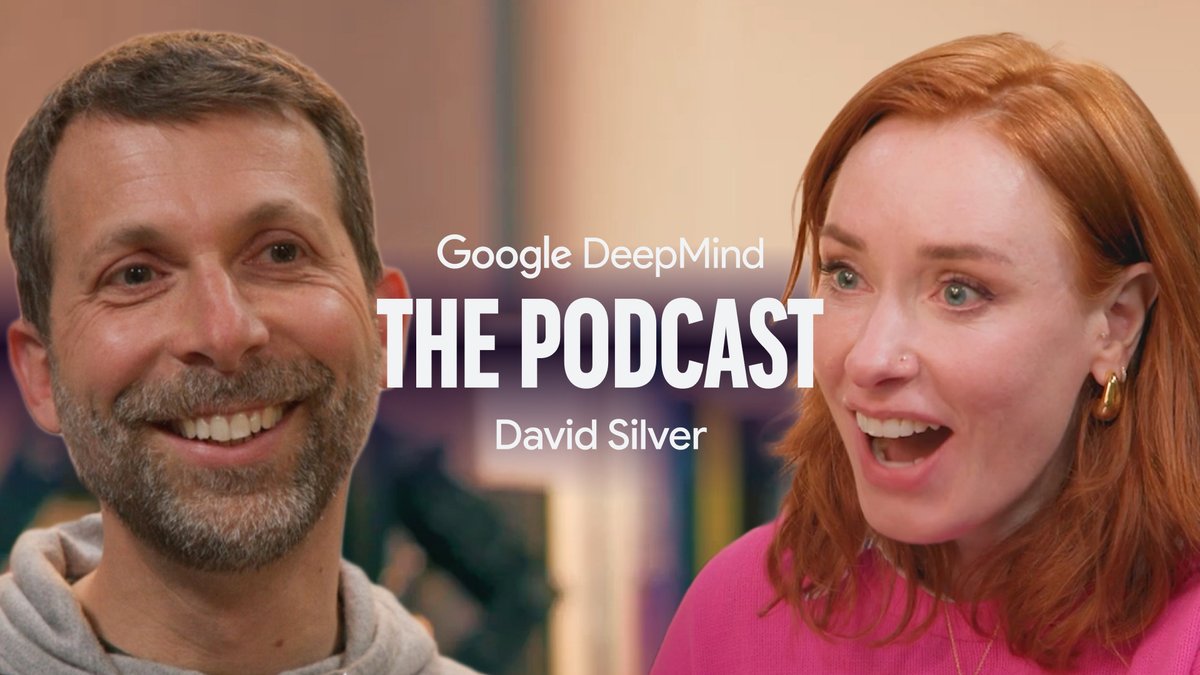
New lecture for the book! Nominally about synthetic data, but mostly is a walk through of the distillation literature from the Hinton 2015 paper to multi-teach on-policy distillation of today! At 7.4 hours of video in my post-training brain dump and counting :) It was fun to stare at...

92,497 Aufrufe • vor 1 Monat •via X (Twitter)

0 Kommentare

Keine Kommentare verfügbar

Kommentare vom Original-Post werden hier angezeigt

Ähnliche Videos

Today, we're joined by Aakanksha Chowdhery, member of technical staff at Reflection, to explore the fundamental shifts required to build true agentic AI. While the industry has largely focused on post-training techniques to improve reasoning, Aakanksha draws on her experience leading pre-training efforts for Google’s PaLM and early Gemini models to argue that pre-training itself must be rethought to move beyond static benchmarks. We explore the limitations of next-token prediction for multi-step workflows and examine how attention mechanisms, loss objectives, and training data must evolve to support long-form reasoning and planning. Aakanksha shares insights on the difference between context retrieval and actual reasoning, the importance of "trajectory" training data, and why scaling remains essential for discovering emergent agentic capabilities like error recovery and dynamic tool learning. 🗒️ For the full list of resources for this episode, visit the show notes page: 📖 CHAPTERS =============================== 00:00 - Introduction 02:26 - Reflection 04:54 - Limitations of post-training for building agents 07:31 - Rethinking pre-training in agents 10:51 - Scaling 11:27 - Evolving attention mechanisms for agentic capabilities 12:39 - Memory as a tool 14:13 - Loss objectives and training data 15:50 - Fine-tuning loss in agent performance 19:37 - Training data 21:29 - Augmenting dominant training data source 24:11 - Overcoming challenges in training on synthetic data 25:47 - Benchmarks 30:44 - Scaling laws in large models versus small models 33:20 - Long-form versus short-form reasoning 37:57 - Agent’s ability to recover from failure 40:15 - Hallucinations and failure recovery 43:53 - Tool use in agents 46:38 - Coding agents 48:37 - How researchers can contribute to agentic AI

The TWIML AI Podcast

44,888 Aufrufe • vor 7 Monaten

Elon Musk On What It Takes To Build A Competitive AI Model Elon Musk breaks down the three factors that decide whether a foundation model can compete, and why the next frontier isn't human data at all. Speaking with Garry Tan, President and CEO of Y Combinator, Elon lays out what's actually required to build a large foundation model that's competitive: "You've got to get a lot of GPUs and have them train coherently and stably. Then it's like, what unique access to data do you have? I guess distribution matters to some degree as well like, how do people get exposed to your AI? Those are critical factors." But there's a problem with the data part of that equation. Echoing what a friend in the field has said, Elon explains that the industry has essentially run out of human-generated pre-training data: "You run out of tokens pretty fast, certainly of high-quality tokens. And then you need to essentially create synthetic data, and be able to accurately judge the synthetic data that you're creating, to verify: is this real synthetic data, or is it a hallucination that doesn't actually match reality?" That verification step is the hard part: "Achieving grounding in reality is tricky. But we are at the stage where there's more effort put into synthetic data. Right now we're training Grok 3.5, which is a heavy focus on reasoning." On reasoning, Garry Tan adds an interesting detail from researchers he's spoken to: hard science, particularly physics textbooks is very useful for training reasoning, whereas social science is "totally useless" for it. Elon's response: "Yes, that's probably true." He then points to where all of this is heading: "Something that's going to be very important in the future is combining deep AI in the data center or supercluster with robotics. So, things like the Optimus humanoid robot."

High Signal AI

21,377 Aufrufe • vor 18 Tagen

Perplexity CEO Aravind Srinivas on the biggest threat to the data center industry: It's not competition. It's not regulation. It's decentralisation. "The biggest threat to a data center is if the intelligence can be packed locally on a chip that's running on the device and then there's no need to inference all of it on like one centralized data center." He outlines how this could work in practice. Personalisation doesn't necessarily require on-device model training. Retrieval augmented generation, tool calls, and local data can already tailor AI to individual users. But the real unlock? Test time training. Aravind Srinivas describes a future where AI lives on your device, watches how you work and gradually automates your repetitive tasks. "Imagine we crack test time training where the AI watches tasks you repeatedly do on your local system, adapts to you over time and starts automating a lot of the things you do." The key insight: in this model, the intelligence belongs to you. It's your data, your device, your personalised AI brain. And if that future arrives, the economics of centralised infrastructure start to collapse. "That really disrupts the whole data center industry. It doesn't make sense to spend all this money, 500 billion, 5 trillion, whatever on building all the centralized data centers across the world that do a lot of the intelligence workloads for people." The companies spending trillions on centralised infrastructure may want to rethink where intelligence actually needs to live.

Big Brain AI

90,241 Aufrufe • vor 5 Monaten

PhD Students – How to extract data from papers for your literature review in seconds? Extracting data from papers takes a lot of time. You can automate this process with Bohrium 𝐇𝐨𝐰 𝐭𝐨 𝐚𝐮𝐭𝐨𝐦𝐚𝐭𝐢𝐜𝐚𝐥𝐥𝐲 𝐞𝐱𝐭𝐫𝐚𝐜𝐭 𝐝𝐚𝐭𝐚 𝐟𝐫𝐨𝐦 𝐩𝐚𝐩𝐞𝐫𝐬? 1. Go to and log in 2. Click on 𝐾𝑛𝑜𝑤𝑙𝑒𝑑𝑔𝑒 𝐵𝑎𝑠𝑒 from the left menu 3. Upload the papers you selected for literature review 4. You will see the following option against each paper - Read PDF - Key Takeaway - AI Poster 5. Click on 𝑅𝑒𝑎𝑑 𝑃𝐷𝐹 for the first paper in your list 6. Write a prompt for the data you want to extract 7. For example, you can enter datasets, methodology etc. 8. It will extract the required data from the paper 9. If you want to extract Key Takeaways from the paper 10. Go back and click on 𝐾𝑒𝑦 𝑇𝑎𝑘𝑒𝑎𝑤𝑎𝑦𝑠 11. Bohrium will extract Key Takeaways from the paper 12. In addition to this, you also have 2 more options - AI Poster - Podcast 13. Click on 𝐴𝐼 𝑃𝑜𝑠𝑡𝑒𝑟 and it will create a poster for you 14. This is the poster based on the given research paper 15. If you click on 𝑃𝑜𝑑𝑐𝑎𝑠𝑡, it will convert the paper to audio 16. You can listen to the paper instead of reading it Repeat this cycle for all the papers in your pool. You will end up with the required data. You can use this data to write your literature review Try Bohrium today for FREE: Anything you’d like to add?

Faheem Ullah

13,433 Aufrufe • vor 11 Monaten