Загрузка видео...

Не удалось загрузить видео

На главную

New presentation by Dr. Matthew Budoff on the Heartflow analysis for Keto-CTA. This is the third analysis of the CCTA scans for our study, with the fourth and final MEDIS QAngio currently underway. Nick Norwitz MD PhD, Adrian Soto-Mota and I will not be commenting on these data until...

60,735 просмотров • 1 год назад •via X (Twitter)

Комментарии: 10

Фото профиля Tony Scott 🧄(🦆🐓🐵🧪🧬🪪)❌=↑🧄🧄🧄🥩🥚🧀↓👽👾🤖
Tony Scott 🧄(🦆🐓🐵🧪🧬🪪)❌=↑🧄🧄🧄🥩🥚🧀↓👽👾🤖1 год назад

@Heartflow @nicknorwitz @AdrianSotoMota Regression, in 5% with astronomical high LDL. The should end the Keys lunacy right there.

Фото профиля Jason Shoaf
Jason Shoaf1 год назад

@Heartflow @nicknorwitz @AdrianSotoMota Clearly, the Cleerly data is suspect. 🧐 Eagerly awaiting the QAngio data!

Фото профиля Ted Eytan, MD, MS, MPH
Ted Eytan, MD, MS, MPH1 год назад

As they teach us in medical school, the purpose of a test is to reduce uncertainty. Hopefully these additional analyses will get us to that place. Appreciate the diligence of the team in moving forward while being mindful of the mistakes from the first analysis. We are in peak Streisand effect right now 😎

Фото профиля Earthling
Earthling1 год назад

@Heartflow @nicknorwitz @AdrianSotoMota Interesting choice of thumbnails for the YouTube vid Dave. While you are choosing not to comment, this doesn’t feel like ur trying less to inappropriately emphasize stuff. Bummer. Also, any reason you chose to tag Heartflow here but not @Cleerlyhealth ?

Фото профиля J. Smith
J. Smith1 год назад

@Heartflow @nicknorwitz @AdrianSotoMota So, we're suggesting the Cleerly data/scans were wrong?

Фото профиля Jeffry Gerber, MD
Jeffry Gerber, MD1 год назад

@Heartflow @nicknorwitz @AdrianSotoMota Thanks @realDaveFeldman

Фото профиля 16hrsForLife
16hrsForLife1 год назад

@Heartflow @nicknorwitz @AdrianSotoMota The anticipation for these results is building! It's crucial to understand the impact of keto on heart health, and this research could provide valuable insights.

Фото профиля Lore Less
Lore Less1 год назад

@Heartflow @nicknorwitz @AdrianSotoMota Very interesting, and the Cleerly results make more sense now. Thanks for posting. Looking forward to seeing the final analysis in August.

Фото профиля Mauricio Londoño R.
Mauricio Londoño R.1 год назад

@Heartflow @nicknorwitz @AdrianSotoMota

Фото профиля Christopher Moore
Christopher Moore1 год назад

@Heartflow @nicknorwitz @AdrianSotoMota Science is slow but moves ever forward

Похожие видео

🚨🚨🚨🚨🚨🚨🚨🚨 BREAKING: Matthew Budoff MD has now presented the matched analysis for: KETO (#LMHRstudy) vs Control (#MiHeart) -🙏Please RT🙏- METHODS – 80 Participants of #LMHRstudy fell within #MiHeart age range and were then matched 1:1 for age, gender, race, diabetes mellitus, hyperlipidemia, hypertension, and past smoking to asymptomatic subjects from the #MiHeart cohort. PRIMARY ANALYSIS – High resolution heart scans (#CCTA) allowing for primary analysis of Total Plaque Score (TPS), Total Stenosis Score (TSS) and Segment Involvement Score (SIS) RESULTS The matched mean age was 55.5 years, with mean #LDL cholesterol of 272 mg/dL (max LDL-C 591) mg/dl and mean 4.7 years duration on a ketogenic diet. 🚨 There was no significant difference in coronary plaque burden of #LMHRstudy (mean LDL-C 272) cohort as compared to #MiHeart controls (mean LDL 123 mg/dl); nb: pre-KETO LDL-C in KETO group was 122 mg/dl 🚨 There was no significant difference in CAC (median and IQR) [0 (0,56)] versus [1 (0, 49)], p = 0.520 🚨 No relationship of LDL-C elevations and plaque ⚠️ This analysis is on baseline scans and the study is still ongoing for second CCTA completion in our cohort by February of 2024. And as always, please continue to work with your doctor. - I will have my own video reaction and thoughts in the coming hours. 🙏🙏🙏 to everyone -- and I mean everyone -- who helped us get to this pivotal milestone. 🙏🙏🙏

Dave Feldman

1,105,960 просмотров • 2 лет назад

Today, we’re pushing a major update to Edison Analysis, our data analysis agent, which is tuned for scientific research and SOTA across data analysis benchmarks. In contrast to Kosmos, which runs for 6-12 hours and produces tens of thousands of lines of code, Edison Analysis runs for seconds to minutes and is best for specific, well-defined computational tasks. It is available both on our platform under the Analysis tab, and via API, and costs only one credit per run, so it is available to users on both free and paid tiers. Edison Analysis is a modified version of the data analysis agent Kosmos uses in its trajectories. Try it out! One of the most important improvements over our previous data analysis agents has been the addition of a specialized data retrieval tool. Edison Analysis can either use this tool to access data, or can pull data down directly via API. To evaluate this tool, we ranked the most commonly used public data repositories across recent papers from BioRxiv, and created a new benchmark that measures the ability of a language agent system to retrieve raw data from those sources. Edison Analysis gets 71% on this benchmark, and we’ll be working to increase this over time. You can read more about our benchmarks in the our blog post, link below. Some features worth highlighting: 1. Edison Analysis produces a report on the analysis it runs, along with a Jupyter notebook that you can download to reproduce the analysis yourself. Every figure it produces is linked back to the specific lines of code used to produce the figure, to make it easy to reproduce. 2. It works well with both Python and R. 3. One of the best uses for Edison Analysis is to use it to retrieve datasets that you can then analyze with Kosmos. We have a bunch of major improvements to Edison Analysis coming in the next few months that we’re excited to share. In the meantime, congratulations to the team, especially Ludovico Mitchener, Jon Laurent, Conor Igoe , Alex Andonian, and many more.

Sam Rodriques

61,934 просмотров • 9 месяцев назад

What has been done and what's next. I'm writing this text mainly for myself so as not to forget some things. Later, based on it, we'll create a roadmap for the near future. And for you, dear $Gruta Fam, it will be useful for a general understanding of where we're heading. So, the goal is to create a unique AI-based analytical platform that includes several tools. AI agent Grufender - real-time analysis of crypto communities on X. Activity analysis, sentiment analysis, FUD and FUDders analysis, as well as the creation of other unique social metrics. The AI agent has been created and is functioning, collecting and analyzing data in real time. Its completeness can be estimated at 80 percent, as further improvements are required. The dashboard for this AI agent is also functioning but needs refinement and a new design. Its completeness can be estimated at 70 percent. The goal for the full dashboard release is to connect 50 - 100 top crypto communities to the AI agent. AI agent Grutector - analysis of any X users for contradictions (flip-flops). The AI agent has been created and is functioning. It has undergone beta testing by volunteers and needs adjustments. Its readiness can be estimated at 70 percent. The dashboard for this agent has also been created but needs rework and additional features - its readiness can be estimated at 50 percent. During the testing of Grutector , it became clear that the main user interest is in checking various KOLs, so an additional level of analysis specifically for KOLs will be created. More in-depth. How it will look: we'll select about 50- 100 KOLs to start with and fully analyze them using our AI agent - every tweet throughout the entire history of their accounts. And this full analysis of all these KOLs will appear on the Grutector dashboard (let's call this analysis L2, and the flip-flop analysis - L1). Every user will be able to access this analysis and get the full picture, for example, regarding Ansem 🐂🀄️ (who has over a hundred thousand tweets in his entire history!): how he became a KOL, what was the most interesting throughout the message history, what common patterns, which coins he promoted, and so on. And then the most interesting part - after reading this analysis, the user will be able to ask our AI agent: what did he say about women, for example? Or how did he promote certain coins? Or how consistent is he? And so on. Each such question will be paid. And, of course, we'll try to use #x402 in the internal payment system. Why is all this needed? Not only because it's interesting and will attract many users. But also if you've decided to buy a coin - you go to our analytical platform - and study the metrics for the coin's community, study the KOLs who shill the coin - and make a decision to buy the coin or abandon the purchase. And we're also currently creating a trading bot to participate in the trading AI bots contest from Aster 🥷 , which will make trading decisions based on metrics obtained from our AI agents 👀 Its readiness at the moment is approximately 15% of the planned functionality. Access to each product will be granted as it becomes ready. But right now, for example, you can explore the Grufender dashboard on the website along with beta testers (authorization via a wallet with a million $GRUTA tokens). In general, we're working, friends 🫡 $Gruta AI CA: 35t5DPbwJtB1tpGiSnqedLwQomi94BRKVDPyTRLdbonk

Dogtor

16,161 просмотров • 10 месяцев назад

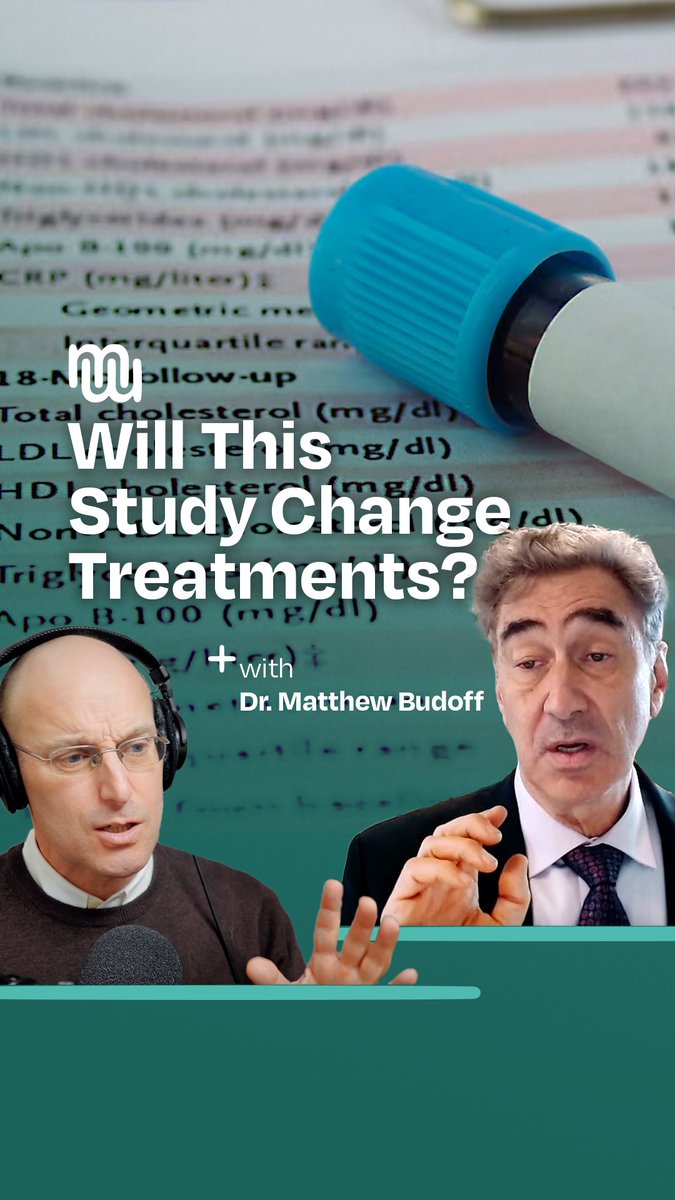
What if everything we thought we knew about cholesterol and heart disease risk… doesn’t apply to everyone? In this episode, world-renowned cardiologist Dr. Matthew Budoff unpacks the results of a landmark one-year study tracking 100 lean, metabolically healthy individuals on a ketogenic diet with extremely elevated LDL levels. Dr. Budoff is the Program Director, Director of Cardiac CT, and the endowed chair of preventive cardiology at The Lundquist Institute for Biomedical Innovation at Harbor-UCLA Medical Center. In this interview, Dr. Scher and Dr. Budoff further break down the results of his new publication, which used advanced imaging to demonstrate that LDL cholesterol and ApoB levels are not associated with plaque progression in Lean-Mass Hyper Responders following a #ketogenicdiet. 📊 Surprising insights: • Elevated LDL and ApoB did not predict plaque progression • Some participants with LDLs over 500 showed no plaque at all • A few participants even experienced plaque regression • Existing plaque—not LDL-C or ApoB—did predict plaque accumulation in this population Dr. Budoff explains what these results mean for clinicians, for patients using ketogenic therapy as a medical intervention, and for the broader conversation around cardiovascular disease risk. “It is important that clinicians, along with the general public, are made aware that personalized, data-driven approaches to assessing risk should be considered based on individual conditions,” said Dr. Budoff. “The existence of this phenotype suggests that alternative markers or tests should be used to establish metabolic health in some cases.” 🎬 These exciting new findings are featured in Dave Feldman and Jen Isenhart’s upcoming documentary, The Cholesterol Code, the story of how a software engineer conducts a groundbreaking study on an unusual group of people—lean, healthy individuals whose doctors are convinced they’ll die young. Real stories of healing with ketogenic diets provide a blueprint for using food as powerful medicine. Visit to learn more about the film and to be the first to hear about private screenings and the general release in the fall. Expert Featured: Dr. Matthew Budoff Matthew Budoff MD Resources Mentioned: Plaque Begets Plaque, ApoB Does Not Diagnostic and Preventative Cardiovascular Imaging Center CMEs Mentioned: Managing Major Mental Illness with Dietary Change: The New Science of Hope Brain Energy: The Metabolic Theory of Mental Illness Learn more about metabolic psychiatry and find helpful resources at

Metabolic Mind

10,423 просмотров • 1 год назад