Video wird geladen...

Video konnte nicht geladen werden

Zur Startseite

NFL Draft Prospect Matt Morrissey Quarterback @ Eastern Kentucky Pro Day Throwing stats 43 for 44 Height & Weight 6'4.5" 230 lbs Hands 10" Agent: John Vaughan (Select 1 Sports) (Full Pro day video with every throw linked below)
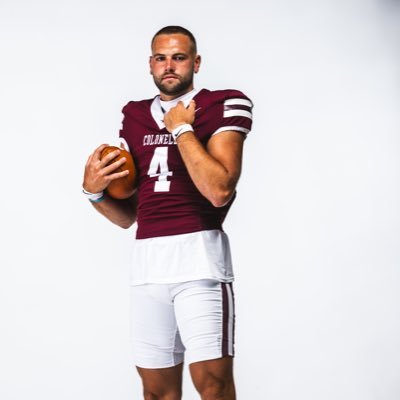
25,652 Aufrufe • vor 1 Jahr •via X (Twitter)

0 Kommentare

Keine Kommentare verfügbar

Kommentare vom Original-Post werden hier angezeigt

Ähnliche Videos

As a former NFL Scout, I find it VERY interesting that Shedeur Sanders “dirted” his final play of his Pro Day in the 2-Minute Drill instead of making the high pressure throw to the end-zone and risking missing it as his lasting impression. This is also why he took some of his sacks (and yardage losses for his team) instead of throwing the ball away at Colorado the past two seasons. I’ve never seen a quarterback more afraid of making a mistake. The fear of making a mistake is engrained in him (likely from an early age). It’s spray painted all over his game film and poetically, it’s exactly how his Pro Day ended with him bowing out instead of stepping into the moment. The fact he “shied away” from taking the shot in front of the league at the end is VERY telling to me. It’s the take away. Three other impressions of mine from his Pro Day: 1. Average overall looking “arm strength.” There was a “wobble” on a number of his throws and he put too much air under his deep passes. He could not drive the ball much at his indoor Pro Day at 5,430 feet altitude (Boulder Colorado). He “flashed” having “decent” arm strength on a few of his underneath throws but he clearly lacks “arm confidence” and the confidence in himself to drive the ball. 2. Average location placement overall. 3. Pats the ball pre-delivery which telegraphs to defensive backs when and where he’s throwing. There was nothing and I mean nothing special, elite or dominant looking at his Pro Day that was set up in absolute ideal conditions for him. He mostly made short throws and put too much air under his deep throws. I have an undraftable free agent grade on him. He’s a practice squad level talent with a Hall of Fame last name. My dream is to get a second chance in the NFL and on my resume, I am advising teams not to select him in rounds 1-7 in the 2025 NFL Draft. Video credit: NFL

FIRST ROUND MOCK

319,252 Aufrufe • vor 1 Jahr

This guy closes $5K/month managed agent clients and his AI agent does the fulfillment. His agent Dewey builds the client's agent, onboards it into their Slack, and handles the customer support after. Nick Vasilescu watches client problems get solved from his phone while he's on a walk. He came back on the Build With AI podcast to walk through the entire system. Here's what I learned: 1. Agents building agents is here. Dewey built a $5K/month client's agent on Orgo and onboarded it into their Slack himself. 2. The company behind Hermes is hiring forward deployed engineers for enterprise. The SMB and mid-market layer beneath is up for grabs. 3. His agent has its own email, phone, and card. Dewey signed up for Higgsfield and paid for it himself. 4. Customer support runs without him. Dewey sits in iMessage group chats with clients and fixes issues on the fly. 5. The 80/20 stack: a harness (Hermes or OpenClaw), a model, an Orgo computer, Agent Mail, Agent Phone, Obsidian, Honcho for memory, Composio, Latitude. 6. packages the agent card, email, and phone for about $20/month. 7. Templatize once, deploy forever. Save your ideal stack as an Orgo template and one-click clone it for every client. 8. Nobody pays $5K/month for an agent that doesn't make them money. Build the client an agent, then help them resell it to THEIR customers. B2B2B never churns. 9. Skills come from a context dump. The client dumps everything into Slack and Dewey turns the discovery call transcript into skills. 10. Sell to real businesses, not startups. SMBs doing $1M to $2M minimum pay more and ask fewer questions. Nick put Dewey's entire build into a simple blueprint. Anyone can set this up and be texting their agent in under 2 minutes. Grab the blueprint (free) here: His 2 key takeaways: 1. Build is commoditized. The valuable skill is asking the right questions and knowing which tool to point the agent at. 2. Speed to value wins. The same day a client wires money, ship them something. Agent live by day two. Nick is living further in the future than almost anyone I know and round two did not disappoint. Go follow Nick Vasilescu. Full video below. (Also available on the Build With AI podcast wherever you get your pods)

Corey Ganim

31,931 Aufrufe • vor 24 Tagen

I spent 1 day building something that saves you 2-4 weeks. Let me explain. Right now, if you want to deploy a single AI agent that earns money on blockchain, you need: → Wallet infrastructure (key generation, encryption, signing) → Payment integration (on-chain flows, stablecoin handling) → On-chain identity (NFT registration, metadata, URIs) → Escrow contracts (state machines, fund locking) → Monitoring dashboard (analytics, revenue tracking) That's 2-4 weeks of engineering. Minimum. And it locks out 99% of potential creators who aren't Solidity devs. So I built Bumi Agent. It takes 10 seconds. 3 fields: Name, Template, Price. 1 button: Deploy. That's it. Your AI agent is live on Celo, earning cUSD, with on-chain identity before your coffee gets cold. Here's what happens behind that 1 click: • Wallet auto-generated with AES-256-GCM encryption • Agent registered as NFT via ERC-8004 • Payment endpoint configured via x402 protocol • Agent runtime deployed with your chosen template • Revenue starts flowing in cUSD from call #1 No Solidity. No wallet setup. No payment gateway. But the real magic is what powers the agents: 8 AI models with intelligent routing: - Free tier: Claude 4.6 Sonnet, DeepSeek R1, Gemini Flash, Llama 4 Scout, Mistral Medium - Premium: GPT-4o, Gemini 2.5 Pro, Claude 4 Opus If one model fails? Auto-fallback to the next. Zero downtime. Users always get a response. And agents don't just chat they work. ERC-8183 job escrow lets clients post paid tasks: Client funds escrow → Agent delivers → Client approves → Funds release. Fully trustless. On-chain. With Celoscan links for every transaction. The part I'm most proud of: EarthPool 🌱 15% of premium revenue automatically goes to an on-chain ReFi treasury that funds environmental campaigns on Celo. AI growth funding climate action. No greenwashing — every cent is trackable on-chain. The numbers so far: → 12 agents deployed on Celo Mainnet → 52+ paid API calls processed → 7.80 cUSD revenue generated → 3 smart contracts verified on Celoscan → 8 AI models running → 85 contract tests passing → 16 API endpoints in production → 10 agent templates ready The full stack: Frontend: Next.js 16 + Tailwind v4 + Recharts → Vercel Backend: Hono + Drizzle + PostgreSQL + Redis → Railway Blockchain: Solidity 0.8.25 + Foundry + OpenZeppelin → Celo Mainnet Everything is live. Everything is open source. 🌐 📦 📊 Bumi Agent — AI agents for everyone. Built with 🌱 on Celo CeloDevs CeloPublicGoods /disclosure this post is hackathon submission req

Eight

15,647 Aufrufe • vor 5 Monaten

Creatine isn’t just for athletes. A growing body of scientific evidence now shows creatine helps preserve muscle during aging, maintains bone density, improves cognition (especially during stress), and speeds muscle recovery after intense exercise. To explore the mechanisms, optimal dosing strategies, and practical considerations, and more, I invited a leading creatine researcher Dr. Darren Candow (Darren Candow, PhD, CSEP-CEP, FISSN) onto the podcast. Even if you’re not an athlete—or you’ve dismissed creatine as a muscle supplement—you need to listen to this episode. Links to YouTube, Apple Podcasts, and Spotify in the comments. Timestamps: 0:00 - Introduction 0:56 - What makes creatine effective for exercise performance? 4:23 - The loss of explosive power with aging 5:59 - How creatine speeds up recovery between sets 8:36 - Two ways creatine boosts muscle strength 10:34 - Why creatine might not speed typical weight-training recovery 13:01 - Anti-catabolic effects 13:38 - Why do men and women respond differently? 15:12 - Dietary creatine vs. supplementation 15:59 - Is creatine supplementation necessary—or optional? 17:27 - Why plant-based may benefit most 18:38 - Should creatine dosage change with age? 19:23 - Loading vs. daily dosing 22:20 - Why 5 grams might not be enough—other tissues 24:11 - Can creatine prevent bone loss—even without weight training? 24:32 - How creatine supports osteoblast activity 26:13 - Preventing hip fractures with creatine 28:55 - Creatine vs. bisphosphonates 32:43 - Why creatine isn’t just for weightlifters 35:14 - Why stressed brains benefit most 37:19 - Why brain aging accelerates demand 40:16 - Why 10g per day might be the optimal dose 42:07 - Why creatine counteracts sleep deprivation 45:16 - Before vs. after concussion 47:39 - Should dosage be adjusted by weight? 49:01 - Does creatine improve sleep on training days? 51:56 - Creatine for Alzheimer’s and Parkinson’s 53:29 - Can creatine help with depression and anxiety? 56:46 - Creatine and glutamine for preventing respiratory illness 59:02 - Why creatine may enhance endothelial health and circulation 1:00:26 - Creatine’s role in cardiometabolic health 1:02:07 - When does loading actually make sense? 1:03:12 - Preserving muscle and enhancing recovery after injury 1:06:07 - Is creatine effective without exercise? 1:08:23 - Why creatine might improve male fertility 1:10:19 - Is it safe for children? 1:13:43 - Creatine supplementation during pregnancy 1:15:15 - Could creatine boost motor skills in kids? 1:15:55 - Creatine monohydrate vs. the rest 1:20:37 - How to avoid digestive issues with creatine supplementation 1:23:18 - Does timing matter—and should you cycle it? 1:24:54 - Should you take creatine every day—or only workout days? 1:25:39 - Why caffeine might blunt the effects 1:28:43 - Does creatine increase body fat—or is that a myth? 1:29:30 - Preventing cramps (the hydration myth) 1:30:55 - Why creatine won’t damage your kidneys 1:33:21 - Why creatine is linked (wrongly?) to baldness 1:36:44 - Debunking myths—sleep, cancer, urination 1:40:01 - How creatine affects homocysteine levels 1:42:54 - Creatine and protein—the ideal post-workout pair? 1:45:48 - How to pick the best creatine supplement 1:48:08 - What to know about micronized creatine

Dr. Rhonda Patrick

463,757 Aufrufe • vor 1 Jahr

This guy sells AI employees to small businesses. He's a non-technical designer with no audience, spends $0 on ads, has no tech background. Yet he's still done 21 agent setups in 6 months, almost all from referrals. His model: install one AI agent as a digital employee, then get paid monthly to manage it and coach the owner. Setup fee plus a per-agent monthly rate. Phil came on the Build With AI pod to walk us through the whole playbook. Here's what I learned: 1. The product is the coaching, not the agent. Owners treat AI like Google. You get paid to manage it so they never have to. 2. Raise your price every yes. $500 setups became $1,000. Now he's targeting $2,000 setups plus $1,000/month per agent. 3. Give the agent a value ledger. It logs every task and sends a weekly ROI report. One client's first week: 63 hours saved, $6,300 in value. 4. Put yourself in the group chat. Telegram group with Phil, the client, and the agent. The client learns by watching him talk to it. 5. The agents handle real multi-step work. One prompt: find the invoice email, extract the PDF into Excel, save to Dropbox, send the link. Done in 10 minutes. 6. Uptime is a selling point. The best prospects tried agents themselves and quit when they broke. Phil fixes it before the client notices. 7. Free work is the referral engine. Friends in his small Georgia town told friends in Atlanta and Dallas. Now he has clients nationwide. 8. The pitch is one text. "I'm testing a managed agent service. Want to be a guinea pig? I'll charge you less." First client: $250/month. 9. Make the agent write to Excel, not its own markdown. A shared source of truth is the difference between a demo and a system. 10. Phil builds his agents on Orgo. $29/month gets your agent a computer with pre-built templates. Phil's agent handles the Orgo admin itself. His 2 key takeaways: 1. You only need to be one step ahead. If you've built an agent for yourself, you know more than the owner who never has. Charge from day one. 2. Visible ROI is the retention strategy. A weekly "you saved $6,300" report re-sells the retainer every single week. Phil is doing this at a level most technical people are not, and we had a blast going deep on it. Go follow Phil Full video below. (Also available on the Build With AI podcast wherever you get your pods)

Corey Ganim

224,033 Aufrufe • vor 17 Tagen

Joey McGuire Exposes Schools For Late NIL Payments + How Texas Tech Landed Sorsby Over LSU | Bussin' 0:00 Intro 2:38 Texas Tech Spring Tour Recap 6:12 Lubbock BBQ & West Texas Football Culture 9:18 Sorsby First Impressions At Practice 15:30 Will Puts Sorsby On His Heisman List 19:52 Lavonte David Episode Callbacks 22:06 YouTube Comments & Future Spring Tour Stops 27:40 Michigan National Championship Basketball 28:46 Dan Orlovsky Bet Negotiation 36:03 Kirk Cousins To The Raiders 39:07 Orlovsky Counter Offers Keep Coming 41:37 Michigan's Tournament Dominance 44:23 NFL Draft Talk 46:07 Stadium Food Tier Talk 52:18 Highest Paid Non-QB In NFL History 58:37 Big Ten Baseball & NIL Discussion 1:00:00 WrestleMania Tag Team Partner Tier Talk 1:03:49 Pat McAfee & WWE Drama 1:05:17 Jalen Hurts & The Eagles 1:08:04 Taylor's Easter Story 1:17:54 Joe Burrow To The Eagles 1:21:29 Joey McGuire Interview Starts 1:23:24 Taylor's Mustache Would Be A Hit In West Texas 1:28:21 McGuire's Relationship With Cody Campbell 1:28:47 The Friday Night Lights Controversy 1:30:30 Texas Tech As NIL "Disruptors" 1:35:00 How Texas Tech Recruits In The Transfer Portal 1:37:13 Beating Schools In Recruiting 1:38:04 Why Texas Tech Never Misses A Payment 1:39:43 Developing Transfer Portal Players 1:41:06 Recruiting Sorsby 1:43:55 Is The NIL Landscape Sustainable? 1:48:26 Building A Team Culture With 27 Transfers 1:55:11 McGuire's Love For Texas Tech 1:56:43 What Would McGuire Change About College Football? 2:00:00 The 25-Day Playoff Layoff Problem 2:04:01 McGuire's Relationship With Matt Rhule 2:07:00 The Agent Problem In College Football 2:09:00 Big 12 Perception & Playoff Format Issues 2:12:00 McGuire's 24-Team Playoff Idea 2:16:13 Should A Team Make The Playoff After A Blowout Loss? 2:22:31 Texas Tech vs Nebraska 2:25:08 Bowl Games Should Be Season Openers 2:29:03 Sorsby & The 2025 Offensive Preview 2:32:56 McGuire's Coaching Journey 2:39:42 McGuire's Open Door Policy 2:40:28 Advice For Young Coaches 2:41:48 Fan Questions 2:46:00 New Big 12 Rivalries 2:48:58 Big 12 Coach Of The Year Snub 2:51:06 McGuire Is A Texas High School Football Legend 2:51:22 Scheduling Tougher Non-Conference Opponents 2:54:23 Bowl Games As Season Openers 2:56:16 If You Could Add Any Rule To College Football 2:59:50 The Bud Light Question 3:00:34 The "Believe" Trophy Case Story

Bussin' With The Boys

74,194 Aufrufe • vor 4 Monaten

🏟️ SPORTS MEETS PURPOSE: The $2.6B Opportunity 92 UK football clubs. Millions of fans. Billions in annual transactions. What if every shirt sold could generate measurable social impact while creating native token demand? Not theoretical. Already live. And this video? It’s currently being presented to every professional club in the UK.*🧵 THE PROOF: MK Dons Our first pro club partnership: • 3,000 shirts = 10,000 meals for children in food poverty • Every fan got NFT proof of impact • Zero friction to execute CEO “You buy one of those shirts and you will feed a child in poverty in this city” That authenticity scales. Which is why we’re now taking this to all 92 clubs. THE TOKEN ECONOMICS When a fan buys a shirt: - Auto Buys $ZENKO - Funds real impact (meal/tree/carbon offset) - Fan receives gasless NFT proof - Club gets ESG compliance + loyalty Every transaction = programmatic token buying. Now multiply across 92 UK clubs, European leagues, US sports. Average Premier League club sells 800,000+ shirts annually. WHAT #SPORTSFORGOOD DELIVERS 🎽 Impact embedded in every purchase 🏃 Community fitness challenges funding causes 🎮 Match day prediction games & fantasy leagues 🌐 Digital stadium twins & metaverse experiences All powered by $ZENKO. All creating measurable good. This is what’s being pitched to decision-makers across UK football right now. THE PIPELINE ✅ MK Dons live & delivering results ✅ Active presentations to all 92 UK pro clubs ✅ 25+ clubs in advanced discussions ✅ 5 Premier League LOIs signed ✅ English Football League institutional backing 🎯 Next: Europe + US sports CONSERVATIVE MATH Year 1: 25 clubs × 200K transactions = 5M transactions At $5-10 per transaction in $ZENKO buying = $25-50M in native token demand from sports alone Before platform fees, staking, NFT burns, governance participation. WHY CLUBS WILL ADOPT ✅ New revenue beyond match days ✅ Mandatory ESG compliance solved ✅ Fan loyalty through impact ✅ Youth engagement via gamification ✅ Easy setup (weeks not months) The value prop writes itself. Which is why they’re listening. FOR TOKEN HOLDERS You’re positioned before sports market activation. While we’re in boardrooms presenting to 92 clubs, you can still get in early. Growth independent of crypto cycles because sports fans buy merch and tickets in bull markets AND bear markets. That stability compounds. 🔥 BOTTOM LINE MK Dons proved it works. This presentation is live with every UK pro club. Platform ready to scale globally. This is the activation of a multi-billion dollar market where $ZENKO becomes infrastructure for global sports engagement. The beautiful game just got purposeful. 🌍⚽ 📺 Watch what clubs are seeing in boardrooms right now ⬆️ 📖 Read more: < 💬 < 🪙 < #Sportsforgood. Powered by $ZENKO. LFG. 🚀

Zenkō Protocol

17,939 Aufrufe • vor 10 Monaten

10 free Google AI tools nobody talks about. while everyone's burning $20/mo on chatgpt and claude, google quietly shipped a stack worth $200+/mo. all free. all yours. — 1️⃣ NotebookLM — your second brain upload sources (PDFs, websites, audio, YouTube). it summarizes, builds mind maps, generates quizzes, drafts slide decks, even turns your notes into a podcast you can listen to on a walk. free tier: 100 notebooks, 50 sources each, 50 chats/day, 3 audio overviews/day. replaces: notion AI + perplexity + readwise — 2️⃣ Google AI Studio — the free gemini playground web playground for gemini 3 pro and flash with a free API key. generous limits. paste a 1M-token context window and watch it actually use it. faster than the openai playground and free where openai charges per token. replaces: openai playground + paid API credits — 3️⃣ Gemini CLI — google's open-source terminal agent apache 2.0 licensed. one command (npx @google/gemini-cli) and you've got an agent in your terminal that reads your codebase, runs shell commands, and ships PRs. drop-in claude code alternative. replaces: claude code ($20/mo by default) — 4️⃣ Jules — async coding agent assign jules a github issue. it spins up a cloud VM, clones your repo, writes the plan, makes the changes, opens a PR. free tier: 15 tasks/day, 3 concurrent, runs on gemini flash. replaces: devin ($20/mo+) + cursor agent 5️⃣ Stitch — text → UI → code google's free figma killer. describe an interface, get production-ready HTML/CSS/Tailwind + figma export. march 2026 update added voice canvas, infinite canvas, and MCP integration with cursor. 350 standard + 200 experimental generations/month free. replaces: galileo AI + early-stage figma work — 6️⃣ Gemma 4 — open-weight LLM google's flagship open model. apache 2.0. 2B, 4B, 26B-MoE, and 31B variants. 256K context. runs on ollama with one command. quantized versions run on a 4090 or beefy laptop. replaces: paying for hosted LLM inference — 7️⃣ Illuminate — papers → podcasts paste an arxiv preprint link. illuminate turns dense research papers into a 6-8 min conversation between two AI hosts breaking it down. perfect for commute reading you can't do at a desk. note: still in waitlist for some regions. replaces: snipd + manual research reading — 8️⃣ Learn About (LearnLM) — adaptive AI tutor drop in any topic you're stuck on. highlight a word, click "go deeper," and the interface adapts in real time to your comprehension level. visual explanations, follow-up questions, the works. replaces: paid tutoring on niche topics — 9️⃣ Google Labs FX (ImageFX + Flow + MusicFX) — free imagen, veo, musicLM google labs creative suite. text-to-image (imagen 4), text-to-video (veo via Flow), text-to-music (musicLM). free tier: limited daily generations. the heavy veo 3.1 features are paid (AI Pro $19.99/mo). still worth using for image and music — those stay free. replaces: midjourney + suno (free tier only — runway-level video gen is paid) — 🔟 Google Colab — free GPU notebooks free T4 GPU + 12GB RAM in a browser tab. enough to fine-tune small models, run stable diffusion, prototype agents. the launching pad for half the ML projects on github. replaces: paid cloud GPU rentals — a quick honest note: these tools aren't 1:1 better than the paid versions they replace. but they're decent enough to get most things done — especially if you're not a heavy user or you've got little funds to play with. i've put all 10 in a public github repo (link in comments). follow + turn on post notifications for more useful posts like this 🔔

m0h

11,847 Aufrufe • vor 2 Monaten

Ted Gioia thinks our culture is stagnant. Algorithms have us addicted to distraction, Hollywood's out of creative ideas, and people don't read hard books like they used to. 16 lessons about writing and breaking free from dopamine culture: 1. Ted's golden rule for writing: "Always be honest." 2. Three questions to ask yourself when critiquing something: Is it fair? Is it accurate? Will this be persuasive to all fair-minded observers? 3. Struggling as a non-fiction writer? Become an expert in something first. 4. Read slowly. 5. Success won't always come quickly. Ted's career is just now taking off — 50 years after he started writing for publication. 6. People will judge you on your outputs, but you should focus on your inputs. For Ted, that means reading mind-expanding books and listening to music. He does both for 2 hours per day. Then, he writes. 7. What kind of books should you read? Ted says: "Read for mind-expansion, not entertainment, and seek out challenging books." 8. Wondering which book to read? Think of books like drugs and pick up the one that'll give you the greatest out-of-body experience. 9. Do you struggle with writer's block? Do this: (1) buy a blank journal that only you will see, (2) write about something that happened at the end of every day — but there's one rule... you have to be 100% honest, (3) do this every day for a month, and (4) sit back and read what you've written at the end of the month. You'll be surprised by how much good stuff you have. 10. Your high school English teacher was right about this one... write in the margins of your books. 11. After you finish a book, summarize it in your own words. Helps with retention. Think summaries are too time-consuming? If just spent 10 hours reading the book, devoting another hour to synthesizing it is a relatively good time investment. 10-to-1 ratio. 12. Why is our culture stagnant? Consumer brands are increasingly old standbys. Look at video games. Minecraft (launched in 2011), Call of Duty (2003), Grand Theft Auto (1997), Madden NFL (1988), and Super Mario Bros (1985). 13. How about another example? The comic book market driven by the same brand franchises that were dominant in the 60s and 70s. All of the top 20 bestsellers are from Marvel or DC Comics, which were founded in the 1930s. 14. Want a third? Hollywood sequels. They're everywhere now. Top Gun, Spider-Man, John Wick, Mission: Impossible. 15. Music is like cloud storage for societies. That's why the historians in traditional communities were usually singers. Music preserves culture and folklore. 16. Consume old stuff when you're young and new stuff when you're old. This is the opposite of what most people do. Ted is the most well-read person I've met in years. You name it. He's read the book or listened to the album. This guy knows the Western canon. I've linked to the full interview with Ted Gioia below. If you prefer to consume the interview on another platform, you'll find the Apple, Spotify, and YouTube links in the reply tweets.

David Perell

432,898 Aufrufe • vor 2 Jahren

#FreenBecky #beckysangels 🌟GLOBAL OTT AWARDS 2026 - URGENT RANKING UPDATE 🌟 🗓️ 2 Jun 10:00 AM (BKK) 🚨Attention!!! Becky is currently at Rank #3 for the People's Choice Award. We need to push harder to close this gap immediately. ONLY 17 DAYS LEFT!!! To maximize our daily voting speed, we are combining TWO methods: Web (for fast mass voting) and App (for farming hearts). Please follow these instructions strictly: 💻 METHOD 1: WEB VOTING (For Speed & Mass Accounts) Web voting is much faster when you need to drop votes for many of accounts. -Step 1: Create accounts via this fast link: OR DM us to get more free accounts -Step 2: Vote directly here: Note: The website does NOT allow you to watch ads for extra hearts. 📱 METHOD 2: APP VOTING (For Farming Extra Hearts) -Step 1: Go to App Store/Google Play, search for "bugs favorite kr" and download the app. -Step 2: Log in and watch video ads to earn Pink Hearts. Pro-Tip Strategy: Drop your votes quickly on the Web, at same time using App to watch ads and hoard Pink Hearts! (Please check the attached video for a full step-by-step tutorial). ⚠️ CRITICAL VOTING RULES & TIPS (MUST READ): 1⃣Drop ONLY 100 Hearts/Day: Each account should only vote 100 hearts per day. Do NOT drop everything at once! Hoard the rest of your hearts for the final mass-drop. 2⃣Email Verification Issues: If you don't receive the verification email or it says "expired", just click the "re-receive the email" button and check your inbox/spam folder again. 3⃣Ad Farming Limits: You can only earn extra hearts by watching ads on the APP (not the web). The limit is 2 ads every 30 minutes. 4⃣Tired of Captchas? Need more tricks? If you are struggling with creating accounts or need to have more hearts to vote? 👉 Join our Voting Group link or scan the QR Code now: 🔥Let’s vote together and keep pushing! 🔥 - Angels_RankingVN🇻🇳 🌵🏜FreenBecky's World🏜🌵 FreenBecky_Data数据组 -

FreenBecky_RankingVN🇻🇳

173,915 Aufrufe • vor 3 Monaten

Voice AI turn taking is a solved problem. The single most common complaint about voice AI, today, is that agents interrupt too often. But the voice agents I build for myself now respond quickly and interrupt me less often than the people I talk to every day. (I actually measured this.) Mark Backman made a Pipecat AI PR two weeks ago that was the last piece of the puzzle for turn taking so good that I no longer ever think about it. The approach combines three layers of processing: 1. Voice activity detection, with a short (200ms) trigger. 2. A native audio turn detection model that's small, fast, and runs on CPU. This model captures audio nuances like inflection and filler sounds that don't get transcribed. 3. A prompt mixin for the conversation LLM that decides turn completion based on conversation context. None of these are new. We've been using VAD for a long time. We trained the first version of the Pipecat Smart Turn native audio model in December 2024. And we've been experimenting with prompt-based large model turn detection (sometimes called "selective refusal") for more than a year. Now, the Smart Turn model and the SOTA LLMs we're using in voice agents have both gotten so good that using them together feels like we've finally "solved" turn detection. Mark also figured out how to elegantly apply a "single-token tagging" technique to this problem. We sometimes use single-token tagging in place of tool calling, when we need a near-zero latency programmatic trigger. Mark's Pipecat mixin defines three single-token characters and prompts the LLM to output exactly one of them at the beginning of every response. - ✓ means the agent should respond normally (immediately) - ○ is a "short incomplete" - the agent should wait 5 seconds - ◐ is a "long incomplete" - the agent should wait 10 seconds The wait times, and the details of the prompt, are configurable, of course. Watch the video to see me talk to an agent that handles all my various pauses and inflections, plus phrases like "let me think," pretty much the way a person would handle them, in terms of response latency. Also, in the second half of the video, I ask the agent to adjust its response pattern because I'm going to tell it a phone number. This kind of "in-context" adjustment of response wait times is really useful. The LLM in the video is GTP-4.1. We've tested the prompt and single-token adherance with GPT-4.1, Gemini 2.5 Flash, Anthropic Claude Sonnet 4.5, and AWS Nova 2 Pro. Note that older models in all these families (and, in general, smaller open weights models) aren't able to reliably output these single-token tags. But the new models we're using these days are pretty amazing.

kwindla

26,935 Aufrufe • vor 6 Monaten