Video wird geladen...

Video konnte nicht geladen werden

Zur Startseite

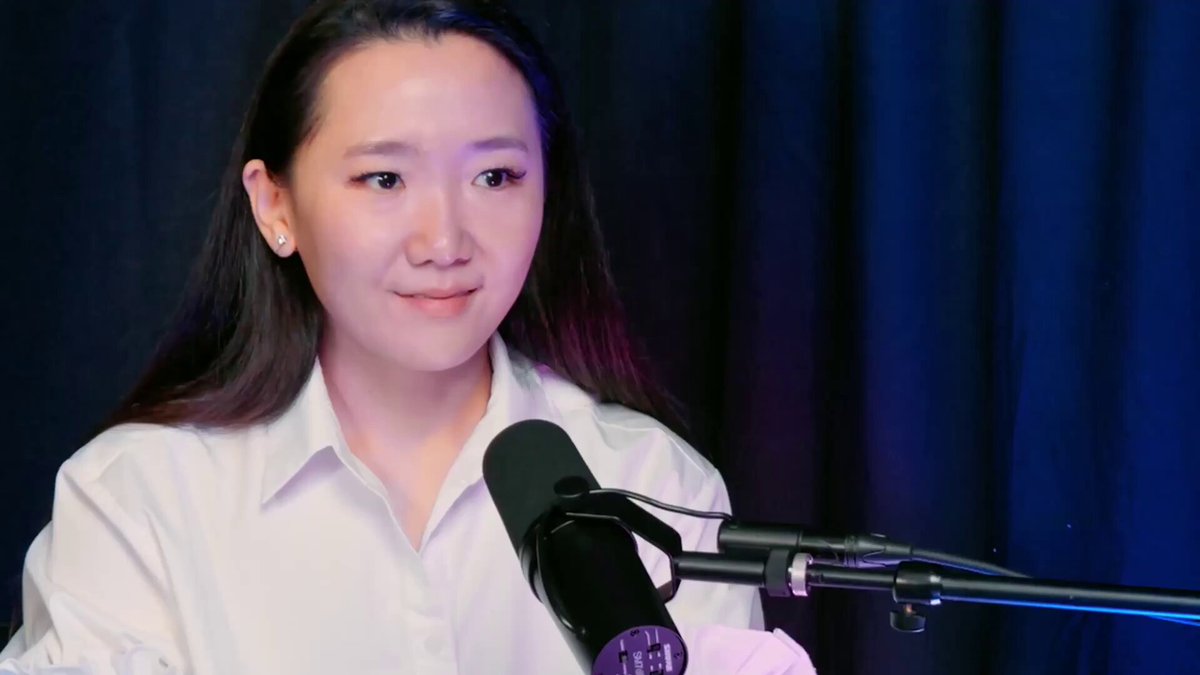
Nine years ago 👇 The crypto was mostly about proving that this technology could work Today, the conversation feels very different One idea from the Binance 9th anniversary livestream really stayed with me: The end goal isn’t just building a bigger crypto market it’s giving people better access to...

29,676 Aufrufe • vor 1 Tag •via X (Twitter)

0 Kommentare

Keine Kommentare verfügbar

Kommentare vom Original-Post werden hier angezeigt

Ähnliche Videos

When I was 8 years old, growing up in Taipei, I called my aunt in San Francisco and asked: What is the best science and technology school in the world? She said MIT. I went on the internet, found it, and decided that was where I was going. All because of a Steven Spielberg movie about a little robot boy who wanted to find his mom. I grew up as an only child. What stayed with me from that movie was not just the technology. It was the possibility that one day, an artificial companion could understand how I felt. That was the first time I remember being moved by a technology that could change how humans experience reality. Years later, I did get to MIT. I studied AI before it became obvious. I became a machine learning engineer, built my first company, joined a $3.5B VC fund, left to build again, failed, started again, moved to New York alone, and built through one of the hardest crypto markets as a solo founder after the collapse of FTX. I kept going because I have always been drawn to technologies that change how humans understand the world. AI was the first version of that. Crypto and prediction markets are the next. I believe the future I am building toward is inevitable. The only question is whether I get to be one of the people who helps realize it. That future is a world where markets become information-first. The old model of trading was asset-first. It rewarded people with capital, financial education, institutional access, and better tools. But the next generation of markets will be shaped by information flow, narrative, attention, politics, culture, sentiment, and collective belief. Prediction markets make this shift obvious. They are one of the first asset classes where the value is informational, not purely financial in the traditional sense. Your edge does not have to come from technical analysis or a traditional finance background. Your edge can come from knowing something before it becomes consensus. From seeing reality shift before the market prices it in. Someone with firsthand knowledge of an unfolding event can have more alpha than an institution with a much bigger balance sheet. They turn belief into price. But price alone is not enough. Polymarket shows what the market thinks will happen. ARES is built to understand why the market is changing. We are building an information-first trading platform for prediction markets and other narrative-driven assets. One that does not just show traders what is moving, but helps them understand why odds are shifting, why narratives are forming, and why the future is moving in a certain direction. But the bigger vision is not just a better trading terminal. We want to turn every trade into an information object. Every position can become a piece of content. Every market view can become a signal. Every trader can build a reputation around conviction and accuracy. Most feeds rank information by engagement. Who got the most likes. Who already has the biggest audience. Markets allow us to rank information differently. How much are you willing to stake on what you believe? How often have you been right? That creates a fundamentally different kind of media feed. One powered by conviction, track record, and market incentives. One that becomes harder to fake. One that can help people understand not just what the market thinks will happen, but why reality is changing. I also believe prediction markets are one of the few markets where humans can still have a real edge over AI. AI knows what is already on the internet. But humans experience reality before it becomes data. We see things before they become headlines. We hear things before they become reports. We feel shifts before they become consensus. If those signals can be priced, organized, and made legible, then more people can gain access to financial opportunity, information agency, and power. That is what Ares is building toward. I spent years watching founders from the VC side of the table, always thinking: I wish that was me. Now it is. I talked about this journey and the thesis behind Ares in my conversation with Dmitry on Predict Time If you are building, trading, investing, or thinking deeply about prediction markets and information markets, I would love for you to watch it. And if you want to collaborate on what we are building, contribute to the vision, or join the team, we are always open to exceptional people across functions. DMs are open.

Morgan Lai

302,663 Aufrufe • vor 2 Monaten

Humans have been on this earth for at least 310,000 years. Yet mainstream history INSISTS our civilisation only started 6,000 years ago? That’s the exact timeline contradiction Graham Hancock has spent more than 30 years trying to unpick. Graham has sold millions of books and has a Netflix series. All built around one idea... That we are missing a huge chapter of our own history. When we sat down, Graham told me that he is about to undergo serious heart surgery. And, there is a 15% chance he may not survive the operation. With his future feeling uncertain, he wanted to come on the show for the opportunity to put his life's work, his philosophy and the biggest unanswered questions of human history on the record. Graham has been very vocal about how he thinks that mainstream science is dismissing and ignoring evidence rather than actively hiding it. We discussed things like: - A 12,800-year-old comet that forced humanity to restart. - Satellite imagery revealing a lost civilisation beneath the Amazon! - Ancient maps of the world that shouldn't exist… - The psychedelics that may have unlocked human consciousness. - Why everything we know about our origins could be wrong…? What was clear from our conversation, was that Graham isn’t afraid to go against the grain and challenge the official narrative. Whether you agree with his conclusions or not, I think there's something valuable about opening your mind in a way that’s just driven curiosity. As he told me, the most important lesson from his life's work is simple: Question everything. So, what if the story of who we are is much older, stranger and more fragile than we think?

Steven Bartlett

136,281 Aufrufe • vor 1 Monat

Mo Gawdat believes up to 30% of jobs in certain sectors could disappear by 2028. That stopped me in my tracks. Mo was one of the first people to come on this podcast and warn me about AI, long before most of the world was talking about it. At the time, it felt early. Now, it feels like the world is catching up to what he was seeing. I’m still trying to understand what AI actually means for our lives. Not just whether it can write emails, create images or make us more productive. I mean what it does to jobs. What it does to power. What it does to education. What it does to human connection… That’s why I wanted to have this discussion with Mo again. What makes Mo worth listening to is that he saw these systems inside Google years before most of us had even heard the term AI. His book *Scary Smart* now feels like it was written for this exact moment. Let me explain why this discussion matters. Mo believes we’re not just entering an AI revolution. We’re entering a period where AI, robotics, economics, surveillance, digital currencies and global instability are all colliding at the same time. That’s a lot for any of us to process. We spoke about: - The jobs Mo believes are most at risk from AI. - Why he believes that AI is actually underhyped! - The mistake almost everyone is making with ChatGPT. - The prediction that changed even his own view of the future. The part that stayed with me was this idea that human connection may become the real currency. Because if AI can produce the information, write the report, analyse the data, then what is left? I don’t think this conversation gives neat answers. That’s probably why it’s worth watching. It helped me think more honestly about what’s coming.

Steven Bartlett

27,598 Aufrufe • vor 1 Monat