Video wird geladen...

Video konnte nicht geladen werden

Zur Startseite

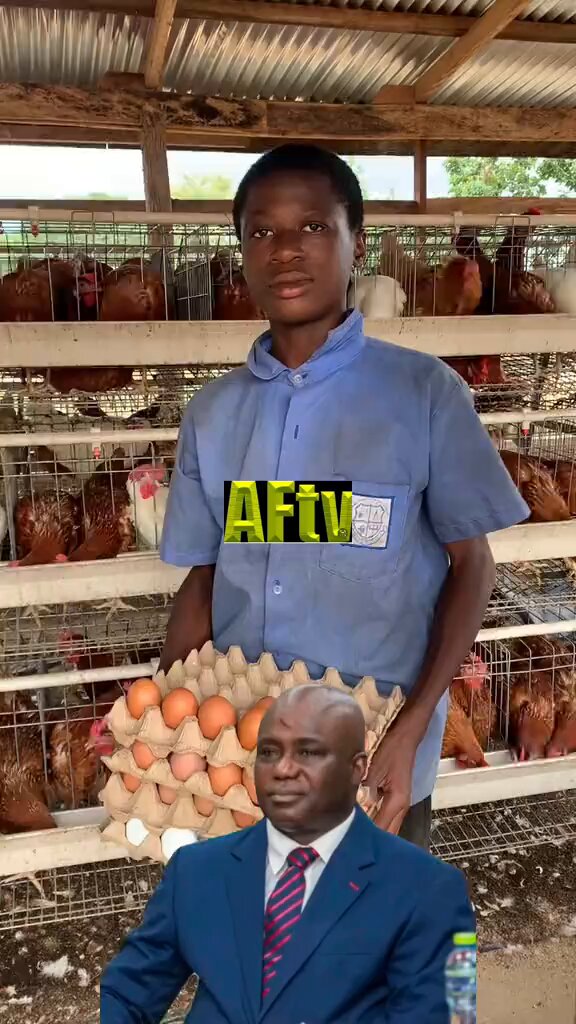
Nkoko Nkitinkiti Programme: Pilot stage currently processes 50,000 birds. #JoyNews

47,416 Aufrufe • vor 7 Monaten •via X (Twitter)

0 Kommentare

Keine Kommentare verfügbar

Kommentare vom Original-Post werden hier angezeigt

Ähnliche Videos

112 New Low-Floor Buses to Be Deployed in September 🚍 🚌 Cabinet approves Rs. 800 million in equity capital for Lanka Metro Transit (Pvt) Ltd to develop infrastructure for modern public transport, with the company set to deploy 112 additional low-floor buses in September following the successful Colombo Urban Transport Pilot. A further Rs. 267.5 million is to be provided in 2027 for operational activities. Rs. 800 Million Equity Capital for Lanka Metro Transit The Cabinet of Ministers has approved the provision of Rs. 800 million in equity capital to Lanka Metro Transit (Pvt) Ltd to support the development of infrastructure required for modern public transport operations. Lanka Metro Transit (Pvt) Ltd was incorporated on October 3, 2025, as a subsidiary of the Sri Lanka Transport Board under the Companies Act No. 7 of 2007, with the objective of modernizing public transportation. The company is currently conducting the Colombo Urban Transport Pilot using 10 low-floor buses purchased with funds allocated under the Clean Sri Lanka Programme. The pilot has demonstrated commercial feasibility and received public acceptance, according to the government. Based on the progress of the pilot, the company plans to deploy a further 112 low-floor buses in September. To support the expansion, infrastructure facilities are required, including a fully equipped central workshop in Ekala, new modern bus depots in Thalangama, Kadawatha, Rathmalana and Homagama, as well as internal roads and bus yards. Accordingly, Cabinet approved the proposal submitted by the Minister of Transport, Highways and Urban Development to provide Rs. 800 million in equity capital for the infrastructure development of Lanka Metro Transit. The government has also approved the provision of a further Rs. 267.5 million in 2027 to support the company's operational activities.

Sri Lanka Tweet 🇱🇰

11,846 Aufrufe • vor 19 Tagen

Today, 7th June 2026, we empowered another batch of women-owned small-scale businesses in our community under the Udama Initiative This is the second phase of the programme following the successful pilot conducted in August. The empowerment is structured as an interest-free revolving loan scheme designed to support vulnerable women with little or no access to capital. Each beneficiary receives ₦50,000, with repayment spread through weekly installments of ₦3,000. The first batch of beneficiaries has consistently repaid their loans for the past eight weeks, and the impact has been encouraging. Many of the women have recorded noticeable improvements in their businesses, increased their stock, and strengthened their means of livelihood. What makes this initiative unique is that the funds are recycled. As repayments are made, the money is reallocated to support more women, ensuring that the programme continues to expand while we seek additional sources of funding. Our target is to empower at least 50 women within our community before the end of the year. Most of these women previously operated with business capital of less than ₦20,000 or ₦30,000, making access to ₦50,000 a significant boost to their economic activities. We remain committed to supporting grassroots economic development, one family at a time, and creating opportunities for women to grow sustainable businesses and improve their standard of living. We would also like to express our sincere appreciation to an anonymous supporter from this platform whose contribution helped strengthen the fund. Your generosity is creating opportunities for hardworking women and helping to transform lives at the grassroots. We are truly grateful for your kindness and support.

Tahir Abubakar M. 🇳🇬🇵🇸

13,979 Aufrufe • vor 2 Monaten

Magyar’s update. Or: the Birds of the USF heading for the White Nights. The Bermuda-like Leningrad oil triangle – Primorsk – Ust-Luga – Kirishi – does exist. Or how the Baltic export oil artery works (worked) – version 3.0, not final. The Birds of the USF report: Siberian oil flowing neatly into the KINEF refinery (Kirishi refinery), then shipped out as diesel or crude through Transneft ports Primorsk and Ust-Luga – feeding the bunker grandpa with bloody oil profits – has taken a hit over the past three days (March 23–26), thanks to a freedom-loving Ukrainian Bird and its pyrotechnic shows. The resulting oil logistics clot has been burning nicely for days now, lightly smoking up the Gulf of Finland, while the ports mentioned above continue their fire show in open-flame mode. By the way – for the shadow tanker fleet still waiting offshore – navigation is currently unnecessary. Just steer toward the glow. So here’s the timeline: • Monday, March 23 – transshipment at Transneft–Primorsk terminal stopped; that same day, ironically, the alternative Ust-Luga terminal resumed operations after earlier “courtesy visits” from Ukrainian drones; • Wednesday, March 25 – Ust-Luga takes a hit, now burning, with smoke thick enough to ruin the view even for Martians with popcorn; • Thursday, March 26 – the largest refinery in the region, KINEF (Kirishi refinery), lights up. It processes Siberian oil delivered via pipeline and pumps it further to the above-mentioned ports for export. The threesome defines the operational perimeter. The full “threesome tour” was carried out by deep-strike units of the Defense Forces of Ukraine, including the Birds of the USF. Today’s trip to KINEF (Kirishi refinery) was executed by the Birds of the 1st Separate USC of the 🇺🇦 Unmanned Systems Forces, jointly with the Security Service of Ukraine. By systematically demilitarizing the enemy’s oil arteries, refining, and export infrastructure, we complicate the financing of their war machine and tighten control over oil flows through the Baltic. And who knows – maybe they’ll eventually start tearing into each other. Though unlikely, so no pink glasses. Back to work, gentlemen. Follow USF results live: USF online scoreboard “PІDRAKHUYKA” MAGYAR 🇺🇦 26.03.26

414 Magyar's Birds

31,797 Aufrufe • vor 5 Monaten

First Lady Bibi Aseefa B Zardari Briefed on Benazir Income Support Programme Islamabad, 22 June 2026 — First Lady Bibi Aseefa Bhutto Zardari attended a briefing by Chairperson BISP Senator Rubina Khalid and Secretary BISP Amir Ali Ahmed at Parliament House today, where she was given a comprehensive overview of the programme's progress, ongoing reforms and impact on deserving families across the country. The First Lady was informed that Rs 716 billion had been allocated for BISP during the financial year 2025-26, with a proposed budget of Rs 844 billion for 2026-27. She was informed that under the Benazir Kafaalat Programme, quarterly cash assistance of Rs 14,500 is currently being provided to 12 million households, with plans to increase the stipend to Rs 18,000 from January 2027. The briefing also highlighted that under the Benazir Taleemi Wazaif Programme, educational support is being extended to 12.4 million children linked to a minimum 70 per cent school attendance condition, while the Benazir Nashonuma Programme is providing assistance to approximately two million pregnant and lactating women and children under the age of two, with 52,000 adolescent girls additionally included under a pilot phase. She was informed that the Benazir Hunarmand Programme, launched by President Asif Ali Zardari and First Lady Bibi Aseefa Bhutto Zardari, is providing free skills training to deserving individuals, with more than 7,000 already enrolled in the programme. On the digital front, more than 10 million beneficiaries are being connected to the formal financial system through Digital Social Protection Wallets under the Prime Minister's Cashless Economy initiative, with more than 8.5 million free SIMs distributed and linked to wallets, and over 410,000 beneficiaries having received digital and financial literacy training. The briefing further highlighted that the National Socio-Economic Registry contains data on 38.7 million households, that 23 million households have updated their information under the Dynamic Registry, and that the recent recertification exercise has identified more than 3.5 million new potentially eligible families. The First Lady was also apprised of a World Bank study which found that BISP supports over 10.3 million families, covering approximately 24 per cent of Pakistani households and that for every one rupee disbursed, Rs 2.34 in real income is generated through multiplier effects in local economies. The study further found that 68 per cent of total income gains accrue to the poorest 40 per cent of households and that the programme supports 1.66 million full-time equivalent jobs. The briefing noted that economic activity generated by BISP returns an estimated Rs 174 billion annually to the national exchequer. Speaking on the occasion, Bibi Aseefa Bhutto Zardari said that the Benazir Income Support Programme stands as a lasting reflection of the vision of Shaheed Mohtarma Benazir Bhutto to provide support and opportunity to vulnerable segments of society. She appreciated the efforts being made to strengthen transparency, financial inclusion and service delivery through ongoing reforms and emphasised that effective social protection programmes play a vital role in supporting deserving families and enabling women to participate more fully in economic and social life. In her welcome remarks, Chairperson BISP Senator Rubina Khalid stated that the programme, launched and established by President Asif Ali Zardari in 2008 following the vision of Shaheed Mohtarma Benazir Bhutto, is the practical manifestation of her commitment to dignified social protection for vulnerable segments of society, and that BISP is moving beyond cash assistance towards an integrated, digital and empowering social protection system. Deputy Speaker Syed Ghulam Mustafa Shah, Ms. Shazia Marri and Mir Ghulam Ali Talpur, Chairman of the National Assembly Standing Committee on Poverty Alleviation and Social Safety, were also present on the occasion.

PPP Digital Media

13,486 Aufrufe • vor 2 Monaten

🚨 STILL BEARISH? READ WHAT GLOBAL FINANCE DID IN JULY BEFORE YOU TOUCH THAT SELL BUTTON. 🚨 Swift moved its blockchain-based shared ledger into initial use, with 17 banks across six continents preparing to pilot tokenised deposits for 24/7 cross-border payments. DTCC then converted securities held at DTC into tokens and used them in real production trades. More than 30 firms tested Treasury, equity, repo, securities-lending, collateral and margin workflows. The full Tokenization Service is scheduled for October. Japan passed a law recognising crypto as financial assets. Dubai gave Revolut in-principle approval for regulated crypto services. Russia’s large-scale digital-ruble rollout begins September 1. Earlier this year, China expanded the e-CNY programme to 22 authorised banks. Now look at the size of the doorway opening. DTCC processed $4.7 quadrillion in securities transactions during 2025. The entire crypto market is currently around $2.25 trillion. Those are different measurements, but the contrast shows how enormous the systems entering tokenisation already are. That is why I keep studying XRP, XLM, HBAR, QNT LINK and more utility assets. $XLM is set to connect with DTC-tokenised assets in 2027. $LINK is being integrated into DTCC’s Collateral AppChain. $XRP sits inside a growing stack for payments, stablecoin liquidity and institutional finance. $HBAR is already supporting regulated tokenised securities with real-time cash flows. $QNT has participated in UK Finance work around programmable bank money. I am not saying every dollar lands in these assets. I am saying systems capable of touching quadrillions are moving onchain. That is the signal I refuse to ignore.

X Finance Bull

18,535 Aufrufe • vor 1 Monat

Parklands Residents Decry Sakaja’s Negligence as Mandera Governor’s Controversial Development Destroys Nairobi’s Green Spaces In the name of progress, Parklands is losing its environmental sanctity. The destruction of homes and ecosystems to make way for new developments is unsustainable and unjustifiable. True progress must prioritize the environment, not sacrifice it. Deforestation threatens not only wildlife but also human well-being. As one quote wisely puts it, “A civilization that burns its future to fuel its present isn’t developing — it’s dismantling.” We wish to remind all stakeholders that planting trees is also a form of development. Parklands needs more trees, not just towers. The state is constitutionally obliged to eliminate processes and activities likely to endanger the environment. Yet, under Governor Johnson Sakaja’s administration, we have witnessed a flagrant disregard for this duty. Relevant county officials have ignored repeated and desperate pleas from residents, allowing environmental destruction to continue unchecked. It has been reported that the development in question belongs to the Governor of Mandera County, raising a critical question: Is public money being used to finance private construction projects in Nairobi? Such conflicts of interest deepen mistrust and highlight the urgent need for transparency and accountability in land use approvals within the city. The project site lies within a densely built urban area where most natural vegetation has already been cleared. It contains a single mature Acacia xanthophloea, the only such tree within the vicinity, which currently hosts active weaver bird (Ploceidae family) colonies — specifically the Village Weaver (Ploceus cucullatus) and possibly the Baglafecht Weaver (Ploceus baglafecht). Other bird species also rely on these mature trees and shrubs for nesting and shelter. Weaver birds play a key ecological role by: •Contributing to seed dispersal and insect population control. •Providing nesting material and shelter for smaller species. •Enhancing the aesthetic and ecological value of local environments. Their nesting behavior reflects habitat quality and supports broader biodiversity. However, ongoing excavation has already exposed the acacia’s root system, leaving roots visibly protruding and creating immediate ecological risks. Without urgent intervention, the tree faces destabilization, drying, or collapse, endangering both the tree and the nesting birds. Residents have reported — and environmental assessments have confirmed — the presence of damaged nests, broken eggs, and dead nestlings. There is an urgent need to rescue and protect the remaining active nesting weavers to prevent further loss of wildlife. We urge all responsible agencies and the public to act swiftly. Saving this single acacia is not just about one tree — it is about holding Governor Sakaja’s administration accountable, questioning the use of public funds, and defending Nairobi’s rapidly vanishing urban biodiversity.

Nelson Amenya

55,218 Aufrufe • vor 10 Monaten

What the country is witnessing today is not leadership; it is the theatrics of deception. President William Ruto did not invent the NYOTA programme. He rebranded KYEOP, a World Bank–supported youth initiative that existed long before him, stripped it of its institutional discipline, and converted it into a personal political cash-dispensing roadshow. Money meant for structured youth empowerment has been reduced to handouts waved before desperate crowds, repackaged as presidential generosity. The WorldBank did not send money to Kenya so that a president could tour the country issuing down payments like a shylock. If the programme’s design estimates KSh 50,000 or KSh 100,000 per youth, why are young people being handed KSh 22,000, then instructed to “work with it” and patiently wait for a mythical Phase Two? Since when did empowerment begin with rationing hope? Worse still, the Auditor-General has raised serious red flags over unaccounted billions linked to the same programmes. This is not opposition noise. This is the constitutional office mandated to protect public resources asking hard questions that the government refuses to answer. Silence in the face of audit queries is not innocence; it is arrogance. Kenyans are poor but not stupid. They remember. Under Uhuru Kenyatta, businesses were stable. Money circulated. People worked. The economy breathed. Youth were not paraded like beggars at political rallies. Corruption did not vanish, but it feared exposure. Today, even the loudest “hustlers,” boda boda riders, and mama mbogas will quietly tell you the truth: money had value then. Today it evaporates in the hand. William Ruto is not suffering from a lack of ideas; he is a master manipulator who understands poverty well enough to weaponize it. He knows how to convert debt into applause, loans into lies, and grants into campaign slogans. He can excite hired crowds, choreographed chants, and bused supporters but that era is ending. For the first time, this is no longer government versus opposition. Funds sent to Kenya by the World Bank were meant for systematic youth empowerment, not presidential tours where cheques are waved before desperate young people like campaign tokens It is William Ruto versus the people. And no amount of stage-managed generosity will silence a nation that knows it is being played.

𝙋𝘼𝙐𝙇. 𝐎. 𝐍𝐄𝐊𝐎

21,200 Aufrufe • vor 7 Monaten

🚨BREAKING: Democrat-controlled Senate passes multi-billion-dollar Millionaires’ Tax With a vote of 27-22, the Washington State Senate on Monday passed Senate Bill 6346, a proposal to impose a 9.9% tax on individuals earning more than $1 million annually. Three Democrat lawmakers—Sens. Adrien Cortes (D-Battle Ground), Deb Krishnadasen (D-Gig Harbor) and Drew Hansen (D-Bainbridge Island) — joined all Republicans in voting against the measure. Supporters cast the bill as a vital step toward fixing what they call a regressive tax system and funding essential services like education and health care, while critics warned it would hammer small businesses, drive away jobs, and set the stage for broader income taxes despite voters’ repeated rejections. SB 6346—also known as the “Millionaires’ Tax”— introduced by Senate Majority Leader Jaime Pedersen (D-Capitol Hill), would start with federal adjusted gross income and make adjustments to arrive at “Washington taxable income.” It excludes long-term capital gains unless already subject to the state’s capital gains tax, adds back certain state and local taxes deducted federally, and provides a $1 million standard deduction per household—adjusted for inflation from 2030—and a $50,000 charitable deduction. Non-residents of Washington state pay only on Washington-sourced income, apportioned based on activity within the state. The Millionaires’ Tax would take effect January 1, 2028, with first returns due in 2029. It exempts real estate sales, qualified family-owned small businesses, and retirement income from public pensions. Estimated to affect about 30,000 taxpayers—roughly 0.5% of households—it is expected to generate approximately $3.7 billion annually, with 5% ($175 million) dedicated to county public defense and the remainder to the general fund for education, health care, and other services. However, these monies are not earmarked for education nor health care and can be used as the legislature sees fit when it is allocated to the state’s general fund. The bill starts with federal adjusted gross income, currently excludes all long-term capital gains and losses initially, then adds back only net long-term capital gains subject to Washington’s capital gains tax (plus the standard and charitable deductions that reduced the taxable amount). Thus, real estate sales that qualify for exemption under the capital gains rules—such as qualified family-owned small businesses or residential property—remain untaxed, avoiding any undoing of exemptions. During the hearing on Feb. 6, it was revealed that although SB-6346 targets only individuals with at least $1 million in annual income, no current law can permanently bind future legislatures should a future legislature expand the tax to other income brackets. The bill now heads to the House for vote. 🎬Source: TVW

Lynnwood Times

52,440 Aufrufe • vor 6 Monaten