Video yükleniyor...

Video Yüklenemedi

Ana Sayfaya Dön

OEM support in fixed ops isn’t equal across brands. Some stay focused on tools and upsells— While others lean into consistency and customer care. Danny Negalha, Corporate Fixed Ops Director at McGovern Automotive Group, explains why Toyota’s approach is standing out. "I will say that Toyota is a very...

20,270 görüntüleme • 9 ay önce •via X (Twitter)

0 Yorum

Yorum bulunmuyor

Orijinal gönderinin yorumları burada görünecek

Benzer Videolar

Mikel Arteta says he ‘doesn’t know’ and his future at Arsenal doesn’t ’depend on him’ with his contract set to run out in 18 months: “Yes [can see himself extending], but it's about today, and a lot of things have to happen in the next few months as well, to earn the right. I think a manager has to earn the right to be here tomorrow, and that's how you react, how you talk here, how you go in the direction of the message that you send, how much the players follow you. “I always say that you need support; I've said it before. From ownership and the board is great. At the end, the most important one is those players. You open that door, you confront them, you talk to them, and they are like this or they are like this. “For six years, I've seen just players with a level of attention, desire to learn, and give the maximum to the team. That is what keeps me in this job, nothing else and obviously, winning a lot of football matches, percentage-wise, I think it's quite high. So that's the only way; if not, you cannot survive in this environment. Arteta asked about conversations with players as Saka and Rice and renewing their deals about his own future: “Yeah, they do ask me, but I cannot lie to them, I don't know. It's something that doesn't depend on me. “Yes, 100 percent [I am happy here], yes. But again, it doesn't depend only on me. And they have to make a decision that is based as well on what they feel about it. And again, that's another sign when you sit with a player and he's talking to you in those terms and they really want to stay. “They don't want to even listen to another option. That's a good sign because that means that the club looks after them in the right way and they believe that this is the right club for them to achieve the goals that they want in their life.”

Connor Humm

88,637 görüntüleme • 6 ay önce

Q: How do you build a great company? In the clip below, Sam Altman walks through 9 things he has seen the best founders do: #1 Get to know your users really well “The best founders do customer support themselves. They go visit their users—in the case of Airbnb they go live with them. You want to get to know your users really really well.” #2 Have a short cycle time & understand compound growth “The cycle here is basically: talk to customer to understand pain point → build product to address that → get product in front of user → see what they do → repeat cycle. This cycle is how you iterate and improve. The law of compound growth being what it is: if you can get 2% better every iteration cycle, your iteration cycle is every four hours rather than every four weeks, and you compound that over the course of a few years, you’ll be in a very very different place. Make it one of your top goals to build one of the fastest iterating companies the world has ever seen.” #3 Make a long-term commitment “Most companies have a 2-3 year time horizon. But companies are almost always a 10 year project if they work. If you think about it that way from the very beginning, you will make very different and much better decisions. I think this is the only arbitrage opportunity left in the market. Almost no one makes a fairly long-term commitment to a new project. But if you do that, you will think in a different way, you will hire different people, and it will work very well.” #4 Stay lean until everything is working really well “In the early days, when you’re experimenting and zig zagging, you’re like a fast little speed boat and want to be able to turn the whole company on a dime. You can’t do that if you’re a big company—cash burn aside, which is another problem. The flexibility of the company basically decreases with the square of the number of employees, so you want to stay really small until you’re sure things are working. Once things are working, then you can get really big.” #5 Resist the urge to hire; especially resist the urge to hire mediocre people “Vinod Khosla has a saying that I love: ‘the team you build is the company you build.’ This is really true and I never appreciated how true this was for a long time. If you build a team of great people and you have a product that people love, you’ll have a 90%+ chance of success. Those are both really hard to do, and they’re independent variables. But don’t ignore the team component. The best CEOs I know spend huge amounts of their time recruiting and retaining good talent.” #6 Relentless execution “You have to keep going, and do things perfectly, and get all of the details right. You have to care too much about every experience that a customer has with your company.” #7 Startups are about not giving up “One of the very best companies in the last YC batch applied 7 times before they got in. This is just a version of what happens in startups all of the time: you get beat down, again, and again, and again. And that last time when you get pushed down and don’t think you have enough energy to get back up—that’s the time it actually works. This is what you sign up for if you’re going to start a startup.” #8 Fiduciary duty to take care of yourself “This is a 10-year marathon and you have a fiduciary duty to your shareholders to take care of yourself. Some people treat startups like an all-nighter: they don’t take care of their health, they don’t sleep, they don’t maintain their personal relationships. It is true that startups are a bad choice for work-life balance. But you have a duty to yourself, your team, and your investors to take care of yourself.” #9 Clear mission “You don’t have to figure this out on Day 1, but all of the most successful startups I’ve been fortunate enough to be a part of pretty quickly—in the first one to two years—figure out a really important mission. It’s this mission that gets people to join them. It drives the founders. It gets the media to write about them. And even if you start off building a project that’s just interesting to you and solves a problem in your life—which is how you should start—remember that you should have a clear mission at some point… That is what will convince people to come help you, and that is how you will build this idea into a huge company with a ton of people that really love your product.” Follow Startup Archive for more tactical startup advice!

Startup Archive

407,653 görüntüleme • 2 yıl önce

Q: How do you build a great company? In the clip below, Sam Altman walks through 9 things he has seen the best founders do: #1 Get to know your users really well “The best founders do customer support themselves. They go visit their users—in the case of Airbnb they go live with them. You want to get to know your users really really well.” #2 Have a short cycle time & understand compound growth “The cycle here is basically: talk to customer to understand pain point → build product to address that → get product in front of user → see what they do → repeat cycle. This cycle is how you iterate and improve. The law of compound growth being what it is: if you can get 2% better every iteration cycle, your iteration cycle is every four hours rather than every four weeks, and you compound that over the course of a few years, you’ll be in a very very different place. Make it one of your top goals to build one of the fastest iterating companies the world has ever seen.” #3 Make a long-term commitment “Most companies have a 2-3 year time horizon. But companies are almost always a 10 year project if they work. If you think about it that way from the very beginning, you will make very different and much better decisions. I think this is the only arbitrage opportunity left in the market. Almost no one makes a fairly long-term commitment to a new project. But if you do that, you will think in a different way, you will hire different people, and it will work very well.” #4 Stay lean until everything is working really well “In the early days, when you’re experimenting and zig zagging, you’re like a fast little speed boat and want to be able to turn the whole company on a dime. You can’t do that if you’re a big company—cash burn aside, which is another problem. The flexibility of the company basically decreases with the square of the number of employees, so you want to stay really small until you’re sure things are working. Once things are working, then you can get really big.” #5 Resist the urge to hire; especially resist the urge to hire mediocre people “Vinod Khosla has a saying that I love: ‘the team you build is the company you build.’ This is really true and I never appreciated how true this was for a long time. If you build a team of great people and you have a product that people love, you’ll have a 90%+ chance of success. Those are both really hard to do, and they’re independent variables. But don’t ignore the team component. The best CEOs I know spend huge amounts of their time recruiting and retaining good talent.” #6 Relentless execution “You have to keep going, and do things perfectly, and get all of the details right. You have to care too much about every experience that a customer has with your company.” #7 Startups are about not giving up “One of the very best companies in the last YC batch applied 7 times before they got in. This is just a version of what happens in startups all of the time: you get beat down, again, and again, and again. And that last time when you get pushed down and don’t think you have enough energy to get back up—that’s the time it actually works. This is what you sign up for if you’re going to start a startup.” #8 Fiduciary duty to take care of yourself “This is a 10 year marathon and you have a fiduciary duty to your shareholders to take care of yourself. Some people treat startups like an all-nighter: they don’t take care of their health, they don’t sleep, they don’t maintain their personal relationships. It is true that startups are a bad choice for work-life balance. But you have a duty to yourself, your team, and your investors to take care of yourself.” #9 Clear mission “You don’t have to figure this out on Day 1, but all of the most successful startups I’ve been fortunate enough to be a part of pretty quickly—in the first one to two years—figure out a really important mission. It’s this mission that gets people to join them. It drives the founders. It gets the media to write about them. And even if you start off building a project that’s just interesting to you and solves a problem in your life—which is how you should start—remember that you should have a clear mission at some point… That is what will convince people to come help you, and that is how you will build this idea into a huge company with a ton of people that really love your product.”

Michael McGuiness

500,017 görüntüleme • 2 yıl önce

What people don't appreciate is that what's maintained the international system and the US position in that system are the middle powers as principal stakeholders, and that's because they perceive the current system as the best one for them. If their perception of America's role and its intentions changes, then the U.S. no longer has a great argument for why these middle powers should support them on different issues. America then becomes just another powerful state; the most powerful state, but one that is both pursuing interests and is using its power more coercively, which you've seen at least in the last month. And so very quickly, we will begin to generate antibodies in the system and coalitions against us on different issues. And we will quickly discover that the reason why the system has endured, why unipolarity has endured and why America's position has endured, is not because we have so many carrier strike groups; it's not because of military power. It's because most countries, although they publicly don't like to admit it, are stakeholders in the system and they see it as the best system for them compared to a bipolar or a multipolar world order. That's the reality. Usually when they say multi polar world order, what they mean is one that's more multilateral with greater room, greater opportunities for smaller states and middle powers. And that's fair. But what they don't mean is that they're all staying up at night and saying, you know, we wish that Saudi Arabia, Russia, maybe Iran and Turkey had a lot more power than they do right now. Because if you ask who would be the powers in the multipolar world system, it's usually not the countries that people want. And so, this kind of will be my closing argument that I think some folks in the U. S. are very short sighted and misunderstand the genuine sources of U. S. power and our position and what keeps it in the international order and what maintains it. And if you pull that thread, you will quickly start unraveling something and you will have an epiphany afterwards on what the order is really based on. — Michael Kofman

Demetri Kofinas

16,844 görüntüleme • 1 yıl önce

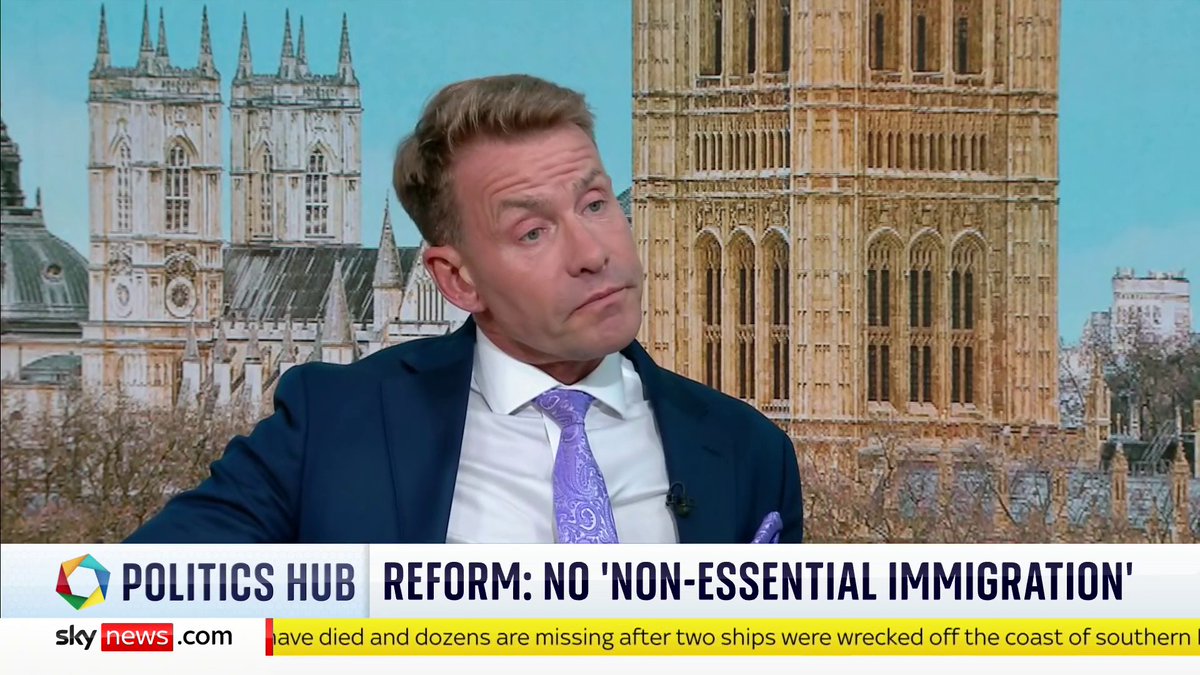
This is a long tweet - but its worth a read - Reform UK’s Dr David Bull talking about family and whether parents should stay at home to look after their children: “You want to support marriage through the tax system and make it easier for parents to stay at home to look after their children - what's the reason behind that?” Dr David Bull: We believe that children do better in stable relationships across the board. And actually we need to encourage that. In marriage you think? Dr Bull: In marriage, and that marriage is an important bond, isn't it? Because I think what children desperately need is someone at home, and they need someone to be there and support them during that education. So we think that's a cornerstone, actually. And one of the things that I find really strange and very difficult to understand is the disconnect that children now have, because when you come home, you want to be able to offload what's been going on at school, and you need someone at home to be able to do that. And if we can incentivise that through tax breaks that has to be a good thing. Do you think if you're a child with two working parents, that's not a great upbringing for you? Dr Bull: No… Of course, it's incredibly difficult. And parents have to work because of the cost of living. But actually, the ideal would be to have a parent that is there available when children need them. You say in the manifesto that the majority of mothers would choose to stay at home more if they could. What's the research on that? Dr Bull: So we polled extensively, actually. But I think if you talk to any mother, of course, they want to spend time with their children. They want to see them grow and develop. And if you're spending all your time at work and you don't have enough time with your kids, I think that's a travesty. You think it's a travesty? Dr Bull: yes And do you think it damages the children as well? Dr Bull: I think emotionally, children need support as they grow and develop. There are lots of questions they have. You have to look at why children are now so obsessed with social media, and certainly from the point of view of having nephews and nieces that are being told all sorts of stuff on social media that needs correcting immediately. One of the biggest things we've seen is the rise of anorexia and bulimia in young women and in young boys as well. And what - do you think that might be because you don't have parents at home? Dr Bull: Well, I think actually the parents are there and they need to counter some of the myths that are on social media.

Sophy Ridge

678,429 görüntüleme • 2 yıl önce