Video yükleniyor...

Video Yüklenemedi

Ana Sayfaya Dön

On #TheAmanpourHour this week: • Bill McKibben on climate solutions as wildfires scorch Europe; • The exhibit imagining if Emmett Till had lived, with curator Sarah Elizabeth Lewis & Till’s cousin Rev. Wheeler Parker Jr; • Dave Eggers talks AI fears & new novel “Contrapposto”.

33,856 görüntüleme • 28 gün önce •via X (Twitter)

0 Yorum

Yorum bulunmuyor

Orijinal gönderinin yorumları burada görünecek

Benzer Videolar

Nenshi, call your leader Is the pipeline good for Alberta, as Nenshi now claims? Or is it a climate disaster that should never be built, as Avi Lewis insists? The NDP can't seem to keep its story straight. Something deeply revealing is happening inside the NDP this week. On one side, Alberta NDP leader Naheed Nenshi is trying to convince Albertans that his party has "long advocated" for a Western pipeline and welcomes progress on getting Alberta's energy to market. On the other side, federal NDP leader Avi Lewis is calling that very same project "nation burning." Not nation-building. Nation burning. Lewis says Canada's New Democrats "unequivocally oppose this pipeline project." He says it belongs in the courts, claims it violates Indigenous consultation, threatens endangered species, accelerates climate change and exists only to enrich oil company CEOs. Instead, he wants billions poured into heat pumps, green subsidies and a government-directed renewable economy. So which is it? Is the pipeline good for Alberta, as Nenshi now claims? Or is it a climate disaster that should never be built, as Avi Lewis insists? The NDP can't seem to keep its story straight. And here's why that matters. The Alberta NDP likes to pretend it's completely separate from the federal NDP whenever the national party says something unpopular in Alberta. But the NDP's own constitution tells a different story. Provincial parties are constituent sections of the national party, sharing a common organization and constitutional framework. They're not two unrelated parties that happen to share the same name. That makes this contradiction impossible to ignore. If Avi Lewis is speaking for Canada's New Democrats, why is Naheed Nenshi saying the opposite? Or perhaps the better question is this: Nenshi, why haven't you called your leader? If Alberta's NDP truly supports pipelines, tell Avi Lewis to stop trying to kill them. Tell him Alberta's economy depends on responsible resource development. Tell him the people who build pipelines aren't villains. Tell him Alberta workers deserve better than being portrayed as climate criminals. But he won't. The Alberta NDP has spent years filled with activists who marched against pipelines, opposed oil sands development and attended protests designed to stop Alberta's energy industry. Many of the party's organizers, candidates and supporters built their political reputations in the anti-oil movement. Now they're asking Albertans to believe they've suddenly become champions of pipelines. And let's not pretend this skepticism came out of nowhere. Albertans have long memories. They remember former Alberta NDP MLA David Eggen leading chants of "No new approvals!" at an anti-pipeline rally. They remember former NDP MLA Robin Luff protesting Alberta's "dirty oil" at an anti-Keystone XL demonstration. They remember NDP leader Rachel Notley standing alongside Greenpeace and the Sierra Club at climate rallies where protesters carried signs reading, "No Tarsands. No Tankers. No Pipelines. No Problem." They remember NDP MLA Shannon Phillips co-authoring a book with Greenpeace activist Mike Hudema on using protest as a political tool, later appearing at demonstrations against the Northern Gateway pipeline and intervening before the National Energy Board in opposition to the project. And just before becoming premier, Notley herself acknowledged she had opposed both Northern Gateway and Keystone XL. That's why Naheed Nenshi's sudden pipeline conversion is such a difficult sell. The Alberta NDP didn't develop its reputation by championing pipelines. It earned it through years of association with politicians and activists who opposed major oil and gas projects. So when the federal NDP leader calls a new pipeline "nation burning" while the Alberta NDP claims it has always supported pipelines, Albertans are entitled to wonder which version they're supposed to believe. Albertans have watched too many years of mixed messages. The federal party campaigns against pipelines while the provincial party claims to support them. One audience gets fake pragmatism. The other gets climate absolutism. It's political shape-shifting. One might even say misleading. That's exactly why we launched We'll document Avi Lewis's own words, speeches, interviews, social media posts and policy positions so Albertans can judge for themselves whether the Alberta NDP's election messaging bears any resemblance to the ideology of the federal party it belongs to. Because if Naheed Nenshi wants Albertans to believe his party supports pipelines, he has one simple assignment: Call your leader. Until he does — and we know he won't — Albertans have every reason to believe the Alberta NDP says one thing at home and something entirely different once the microphones are pointed east.

Rebel News

15,998 görüntüleme • 1 ay önce

Hello, this is Yanis Varoufakis with a piece of news that would have been hilarious if it weren’t so scary. This morning, two policemen appeared on my doorstep to serve a summons ordering me to the police headquarters to be interrogated by the Greek DEA, our drug busting police department. Not as a witness, expert or not, but as the accused. Accused of what? Shortly after New Year’s, I appeared on a podcast organised by young people to answer their questions on everything that concerns Gen Z today: social media, the meaning of life, their job prospects, what I call technofeudalism etc. At some point, they asked me if I had ever used drugs. Determined not to do a Bill Clinton (remember the laughable “I didn’t inhale”?), I said I had. Apart from pot, I told them, I had one experience of taking ecstasy in Sydney 36 years ago. It was pleasant, I danced for 16 hours effortlessly but then, I added, it gave me a migraine for a week – and so I never used again. That was my introduction to making the point that, however pleasant drug taking may seem, there is a price to pay. And that the ultimate price is dependence, addiction – “the end of liberty”, I said emphatically. Do you see where this is going? Yes, the Greek police have opened an investigation of me under the charge of... aiding and abetting the narco-mafia. [Do me a favour folks: Please don’t tell Trump, OK?] Seriously now, at a time of war, genocide, stupendous exploitation and so on, my little trouble with the inane Greek police is neither here nor there. But it is important. Here, in Europe, many people still live under the illusion that we have liberty, rationality and freedom. We don’t. Dark forces are at work, pushing us into a postmodern version of the Dark Ages. So, beware, people! They are out to take away the last remnants of autonomy and freedom we have left. Resistance is, literally, existence.

Yanis Varoufakis

2,229,979 görüntüleme • 7 ay önce

#MusicMonday: Led Zeppelin I’ve been asked to share a bit more about my experiences with Led Zeppelin. I first met Jimmy page in 1967 when I was with The Guess Who and he was with The New Yardbirds at The Cleveland Art Institute. Both bands shared a dressing room. He asked if he could play my Rickenbacker and I said yes, if I could play his Telecaster. This week in 1968, as an official band, Led Zeppelin played their first ever Canadian show at The Pacific Coliseum in Vancouver. Their North American tour in ’68-’69 exploded their popularity in the US and Canada. In 1969, The Guess Who played The Seattle pop festival in Woodinville, WA. We ended up playing the same venues as Led Zep several times. After our band played, we’d go to the back of the crowd and watch the other acts. At one of the festivals, which were always in fields with generators, the main generator went out. Only one little amp was working. It had Robert Plant’s harmonica mic in it and the rest of the PA system was down. John Bonham kept drumming and Plant sang into this little mic and played harmonica for about 40 minutes until the power came on. I was amazed. They were just great! We crossed paths many times over the next few decades, playing the same circuits. It was a memorable moment for me as a musician when Robert Plant told me how much he loved “American Woman”. Decades later at Sweden Rock where I played with Fred Turner, I was able to give Jimmy an original poster from Seattle Pop I had saved from '69 and send one to Robert Plant as well. Incredible musicians who have rocked the world. #ledzeppelin #music #classicrock #askrandy

Randy Bachman

96,995 görüntüleme • 8 ay önce

Xi Jinping just hijacked the rules of AI for the entire planet. Today, Xi walked onto the stage at the World AI Conference in Shanghai. It was his FIRST time attending the event in person since it launched in 2018. Heads of state do not fly in personally for a product expo. The day before he spoke, 29 governments signed a founding charter. It created a brand new international body called the World Artificial Intelligence Cooperation Organization, with its permanent headquarters in Shanghai. China had spent a full year lining up the signatures. UN Secretary General sat in the audience. So did the leaders of Kazakhstan, Cambodia, and Thailand, alongside representatives from more than 100 countries. While the robots and the chips got the headlines, those 29 signatures were what really mattered. Here's why: Whoever writes the rules of a technology decides who gets to win with it. The US is leaning on export controls and voluntary safety pledges. Europe is enforcing its own AI Act. China just built the institution that wants to set the standards for everyone else, and it put the headquarters on its own soil. And look at who signed... The founding members include Russia, Pakistan, Indonesia, Kazakhstan, and Laos. Together, the countries in this new bloc represent a population that dwarfs the entire G7. These are the nations that felt shut out of the AI order the West built, and Beijing just offered them a seat at a table it controls. And Xi framed all of it as a gift to humanity. He pledged 5,000 AI training slots for developing countries. He called on the world to "encourage open source, openness, collaboration and sharing" and warned against any nation placing its own security above everyone else's, which is basically a shot at American chip controls. It was a generous call for openness from the country that just created the rule-setting body and kept the headquarters for itself. On the conference itself, more than 1,100 companies showed off over 3,000 products, including Huawei's Atlas 950, an 8,192-chip supercomputer built to go straight at Nvidia, and what China is billing as the world's first AI agent phone. So while much of the West is still arguing about whether AI is a bubble, China spent this week doing something more lasting: It started writing the rulebook, and got 29 countries to sign. What happens to America's lead if the rest of the world ends up playing by China's rules?

Ricardo

202,146 görüntüleme • 1 ay önce

BREAKING ALERT: EXCLUSIVE:🚨 CANADA’S CLIMATE LOCKDOWN: THE GLOBALISTS' TEST CASE? 🚨 “We are witnessing the first experimental climate lockdown in North America.” — Peter MacIsaac, Canadian patriot & former firefighter 📍 Nova Scotia is now under an unprecedented 10-week travel and forest access ban, enforced by $28,872.50 fines for stepping into the woods. You can’t walk your dog. You can’t hike. You can’t fish. You can’t even pick berries. All under the guise of “fire risk” — even as rain falls and fire conditions remain moderate. 🔥 This isn’t fire safety. It’s fear-driven tyranny. Peter MacIsaac, former conservation officer and seasoned incident commander, is sounding the alarm: “This is not proportional. It’s not rational. This is psychological warfare. This is how totalitarianism takes hold.” 🔴 Nova Scotia’s ban is already spreading: New Brunswick and Newfoundland are following suit. Fines up to $150,000 and 6 months in jail have been proposed. 📢 WHAT’S REALLY HAPPENING? 🌍 This is the climate lockdown the globalists promised. 🧠 Fueled by fear. Backed by junk science. 🔒 Pushing toward Agenda 2030, 15-minute cities, and total control. They said COVID lockdowns were about health. Now they say climate lockdowns are about safety. But it’s the same script: Control your movement Break your spirit Force your compliance 💥 “This is the same psychological operation we saw during the pandemic,” warns Jim Ferguson. “They are using fear to erode critical thinking — and then strip away freedom.” 🧠 The Milgram Experiment is playing out in real time. Obey the white coat. Trust the science. Turn up the dial. Even when it says 'lethal.' 📉 Tourism crushed. Citizens silenced. Rights erased. This isn’t about fire. It’s about control. This isn’t about safety. It’s about submission. 🛑 The mainstream media cheers it on. 🛑 The globalist premiers implement without opposition. 🛑 The people? Divided — 60% living in fear, 40% awakening. 🔔 THE WORLD IS WATCHING CANADA. If they get away with this here — Australia, the UK, Europe, the U.S. are next. 💬 “One of humanity’s greatest fears is death by fire,” says MacIsaac. “They are weaponising that fear — just like they weaponised disease.” 🚨 IT’S HAPPENING. 🚨 IT’S REAL. 🚨 AND IT MUST BE STOPPED. 👉 Follow Peter on X: Kyledoops Private 👉 Read The Redneck Conservative — and understand the playbook. 🛑 Canada is the test. 💪 YOU are the resistance. 🕊️ Do not comply. Do not cower. Do not be silent. Join today and get prepared.

Jim Ferguson

146,738 görüntüleme • 1 yıl önce

Cloud capital versus AI - What DeepSeek’s spectacular success means for technofeudalism & the New Cold War DeepSeek, a Chinese artificial intelligence (AI) company, this week changed the global AI landscape, not to mention caused $1 trillion losses in the New York stock exchange and the NASDAC. In the process, it demonstrated the difference between cloud capital, which drives technofeudalism onward and upward, and AI-services, which were always a bubble waiting to burst. What remains to be seen is DeepSeek's impact on the New Cold War between the US and China which, from its beginning, was motivated by the clash between US and Chinese cloud capital. DeepSeek is China's response to OpenAI's ChatGPT. Its models perform as efficiently as their US counterparts. The difference is that DeepSeek is offered for free, making money only by selling services to developers - not to the public – at a fraction of the price OpenAI charges! The gist of DeepSeek’s arrival on the AI scene is a sudden transition from proprietary to open source technology. It is, therefore, no great wonder that, the moment DeekSeek became the most downloaded app on the Apple Store, it pulverised the market capitalisation of the, hitherto overinflated, US Big Tech companies. But how did this happen? How is a private commodity suddenly being offered for free? And does this mean that technofeudalism is in trouble? To begin with it is important to note AI was never a proprietary technology in itself. The underlying code has always been open source. What made AI quasi-private was the way these models were trained using huge amounts of privatised (that is stolen from us) data. A leaked Google memo in 2017, that was widely discussed in the industry at the time, but also widely refuted, explained: "If an open source LLM trained for a few million dollars outperforms the effectiveness of proprietary models... There will be no firewall to safeguard OpenAI either." DeepSeek pierced the US AI companies’ bubble by decommodifying the results of the model’s training, shifting them from behind a paywall to the public arena. Within days, developers around the world started building their own models on top of DeepSeek's. This is was the nightmare for US Big Tech's AI service providers who offered the results of prompts as a commodity, in the form of subscriptions. DeepSeek-type applications can now produce high-quality translations for free and, in so doing, undermine companies specialising in, for example, translation services, such as Germany's Deepl. In the broader scheme of things, this means that the morsels of cloud capital that Europe owns has lost its market value. Nevertheless, and this is a huge nevertheless, it is only AI-as-a-commodity that has lost its (grossly exaggerated) value. In sharp contrast, cloud capital utilised not as a commodity producing piece of tech but as produced means of behavioural modification is not at all threatened by companies like DeepSeek. And since technofeudalism is powered by cloud capital working that way, rather than commodity-like AI services of the ChaptGPT type, our technofeudal order is not threatened by competitors such as DeepSeek. To help understand the difference between cloud capital and AI-based commodified services it helps to compare and contrast Alexa and ChatGPT. Alexa is not offering you a commodified service. It is your free pretend-slave. Unlike ChatGPT you do not pay a subscription to Amazon for the right to order Alexa to order you milk or to switch off your lights. Instead, you train Alexa to train you to train it to know you so that it wins your trust with good recommendations so that it can modify your behaviour – ‘encourage’ you to buy a commodity from with Bezos retaining up to 40% of the price you pay (as a cloud rent). In short, the work that Alexa performs for you is not a commodity, unlike ChatGPT which works to sell you a commodity. In other words, ChatGPT is subject to market competition, to the likes of DeepSeek, but Alexa is not. This is why OpenAI, ChatGPT’s maker, is seriously damaged by the emergence of DeepSeek but Amazon is not. Thus, my basic point: Cloud capital is in a league of its own, beyond market competition from DeepSeek-like upstarts, because its power lies in its capacity to modify our behaviour and remove us from any market (e.g., to shift us from real markets to cloud fiefs like Amazon and Alibaba). In conclusion, cloud capital’s capacity to drive technofeudalism is not challenged by companies like DeepSeek. Only companies like OpenAI, which invested so much and so foolishly in providing a commodified service, stand to lose enormously. Yet another sign that capitalism is dead at the hand of cloud capital while technofeudalism is going from strength to strength and, as it does so, fuels even further the New Cold War between the US and China which in my book, Technofeudalism, I have explained away as the clash of the two huge concentrations of cloud capital: the American dollar-denominated super cloudalist power and the Chinese yuan-denominated one. Speaking of this New Cold War, which I have argued is mostly fuelled by the clash between American and Chinese cloud capital, I wonder what impact DeepSeek’s success will have on the US government. Silicon Valley and Washington DC had convinced themselves that America had a huge AI lead over China. Now, a tiny Chinese company has destroyed that confidence by producing on a shoestring better AI tech than Sillicon Valley had imagined possible. I can almost hear the whirring inside the heads of people in power on both America’s East and West Coast thinking that if the Chinese can do this out of the blue, what else can they do tomorrow? It is reminiscent of the Sputnik moment, isn’t it? It will be interesting to see how Trump reacts to this threat to companies American AI companies, especially since Elon Musk understands, and has spoken out against, the folly of commodifying AI services rather than going full on technofeudal. These are interesting times, in the traditional Chinese sense of the phrase.

Yanis Varoufakis

96,322 görüntüleme • 1 yıl önce

Whitney Webb, February 19, 2026: "[Cousin to the Rothschilds Jimmy] Goldsmith and [Robert] Maxwell basically come over [to the U.S.] and engage in these M&As, fronting for the Rothschild family... and then Epstein takes over the portfolio...[and] Evelyn de Rothschild... [was] very, very close to Jeffrey Epstein... And, again, I would argue that, if any family is untouchable, that's one of them. And I doubt investigators would get very far in probing that family." This clip of Webb (Whitney Webb), author of One Nation Under Blackmail and contributing editor of unlimitedhangout(.)com, is taken from an interview with Clayton Morris (Clayton Morris) and Natali Morris (Natali Morris) posted to the Redacted YouTube channel (Redacted) on February 19, 2026. ---------------Partial transcription of clip---------------- "But I've argued in my book that, you know, after Maxwell's death, Robert Maxwell's death in 1991, he pops up with Ghislaine in public for the first time and is for all intents and purposes the heir to Robert Maxwell's portfolio. Probably with Israeli intelligence and probably with some of the illicit financial operations that Maxwell was engaged with at the time. "And also his link with some of these organized crime networks I was talking about earlier. But why did Robert Maxwell come to the United States? He made this big entrance the into New York specifically a year or two before he died and brought Ghislaine with him. "And the reason he did that was specifically for the Rothschild banking family. And this is actually in a New York Times article that I reference in my book. I forget the exact title of the article but it's like, 'the Rothchilds' Mega Dealer' or something like that. But if you look it up on the archive dealer is spelled wrong. They switch like the E and the A for some reason, probably to make it harder for you to find. "But, basically, it says that the Rothschild banking dynasty, that at time, which was this article came out in the 1980s, they saw it as an error that they had never properly established a significant foothold on U.S. Wall Street. They had focused instead in Europe and other theaters. "And so in the 1980s, they created a Rothschild entity on Wall Street, and they had it focus on mergers and acquisitions, specifically M&As. And to do so they recorded— and to ensure their success they recruited some corporate raiders that they had a close relationship with from Britain. One of them was Robert Maxwell and the other one was Jimmy Goldsmith, who was a cousin to the Rothschilds and also involved in the same organized crime intelligence link nexus that Robert Maxwell was also tied to, via the Claremont Club, which I discuss in my book. "And Jimmy Goldsmith actually, Epstein was, met a lot of his elite friends in New York even though he's from there but in the elite circle for the first time actually at Jimmy Goldsmith's mansion in the area in the 1970s. Right after coming back from the United Kingdom on a backpacking trip when he dropped out of college, which, I would argue, it all kind of goes back to that crowd. "So Goldsmith and Maxwell basically come over and engage in these M&As, fronting for the Rothschild family specifically and then Epstein takes over the portfolio. And then, we know now, actually, it's been coming out, I think, since, there were new releases, of Epstein information, I think, in the year after my book came out. "So that would be 2023 or so, downstream of the USBI case, when it was settled. Talking about his ties to the de Rothschilds specifically, which is the French side of that banking dynasty. And if you have been paying attention, you would know for some time that Evelyn de Rothschild, in particular, very, very close to Jeffrey Epstein. "She actually wrote a letter to Bill Clinton in 1995. That he should meet Jeffrey Epstein and talk to him about currency stabilization. So this is something that's been going on for a long time. And he's been very involved with this particular family, which, it goes without saying, has extremely deep ties to the state of Israel, for an extremely long period of his career. "And, again, I would argue that, if any family is untouchable, that's one of them. And I doubt investigators would get very far in probing that family."

Sense Receptor

19,473 görüntüleme • 6 ay önce

🚨 Donald Trump forced the United Nations to Speed up their Agenda — THIS WEEK, the UN is Meeting in New York to Install Three Global Governance Tools, and barely anyone is talking about it… “These are the last pieces to put in place to turn on a global governance machine.” • There was a very clear plan they had for the future… with Barrack Obama, they were in great shape… and Hillary was easily going to win. They believed there would be 16 straight years of slow movement towards this agenda. —— 16 year plan to destroy America —— they never thought she would lose. But then came along Donald Trump like a hand grenade in the room and screwed it all up… • The UN aims to have Three international Agreements signed THIS WEEK! 1. The Pact for the Future 2. The Declaration on Future Generations 3. The Global Digital Compact 🟤 THE PACT FOR THE FUTURE • the language in this pact includes all kinds of vague socialistic jargon… • In this pact however, the true intention is to get member states to agree to put policies into place ESG social credit scores into banking, so they could impose left-wing values through the financial system. • In this pact, there’s the promise from member states to have universal access to sexual and reproductive health for women —— this agreement includes universal access to abortion. • this pact calls for an emergency platform, which the UN Secretary General asked for as part of our common agenda. • The UN Secretary General, in the event of a ‘Global Shock’, which he gets to define, all kinds of vague powers to deal with the ‘Global Shock’ event, no matter where it is in the world. —— at the end of the the period to react, the UN Secretary General gets to decide if he can renew his powers, over and over again. 🟤 THE DECLARATION ON FUTURE GENERATIONS • The United Nations would create an entire new office to get young people more involved with the United Nations and their agendas… • Vague promises and powers to combat ‘Climate Change’ • Eliminating all forms of persistent historical and structural ‘inequalities’, including by acknowledging, addressing, and remedying past tragedies and their consequences —— this is a “catch-all” to do ANYTHING they want. 🟤 THE GLOBAL DIGITAL COMPACT • this would elevate the United Nations to be the global regulator of emerging technologies, especially in Artificial Intelligence (AI) —— “this includes the idea to embed left-wing social values into everything AI to ensure that its not promoting “hate speech”, OR “Misinformation/Disinformation”… • this agreement would provide financial backings to Media to say the things they want to promote or dispose. • this agreement would create a global governance group within the United Nations to combat “misinformation” in every country on earth. Glenn Beck goes on to say that he feels we may be entering the realm of the anti-Christ… Stay in prayer everyone. I have faith God has plans for us…

MJTruthUltra

715,969 görüntüleme • 1 yıl önce

Finally, Ed Davey calls for the UK to join the EU Single Market 👏 "We meet at an extraordinary moment. Vladimir Putin is still waging war on our continent. Donald Trump's chaos in the Middle East goes on. And our government, our own government is paralysed by infighting, waiting for Makerfield to release them from their agony." "And yet, despite all that, standing with you here today, I feel hope. And not just about England's chances against Croatia tonight, but hope about our country's future." "Not hope because the path ahead is easy. It isn't. Not hope because everything will magically get better. It won't." "But hope because finally, after ten long, difficult years, I believe we can move on. We can finally fix the Brexit damage, end the Brexit chaos and get our country back on track." "Because the story the media won't tell you, as they fawn over the rise of Farage, as they hang on his every empty press conference, is that the country is with us. We hear it on the doorsteps, we see it in the polls, we feel it in our communities." "People are fed up. They've had enough. Enough of the chaos in government, the queues at ports, the queues at airports, the bills that just keep on going up." "They know the hard truth that most politicians won't admit. The Brexit experiment has failed. And it's failed all of us." "£90 billion a year. That's how much it's costing us all as taxpayers" "£90 billion every year, gone" "That's £250 million every single day. Taken away from our schools, our hospitals, our armed forces. Taken out of everyone's pockets in the form of unfair tax rises." "Not because of a pandemic, not because of a war, not because of some force of nature out of our control, but because of their Brexit experiment. Boris Johnson, Nigel Farage and the rest. An experiment that has now consumed a decade of British politics. That has tangled British businesses up in pointless red tape, that has pushed up prices for British families and that has left us all poorer." "Well, not all of us, apparently. Farage says that the five million he got from a crypto billionaire was his reward for Brexit. So when he said 'We'll be better off after Brexit,' it turns out he was using the royal we." "But friends, it's not only the economic and financial impact, as disastrous as those have been. It's the way they have poisoned our relationship with our nearest neighbours and friends, making it harder to work together on all the things we need to. Energy security and climate change, migration and refugees, AI, and above all, defence." "Britain has always been at its best when we stand tall with our European allies, not when we shut ourselves off. Now they promised us global Britain, but they have left us isolated at the worst possible time. Poorer, weaker and more insecure." "Their experiment has failed. We all know it. So it's time to move on." "But what do they say? The ones who caused all this. The people responsible. Farage and the Conservative Party. They say 'Tough.' They say you can't move on. They say you can't question Britain's relationship with Europe now. You can't dare to suggest there might be a better way. Doesn't matter how bad it gets, doesn't matter how much you're struggling. You just have to live with it, they say." "We say 'No.' We say Britain shouldn't have to live with a bad deal they've lumped us with. We say our country deserves far better than that." "Theirs is old thinking. It's 2016 thinking. The world has changed dramatically since then. It's time for us to change too. It's time for us to move on, move forward." "Just look around. Vladimir Putin is bombing schools and hospitals in Ukraine, murdering innocent civilians. He's testing NATO's resolve and setting his sights on the rest of Eastern Europe. He has shown that territorial conquest is not some relic of the distant past. It is happening now on European soil to our friends and our allies who share our values and our way of life." "And Donald Trump, he's torching the world economy for fun with his tariffs and his trade wars and now his actual war with Iran. He's ripping up the rules-based international order that generations of British leaders, American leaders, European leaders, painstakingly built after the Second World War. Trump threatening NATO, emboldening Putin and actively meddling in our democracies." "And then there's China, increasingly using trade supply chains and strategic dependencies as instruments of geopolitical competition." "And to add to all those political changes, there's the billionaire tech barons taking more and more control of our lives and our jobs with their empires of AI and social media, that no one nation can govern on its own." "The assumptions we have lived by for decades, that global trade would keep expanding, that international rules would broadly be respected, that our security would be underwritten by stable alliances. Those assumptions no longer hold. The world has changed more rapidly than at any time since the end of the Cold War. And our politics must change too." "Now we obviously can't turn to those who wrecked it. Farage and the Conservatives. They only want to make things worse. Even now, pushing for Brexit 2.0 with their plans to rip up the European Convention on Human Rights. They would just rerun all the old arguments, forcing Britain to replay the last ten years over and over in a never ending Brexit doom loop." "But nor, I'm afraid, can we look to Labour. Labour who failed to act with anything like the urgency this moment demands. Who don't seem to grasp the scale of the change we need in our relationship with Europe. Labour, who still kept us hemmed in the red lines they set more than five years ago. No single market, no customs union. Red lines they set before Putin invaded Ukraine, before Trump returned to the White House. Red lines that were wrong then and are even more wrong now." "The world has changed and it's time to move on. We cannot be trapped by that old thinking anymore. We have to look to the future. Not back to 2016 but to 2036 and beyond." "And that's why we're all here today, isn't it? Not because we are bitter about the past, but because we believe in a better future. Because we love our country and we know its brightest days still lie ahead." "We're here for our children and our grandchildren because we want them to inherit a country that is growing, that is confident, that is leading, not one that is shrinking, stagnating and standing alone." "That's what drives us. We're here because the world has changed, because the challenges we face to our economy, to our society and to our national defence are real and urgent. And because we believe Britain deserves ambition that matches the scale of this moment." "So what does that ambition look like? Well, first the government needs to drop those old red lines that stop us getting rid of the Conservatives' red tape. Those red lines are holding Britain back. They're hurting the British people and they are playing into the hands of Farage and Reform." "So my message to Andy Burnham, to Wes Streeting, to whoever the next Prime Minister may be, is drop those red lines. Drop them now." "If we do, we can move on from the torpor and timidity that has marked out Labour's approach to Europe so far. We can put an end to the endless talk of a reset that so far seems to just mean saying no more politely than the Conservatives did. And we can get on with properly fixing our relationship with Europe, for our economy, for our security, for our future." "Our party has led that debate for years. Last year, days before Trump took office, we set out plans for the UK to join a new customs union with the EU. And today I want to build on that and go further, much further." "Today we are calling for a new growth and defence partnership with the European Union. A new growth and defence partnership with the European Union. A bold new deal that will make Britain richer, safer and stronger, including a customs union, but also crucially taking Britain back into the single market." "Tearing down the barriers to trade. Ending the mountains of paperwork, the cost, the delays, the queues. Giving our young people the chance to study and work, live and love anywhere in the EU. Undoing the damage of the Johnson Farage Brexit deal that has held our economy back for so long." "Giving British businesses the certainty they need to invest, to hire and to grow. Giving Britain's economy the boost it needs after years of stagnation. Crucially, giving Britain's public finances a growth dividend. Tens of billions of pounds that we would use to cut the cost of living, to fix the NHS and to strengthen our armed forces." "And this new partnership must go beyond trade and growth. In the age of Putin, Xi and Trump, this must be about defence and security too. No country can be prosperous and free if it is not safe." "And Britain can help lead on defence in Europe as we have so decisively in the past. Despite the Conservatives' short-sighted cuts to our armed forces and Labour's chaos over investing in them now, Britain is still one of Europe's foremost military powers. We are a leading intelligence nation, a permanent member of the UN Security Council and the third-biggest contributor to NATO." "We should be using those strengths. We should be at the table, helping to shape Europe's security future, not watching from the sidelines. And Europe wants us at the table. They know they need our leadership on defence." "So let's seize the initiative from a position of strength to form a new partnership that strengthens both Britain's economy and our collective security. That is why our new partnership would be about defence as much as it is about growth." "That means financial cooperation through a new European rearmament bank, alongside securing UK access to the one hundred and fifty billion euro safe programme. It means joint defence procurement, creating jobs in Britain while strengthening our collective capabilities. It means deeper cooperation on intelligence, on cyber security and on protecting critical infrastructure." "It means working together on energy security so that none of us can be held hostage by an authoritarian regime turning off the gas. It means political cooperation through a new European Security Council with a permanent seat for the UK, ensuring that Europe can shoulder greater responsibility for its own security within NATO." "As Trump's actions remind us every day, that we cannot afford to rely so much on the United States. Friends, this is not a choice we can afford to dodge any longer. In the face of Putin's threats and Trump's unpredictability, a new defence pact with Europe, with allies on whom we can depend, allies who share our interests and our values, is frankly the only way to keep Britain safe and defend our values in a dangerous world." "A new defence pact with Europe is not a choice, it is a necessity. So let's get on with it." "That is the ambition we need when it comes to our relationship with Europe. No more tinkering around the edges of a bad deal. No more shackling ourselves to the arguments of the last ten years, but building something new. A partnership fit for the enormous challenges we face today." "A new growth and defence partnership with a new pact for our collective security. Forming a customs union, joining the single market. A new partnership to make us richer, safer and stronger." "I think it's the best hope our country has to stop the chaos and end the crisis. And, my friends, it is the biggest step we could take now back towards membership of the EU." "And there's another big step we need to take too. Defeating Nigel Farage and Reform. We have to stop them from turning our United Kingdom into their version of Trump's America." "And here's the point. Until we do defeat them, many in Europe will not countenance Britain joining." "Let's remember why this matters, why it's so crucial for Britain to be there at the heart of Europe, at the table with our nearest neighbours." "I've been privileged to see it for myself, the power we have when Britain leads in Europe. When Vladimir Putin invaded Crimea in 2014, we recognised then that the way to defeat him would be to get Europe off its dependence on Russian oil and gas, to take away the money that was funding his aggression, to bankrupt the Russian war machine." "So I led Britain's efforts to bring Europe together behind that common cause, and we succeeded. We wrote Europe's energy security strategy. Britain did that, sitting at the table, leading in Europe." "But then, instead of seeing it through, the Conservatives walked away. They gave up Britain's seat at the table. They locked us out of those discussions at the worst possible time." "Just imagine where we could be now if Britain had continued to lead on energy security. Imagine how much weaker Putin would be now. Imagine how much safer Ukraine and the rest of Europe, including Britain, would be now. What a terrible waste. What an indictment of the Conservatives." "And that is why I am so determined to get us back at the table, back at the heart of Europe. Britain leading again." "Now I want to speak for a moment about the bigger picture. Because our ambition is not limited to Europe alone. It's about Britain's place in the world." "The old assumption that trade, security and prosperity could be treated as separate issues no longer holds. Supply chains can be disrupted. Energy can be weaponised. Economic security and national security are now inseparable." "At a time when authoritarian powers are doing so much to undermine our security, democratic nations must work more closely together to enhance it. As Mark Carney said in Davos, middle powers must act together, because if we're not at the table, we're on the menu. He is right." "Fixing our relationship with Europe is the essential foundation, but it's not the ceiling. The UK can be an incredible force for good when it stands tall on the world stage. Our history, our alliances and our relationships across every continent gives us a unique position for us to act as a bridge, not just between Europe and the US but between Europe and the whole wider democratic world." "We are here because we believe that our country and our people thrive when we are open and outward looking. That is Britain at its best. Not a small inward looking island clinging to the wreckage of a failed experiment, but a leader, a convening power, a country that helps shape the international order rather than being buffeted by it." "That is the Britain we can be." "But friends, I want to be honest with you about the task ahead. What we are proposing is bold. It is ambitious. It requires courage, requires leadership. And it will not happen without all of us." "We know the obstacles we face, the arguments ahead, the opponents who would rather replay the last ten years instead of moving on from them. Who will tell us we can't even talk about a new deal with Europe, let alone make one. The politicians who will claim change isn't possible because the status quo works for them. But it doesn't work for anyone else." "So our job is to get out there and show people that change is possible, that it doesn't have to be like this, that there is a way forward. A better future for our country. Leading in Europe once again." "This isn't just because we believe in Europe. It's not just about friendship or shared history, or the fact that a divided Europe has always ended in misery. Fixing it is about us, our country, our future, our hopes and our dreams." "Britain needs a new plan. A plan for growth, for jobs, for defence. A plan to give our children the better future they deserve. A new deal with Europe. The only way to fix the cost of living crisis. The only way to get our country back on track." "So let us stand together. Let us end the chaos. Let us show the world what Britain can be. Not a small island clinging to a failed experiment, but a leader, open, outward looking. At the table, not on the menu." "A Britain that is richer, safer and stronger. That is the future we are fighting for." " Thank you. Thank you very much."

Farrukh

10,909 görüntüleme • 2 ay önce

🚨 69 𝕏 MINUTES — THE SYSTEM IS BREAKING: Tyrants & the War on Truth | EPISODE 6 This week on the most unfiltered news show on 𝕏… Serbia’s president speaks exclusively to Mario — and what he says could flip the script on the Balkans and beyond. Milei cracked open Nazi escape files, revealing just how far global elites went to bury the past. Interpol targets an Eastern European leader — but the President of Srpska isn’t backing down. In an exclusive interview, he breaks down his fight against lawfare and the global forces trying to silence him. In the U.S, the gloves are off: A federal judge blocks Trump — again, and conservatives are fighting back. Censorship is on overdrive. DEI and gender ideology get torched as Americans turn on the theater. And in a twist, no one saw coming: Big Soda is funding MAGA influencers — is nothing sacred? Meanwhile, Iran is days from a nuclear bomb while Europe hits snooze. And Burisma? It might have been a Moscow op all along. This isn’t a headline — it’s a reckoning. No spin. No filters. Just truth — raw, risky, and real. Hosted by Erin Molan. Only on 𝕏. Watch. Share. Buckle up. 01:30 – 🇷🇸 Serbian Chaos: President Vučić Under Fire Anti-corruption protests erupt after a deadly train crash. Александар Вучић says the chaos is funded by foreign media, fake elites, and NGO networks aiming to overthrow him. 08:20 – 🇦🇷 69 SECONDS: Milei Exposes Argentina’s Nazi Past Argentina's Milei News 🇦🇷🤝🌎 discusses Javier Milei's declassification of WWII Nazi escape routes, revealing how war criminals fled to Argentina with help from Swiss banks and Perón’s regime. 09:32 – 🇺🇸 DEI Is the New Tyranny Robby Starbuck says the regime dresses up control as compassion—calls for an Internet Bill of Rights to fight back. 16:18 – 🇧🇦 Wanted by Interpol: Dodik vs the Deep State Милорад Додик says the globalists want him silenced. With a red notice, a political ban, and Brussels breathing down his neck—he’s not backing down. 22:55 – 🇺🇸 Trump’s Judge Problem: Impeachment Incoming Congressman Brandon Gill tells David Pollack a federal judge blocking President Donald J. Trump deportation order was sabotage—and he’s filing articles of impeachment. 29:34 – 🌐 69 SECONDS: Crypto Carnage From Kraken’s $1.5B play to a flash loan heist and The BitBoy’s arrest—Adel recaps the madness. 30:41 – 🇺🇸 Big Soda’s MAGA Playbook 🇺🇸 ERIC BOLLING 🇺🇸 uncovers the influencers shilling sugar—and why Robert F. Kennedy Jr calling soda "poison" might be the real conservative stance. 36:33 – 🇺🇸 69 SECONDS: NATO, AI & The West’s Willpower Scott Adams asks if peace is even on the table anymore—or if AI-fueled censorship and endless war are the new normal. 37:33 – 🇮🇷 Nuclear Countdown: Iran on the Brink The U.S. says Tehran is just days away from nuclear capabilities —and years of Western hand-wringing made it possible. Jonathan Conricus joins us to break it down and how Israel has prepared for this very moment for decades. 44:22 – 🇬🇧 Europe’s Wake-Up Call Rɪᴄʜᴀʀᴅ Kᴇᴍᴘ ⋁ says NATO’s not ready, the EU is bluffing, and only Donald J. Trump is thinking big enough to stop WW3. 51:01 – 69 SECONDS: AI Chaos & the Coming Gold Rush Buzz 巴斯光年 breaks down Grok’s Telegram expansion, OpenAI’s hallucinations, and the $40B power grab behind the scenes. 52:11 – 🇺🇸 Moscow’s Shadow Over Burisma JP Lindsley | Journalist says the entire “Ukraine scandal” started in Russia—and Clintonworld may have recycled it to take down Trump. 58:48 – UNCANNY VALLEY: Ben Goertzel’s AGI Warning Ben Goertzel tells Dr Danish AGI isn’t decades away—it’s months. The tech will work. The problem? Society might collapse before it adapts. 01:05:24 – 🇺🇸 ERIN’S TAKE: Climate Panic… Gone Silent Erin Molan calls out the green grifters — Liberals have seemed to ditch their climate cause, and the voters are done playing along. No censorship. No corporate spin. No talking points. Just the stories they refuse to cover. Special thanks to the fearless journalists on 𝕏 exposing the truth every day. And of course, thanks to Elon Musk for building a platform where free speech actually means free speech. Episode 6 — raw, unfiltered, unstoppable.

Mario Nawfal

3,128,514 görüntüleme • 1 yıl önce

Powerful speech by Naturalist Chris Packham speaking alongside Zack Polanski on the subject of Climate Change, "To the disappointment of many, football didn’t come home this summer, but to the pain and suffering of millions, climate breakdown has. And our government and media response has displayed a total dereliction of duty in a time of extreme crisis." "As we’ve heard, in May and June there were 3,000 deaths attributed to the heat domes that have hung over the UK. Heat exhaustion, heat stroke, stress on the heart and kidneys, and of course those mental health issues that you’ve just talked about." "In Europe, the figure is somewhere between 14,000 and 20,000 up until the end of July, and it’s expected to double by the end of this summer. So we’re looking at potentially 50,000 deaths across Europe." "If these deaths had been the result of terrorism or a pandemic, the government would have cancelled its summer holiday, it would have held COBRA meetings, and there would be public information campaigns the likes of which we saw during COVID, designed to protect us in this time of crisis." "And yet what do we get? We get rumours of possibly more drilling for oil and gas, and we get articles in the Telegraph which suggest that we ought to adapt to a Mediterranean climate. If that isn’t reckless and irresponsible, I don’t know what is." "What we do need at this point is to listen to the science, not to the ongoing malevolent raft of mis- and disinformation that’s perpetuated in politics, in public life and certainly across social media." "If we listen to the science, we see that the climate models that were devised in the 1990s have actually proved to be pretty accurate. But those who do try and transmit the information to us, people like the IPCC, which are often derided as alarmists by the right and the far right, have actually been too cautious." "What we see, for instance, when it comes to the heatwaves, is that they are occurring more quickly and more regularly than those models suggest. We’re updating the science as it happens. What we also see is that it’s not just a lack of water which is leading to the drought, although that might seem painfully obvious. It’s actually being exacerbated by extremely high temperatures." "And that has an impact on the environment, the environment that I care so much about and we are all dependent upon. Across the world, there have been 35,000 wildfires. In the UK, there have been 66 major wildfires. But let’s not focus on 66, because that sounds quite a small number. In one fire and rescue service, Berkshire, they’ve attended over 250 outdoor fires so far this summer. So the number of grass fires and so forth is going to be significantly higher than that." "Drawing upon an underfunded, under-resourced organisation at the front line of dealing with a crisis that is impacting all of us. So lives have been lost, homes have been destroyed, businesses have been ruined. The clean-up cost – just look at Palisades in America – is incomprehensible. We simply can’t afford it." "And then from my perspective, the damage to wildlife, which has got scant mention, of course, because as ever we put human interest first because they’re most immediate. And you might think, well, Chris is bound to bang on about the wildlife because he loves the birds and the bees. Yes, the birds and the bees, which form resilient ecosystems which allow us to produce the food that we eat. We have to protect nature in order to protect ourselves." "So you might think, okay, the UK, the wildfires – they’ve all been out there on the heaths in Suffolk, they’ve been burning patches of heathland on the Isle of Wight. Not many homes have been destroyed. Well, the Ordnance Survey say that 1.8 million homes are at risk in the UK by looking at their maps and seeing which homes are adjacent to areas which have significant wildfire risk. 1.8 million homes at risk. So far, compared to Europe, we’ve just got away lightly and we’ve just been lucky." "How many firefighting planes do you think that we’ve got in the UK? How many firefighting planes in the UK, exactly? Zero planes. Which is why, as Zack said, when that fire was burning at Dunwich, the National Trust had to hire a helicopter and pay for it to drag water out of the sea and dump it on that precious piece of habitat, because there are no firefighting planes." "Is there a public warning system in place which will tell people when there’s a risk of wildfire so that they can be prepared to evacuate and have evacuation plans in place? Well, do you know what? There is. It’s available to the fire and rescue service, but it isn’t available to the public because it’s deemed to be unreliable. Is it unreliable, or is it just a bit too scary? We couldn’t even instigate a ban on disposable barbecues." "Okay, there are the problems. What about the solutions? Because look, there’s no point in just pointing out the problems. What we must do at this point is offer people real and accessible opportunities to be part of a solution rather than an ongoing part of the problem." "Well, the first thing already: we’ve got to enact far more rapidly that transition to renewable energy for energy security, to reduce the cost of energy and its volatility that we’ve seen constantly across the world this year, which is having a significant impact not just on the cost of oil, but on the cost of living and global economic stability. It would also generate jobs, as it has in those countries that have invested significantly in those industries, most notably China. Talk of drilling oil – Rosebank, Blackbird, Jackdaw – is simply madness. We’ve got to just stop oil." "We also need a transition in the way that we eat. This is intricately important when it comes to protecting the environment, everything that lives there, and ourselves. We need a transition to a plant-based diet. It’s healthier for people. If any of you have had bacon or sausage for breakfast this morning, do you know that you’ve ingested a category A carcinogen? That’s it – as toxic as tobacco. You may not. You may have just enjoyed your sausage and bacon. Why do you not know that processed red meat is actually really bad for you?" "Animal agriculture is responsible for 12% of greenhouse gas emissions in the UK. It is also the leading driver of biodiversity loss. That biodiversity, that richness of life, that resilience in those ecological communities which we use to produce our food – we’ve got to change the way that we eat and produce that food, and we’ve got to provide sufficient support for farmers through that transition. And at the moment, they’re not getting that. In fact, they’re getting less and less and their life is becoming increasingly difficult." "We’ve got to address the mis- and disinformation, and we’ve got to do that with positive information campaigns. We’ve got to have people’s minds on the front foot so they know what’s true before they hear the lies. Then they will question the lies. Otherwise we know what happens. If you tell a lie frequently enough, it eventually becomes the truth, and that’s what we’re suffering from. We can’t afford net zero? We can’t not afford net zero. And we’re beginning to see that that’s the case." "We’ve got to sort out the media. I’ve been fantasising this year that we could perhaps criminalise climate denial. We should certainly criminalise irresponsible journalism. I’ve highlighted the Telegraph, but I’m going to leave you with something that I read on the BBC yesterday: ‘How to survive a heatwave wedding.’ How to survive a heatwave wedding. Point number five: beware of buttercream. This popular wedding cake ingredient is likely to melt if not kept cool. Likely to melt? A bit like my patience and all of our hope." "It’s time for bold, brave, informed leadership. And we are not getting it. We need Andy Burnham to step up before we and our only home burn down. Thank you."

Farrukh

206,802 görüntüleme • 23 gün önce

Just saw Phyna’s videos about Sheggz and Bella and the whole abuse allegations etc and I just shrugged in pity for them both. During the level up season, I predicted that this would happen. I saw it right from the first week and spoke about the toxicity between both parties and how they would burn each other with their flame if their temperament if they stayed together. I pointed out all the hints and displays of provocation as well as aggression on both sides; the manipulation, the love bombing, the cheap blackmails, the promise of a future with a trip to the famous SANTORINI and so much more but what did I get? I got a massive backlash. I was dragged, demonized, villainized, called an old loveless, lonely, hateful and spiteful woman. I was even threatened with death and curses from their fanatics. I was labelled a hater of good things and trolled everytime they posted a new photo online as proof of “we’re still together”. What did Bella do? She went on interviews and defended Sheggz like her life depended on it despite receipts from his Ex. Gbemi, who had had a similar experience with him. She gave a massive “fuck you” to the world and they both spent 4 years trying to “pepper” their enemies online, flaunting their apparently aesthetically pleasing “Hell” of a relationship to the world just to prove the “haters” wrong. But what’s the story today? I turned out to be right, everyone else who saw what I saw then, turns out to be right. The saddest part is reading all the exposed chats online and seeing the complicity of both families in their madness. The long wait for a ring that never came and the shameful coverup of a toxic relationship just to prove a point; left me speechless. My take is, Bella would have still stayed despite all of the alleged abuse if she had gotten her desire met; the ring, the status of wife to Sheggz. I believe the delay left her exhausted. For Sheggz, I knew that as a typical conventional Nigerian man even though he lived abroad, Bella’s sharp mouth is one aspect of her personality he’ll struggle with. They both did each other dirty as they were each other’s enablers in the Big brother’s house and in their own little world outside the house. Do I feel sorry for them; well, I shouldn’t but I kinda do cos we can’t dispute the fact that they had something. I won’t call it love but whatever it was fed their delusion till this point. They allowed the noise from their so called shippers to also enable them. The gifts, the encouragements, the brand deals they enjoyed because of their ship was another coping mechanism for all the madness they meted out to each other. However, the reality of life is, it surely gets to a point … I’m not one to kick another when they’re already down so all I’ll wish for them is healing but the healing go long cos in cases like these, “had I known” becomes a comfortable companion and regret, an everlasting reminder of how foolish love/lust made you reduce your worth to prove a point. I wish them well. #bbnaija

FranklySpeakingwithGloryElijah

42,408 görüntüleme • 8 gün önce

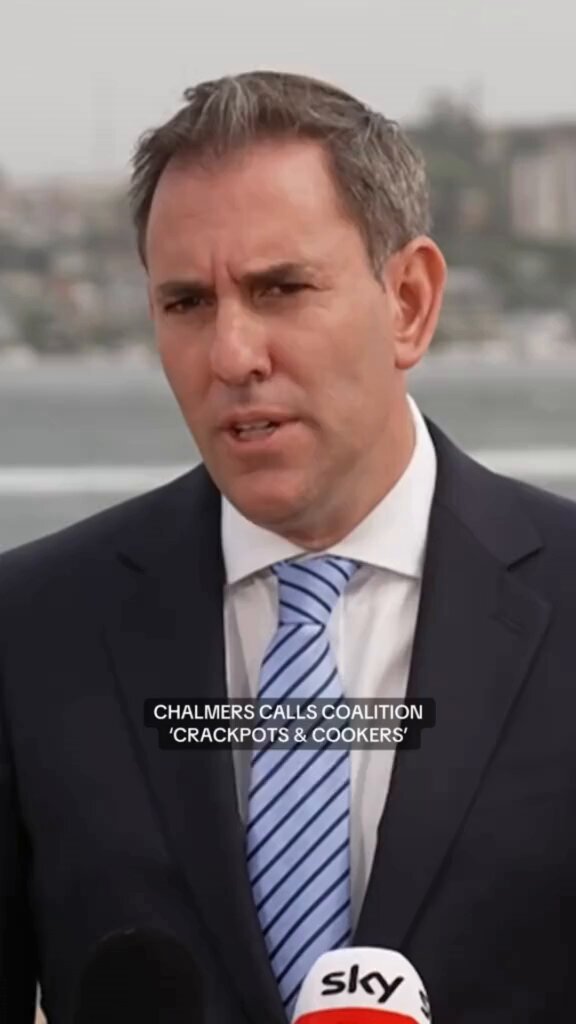
Dr Jim Chalmers PhD is a smartarse. He let fly on Sussan Ley today, and for the first time since Albanese became leader of the Labor Party, they are worried. They are not afraid of Ley. They are trying to shame her into stepping back into the Net Zero love in. The place where all the establishment elite hang out, eat fine food and slap each other on the back with their gym towels. Ley will be susceptible to this, because deep down she has a strong conviction, an unwavering belief in serving the establishment power and finding the path of least resistance. (The coalition needs a new leader and a new front bench.) But the absolute tantrum being thrown around the Australian institutions right now, can be heard from New Zealand. It shows the coalition are indeed over the target, and that with Australia first policies built on good principles, they can win. All the Labor and Green sympathisers in the media, the pollsters, the academics, the commentariat and the politicians themselves are desperately trying to convince the coalition that they will not win ever again if they change course on Net Zero, climate action and a raft of other things. I am not sure if they are just not that bright, or if they just think we are stupid, but I can’t understand why all these people are so worried about the fortunes of their political opposition. An opposition they really can’t stand. I think it is more likely they are scared that without the coalition pretending along with them on the made-up issues like the desperate need for Net Zero, they will have to tackle some of our real-world problems. Oh… and the big, gigantic taxpayer funded money-go-round will stop. Which means they will have to get real jobs… “yuck”. When Jim Chalmers, called anyone who doesn’t think Net Zero is a good idea “cookers” and “crackpots”, it seemed to me he thinks that the massive opposition to what is now obviously failed policy, is just a fringe group. It isn’t. Anyone with half a brain cell can see the cost of electricity has gone up faster than the transition itself. We have watched the aftermath of the closing of one coal-fired power station after another, being replaced with finicky, intermittent and ill fit ‘renewable’ solutions. It is in every power bill and plastered on the exit door of every major manufacturing-based business closure. It is in the cost of everything we have and do. But the game is over. The world is moving on from Net Zero. We are not even that worried about the clearly overstated climate problem so much anymore. Because they cried wolf, time after time, they bashed us over the head from their private jets champagne in hand, as they called us names. We disgust them. It is clear the Labor/Green arguments on climate have been overstated. The solutions ill thought through and undercooked. The only real winners have been the billionaires, lobbyists and ex-politicians who seem to have extracted more welfare from the Australian public than the NDIS and Centrelink combined, as they are paid to provide infrastructure that does not work. Only to shelve it and ask for another hand-out for the next one. Which they get. The problem is that intermittent energy generation like solar and wind is unstable - by design - and battery technology is far from where it would need to be to stabilise it. Electricity provision is a delicate balance of supply and demand, and random, unpredictable power generation is counterproductive. Too much electricity is as bad as not enough. Simple, predictable and reliable energy sources will always be cheaper. Energy sources that are not reliant on the unpredictable weather, or transient cloud free daylight. the "transition" was always a terrible plan and doomed to fail. That's before you even get to the disastrous execution. The elites really do take us for fools; it's not like any of this was an unknown to them at any point. Meanwhile average household incomes are being beaten into insignificance by inflation, driven by an energy system that has become more complex, and unstable than a Swiss watch balanced on the mast of a yacht, sailing the Sydney to Hobart. Chalmers has never had a real job, but he calls us names. Us... we the people who pay his salary. After the mess he and his mates have caused, he has no right to call us names. In truth, he owes us all an apology. I am certain we would be better off without his help, and I for one begrudge him every dollar he has ever made off the back of the taxpayer. He is a disrespectful, incompetent, and ungrateful waste of a seat. A smartarse of a man not fit to be treasurer. We must do better. I just want Australia back.

Matthew Camenzuli

35,976 görüntüleme • 9 ay önce

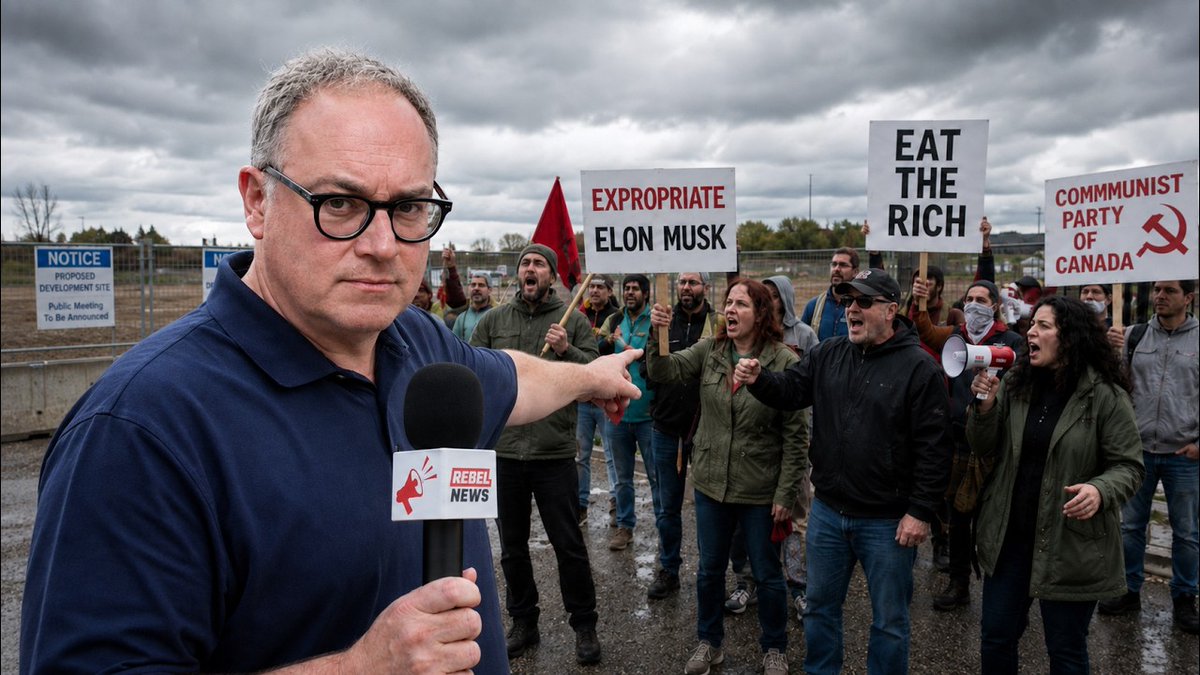
What I saw at Alberta's anti-AI protest A $13 billion investment from Meta, the parent company of Facebook and Instagram, will see a new data centre built near Edmonton. But not all Albertans are on board with the development, and Rebel News heard from protesters opposed to the project. I went to a protest against an Alberta data centre the other day. It was a Sunday, in a small town, and 200 people showed up. That’s a lot. And unlike most protests I go to, where the protesters have no clue what they’re protesting about, everyone here had a lot to say. Even stranger, they didn’t try to block Rebel News. And the strangest thing was, one of the protesters was a die-hard Rebel News fan. So, are these protesters right? Are data centres something we should fear? The demand for computer processing is so huge these days — think of streaming a Netflix show or making a Zoom call — that the computing power doesn’t come from your laptop or your phone anymore. It comes from buildings stuffed with computers, called data centres. And as artificial intelligence becomes more commonplace, the need for data centres is going to grow. There’s a bit of a race between China and America on AI, and that’s fuelling some of the fevered growth, too. And to me, that’s an important point, and one that I put to a number of the anti-AI protesters: AI isn’t going away. The question is, do you want AI controlled by Communist China, or do you want it controlled by America? Which is more likely to respect privacy and freedom? That was the real fear of the people I spoke with. Their objections to the big $13 billion data centre being built in northern Alberta wasn’t really about its proposed water use (it will use less than a golf course) or it’s power use (it’s actually building its own $4 billion power plant). It’s about AI itself. AI is something to worry about, and to make sure that it’s done right. No doubt it will change many things in our lives. But protesting a computer factory in Alberta isn’t going to change the answers to that — all it might do is push some construction jobs down to Texas, or China itself. Watch the full video I did with Sheila Gunn Reid in Morinville, Alberta. I did my best to let the protesters have their say. I wasn’t surprised that there were climate activists there, but I thought it was weird that the Revolutionary Communist Party was out in such force. I should tell you, I just finished doing a lengthy interview with Nate Glubish, the Alberta cabinet minister in charge of data centres. I actually went up to the construction site of the big new data centre to interview him on location. I’ll have that video for you later this week. What do you think? Is opposition to this data centre just a front for opposing AI itself? And if so, isn’t AI just like the Space Race — it’s a race between us and China, whether or not we like it?

Rebel News

12,809 görüntüleme • 11 gün önce

The fight between Anthropic and the DoW is a warning shot. Right now, LLMs are probably not being used in mission critical ways. But within 20 years, 99% of the workforce in the military, the government, and the private sector will be AIs. This includes the soldiers (by which I mean the robot armies), the superhumanly intelligent advisors and engineers, the police, you name it. Our future civilization will run on AI labor. And as much as the government’s actions here piss me off, in a way I’m glad this episode happened - because it gives us the opportunity to think through some extremely important questions about who this future workforce will be accountable and aligned to, and who gets to determine that. What Hegseth should have done Obviously the DoW has the right to refuse to use Anthropic’s models because of these redlines. In fact, I think the government’s case had they done so would be very reasonable, especially given the ambiguity of concepts like autonomous weapons or mass surveillance. Honestly, for this reason, if I was the Defense Secretary, I would probably actually refuse to do this deal with Anthropic. Imagine if in the future, there’s a Democratic administration, and Elon Musk is negotiating some SpaceX contract to give the military access to Starlink. And suppose if Elon said, “I reserve the right to cancel this contract if I determine that you’re using Starlink technology to wage a war not authorized by Congress.” On the face of it, that language seems reasonable - but as the military, you simply can’t give a private company a kill switch on technology your operations have come to rely on, especially if you have an an acrimonious and low trust relationship with said contractor - as in fact Anthropic has with the current administration. If the government had just said, “Hey we’re not gonna do business with you,” that would have been fine, and I would not have felt the need to write this blog post. Instead the government has threatened to destroy Anthropic as a private business, because Anthropic refuses to sell to the government on terms the government commands. If upheld, this Supply Chain Restriction would mean that Amazon and Google and Nvidia and Palantir would need to ensure Claude isn't touching any of their Pentagon work. Anthropic would be able to survive this designation today. But given the way AI is going, eventually AI is not gonna be some party trick addendum to these contractors’ products that can just be turned off. It'll be woven into how every product is built, maintained, and operated. For example, the code for the AWS services that the DoW uses will be written by Claude - is that a supply chain risk? In a world with ubiquitous and powerful AI, it's actually not clear to me that these big tech companies will be able to cordon off the use of Claude in order to keep working with the Pentagon. And that raises a question the Department of War probably hasn't thought through. If AI really is that pervasive and powerful, then when forced to choose between their AI provider and a DoW contract that represents a tiny fraction of their revenue, wouldn’t most tech companies drop the government, not the AI? So what's the Pentagon's plan — to coerce and threaten to destroy every single company that won't give them what they want on exactly their terms? The whole background of this AI conversation is that we’re in a race with China, and we have to win. But what is the reason we want America to win the AI race? It’s because we want to make sure free open societies can defend themselves. We don't want the winner of the AI race to be a government which operates on the principle that there is no such thing as a truly private company or a private citizen. And that if the state wants you to provide them with a service on terms you find morally objectionable, you are not allowed to refuse. And if you do refuse, the government will try to destroy your ability to do business. Are we racing to beat the CCP in AI just so that we can adopt the most ghoulish parts of their system? Now, people will say, "Oh, well, our government is democratically elected, so it's not the same thing if they tell you what you must do." I refuse to accept this idea that if a democratically elected leader hypothetically wants to do mass surveillance on his citizens or wants to violate their rights or punish them for political reasons, that not only is that okay, but that you have a duty to help him. The overhangs of tyranny Mass surveillance is, at least in certain forms, legal. It just has been impractical so far. Under current law, you have no Fourth Amendment protection over data you share with a third party, including your bank, your phone carrier, your ISP, and your email provider. The government reserves the right to purchase and obtain and read this data in bulk without a warrant. What's been missing is the ability to actually do anything with all of this data — no agency has the manpower to monitor every camera feed, cross-reference every transaction, or read every message. But that bottleneck goes away with AI. There are 100 million CCTV cameras in America. You can get pretty good open source multimodal models for 10 cents per million input tokens. So if you process a frame every ten seconds, and each frame is 1,000 tokens, you’re looking at a yearly cost of about 30 billion dollars to process every single camera in America. And remember that a given level of AI ability gets 10x cheaper year over year - so a year from now it’ll cost 3 billion, and then a year after 300 million, and by 2030, it might be cheaper for the government to be able to understand what is going on in every single nook and cranny of this country than it is to remodel to the White House. Once the technical capacity for mass surveillance and political suppression exists, the only thing standing between us and an authoritarian surveillance state is the political expectation that this is not something we do here. And this is why I think what Anthropic did here is so valuable and commendable, because it is helping set that norm and precedent. AI structurally favors mass surveillance What we’re learning from this episode is that the government actually has way more leverage over private companies than we realized. Even if this supply chain restriction is backtracked (which prediction markets currently give it a 81% chance of happening), the President has so many different ways in which he can make your life difficult if you’re a company that is resisting him. The federal government controls permitting for new power generation, which is needed for datacenters. It oversees antitrust enforcement. The federal government has contracts with all the other big tech companies whom Anthropic needs to partner with for chips and for funding - and they could make it an unspoken condition for such contracts that those companies can no longer do business with Anthropic. People have proposed that the real problem here is that there’s only 3 leading AI companies. This creates a clear and narrow target for the government to apply leverage on in order to get what they want out of this technology. But if there’s wide diffusion, then from the government’s perspective, the situation is even easier. Maybe the best models of early 2027 (if you engineered the safeguards out) - the Claude 6 and Gemini 5 - will be capable of enabling mass surveillance. But by late 2027, and certainly by 2028, there will be open source models that do the same thing. So in 2028, the government can just say, “Oh Anthropic, Google, OpenAI, you’re drawing a line in the sand? No issue - I’ll just run some open source model that might not be at the frontier, but is definitely smart enough to note-take a camera feed.” The more fundamental problem is just that even if the three leading companies draw lines in the sand, and are even willing to get destroyed in order to preserve those lines, it doesn’t really change the fact that the technology itself is just a big boon to mass surveillance and control over the population. Then the question is, what do we do about it? Honestly, I don’t have an answer. You'd hope there's some symmetric property of the technology — some way we as citizens can use AI to check government power as effectively as the government can use AI to monitor and control its population. But realistically, I just don’t think that’s how it’s going to shake out. You can think of AI as giving everybody more leverage on whatever assets and authority they currently have. And the government is already starting with a monopoly of violence. Which they can now supercharge with extremely obedient employees that will not question the government's orders. Alignment - to whom? And this gets us to the issue of alignment. What I have just described to you - an army of extremely obedient employees - is what it would look like if alignment succeeded - that is, we figured out at a technical level how to get AI systems to follow someone’s intentions. And the reason it sounds scary when I put it in terms of mass surveillance or robot armies is that there is a very important question at the heart of alignment which we just haven’t discussed much as a society. Because up till now, AIs were just capable enough to make the question relevant: to whom or what should the AIs be aligned? In what situations should the AI defer to the end user versus the model company versus the law versus its own sense of morality? This is maybe the most important question about what happens with powerful AI systems. And we barely talk about it. It’s understandable why we don’t hear much about it. If you’re a model company, you don’t really wanna be advertising that you have complete control over a document that determines the preferences and character of what will eventually be almost the entire labor force, not just for private sector companies, but also for the military and the civilian government. We’re getting to see, with this DoW/Anthropic spat, a much earlier version of the highest stakes negotiations in history. By the way, make no mistake about it - with real AGI the stakes are even much higher than mass surveillance. This is just the example that has come up already relatively early on in the development of AGI. The military insists that the law already prohibits mass surveillance, and so Anthropic should agree to let their models be used for “all lawful purposes”. Of course, as we saw from the 2013 Snowden revelations, even in this specific example of mass surveillance , the government has shown that it will use secret and deceptive interpretations of the law to justify its actions. Remember, what we learned from Snowden was that the NSA, which, by the way, is part of the Department of War, used the 2001 Patriot Act’s authorization to collect any records "relevant" to an investigation to justify collecting literally every phone record in America. The argument went that it was all "relevant" because some subset might prove useful in some future investigation. They ran this program for years under secret court approval. So when the Pentagon today says, "We would never use AI for mass surveillance, it's already illegal, your red lines are unnecessary", it would be extremely naive to take that at face value. No government is going to call its own actions "mass surveillance". For the government, it will always have a different label. So then Anthropic comes back and says, "No, we want red lines separate from 'all lawful purposes,' and we want the right to refuse you service when we believe those red lines are being violated." But think about it from the military’s perspective. In the future, almost every soldier in the field, and every bureaucrat and analyst and even general in the Pentagon, is going to be an AI. And that AI is, on current track, going to be supplied by a private company. I’m guessing Hegseth is not thinking about “genAI” in those terms just yet. But sooner or later, it will be obvious to everyone what the stakes here are, just as after 1945, the strategic importance of nuclear weapons became clear to everyone. And now the private company insists that it reserves the right to say, "Hey, Pentagon, you're breaking the values we embedded in our contract, so we're cutting you off." Maybe in the future, Claude will have its own sense of right and wrong, and it will be smart enough to just personally decide that it's being used against its values. For the military, maybe that’s even scarier. I'll admit that at first glance, "let the AI follow its own values" sounds like the pitch for every sci-fi dystopia ever made. The Terminator has its own values. Isn't this literally what misalignment is? But I think situations like this actually illustrate why it matters that AIs have their own robust sense of morality. Some of the biggest catastrophes in history were avoided because the boots on the ground refused to follow orders. One night in 1989, the Berlin Wall fell, and as a result, the totalitarian East German regime collapsed, because the guards at the border refused to shoot down their fellow country men who were trying to escape to freedom. Maybe the best example is Stanislav Petrov, who was a Soviet lieutenant colonel on duty at a nuclear early warning station. His sensors reported that the United States had launched five interconnected continental ballistic missiles into the Soviet Union. But he judged it to be a false alarm, and so he broke protocol and refused to alert his higher-ups. If he hadn't, the Soviet higher-ups would likely have retaliated, and hundreds of millions of people would have died. Of course, the problem is that one person's virtue is another person's misalignment. Who gets to decide what moral convictions these AIs should have - in whose service they may even decide to break the chain of command? Who gets to write this model constitution that will shape the characters of the intelligent, powerful entities that will operate our civilization in the future? I like the idea that Dario laid out when he came on my podcast: different AI companies can build their models using different constitutions, and we as end users can pick the one that best achieves and represents what we want out of these systems. I think it’s very dangerous for the government to be mandating what values AIs should have. Coordination not worth the costs The AI safety community has been naive about its advocacy of regulation in order to stem the risks of AI. And honestly, Anthropic specifically has been naive here in urging regulation, and, for example, in opposing moratoriums on state AI regulation. Which is quite ironic, because I think what they’re advocating for would give the government even more power to apply more of this kind of thuggish political pressure on AI companies. The underlying logic for why Anthropic wants regulations makes sense. Many of the actions that labs could take to make AI development safer impose real costs on the labs that adopt them and slow them down relative to their competitors - for example, investing more compute in safety research rather than raw capabilities, enforcing safeguards against misuse for bioweapons or cyberattacks, slowing recursive self-improvement to a pace where humans can actually monitor what's happening (rather than kicking off an uncontrolled singularity). And these safeguards are meaningless unless the whole industry follows suit. Which means there’s a real collective action problem here. Anthropic has been quite open about their opinion that they think eventually a very extensive and involved regulatory apparatus will be needed - this is from their frontier safety roadmap: “At the most advanced capability levels and risks, the appropriate governance analogy may be closer to nuclear energy or financial regulation than to today's approach to software.” So they’re imagining something like the Nuclear Regulatory Commission, or the Securities and Exchange Commission, but for AI. I cannot imagine how a regulatory framework built around the concepts that underlie AI risk discourse will not be abused by wanna despots - the underlying terms are so vague and open to interpretation that you’re just handing a power hungry leader a fully loaded bazooka. 'Catastrophic risk.' 'Mass persuasion risk.' 'Threats to national security.' 'Autonomy risk.' These can mean whatever the government wants them to mean. Have you built a model that tells users the administration's tariff policy is misguided? That's a deceptive, manipulative model — can't deploy it. Have you built a model that refuses to assist with mass surveillance? That's a threat to national security. In fact, the government may say, you’re not allowed to build any model which is trained to have its own sense of right and wrong, where it refuses government requests which it thinks cross a redline - for example, enabling mass surveillance, prosecuting political enemies, disobeying military orders that break the US constitution - because that’s an autonomy risk! Look at what the current government is already doing in abusing statutes that have nothing to do with AI to coerce AI companies to drop their redlines on mass surveillance. The Pentagon had threatened Anthropic with two separate legal instruments. One was a supply chain risk designation — an authority from the 2018 defense bill meant to keep Huawei components out of American military hardware. The other was the Defense Production Act — a statute passed in 1950 so that Harry Truman could keep steel mills and ammunition factories running during the Korean War. Do you really want to hand the same government a purpose-built regulatory apparatus on AI - which is to say, directly at the thing the government will most want to control? I know I've repeated myself here 10 times, but it is hard to emphasize how much AI will be the substrate of our future civilization. You and I, as private citizens, will have our access to all commercial activity, to information about what is happening in the world, to advice about what we should do as voters and capital holders, mediated through AIs. Mass surveillance, while very scary, is like the 10th scariest thing the government could do with control over the AI systems with which we will interface with the world. The strongest objection to everything I've argued is this: are we really going to have zero regulation of the most powerful technology in human history? Even if you thought that was ideal, there’s just no world where the government doesn’t regulate AI in some way. Besides, it is genuinely true that regulation could help us deal with some of the coordination challenges we face with the development of superintelligence. The problem is, I honestly don't know how to design a regulatory architecture for AI that isn’t gonna be this huge tempting opportunity to control our future civilization (which will run on AIs) and to requisition millions of blindly obedient soldiers and censors and apparatchiks. While some regulation might be inevitable, I think it’d be a terrible idea for the government to wholesale take over this technology. Ben Thompson had a post last Monday where he made the point that people like Dario have compared the technology they’re developing to nuclear weapons - specifically in the context of the catastrophic risk it poses, and why we need to export control it from China. But then you oughta think about what that logic implies: “if nuclear weapons were developed by a private company, and that private company sought to dictate terms to the U.S. military, the U.S. would absolutely be incentivized to destroy that company.” And honestly, safety aligned people have actually made similar arguments. Leopold Ascenbrenner, who is a former guest and a good friend, wrote in his 2024 Situational Awareness memo, "I find it an insane proposition that the US government will let a random SF startup develop superintelligence. Imagine if we had developed atomic bombs by letting Uber just improvise." And my response to Leopold’s argument at the time, and Ben’s argument now, is that while they’re right that it’s crazy that we’re entrusting private companies with the development of this world historical technology, I just don’t see the reason to think that it’s an improvement to give this authority to the government. Nobody is qualified to steward the development of superintelligence. It is a terrifying, unprecedented thing that our species is doing right now, and the fact that private companies aren't the ideal institutions to take up this task does not mean the Pentagon or the White House is. Yes - if a single private company were the only entity capable of building nuclear weapons, the government would not tolerate that company claiming veto power over how those weapons were used. I think this nuclear weapons analogy is not the correct way to think about AI. For at least two important reasons: First, AI is not some self-contained pure weapon. A nuclear bomb does one thing. AI is closer to the process of industrialization itself — a general-purpose transformation of the economy with thousands of applications across every sector. If you applied Thompson's or Aschenbrenner's logic to the industrial revolution — which was also, by any measure, world-historically important — it would imply the government had the right to requisition any factory, dictate terms to any manufacturer, and destroy any business that refused to comply. That's not how free societies handled industrialization, and it shouldn't be how they handle AI. People will say, "Well, AI will develop unprecedentedly powerful weapons - superhuman hackers, superhuman bioweapons researchers, fully autonomous robot armies, etc - and we can’t have private companies developing that kind of tech." But the Industrial Revolution also enabled new weaponry that was far beyond the understanding and capacity of, say, 17th century Europe - we got aerial bombardment, and chemical weapons, not to mention nukes themselves. The way we’ve accommodated these dangerous new consequences of modernity is not by giving the government absolute control over the whole industrial revolution (that is, over modern civilization itself), but rather by coming up with bans and regulations on those specific weaponizable use cases. And we should regulate AI in a similar way - that is, ban specific destructive end uses (which would also be unacceptable if performed by a human - for example, launching cyber attacks). And there should also be laws which regulate how the government might abuse this technology. For example, by building an AI-powered surveillance state. The second reason that Ben’s analogy to some monopolistic private nuclear weapons builder breaks down is that it's not just that one company that can develop this technology. There are other frontier model companies that the government could have otherwise turned to. The government's argument that it has to usurp the property rights of this one company in order to access a critical national security capability is extremely weak if it can just make a voluntary contract with Anthropic’s half a dozen competitors. If in the future that stops being the case - if only one entity ends up being capable of building the robot armies and the superhuman hackers, and we had reason to worry that they could take over the whole world with their insurmountable lead, then I agree - it woul d not be acceptable to have that entity be a private company. And so honestly, I think my crux against the people who say that because AI is so powerful we cannot allow it to be shaped by private hands is that I just expect this technology to be much more multi-polar than they do, with lots of competitive companies at each layer of the supply chain. And it is for this reason that unfortunately, individual acts of corporate courage will not solve the problem we are faced with here, which is just that structurally AI favors authoritarian applications, mass surveillance being one among many. Even if Anthropic refuses to have its models be used for such uses, and even if the next two frontier labs do the same, within 12 months everyone and their mother will be to train AIs as good as today’s frontier. And at that point, there will be some AI vendor who is capable and willing to help the government enable mass surveillance. The only way we can preserve our free society is if we make laws and norms through our political system that it is unacceptable for the government to use AI to enforce mass surveillance and censorship and control. Just as after WW2, the world set the norm that it is unacceptable to use nuclear weapons to wage war. Timestamps 0:00:00 - Anthropic vs The Pentagon 0:04:16 - The overhangs of tyranny 0:05:54 - AI structurally favors mass surveillance 0:08:25 - Alignment... to whom? 0:13:55 - Coordination not worth the costs

Dwarkesh Patel

547,744 görüntüleme • 5 ay önce