Загрузка видео...

Не удалось загрузить видео

На главную

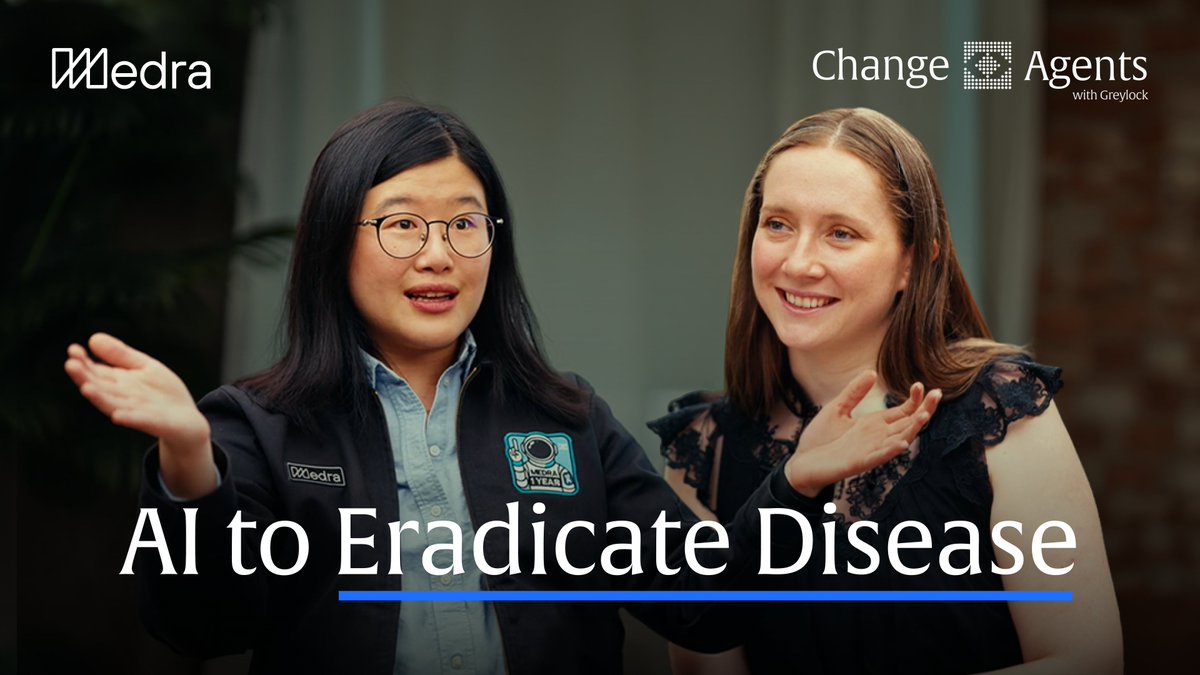
One of the biggest unsolved problems in making medicines is what comes after AI design. Gleb Kuznetsov, cofounder and CEO of Manifold Bio, is tackling the in vivo bottleneck. Screening hundreds of thousands of antibody designs in a single animal changes what’s possible in drug discovery. I’ve known Gleb...

10,659 просмотров • 6 месяцев назад •via X (Twitter)

Комментарии: 0

Нет доступных комментариев

Здесь появятся комментарии из оригинального поста

Похожие видео

This is WILD! Nvidia just launched something that could compress the most expensive process in medicine from 12 years to 12 months. BioNeMo Agent Toolkit is an open, agent-ready platform that turns AI agents into autonomous scientific workers, giving them the ability to run real drug discovery workflows instead of just generating ideas. And more than 50 companies are already using it, including Anthropic, OpenAI, Eli Lilly, Databricks, Snowflake, Dassault Systèmes and Schrödinger. Here is what it actually does. Traditional drug discovery costs an average of $2.6 billion per drug and takes over a decade. Most of that time and money goes into screening millions of compounds, designing proteins that bind to disease targets and running countless lab experiments to validate whether something works. BioNeMo agents now do all of that computationally before a single lab experiment begins. The demo Nvidia shared makes the speed impossible to ignore. An agent was asked to design 10 protein binders for PD-L1, a critical cancer immunotherapy target and it completed the full design, co-folding, scoring, and 3D structural analysis on GPU in under 90 seconds. What used to require weeks of wet lab work and PhD-level expertise now runs as a callable tool inside an AI workflow. The four core capabilities are virtual drug screening, protein binder design, genomic analysis, and medical imaging each one compressing tasks that previously took weeks into minutes. The institutional validation behind this is unusually strong. Nvidia and Eli Lilly announced a joint investment of up to $1 billion over five years to build a co-innovation lab running entirely on BioNeMo. The University of Washington's Institute for Protein Design is already running RosettaFold3 at 2x faster performance than the prior generation. And the market this unlocks is enormous, and Nvidia is sitting right at the center of it. The AI drug discovery market is projected to grow from $2.9 billion in 2026 to $13.8 billion by 2033 and McKinsey estimates generative AI could deliver $60 to $110 billion in annual economic value to pharma. Bullish on drug discovery!

Milk Road AI

23,155 просмотров • 1 месяц назад

Marc Andreessen went on Chris Williamson's podcast and broke down exactly how Elon Musk runs multiple companies at once No other CEO on Earth does this: 1. Every week, Musk shows up at each of his companies, identifies the single biggest problem that company is having that week, and fixes it. Then he does that for 52 weeks in a row. At the end of the year, each company has solved its 52 biggest problems. Meanwhile, most large companies are still having the planning meeting for the pre-planning meeting for the board presentation with the compliance review and the legal review attached. 2. This is not a new operating method. It is actually how the great industrialists of the late 1800s and early 1900s ran their companies. Henry Ford, Andrew Carnegie, Thomas Watson, who built IBM. Total devotion from the leader to fully and deeply understand what the company does, be in the trenches, talk directly to the people doing the work, and be the lead problem solver in the organization. Andreessen says he is not aware of another current CEO who operates this way. 3. The framework Musk uses is the bottleneck. In any manufacturing chain, there is always one thing holding everything up. Sometimes it is raw materials at the start. Sometimes it is warehousing at the end. Sometimes it is in the middle. The job is to find it and remove it. Musk has universalized this concept across every company he runs. In any given week, there is one main bottleneck. He micromanages the solution to that one thing and delegates almost everything else. 4. Musk delegates almost everything. Andreessen is clear about this. He is not involved in most of what his companies are doing. He is involved in the one thing that is the biggest problem right now. Once that is fixed, he moves to the next biggest problem. Everything else by definition, is running better than the bottleneck, so it does not need him. 5. When Musk identifies the bottleneck, he goes directly to the engineer who actually understands it. not the VP of engineering, not the director, not the manager. The individual contributor who has the actual technical knowledge. He sits in the room with that person and fixes the problem alongside them. He does not ask for a report to be reviewed in three weeks. he shows up at the keyboard or on the manufacturing line and works through it overnight if necessary. 6. This is why technical people who work for Musk say it was the best experience of their lives. Andreessen's framing: if you are stuck on a problem you cannot solve, Elon Musk is going to show up in his Gulfstream, sit with you in front of the keyboard, and help you figure it out. For an engineer who genuinely cares about the work, that is an almost incomprehensible level of support from the CEO of the company. 7. Business school teaches the opposite of this: management as a generic skill applicable to any industry. Soup company or a rocket company, the management principles are the same. process, balance sheet, meeting schedules, compliance, executive motivation, interpersonal conflict resolution. Andreessen says those skills are useful in many contexts. They just give you nothing; you need to do what Musk does. And Musk pushes as far as he can away from all of that so he can spend all of his time doing the things only he can do.

Jaynit

271,514 просмотров • 1 месяц назад