Video yükleniyor...

Video Yüklenemedi

Ana Sayfaya Dön

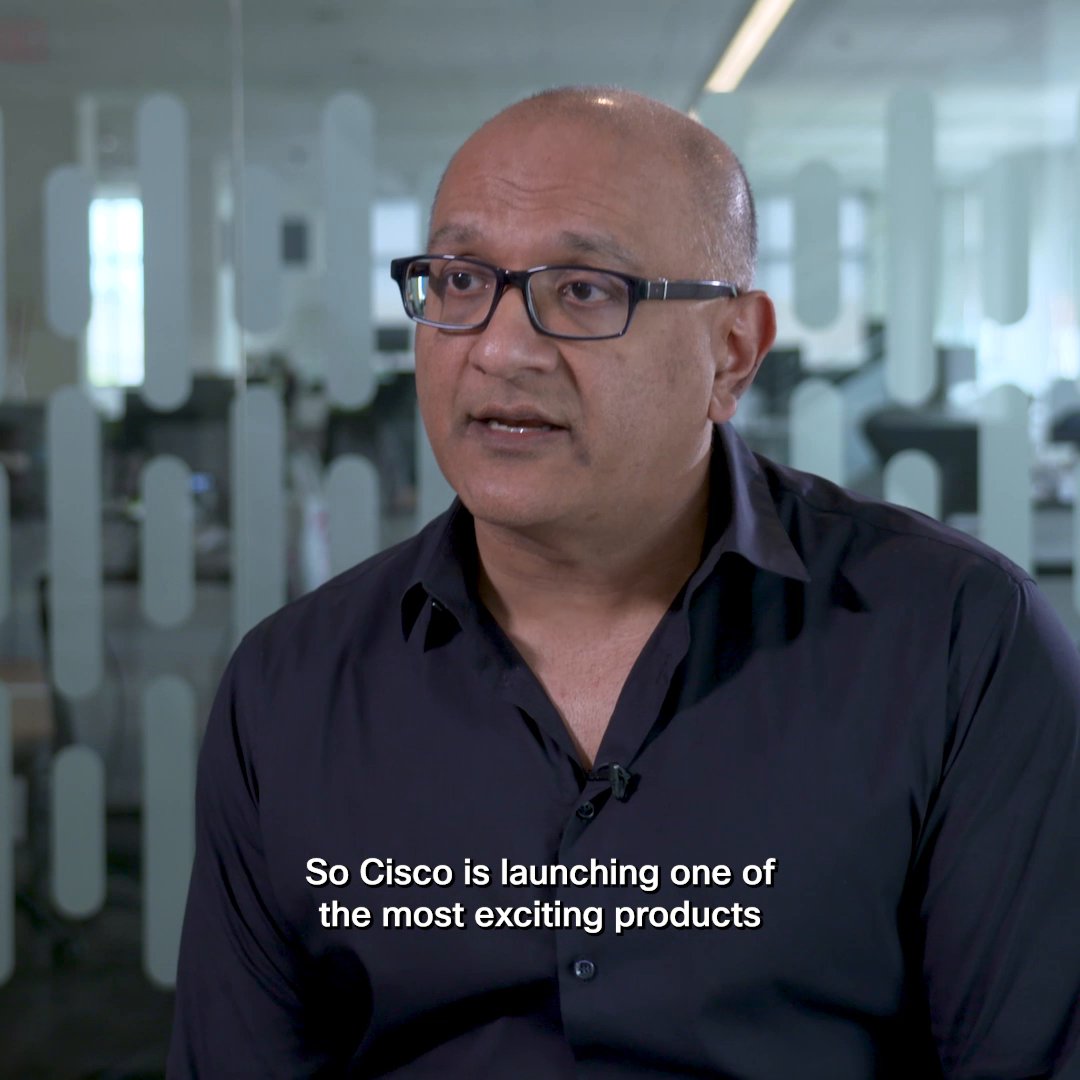
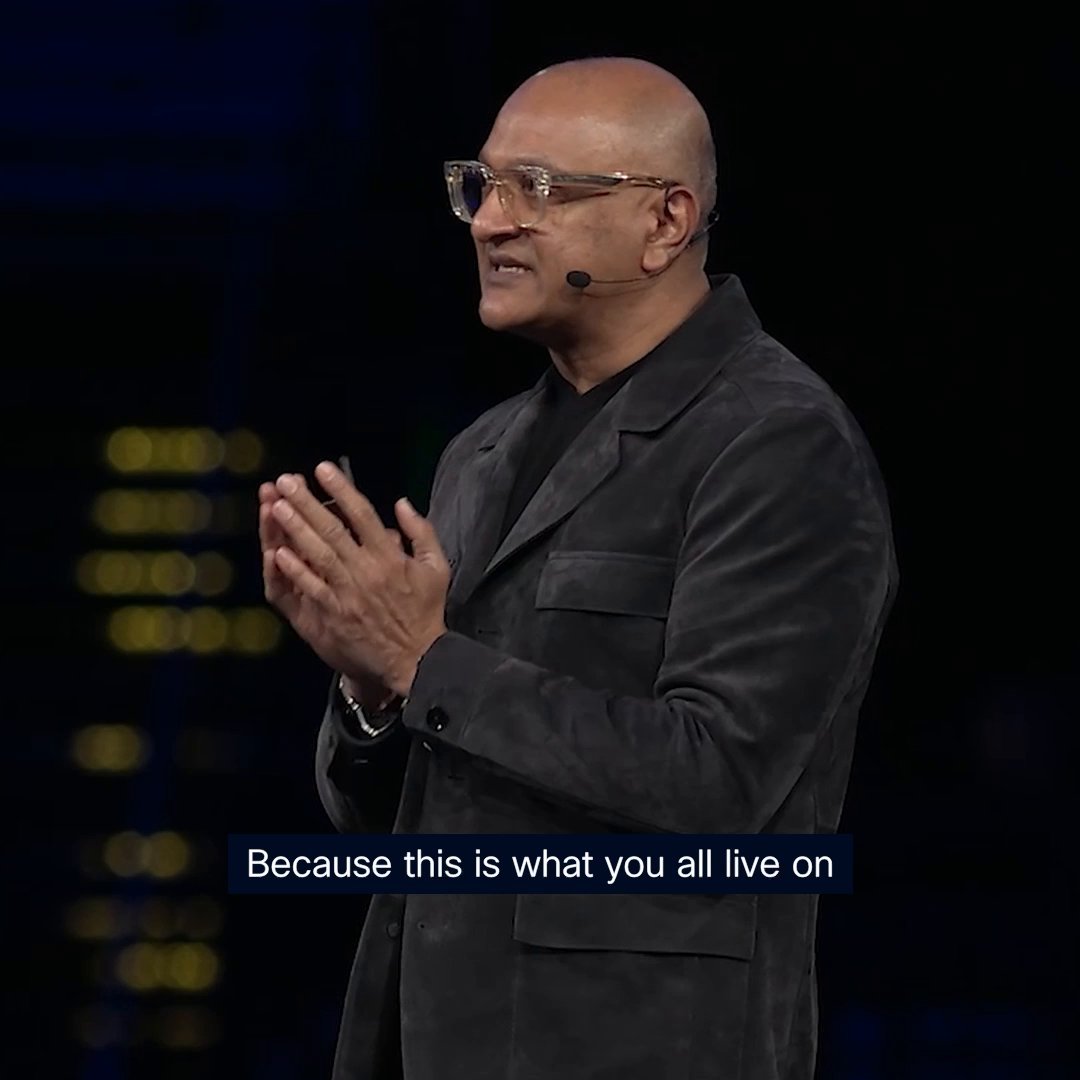
One #quantum device won't solve the world's hardest problems. You'll need many, working together. The Cisco Universal Quantum Switch prototype makes that possible, on standard fiber, at room temperature. Learn more from SVP & GM, Outshift Vijoy Pandey ➡️
14,526 görüntüleme • 2 ay önce •via X (Twitter)

0 Yorum

Yorum bulunmuyor

Orijinal gönderinin yorumları burada görünecek

Benzer Videolar

D-Wave announced a scientific breakthrough published in the esteemed journal Science Magazine, confirming that its annealing quantum computer outperformed one of the world’s most powerful classical supercomputers in solving a complex magnetic materials simulation problem with relevance to materials discovery. The new landmark peer-reviewed paper, “Beyond-Classical Computation in Quantum Simulation,” validates this achievement as the world’s first and only demonstration of quantum computational supremacy on a useful problem. An international collaboration of scientists led by D-Wave performed simulations of quantum dynamics in programmable spin glasses—a computationally hard magnetic materials simulation problem with known applications to business and science—on both D-Wave’s Advantage2™ prototype annealing quantum computer and the Frontier supercomputer at the Department of Energy’s Oak Ridge Lab. D-Wave’s quantum computer performed a complex simulation in minutes and with a level of accuracy that would take nearly a million years using the supercomputer. In addition, it would require more than the world’s annual electricity consumption to solve this problem using the supercomputer, which is built with graphics processing unit (GPU) clusters. For decades, scientists have aspired to build a quantum computer capable of solving complex materials simulation problems beyond the reach of classical computers. D-Wave's advancements in quantum hardware have made it possible for its annealing quantum computers to process these types of problems for the first time. Magnetic materials simulations, like those conducted in this work, use computer models to study how tiny particles not visible to the human eye react to external factors. Magnetic materials are widely used in medical imaging, electronics, superconductors, electrical networks, sensors, and motors. This is an incredibly important achievement. Please join us in congratulating the D-Wave team and our global collaborators on this remarkable milestone. It’s a significant moment for the quantum computing industry. Learn more about this monumental achievement: Read the press release here: #QuantumSupremacy #QuantumRealized #QuantumComputing #DWave #Technology #Innovation #Optimization #MaterialsDiscovery #ScientificBreakthrough $QBTS

D-Wave

65,000 görüntüleme • 1 yıl önce

BREAKING: THE MOST IMPORTANT VIDEO TO WATCH IF YOU ARE INVESTED IN QUANTUM COMPUTING COMPANIES. $IONQ $RGTI $QBTS $QUBT The world's leading quantum computing researcher Scott Aaronson calls out the scams and snakeoilmen in the public quantum computing stock market. $IONQ $RGTI $QBTS $QUBT - "The most important thing that I can say in this whole interview, if I am taking to Retail investors is that unfortunately there are companies that I see that are really trying to solve the hardware problems, they might succeed, they might fail but they are really focused on solving the real problems and talking about it more or less honestly" - "and then there are companies that have focused on like marketing themselves to Retail investors and doing IPO's" i.e. the 4 public quantum computing companies IONQ, Rigetti, D-Wave and QUBT. - "and I see these 2 sets of companies being mostly disjoint from each other" - "So the companies that have focused on doing IPO's are actually not the ones that are in the lead on in the hardware, what they are in the lead on is selling a narrative to people...... - "convincing people this is already useful for solving problems in optimization and machine learning and finance, which sounds great to people, but all depends on you agreeing to not ask the question Q. well could a classical computer have done that just as well, could a classical computer actually have done that much faster and easier " "When people are talking about that the big use of a quantum computer is to solve optimization or machine learning problems or to turbo charge AI, or it can already do this, it's already delivering value to customers...." "these are the tells you are dealing with a SNAKEOIL SALESMAN" He calls out the "scammy" companies in this space! Remember the only 4 quantum pure play companies that have IPO'd are $IONQ $RGTI $QUBT $QBTS He also says earlier in the interview “I would say $IONQ has not demonstrated anything in trapped ion hardware close to what Quantinuum has demonstrated in the last year” YOU ARE BEING LIED TO! Full video in comments from the The Quantum Bull

Common Sense Investor (CSI)

140,077 görüntüleme • 6 ay önce

6,100-Qubit Processor Shatters Quantum Computing Record | David Nield, ScienceAlert Another major quantum computing record has been broken, and by a considerable margin: physicists have now built an array containing 6,100 qubits, the largest of its type and way above the thousand or so qubits previous systems contained. It's the work of scientists from the California Institute of Technology, who used cesium atoms as their qubits, trapping them in place with a complex system of lasers that acted as tweezers to keep the atoms as stable as possible. Qubits differ from the classical bits of traditional computers by exploiting what's known as a superposition: not just binary states of 1 or 0, but a spread of probabilities that allows for algorithms that can solve problems considered out of reach of conventional computing methods. Related: Quantum Advantage: A Physicist Explains The Future of Computers A lot of qubits will be needed to make quantum algorithms practical, however. One reason for these large arrays is error correction, which helps overcome the inherent fragility of the qubit by providing a surplus to double-check the machine's operation. "This is an exciting moment for neutral-atom quantum computing," says physicist Manuel Endres. "We can now see a pathway to large error-corrected quantum computers. The building blocks are in place." There was no single breakthrough that enabled this jump in qubit numbers, but rather a series of engineering advancements in many key areas – from the laser tweezers to the ultra-high (very low pressure) vacuum chamber. Stability has also been a problem for quantum computing systems. The innovations in this latest array kept qubits in a superposition state for almost 13 seconds – almost ten times longer than previous configurations had managed. What's more, individual qubits could be manipulated with 99.98 percent accuracy, establishing a significant benchmark in the programmability of quantum technology. "Large scale, with more atoms, is often thought to come at the expense of accuracy, but our results show that we can do both," says physicist Gyohei Nomura. "Qubits aren't useful without quality. Now we have quantity and quality." To make quantum computers a practical alternative to modern supercomputers, more qubits and even greater levels of stability will be required. Experts are tackling the problem from several different angles, which is why records for some types of quantum computer don't necessarily apply to others. Next, the researchers need to work on exploiting entanglement, which will enable the system to make the leap from storing information to actually processing it. Not too far in the future, we could be using these computers to discover new materials, matter, and fundamental laws of physics. "It's exciting that we are creating machines to help us learn about the Universe in ways that only quantum mechanics can teach us," says physicist Hannah Manetsch. Read more:

Owen Gregorian

43,078 görüntüleme • 9 ay önce

Bitcoin Rails x MARA Foundation presents: THE POLITICS OF POST-QUANTUM BITCOIN | with Nic Carter 🔗 YouTube: 🌿Spotify: Less than nine months ago, investor and researcher nic carter sparked one of the most heated debates in Bitcoin's recent history — when he published a series of essays arguing that the network should prepare for its post-quantum transition sooner rather than later. While the essays broadly persuaded investors and institutions, many of Bitcoin's technical leaders dismissed them as alarmist — that is, until Google's quantum resource estimates were updated just a few months later. Crediting Google's paper with "shifting the Overton Window" on quantum and strengthening the case for post-quantum preparation, Nic shares his thoughts on the delicate politics surrounding this transition — and how he believes a quantum attack and response could potentially play out in practice. In more detail, this special episode of Bitcoin Rails X MARA Foundation TV covers: - How a quantum attack could realistically unfold + the different ways stakeholder groups might respond - The constitutional tensions surfaced by quantum vulnerable coins and how incentives will ultimately dictate outcomes - How a state actor could facilitate "benevolent" quantum recovery and eliminate the need for a contentious fork - The role and influence of institutional investors as key players in quantum outcomes - How Bitcoin's post-quantum transition could permanently reshape Bitcoin’s governance structures ...or build them from the ground up TIMESTAMPS: 00:00 — Intro 00:18 — Nick's path from Fidelity to founding Castle Island 07:00 — How quantum went from FUD to Nick's biggest concern 12:45 — Why Core devs refuse to be accountable 26:09 — Investors vs developers: who took quantum seriously first 32:33 — Bitcoin's "pre-constitutional" governance problem 39:18 — Satoshi's coins: liquidate, burn, slow-bleed, or let the government take them 47:36 — Why there will never be another Bitcoin fork war 01:01:35 — Bitcoin is about to choose the wrong signature scheme 01:09:42 — The actual deadline: why PQ signatures need to ship in 2026 01:13:09 — The happy path, the coup, and why Bitcoin won't die

Isabel Foxen Duke⚡️

50,090 görüntüleme • 16 gün önce