Loading video...

Video Failed to Load

Go Home

#OTD 1983. General Election. Although Thatcher wins less votes than in 79, her majority increases to 144. Labour endure their worst electoral performance since 1923. Jim Callaghan gives an immediate verdict - blaming the party’s position on defence.

98,371 views • 2 months ago •via X (Twitter)

0 Comments

No comments available

Comments from the original post will appear here

Related Videos

This lady said her views, which is what we encourage… The 90 days are for that! These discussions are better than a YES/NO referendum vote! But her argument is premised on LITTLE UNDERSTANDING of the proposed system. The system is NOT NEW, it was used in the 1980 & 1985 elections in Zimbabwe. It was only changed in 1990. It’s also the system used in the majority of countries in the world including South Africa, Australia, Canada, India, the UK. Even the United States doesn’t have a Direct Election of the President, they use the electoral college system. The Presidential Candidates will be known from the beginning because they come from the political parties that Zimbabweans vote for… There is no disconnection between the MP & the President, their relationship is forged and cemented during the election campaigns & on the election day. There is a reason this system is used in the most established democracies: They realised it brings STABILITY & encourages unity. In future, we will see Coalition Governments in Zimbabwe… Political parties can form alliances to elect a president of their choice. This is now the Case in South Africa where the ANC & the DA teamed up to make Ramaphosa the President. Because of this, politics will be MUCH LESS toxic! The voter’s power to choose a President is FIRMLY protected because the voters choose the President’s Electors… if you want a ZANU PF President you vote for ZANU PF MPs.

𝑲𝒖𝒅𝒛𝒂𝒊 𝑴𝒖𝒕𝒊𝒔𝒊

36,498 views • 4 months ago

The former RMT General Secretary Mick Lynch warned people about #KeirStarmer before the election. Most of the media laughed it off. Many in Labour dismissed him. But he understood exactly what Starmer represented. Lynch said Starmer’s Labour was managerial, not political. A party run by lawyers, advisors, and communications professionals rather than people rooted in labour history, trade unions, industry, or working-class communities. A party that believed in management, not representation. Stability, not change. Administration, not politics. He warned that if Starmer won, Labour would not govern as a movement, but as a management team. If anything, Lynch understated it. What we have seen is not a political Prime Minister but an administrative one. Government by briefing note, by focus group, by legal framing rather than political vision. A Labour Party reshaped from a political movement into something closer to a corporate structure with MPs. Under Starmer, Labour has been changed more fundamentally than even under Blair. Blair at least had a political project. Starmer’s project has been control. Centralise the party. Remove internal opposition. Sideline unions. Purge members. Control candidate selection. Control messaging. Control policy. The result is a Labour Party that is now barely recognisable as a working-class party, and barely recognisable even as a democratic political party. It behaves more like an administrative arm of the state than a movement representing the people. Alongside this has come something else that should worry anyone who cares about civil liberties. Expanding surveillance powers. Restrictions on protest. Speech laws framed as safety. Increasing police powers. More powers for the state, fewer rights for the citizen. All passed in the language of responsibility and stability. This is managerial politics. Not leadership, not representation, not democracy in the traditional labour movement sense. Management of the population. Management of expectations. Management of decline. Mick Lynch saw a managerial Labour Party coming. What he didn’t see was a Labour Party rebuilt as a machine: centrally controlled, staffed with loyalists, a government with authoritarian instincts and no roots in the labour movement at all, parachuting in MPs with little to no experience outside political offices, hand-picked acolytes from outfits like Labour Together, selected not for independence or service to their communities, but for loyalty to the leadership. MPs whose first duty is not to their constituents, not to their country, but to the party machine and the people who control it. Labour didn’t win power for the people. Starmer won power for the global oligarchy and that little club he's been a member of since 2019... Paul Knaggs , Labour Heartlands

The Heartlands Tribune

105,428 views • 4 months ago

When the Nigerian economy fell into hard times in the early 1980s, the government issued a “Quit order” expelling undocumented immigrants. In the video below, Nigeria’s president, “Minister” Shehu Shagari fielded questions about the scale and the death of people during the mass exodus. Interestingly, there was not much improvement in Nigeria’s economy after the order was carried out. According to Dr Hashim Gibrill of Clark Atlanta University, “The economic impact was acute, notably in sectors like hospitality and construction, where many skilled workers were lost”. Many foreign manual labourers and skilled tradesmen vanished overnight, stalling building projects, while small businesses, hotels, and agricultural sectors lost a massive pool of cheap, reliable labour. At the same time, the policy failed to save the government economically as the economy continued to freefall. On 31 December, 1983, less than a year after the expulsion order, military Major General Muhammadu Buhari overthrew the government in a military coup, citing a completely ruined economy. Ultimately, historians agree that the 1983 expulsion was a severe humanitarian tragedy that caused massive regional disruption and provided absolutely zero economic relief to Nigeria. Now, to be fair, it makes total intuitive sense on the surface for people to believe that expelling migrants will improve their economic situation. That is precisely why political leaders throughout history have used this tactic because it relies on logic that feels like common sense, even though economic reality repeatedly proves it wrong. This is because from a purely intuitive standpoint, people tend to look at the economy as a zero-sum game, with jobs, housing, and government resources as a fixed pie. It sense that if there are 100 jobs and 20 immigrants occupy some of them, expelling those immigrants means 20 citizens get those jobs. Similarly, when unemployment and inequality are high, finding complex macroeconomic solutions takes years. But blaming a visible, distinct group of outsiders offers an instant, simple explanation for a complex mess, which makes it attractive to a frustrated public. But the thing is that in any economy, jobs are not a fixed pie, and when you suddenly remove millions of consumers from a country, as Nigeria did in 1983, the demand for bread, clothes, transport, and rent plummets. Businesses lose customers, revenues drop, and many end up retrenching more workers. Again, it’s common sense to assume a citizen will just step into an undocumented worker’s shoes. But in reality, citizens often refuse to work the same low-wage, backbreaking labour like seasonal agriculture. South African farmers routinely report struggling to recruit and retain local South African workers for these short-term, backbreaking harvesting seasons as farm work is highly intensive, temporary, and often located in remote areas. South African citizens, who have constitutional rights, families to support locally, and expectations of fair labor standards, rightfully refuse to work for these illegal, sub-poverty wages. So, this is less about citizens being “lazy” and more about the distortion of the labour market because undocumented workers lack legal protections, unscrupulous employers exploit them by paying well below the legal minimum wage and ignoring labour laws. Still, if those undocumented workers disappear overnight, many exploitative small businesses and farms face sudden operational collapse rather than a seamless transition to local labour. Needless to say, for South Africa, a sudden exit of regional labour, much like Nigeria experienced in 1983, would not solve South Africa’s unemployment catastrophe. Instead, it would instead cause immediate labour shortages in agriculture, spike food prices and shrink the overall size of the economic pie available to everyone.

Sizwe SikaMusi

53,049 views • 1 month ago

🚨 Kamala Harris Wins NAACP Chairman Award! You Don’t Have to Agree with Her to Acknowledge Her Impact. 🇺🇸 In America, we don’t just celebrate the winners. We celebrate those bold enough to step onto the field. When Biden stepped out, Harris stepped in with just 107 days to go (less than 60 before early voting began) and down by 150 electoral votes in internal polling. She got that gap closer, but fell well short. Harris has been awarded the NAACP Image Chairman Award. And before dismissing it, consider this: 🔹 The NAACP was founded in 1906, when segregation was still law. It played a crucial role in dismantling Jim Crow, securing voting rights, and advancing civil liberties. While times have changed, its impact remains. Consider how historical Harris accomplishments were and tie that to this orgs founding purpose. 🔹 Harris has had a prestigious career; from breaking barriers as Attorney General to serving as Vice President, the highest-ranking woman in U.S. history. You don’t need to agree with her politics to acknowledge her significance. She means something to millions of Americans. There is no need to minimize that! That’s what the award represents. Are we able to tip our hats to those we disagree with or has our society become too petty to do so? What is the point of being a “sore winner?” Normally victors have much to be thankful for. I hope that is the case here. 📽️ Watch the moment: ⬇️

🔥 CEO Branding Expert

32,648 views • 1 year ago

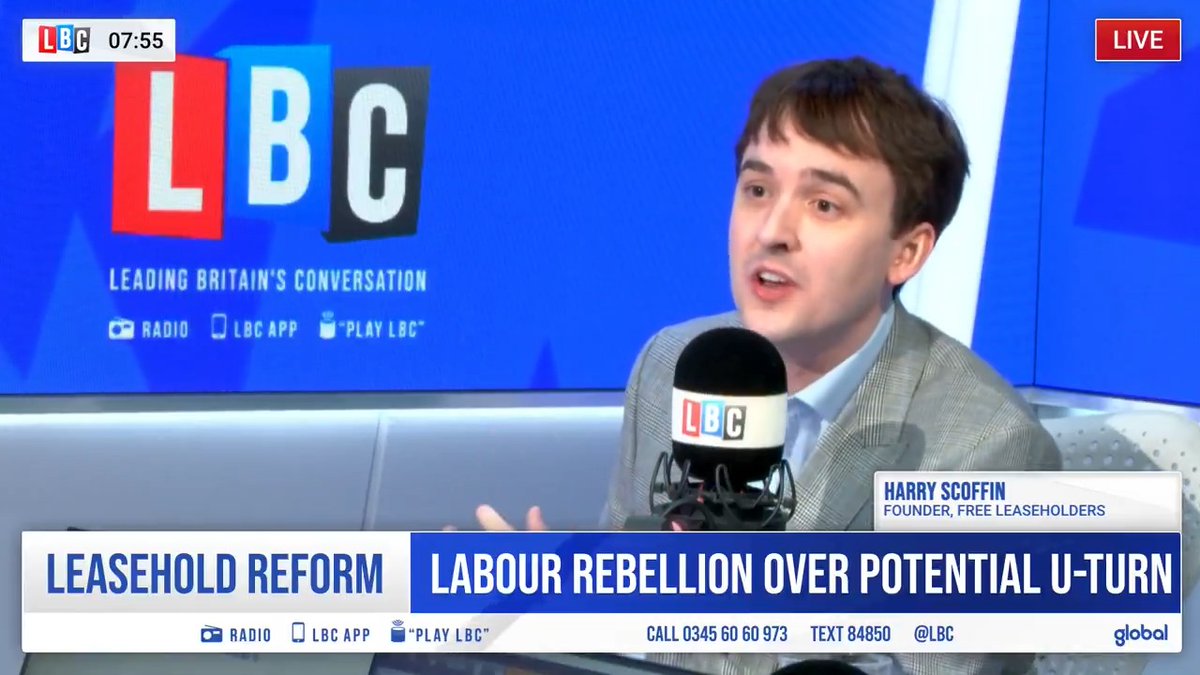
GROUND RENTS: STATEMENT FROM FREE LEASEHOLDERS 26/1/25 At the last general election, 9.7 million people voted for “change”. In the manifesto, Labour promised to “act where the Conservatives have failed and finally bring the feudal leasehold system to an end”. In the months building up to the election, Matthew Pennycook MP told Parliament that the Tories needed to be “courageous” and that he supported slashing money-for-nothing ground rents to a peppercorn, meaning zero financial value. Pennycook, Angela Rayner and Sadiq Khan rightly rounded on the Tory government for dropping its plans for immediate peppercorning. Let’s be clear, freezing ground rents or even capping them at £250 per annum keeps leasehold on life support. It would be the opposite of ENDING leasehold, which is what the The Labour Party manifesto promised. If Labour announces a freeze or cap tomorrow, they will be betraying hardworking leaseholders to protect the ground rent grifters and offshore property mafia. In fact, a freeze or straight £250 cap would be WORSE than what we going to get under the Tories had Rishi Sunak not called an early election. Sunak sided with Michael Gove against the Treasury and the freeholder lobby by agreeing to a £250 cap with a phaseout to peppercorn over time. This policy featured in the 2024 Conservative manifesto. The political economy of housing is changing. Even Donald J. Trump has told these murky investors to stay out of people’s homes. This May, local elections will be taking place across the country, including in London, where there is a super high proportion of leaseholders. No wonder disruptors like Zack Polanski and Nigel Farage MP are licking their lips at a government servile to wealth-destroying corporates and captured by weird ECHR legalism. Homes are for people, not corporations.

Free Leaseholders

35,937 views • 6 months ago

This week's episode of our podcast The State of It with the brilliant Lara Spirit * Inside the bitter Cabinet splits over the defence investment plan - why nobody is happy * Sir Keir Starmer is expected to announce a £13.5billion increase in defence spending - far less than previously considered * John Healey, the defence secretary, has warned that this will not be enough and that it risks undermining our credibility in Nato. Defence chiefs had originally asked for £28billion * The Treasury is also said to be pushing for a "planning assumption" that Britain will only meet its target of spending 3 per cent of GDP on defence up from current levels of 2.3 per cent in 2034/35. Healey is concerned that this is not soon enough, given the scale of the threat Britain faces, and has so far refused to sign it off * Talks are going down to the wire. The launch of the Defence Investment Plan was planned for Friday but it could easily be delayed yet again * The defence chiefs are deeply unhappy. They are concerned that the money on the table will not be enough to fund key projects. There's a feeling they have largely been kept in the dark * Reeves is deeply frustrated by the process - the fact she is having to effectively reopen the spending review process to find the money. Her intervention at an investor conference yesterday - warning of need for tax rises to fund defence - was particularly significant * Then there's the bigger political picture - what if Burnham wins Makerfield, becomes PM and takes a different view? By that stage you could have a new PM, a new chancellor and a new defence secretary. Worth remembering that there are significant cuts to DfT capital budgets and net zero projects to help fund the DIP * Latest from Makerfield: Burnham allies are increasingly confident he will win the by-election. They think Restore UK is a factor that will divide the vote on the right. Restore is targeting female voters in particular * The big question - if Burnham wins Makerfield when does he make his move? Allies suggesting he is likely to go sooner than later * The prospect of an orderly transition appears unlikely - Starmer said to think Burnham's manoeuvres are 'unforgivable' - there is mutual enmity between the two men which goes back for years * Will Starmer stand and fight? He insists he will. But we have seen this before with Boris Johnson and even Liz Truss insisting they would fight on and then going. But Starmer is a different character * If there is a leadership contest where does that leave Labour? It means we will have weeks of internal arguments and a 'battle of ideas' in the run-up to a hugely challenging cost of living crisis this winter...

Steven Swinford

16,238 views • 2 months ago

Election fraud in Guatemala… if happens here, it will happen in the US in 2024. The facts: 1. The Supreme Electoral Tribunal (Like the FEC in the US) is in charge of the election, and in this election they didn't had an IT Director, the previous one is currently in court prosecuted because of "anomalies" in the previous election. How they managed to have control on the different voting systems? 2. Before our General Elections, and after the call for elections when all parties were already registered and participating, some were suspended and dismissed by the Supreme Electoral Tribunal (TSE), which the Electoral and Political Parties Law (LEPP) forbids, some parties appealed to the Constitutional Court, as their right to vote and be elected was being violated, and to this day, haven't get any response from the Court. 3. On June 25, the General Elections were held. There were thousands of complaints from almost all party poll watchers. Among these complaints, there were reports of party poll watchers being kidnapped during the countdown; records being edited in the absence of party poll watchers, changing the votes; data tampering during data entry into the system; forgery of the original physical records; polling station officers refusing to provide the necessary paper forms to report this incidents, etc. The very same day, and the next day, many party poll watchers reported these incidents with the polling station officers to the Public Ministry (Kind of the General Attorney's Office in the US) and to the Constitutional Court. This is well documented in the video included in this post. 4. The Constitutional Court sent its ruling to the Supreme Court of Justice, and they ordered to the Supreme Electoral Tribunal and the Electoral Boards to compare the original records (white papers) with the copies (yellow papers), and to recount the votes, in a hearing, in the presence of party poll watchers and the media. The Electoral Boards didn't comply with the ruling, and the media was almost absent or didn't publish the complaints and findings, producing a general discontent and distrust in the electoral process. Some party poll watchers escalated their reports to the Public Ministry, reporting the misdeeds of the polling station officers. Several party poll watchers called for a repeat of the elections due to all the flaws found, and of course, the media pundits created the false narrative that auditing the records and recounting the votes was going against what was voted in the ballot boxes and against the electoral law, when in reality, it's a way to make the process more transparent and it is clearly stipulated in Article III of the Electoral and Political Parties Law 5. According to the dubious results, from the more than 20 candidates, for the first time in the country's history, the majority of the votes were null, the winner was null, which is a clear indication of the widespread discontent and mistrust for the Guatemalan political class, but because none of the candidates got more than 50%+1 of the votes, a second round is needed. Is worth noting that the second place after null was held by the UNE party, a left-wing political candidate Sandra Torres got it, and the third place in these dubious results was obtained by the political party "Movimiento Semilla", an extreme left-wing political party with a presidential candidate virtually unknown throughout the entire country, this raised suspicions among absolutely all Guatemalans, except for the typical media pundits who tried to justify it at all costs with any baseless excuse or narrative. 6. After some pressure from foreign forces, the Supreme Court of Justice ruled that The Electoral Boards comply with what was needed, but this was a lie, they were pressured not to proceed with the legal process. It is worth noting that "Movimiento Semilla" party, is well connected with international forces, most of their members have belonged to NGOs founded by none other that George Soros through his Open Society Foundations, so is most of our media pundits, and most of the college professors, for instance, former Secretary-General and current Semilla's candidate for Congress, Samuel Andrés Pérez Alvarez, is son of the Abraham Samuel Pérez de León, who has been an advisor to the World Bank and the UNDP/PNUD; he is a professor in Universidad Rafael Landívar which receives grants from the Open Society Foundations for the "independent news site" called Plaza Pública where both father and son write their columns. 7. During the process, Guatemalan prosecutor Rafael Curruchiche issued a public statement exposing an open case against "Movimiento Semilla" party, a process that started around 2018, way before the elections. Curruchiche showed legal documents and evidence from the forensic agencies' expert examination, showing forgery of signatures in the party affiliation process, affiliating dead people, affiliations only with signature and without names. Considering that in Guatemala, in order to have a political party, you have to affiliate certain number of people, failing to do so, makes the legal figure that constitutes the party, lack the necessary foundation, thus, nullifying the party, but again, even without the legal representation, the party appealed to the Constitutional Court, which under foreign pressures, granted protection to the inexistent party, citing that the electoral law establishes that once the election call has been made, parties cannot be canceled. However, they did cancel other parties after the call, demonstrating that there is no equality before the law, and that this party has privileges due to its connections abroad. This was one of the complains of other candidate that was left out of the election on similar grounds. It is worth noting that the prosecutor notified the Supreme Electoral Tribunal about this matters since 2018, and they didn't nullify the party, and it is also worth noting that Semilla was reported for receiving funding from abroad, specifically, from the Netherlands Institute for Multiparty Democracy (NIMD), and even tho there was a legal preceding, the Supreme Electoral Tribunal protected Semilla ignoring the law. 8. While all these events were transpiring, after hearing Semilla's almost unknown presidential candidate mention the elections observers from as the ones validating the results, I did a research on who were these election observers sent by the EU, who spare no expense with hundreds of members all over the country in quite expensive cars. It turns out that these observers, just before the election, held a meeting only with Semilla's presidential candidate and with no other candidate, most of its members are in fact, members of the party or acquaintances that have work along in the very same NGOs, and all the "influencers" and young tiktokers that support the party and engaged in smear campaigns against all other parties, were also election observers for and similar NGOs, the case of Romeo Alejandro Méndez Zuñiga who partnered with José Roberto Alejos Cámbara (brother of convicted Gustavo Adolfo Alejos Cámbara) in his NGO of observer called Caminemos Political Association, which has received grants from the Netherlands Institute for Multiparty Democracy (NIMD). I wrote a long post with all the evidence, it is in Spanish but you can use any web translator, it includes a great hearing with .Rep. Scott Perry exposing how USAID (which is embedded in all this NGOs) is founding ideological groups in Guatemala: 9. Verifying that political parties comply with the law and do their job properly, without affiliating deceased individuals, without forged signatures, or affiliating only with signatures and without names as Semilla did, is the responsibility of the Registrar of Citizens, Ramiro José Muñoz Jordán, who was ordered by a judge to suspend the Semilla party, if he fail to comply with the ruling, appropriate measures will be issued, possibly facing a warrant, but before he was notified, the Supreme Electoral Tribunal grant him vacations, and his whereabouts are currently unknown. This lead to more distrust in the whole electoral process, and the opacity of the Supreme Electoral Tribunal. 10. Recently, the corrupt President Magistrate of the Supreme Electoral Tribunal, Irma Elizabeth Palencia Orellana, usurping functions, since according to our constitution, international relations are the exclusive domain of the executive branch, called for a statement from the Secretary-General of the OAS, Luis Almagro, who is aligned with the globalists of Semilla. We are experiencing an electoral fraud, one that is fiercely protected by foreign forces who seek impunity for both, the Supreme Electoral Tribunal and the corruption within the Semilla Party, a fraud strongly defended by the media by not only hiding what truly happened, but also distorting and misrepresenting the actual events and facts with unfounded narratives to manipulate the masses and public opinion, and if it happens here, in this laboratory of so many three letter foreign agencies, it will happen in the USA, as it always does. It happened here in 2019, it happened there in November 2020, it will be the same in 2024 there. Please, address this issue, do your own due diligence, there is a lot to uncover. .Donald Trump Jr. .Marjorie Taylor Greene .Mark R. Levin .GregGutfeld .Jesse Watters .Charlie Kirk .DC_Draino .Terrence K. Williams .Sebastian Gorka DrG .Ted Cruz .Steven Crowder .Tulsi Gabbard 🌺 .Rob Schneider 🇺🇸 .E . .End Wokeness .Tim Pool .James O'Keefe .Robert F. Kennedy Jr .Dr Jordan B Peterson .Ben Shapiro .Lex Fridman .MaryAnastasiaO'Grady .Salomondrin 🤖 .Luis Almagro

Rodrigo Polo

67,745 views • 3 years ago

Court clerk of Hancock County Mississippi feels as though her feelings and her time are far more important than the rights of the citizens of the county. An arrogant display of government overreach at the Hancock County Justice Court in Mississippi shows exactly why First Amendment audits are so vital. When an independent journalist, entered the public lobby to document court operations, he was met with immediate, unprovoked hostility from Court Clerk Catherine Garcia. ​Claiming the lobby was a "non-recording facility," Garcia cited a state rule regarding criminal proceedings that has absolutely no bearing on a public lobby. Her primary grievance? The camera was making her clerks "uncomfortable." She even pointed to the court's own surveillance cameras—ironically used because members of the public keep stealing their counter bell—demanding that the journalist stop recording while her own cameras rolled. When journalist refused to yield his constitutional rights to appease her personal feelings, she called for security. ​The situation defused only when Investigator Egan arrived, assessed the scene, and correctly informed Garcia and her staff that filming in the public lobby is perfectly legal as long as private records aren't being exposed. Rather than admitting her mistake, Garcia and a staggering seven court clerks completely abandoned their posts and retreated from the windows, grinding county business to a halt simply because a citizen held a camera. ​This entire interaction highlights a disturbing trend: Catherine Garcia seems to have remarkably little understanding of the law and the actual rights of the citizens she is paid to serve. Because the Justice Court Clerk is an appointed position rather than an elected one, she answers directly to the Hancock County Board of Supervisors. The accountability lands squarely on them. ​The entire Board of Supervisors is up for reelection in November 2027. One can only hope that when the 2027 election cycle arrives, the voters of Hancock County demand sweeping changes on the board. A fresh, newly elected board needs to step up and replace Garcia with someone who is genuinely willing to uphold the constitutional rights of the county's citizens, rather than prioritizing their own fragile egos and personal feelings over the law.

Giggling Ganon

121,231 views • 2 months ago

NEWS: Paul Biya, the 92-year-old president of Cameroon, has formally declared he’ll run for an eighth term in the October 12, 2025 election. He made the announcement on Sunday, July 13, in both French and English on X, writing: “The best is still to come.” Biya has ruled since 1982, making him the world’s oldest serving head of state and one of Africa’s longest-reigning leaders. His re-election bid—widely expected—comes amid growing domestic unease. Biya scrapped term limits in 2008, and rarely appears in public, often delegating power to his chief of staff. For decades, Cameroonians have seen their President a maximum of five times a year. In 2024, he vanished from public view for 42 days, triggering speculation about his health, which the government later declared a “national security” matter. Biya returned and simply banned Cameroon’s media from reporting on his health. Opposition figures accuse him of stifling economic and democratic development, and warn of a looming succession crisis in a country that has had just two presidents since independence in the 1960s. Freedom House gives Cameroon a score of 15 out of 100 on its 2025 Index, i.e. “Not Free,”, citing pervasive political repression, the absence of judicial independence, restrictions on opposition parties, and elections marred by intimidation, fraud, and the ruling party’s control over electoral institutions. Reuters writes Cameroon continues to face multiple crises under Biya’s rule, including a brutal separatist conflict in its Anglophone regions and Boko Haram attacks in the north. Al Jazeera Listening Post published a video report in February 2025 on Biya and media repression in Cameroon. Full video on YouTube (link in reply).

Drop Site

17,736 views • 1 year ago

It is insane to see this 5th April 1982 interview with Margaret Thatcher from the vantage point of today. At this point, the Argentinians had just invaded and seized the Falklands. You can actually see what they call an "iron will" in her eyes, and hear it in every measured, authoritative word. There's no bluster or misplaced confidence, just a quiet conviction. She was a totally different type of leader unseen in a long time, which Britain sorely needs today. Thatcher’s government staked everything on retaking the islands after Argentina's invasion. Polls showed her deeply unpopular beforehand; victory, thanks to the "Falklands Factor," delivered a landslide in 1983. Defeat almost certainly would have forced her resignation amid national humiliation, collapsing Conservative support and likely ushering in a Labour government amid economic strife and union unrest. More than politics was at stake. Giving up would have meant abandoning British citizens to a right-wing junta’s aggression, a Suez Crisis on steroids for the television age. Images of surrender would have flashed around the world, signaling weakness. It would have shattered the idea that Britain still stood ready to defend its people and its territory. Watch how she explains why fighting was not just necessary, but morally imperative. Listen to the way she deftly handles questions about America, praising their diplomatic efforts while making it crystal clear that this was Britain and only Britain's responsibility to shoulder alone. And when the ITN interviewer asks her at the end if she's prepared to resign if she fails? Trust me.... just watch how and what she answered it with. This type of leadership feels like an extinct species now. It’s exactly the kind of clear-eyed, unflinching European voice the West could use more of today. (Javier Milei has long been an open admirer of Thatcher for precisely these reasons btw)

Melissa Chen

275,671 views • 25 days ago

Sussan Ley is 'Malcolm Turnbull' in a dress.' The NSW Liberal Leftie moderate factional power plays have destroyed the party from within. The moderates are selfish, all about themselves. Don Harwin is still the NSW President, and Matt Kean remains a member who works for Albo.😡 Australia urgently needs a UK-style Nigel Farage MP Reform party. Just remember Tony Abbott won in a landslide and that margin was reduced to 1 in a single election cycle. Remember, it was a Lib loss more than a Labor win. We have less than 3 years to get this right. Forget Ley, our focus has to be on how economically hopeless Labor is. Revealed: Albanese’s ‘super safe seats’ fortress 12:00AM JUNE 28, 2025 Labor holds more seats on double-digit margins after the May 3 ­election than the Coalition parties hold altogether, highlighting how the second-term Albanese government not only occupies greater breadth of electoral territory but does so with increased strength as well. Although the Albanese government’s post-election seat count is almost identical to those of the newly elected Howard and Abbott governments, its haul of electorates on two-party-preferred margins of 10 per cent or more is greater than either of those predecessors. After the Australian Electoral Commission finalised results in all 150 House of Representative seats this month, the new federal electoral margin tower has a very different structure than the four before it. Labor’s 94-seat tally – one more than Tony Abbott’s 2013 haul and level with John Howard’s 1996 total in a 148-seat parliament – has already sparked discussions about the strength of the Albanese government’s mandate. But the final vote counts reveal how safe so many of those seats are. The Albanese government holds 48 seats – just over half ­of the ALP total ­– on two-party-preferred margins of 10 per cent or more. By comparison, the Liberals and Nationals won only 43 seats overall and just 13 (nine Nationals and four Liberal) on double-digit margins. Even before the 2025 election rout, the Coalition notionally held only 55 seats, having won 58 at the 2022 election. Despite Labor’s 2025 win being secured on a historically low ­victorious primary vote of 34.6 per cent – above only its 2022 result (32.8 per cent) – its seats ­security after receiving the bulk of preferences is greater than Howard and ­Abbott enjoyed when they swept to power. After the 1996 election, the ­Coalition parties held 45 of their 94 seats on double-digit margins, while Abbott’s 2013 victory left 43 Coalition seats on margins of 10 per cent or more. The previous Labor government to hold a comfortable ­majority – Kevin Rudd’s in 2007 – had just 37 of its 83 seats on double-digit margins. The final election results also highlight how bad the Coalition’s internal polling was, encouraging it to target seats where it would emerge the Coalition parties had no hope. Labor’s “safe seats” set includesseveral the Liberals believed they could win. Boothby in Adelaide’s east, where the Liberals ran high-profile former MP Nicolle Flint in a top-priority campaign, is now a Labor seat on a margin of 11.1 per cent. The rural Tasmanian seat of Lyons, which the Liberals thought they could snatch on the retirement of Brian Mitchell, has jumped from a margin of less than 1 per cent to 11.6 per cent for new MP and former Tasmanian ALP leader Rebecca White. And inner-Brisbane Lilley, a Liberal target held by frontbencher Anika Wells where Labor’s hold had been steadily weakening, has exploded out to a 14.5 per cent margin. Along with Boothby, several Labor seats that were held by Liberal MPs just three years ago are now in the government’s “safe seats” set. Hasluck in outer eastern Perth, which was held by former Liberal cabinet minister Ken Wyatt heading into the 2022 election, switched allegiances three years ago and has now handed second-term MP Tania Lawrence a super-sized margin of 16 per cent. Swan, closer to the centre of the West Australian capital, was also a Liberal seat two terms of government ago and had been in Labor’s hands since 2007. Now it is safe territory for another of Albanese’s second-term MPs, Zaneta Mascarenhas, on 14 per cent. Reid in Sydney’s inner west was Liberal for the three terms of the Abbott-Turnbull-Morrison government but two elections down the track is securely in Labor’s possession, with Sally Sitou securing a margin of 12 per cent on May 3. Perhaps most tellingly, the NSW central coast seat of Robertson – the nation’s bellwether seat having elected an MP of the winning party overall at every election back to 1983 – is anything but a close contest now. Labor’s Gordon Reid has extended his margin to 9.4 per cent, the biggest in Robertson since 1931. The demise of the Liberal Party in inner-city seats, aside from those it surrendered to teal independents across the past three elections, is also evident in Adelaide. Labor MP Steve Georganas now holds a seat that has often been marginal and at times held by the Liberals, including from 1993 to 2004, on a margin of 19.1 per cent, Adelaide’s largest at a federal election. As revealed by The Australian in May, the Liberal Party has been pushed so far out of its inner-urban heartlands that its safest seat is now Townsville-based Herbert. For much of the party’s existence, that mantle was held by Bradfield in Sydney’s north, which was added to the “teal captures” list when a recount gave Nicolette Boele a 26-vote win. Five of the Liberals’ next six safest are in rural areas: O’Connor and Durack in Western Australia, Barker in southeastern South Australia, Hume in the NSW southern tablelands and Wright in southern Queensland. The Gangster's Ghost The Australian

Timjbo 🇦🇺

32,222 views • 1 year ago

ELON MUSK: We believe the AI5 chip will be roughly comparable performance to an NVIDIA Blackwell, and at much less than 10% of the cost Transcription: I'm super hardcore on chips right now as you may be able to tell. I have chips on the brain. I dream about chips, Literally! Because in order to have a functional robot, you have to have a great AI chip. And it needs to be an inexpensive chip and it needs to be very power efficient So we think we believe the AI5 chip will be probably about a third of the power of say something like a Blackwell, an NVIDIA Blackwell, which is a great chip, for roughly comparable performance. And much less than 10% of the cost. This is a chip that is very much optimized for the Tesla AI software stack. So it's not meant to be a general purpose chip, it's meant to be an amazing chip for the Tesla AI software And I mean a couple of things that I think make... like how is Tesla able to achieve such an improvement? I think it is because we are specialized. We're not trying to... you know, NVIDIA has to serve the superset of all past and future customers. So all of their requirements, all of the software that they've written has to work, which is a very difficult problem. Whereas we just need to make it work for our software. And so we're able to simplify the chip dramatically And then we also, I think we're unique in this, but like we have an integer-based system. And integer operations are fundamentally more efficient than floating point operations. So we can do floating point, but the vast majority of our inference is done in integer. Which is, if you're familiar with sort of logic gates, the simplicity of integer... it's integer is much more power efficient, much more silicon efficient, but you have to, you actually have to train for integer inference, which everyone else is training for floating point. That's kind of like a niche technical detail, but it's actually very important. So, yeah, this is going to be a great chip So this chip will be made in basically in four places: TSMC Taiwan, Samsung Korea, TSMC Arizona, and TSMC Texas. And we already know what improvements to make for AI6. So I'm hopeful that we can within less than a year of AI5 starting production, we can actually transition in the same fab to AI6 and double all of the performance metrics

X Freeze

305,109 views • 9 months ago