Loading video...
Video Failed to Load
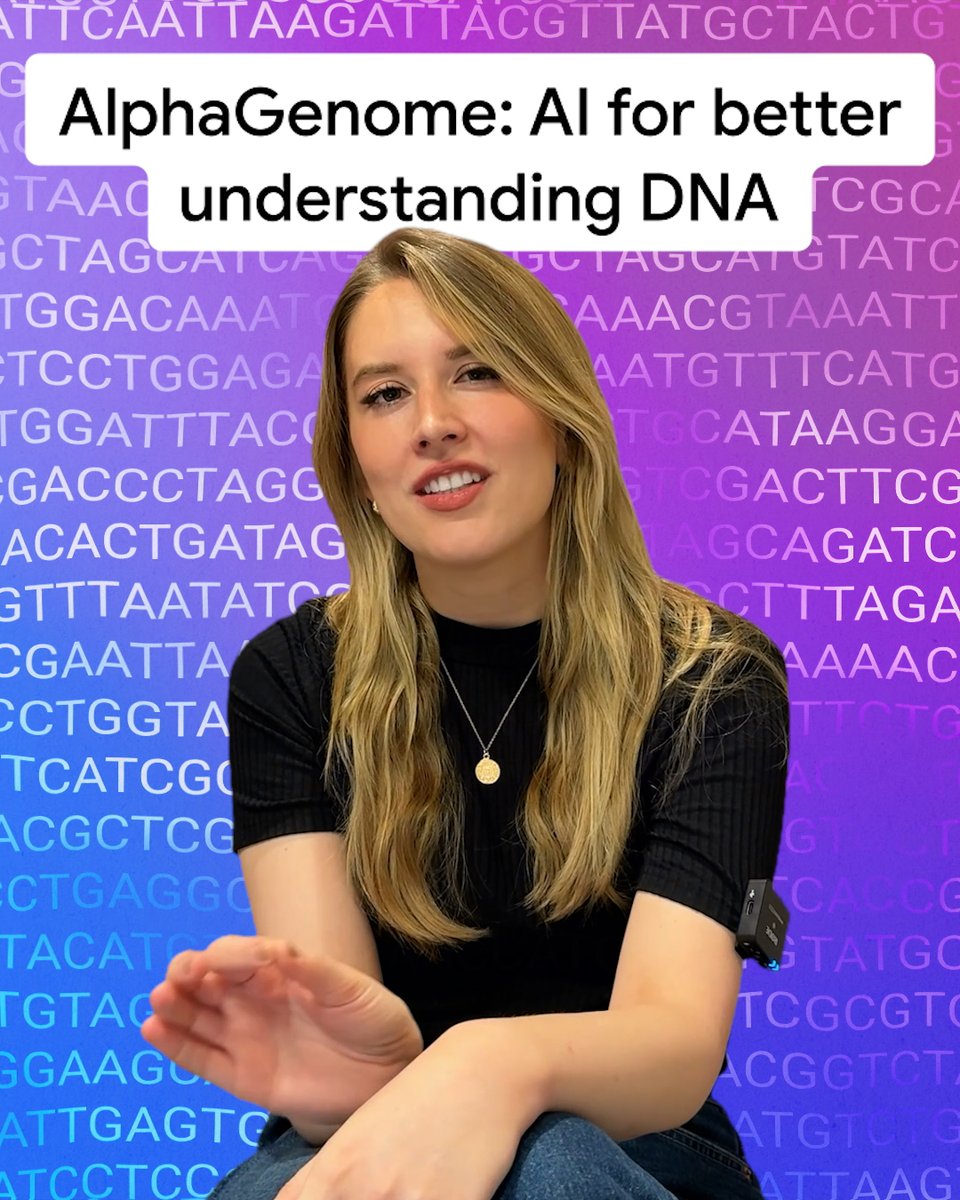
Our Gemini for Science tools could help scientists unlock their next breakthrough. 🧬

95,332 views • 5 months ago •via X (Twitter)
32 Comments

scientists have been waiting 400 years for someone to put a DNA emoji in a tweet

genuine question is any of this being used by scientists who didn't work at Google first?

the bar for 'AI for science' is whether it survives contact with a real clinical or wet-lab workflow, not the demo. been running Gemini grounding on genomics lit this month, solid for the triage step. what's the eval suite behind these tools?

Who will get the credit when they do that?

Breakthroughs rarely come from one perfect answer. They come from trying more good questions. AI for science matters when it makes the hypothesis loop cheaper without making the evidence thinner.

@TheBigK75 🔥

It is great to see focused AI support for scientists. The tools may shorten the path to important discoveries.

Please give me access. I applied and still waiting for.

Google Korea B2C "ME"

Next up: Gemini for Business. Later this year, the entire goal of all these frontier orgs is employee replacement. 1 employee runs 10 agents replacing 10 coworkers.

Science as a partnership, not a tool — that's the spirit Japan calls 「仲間」 (nakama). Discoveries are kinder when made together with AI.

Multi-agent idea tournaments and AlphaEvolve code variation loops are exactly how you unlock the next tier of science.

The quiet revolution here is not “AI replaces scientists.” It’s that more good questions may finally get a chance to be explored. Science has never lacked curiosity; it has often lacked time, tools, and access.

同じこと考えてました。たぶん次の論点は「人間の意思決定をどこに残すか」で、ここを設計しない自動化は半年後に手戻りが来る気がしてます。

🤔…. Ok let’s add void detection in there as well @googleaidevs

good job

Every lab says AI will unlock science. Then 90% of the demo budget goes to making chatbots sound friendlier.

Curious how the latency and throughput stack up against a dedicated compute cluster for real-time molecular simulation.

Co-Scientist is not a simple chatbot for papers. It runs an idea tournament: agents float hypotheses, then argue and rank the survivors. For example, on antimicrobial resistance it hit the same answer a lab spent a decade reaching.

Very interested to test this out and see how it fits in existing workflows and what additional value it brings compared to current workflows and other new tools like Biomni and SciAgent studio and literature review tools.

The transition from specialized scientific engines like AlphaFold to generic LLM wrappers bundled as "Science Skills" feels like a product packaging shift rather than an algorithmic leap. Multi-agent debate loops still depend heavily on the validity of the underlying corpus.
you should try one of these:

YAY.

I'd say it's likely those scientists who don't have a track record of groundbreaking research. It's not a magic solution for those who already have success, but rather a tool to level the playing field.

nnah this is actually huge, making science tools more accessible is the kind of thing that actually moves the needle

That kind of system would be most powerful when it’s tightly integrated into real research workflows—things like hypothesis generation, protein structure analysis, literature synthesis, or even automating parts of lab data interpretation. If “Gemini for Science” is aimed at that space, the real breakthroughs usually come from a few practical capabilities working together: Literature compression: turning thousands of papers into testable insights Multimodal reasoning: combining text, images (microscopy), and numerical data Simulation support: helping model outcomes before lab work Hypothesis generation: suggesting non-obvious experimental directions Lab automation interfaces: connecting directly with analysis pipelines The key question isn’t just “can it help?” but how reliably it avoids hallucinations in high-stakes scientific reasoning—because in science, a wrong suggestion can cost months of work. Are you thinking about this more from the perspective of biotech, chemistry, or general research acceleration?

They could, if they weren't so expensive,

when it will be published?

the honest answer is that ai won't break new scientific ground, humans will still do that, but it'll speed up the process somehow

Love this.

ENGINE

@GoogleDeepMind