正在加载视频...

视频加载失败

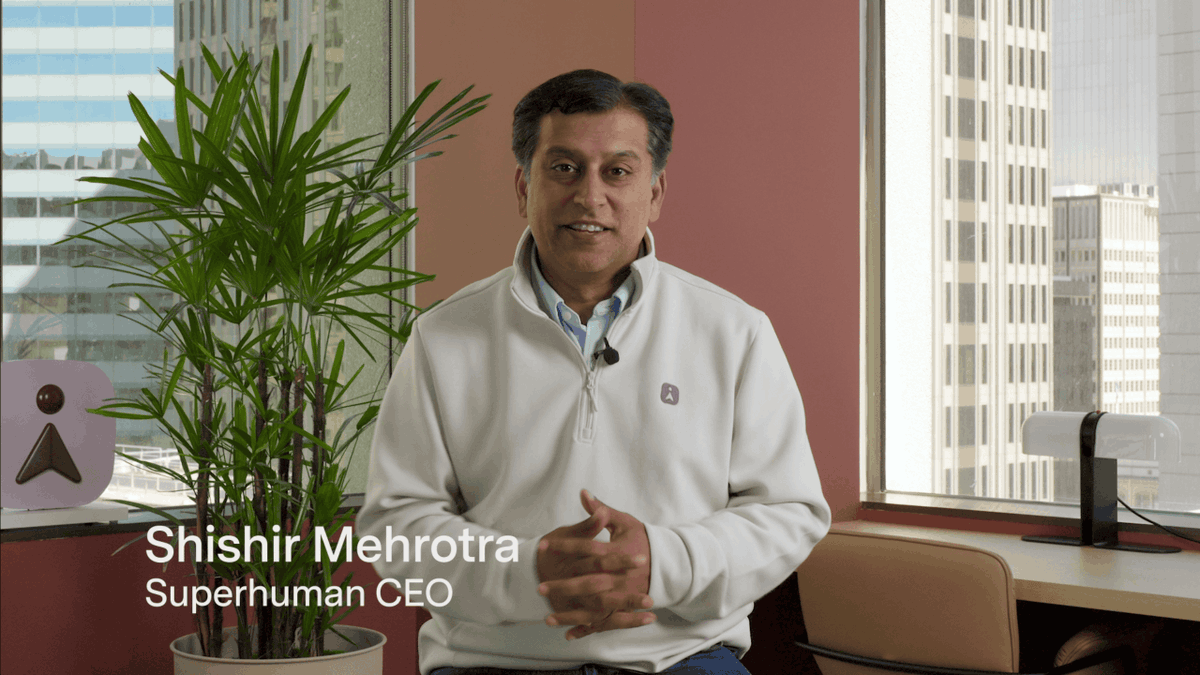
over the weekend i built and shipped Sentra for our docs. we use Mintlify for documentation. the built-in assistant kept running into context issues. wrong answers, missing context, no citations. so we extended Sentra's capability to the docs site directly. now when you're reading Dodo Payments docs, you can...

18,408 次观看 • 2 个月前 •via X (Twitter)

13 条评论

Revoca AI 的头像
Revoca AI2 个月前

The context and citation problem you hit is very real. Most of the built-in doc assistants are not great at answering with exact page citations. We’re building this space: connect your docs, github, etc and it handles customer onboarding and support with to-the-point, grounded answers. Our view is that you don't want companies pulled off their core craft to solve this, let us handle it. Give Revoca a try. We do a lot more than just surfacing the docs. I’d love to show you what we have.

Tanay Kumar 的头像
Tanay Kumar2 个月前

@mintlify oof this is SO GOOD. Sire, the engineers g culture you’ve cultivated at Dodo is 🤌

Uday 的头像
Uday2 个月前

@mintlify The citation layer is the real unlock for docs assistants. A wrong answer without a source feels worse than no assistant. I’d also make “I don’t know from the docs” a first-class path, with links to the closest source pages. That keeps trust intact when context is thin.

Animesh 的头像
Animesh2 个月前

@mintlify I've been thinking of building this for myself any plans of making this open-source or as self-hostable Ask AI widget

Ayush Agarwal 的头像
Ayush Agarwal2 个月前

@mintlify open sourced it here -

Animesh 的头像
Animesh2 个月前

@mintlify Wow, thanks a lot Ayush! 🙌

Mateusz 的头像
Mateusz2 个月前

@mintlify What LLM model you use under the hood?

Ayush Agarwal 的头像
Ayush Agarwal2 个月前

@mintlify For this gpt-5.4-mini

Somi 的头像
Somi2 个月前

@mintlify what's the reindex story when docs change, every deploy or on a schedule? that's the part that rots quietly, stale citations still read as grounded so you don't notice

Ayush Agarwal 的头像
Ayush Agarwal2 个月前

@mintlify It reindex everyday to maintain freshness

Wijayanto 的头像
Wijayanto2 个月前

@mintlify Actually i more like MCP because can conntect with my agent an AI

Ayush Agarwal 的头像
Ayush Agarwal2 个月前

@mintlify This is also an extension to our mcp

Uday 的头像
Uday2 个月前

@mintlify Nice direction. For docs assistants, citations are only the visible part. The deeper thing is trust recovery: show which page/version answered, what context was ignored, and where the answer is unsure. That makes wrong answers debuggable instead of just embarrassing.

相关视频

We've built 40+ AI agents and internal tools. The hardest part is Context Creation. AI runs playbooks and makes judgment calls for you. But without your company's context, you get slop. Context Creation means extracting the subject matter expertise and playbooks that live in people's heads, not in LLM training data, or even your tools. As forward deployed engineers (FDEs), we create context and turn it into code. We evaluate the business impact, how it aligns with the dev roadmap, and come up with creative solutions. We built The FDE Factory to replace ourselves. It drives AI adoption inside our clients' companies by running discovery sessions using prototypes to create context. Here's how it works: We put a prototype in front of a stakeholder. The stakeholder gives feedback via voice while they're using or reviewing it. Then our FDE Factory Agents builds in their expertise in minutes: > Context Agent reviews the codebase and feedback, extracts the requirements, and creates a spec > Scope Agent checks the spec against the development roadmap, validates it, and hands it off > Engineering Agent builds a new feature and wires the integration > QA Agent runs tests to prove to itself it works > PR merges, feature goes live, product updates itself in real time It's like the nontechnical stakeholder wrote the code without even knowing it. Coding agents are great at turning good development plans into code, and they're getting better at turning context into good development plans in collaboration with professional engineers. But nontechnical people are capped on what they can build without product people and engineers. The bridge that takes nontechnical people from vibe coding basic apps to building production AI tools that run on first party context is FDEs. Our new FDE Factory gives you the system to go from idea to production. Context Creation is the first and most important step in our FDE lifecycle, and we just automated it. Now clients get the right agents and tools built for them, customized to their unique business and encoded with their expertise. PS: If you're building AI agents within your company, reply "Playbook" and I'll DM you the entire FDE playbook we've run with 30+ companies. It covers finding high-impact AI use cases, building them, and deploying them across the org.

Mike Fishbein

10,171 次观看 • 3 个月前

We’re entering the 10x speed of research publication workflow with AI. SciSpace (SciSpace), the first AI Agent built exclusively for the scientific community, is releasing so many inredibly useful features. 🎯 This is the AI Agent that can use 150+ tools, 59 databases, and 280M+ papers A few weeks back they launched BioMed Agent - It can design entire molecular biology workflows and even create publication-ready illustrations in a single prompt. This is its new domain-specialized AI co-scientist that sits on top of the existing SciSpace Agent and automates full biomedical workflows, from raw data and papers to analysis, decisions, and the final production-grade illustrations. You just need to give it 1 prompt. And today the added the following - Library Search, so it can search and analyze the PDFs already sitting in My Library, letting people ask questions across their own paper pile while keeping it private. - Now connects directly to Zotero, so the Agent can pull and work with the papers you already saved there without manual uploads. - For bigger prompts, it auto-triggers a Report Writing Sub-Agent that turns the chat into a structured research-style report, which is way cleaner for literature reviews and long summaries. - And when you get something worth keeping, Save to Notebook lets you store the output as .md notes with citations in My notebooks, so the work becomes reusable research notes instead of disappearing into chat. Behind the scenes, it indexes the PDF text, pulls a few relevant chunks for the question, then writes an answer grounded on those chunks.

Rohan Paul

11,574 次观看 • 8 个月前

MCP is an absolute game-changer. (Together with DeepSeek, MCP is probably the hottest thing in AI over the last 6 months.) I use Cursor to write code 90% of the time. I built an MCP server to connect the Cursor agent to GroundX, an open-source RAG system, and I'm not going back. This is officially insane! Here is what I did, step by step: First, a little bit of context. I maintain an end-to-end Machine Learning System with several pipelines to process data, train, evaluate, register, deploy, and monitor a model. I've written a lot of documentation explaining how the system works and how to modify and maintain it. There's also the documentation of the few libraries I used to build the system. I'm a massive fan of GroundX, an open-source enterprise-grade RAG system you can run on your servers or deploy to any cloud provider. I've been working with them for a long time. GroundX offers two services. First, the "ingest" service uses a custom, pretrained vision model to ingest and understand your data. I used this to process all the documentation I have for my code. Markdown files, source code, HTML files, and even PDF documents. Everything I've written related to my project went into GroundX. Their second service is "search," which combines text and vector search with a fine-tuned re-ranker model to retrieve information from the data. I needed to connect Cursor with this service, and that's where MCP came in. I built an MCP server with two tools: 1. The first tool would go to GroundX and retrieve the available topics. Splitting the data into topics (or "buckets," as GroundX calls them) allows me to use the same setup to serve documentation from different topics. 2. The second tool would search GroundX under a specific topic for the context related to the supplied query. The magic happens after connecting the MCP server with Cursor. Now, I can ask any questions related to my project, and Cursor's AI agent retrieves the list of available topics from the RAG system and then searches it to provide relevant context to the model. I went from getting mediocre, sometimes wrong answers to 100% truthful, complete answers. Here is the crazy part:

Santiago

255,756 次观看 • 1 年前