Загрузка видео...

Не удалось загрузить видео

На главную

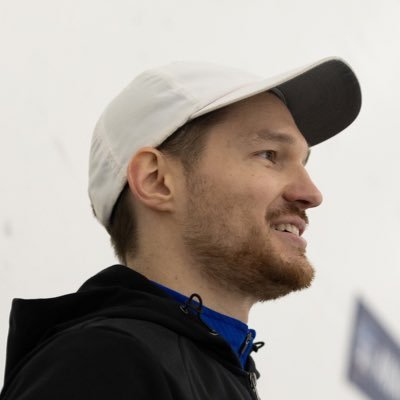
Parenting athletes isn’t easy. Keith Tkachuk's 2 most important lessons for his sons growing up: 1) Compete 2) Be a good teammate (Via Hockey Daily 365 l NHL Highlights & News)
38,835 просмотров • 1 год назад •via X (Twitter)

Комментарии: 4

Фото профиля Shaun Thompson
Shaun Thompson1 год назад

@HockeyDaily365 Great players but had every advantage to get to where they are at. Daddy coached them all the way at St Louis Jr Blues until Juniors. Never had to worry about making any of the top teams or showcases because of who dad was and called. So common in the hockey landscape today.

Фото профиля Noah Basketball
Noah Basketball1 год назад

🏀 "The kids love it. I have kids fighting over who can get here earliest to get shots off before school." – Coach Garrison When passion meets performance, Noah Backboard makes it happen. Turn practice into obsession with shot-tracking that players can’t get enough of.

Фото профиля Michael Boyle
Michael Boyle1 год назад

@HockeyDaily365 And Keith did both himself.

Фото профиля Shawn Riester
Shawn Riester1 год назад

@HockeyDaily365 That is almost literally the exact same thing I tell my kids before each practice! Thanks for sharing that. “Compete hard and be a great teammate!” And then a fist bump that sometimes explodes. Game days get an added, “and No Fear!” And most importantly… NOTHING ELSE! 😊

Похожие видео

New Perform with Dr. Andy Galpin episode: Hardship, Resilience & Competing at the Highest Level My guest is Ken Rideout, a former Wall Street trader turned elite masters marathoner who battled opioid addiction for 10 years before becoming the Masters (50+) Marathon World Champion and winning the Gobi March, a 155-mile self-supported stage race across the Gobi Desert in Mongolia. We discuss how running became his path to sobriety, why suffering is his source of peace rather than a cost to endure, the "clean vs. dirty fuel" framework for motivation, and the mental tactics he uses mid-race to keep going when his mind has already quit. Ken is proof that it's never too late to become someone you're proud of. 0:00 Ken Rideout 2:15 Book Tease and Tears 3:27 Gobi March Race 38:23 Relief After Winning 40:29 Why Choose Suffering 47:30 Drugs Versus Discipline 1:01:10 Quitting And Redemption 1:05:00 Malibu Half Turnaround 1:09:29 Racing Tactics Mindset 1:16:03 Train Fear Compete Fire 1:17:58 Clean Versus Dirty Fuel 1:24:00 Health First Baby Steps 1:27:09 Morning Routine And Discipline 1:32:48 From Sports To Running 1:35:31 Triathlon Lessons And Kona 1:38:16 The Mental Grind Of Suffering 1:40:31 Try Harder Mindset 1:49:06 Comfort With Discomfort 1:52:48 Parenting Toughness And Losing 1:56:41 Setbacks Into Strength 1:58:20 Money Doesn't Fix You 2:00:09 Family Pride And Purpose 2:00:47 Coaching With Edge 2:06:57 Ask For Help 2:09:52 Romanticizing The Suffering 2:15:55 Grit Beats Talent 2:19:38 No Roadmap Just Effort 2:23:54 Marathon Progress And Coaching 2:28:01 First Marathon Fueling Plan 2:31:28 Service First Content 2:32:25 Wrap Up Includes paid partnerships.

Andy Galpin, PhD

73,378 просмотров • 3 месяцев назад

Dr. Kelly Starrett has a simple philosophy. We should train to live, not live to train. He's helped athletes, teams, and everyday people build bodies that can handle the real demands of life. In this episode, Kelly (Kelly Starrett) breaks down how to think about pain, mobility, warmups, breathwork, recovery, and movement in a way that is practical, durable, and built for real life. We even get into youth sports—why so many kids burn out, why sleep and fueling are foundational for young athletes, why early specialization can backfire, and why play, broad movement skills, and better coaching may be the missing pieces in developing healthy, durable kids. If you want a more practical framework for lifelong performance, this is an episode you do not want to miss. Links to the episode on all platforms in the comments below. Timestamps: 0:00 - Introduction 2:17 - Pain isn't always injury 4:30 - Desensitizing persistent pain 9:45 - Foam rolling, reconsidered 12:55 - Evening soft tissue work 15:00 - The soreness myth 16:57 - Overhead pressing & neck pain 21:58 - Testing mobility at home 23:45 - The Cindy workout 24:42 - The real purpose of warming up 28:56 - Priming vs. protecting 31:50 - No time to warm up? 34:50 - Hip spin-up 36:17 - The sit-and-rise test 38:18 - Sit-and-rise & longevity 39:46 - Fit doesn't mean mobile 42:57 - Shoulder mobility for desk workers 47:16 - Daily shoulder maintenance 48:34 - Breath holds as a reset 51:43 - The spine as a breathing engine 54:28 - Training CO2 tolerance 57:04 - Fit vs. sport-ready 1:01:08 - Breathing under load 1:04:50 - The plank as a breathing drill 1:10:09 - Train for life, not live to train 1:13:29 - Training for non-athletes 1:19:30 - Leisure-time activity 1:23:26 - Hidden drivers of pain 1:26:31 - The couch stretch test 1:28:32 - Testing shoulder internal rotation 1:31:28 - Menopause & frozen shoulder 1:34:18 - Can running help recovery? 1:35:34 - Heat vs. cold for recovery 1:38:53 - Sauna for tendon repair 1:42:30 - A desk that invites motion 1:48:46 - Why floor sitting matters 1:51:40 - Mobility doesn't have to decline 1:57:30 - Movement snacks 2:04:28 - Never do nothing 2:09:27 - Inactivity by design 2:13:14 - The case for rucking 2:15:16 - The outdoor deficit 2:20:26 - A better nutrition framework 2:25:12 - The youth sports problem 2:27:19 - Sleep for young athletes 2:31:55 - Late practices & recovery 2:34:35 - Early sport specialization 2:37:21 - Why kids need free play 2:43:12 - Strength training for kids 2:45:45 - Martial arts & movement literacy 2:47:08 - Why kids quit sports 2:51:03 - What parents can control 2:52:39 - Fueling picky eaters 2:56:00 - Handstands & skipping 2:58:17 - Can jumping prevent ACL injuries? 3:00:38 - Ten minutes of daily play 3:02:15 - Subtract before adding

Dr. Rhonda Patrick

78,097 просмотров • 3 месяцев назад

Brad Stevens shares what it really means to be a great teammate. "This game is about how you act as a teammate. This game is about what you do from the standpoint of supporting one another, embracing roles, and accepting roles." Great teams have great teammates. "Those were hard lessons for me at the time and I'm embarrassed to say that because it should have been really obvious." He was a Division III basketball player. And it still took him years to learn: supporting others matters more than minutes, points, and stats. "Those other things are a lot more important than how many minutes you're playing a game, how many points you score, and all that stuff." Great teammates care about each other. They commit to the team. They own their roles. How to be a great teammate: 1: Give More Than You Take - The teammates Stevens respects most aren't the stars - they're the ones who could play anywhere but never demand the spotlight. Show what you can give, not what you can get. 2: Compete and Be Selfless - Good people aren't enough. You need competitive character - relentless pride in your own growth AND selfless commitment to something bigger. 3: Embrace and Own Your Role - It's not about being the closer or the star. It's about being ready without knowing when. Supporting others matters more than minutes. 4: Be a Connector - Trophies don't satisfy. The real measure of a team isn't the banner - it's whether you want to see each other again. 5: Be The Teammate Others Want to Call - Your greatest legacy isn't a ring. It's being the teammate others wanted in their foxhole. How did you treat people? How did you show up? Great teammates don't need the spotlight - they become the spotlight. (🎥 Naismith Basketball Hall of Fame)

Coach AJ 🎯 Mental Fitness

30,920 просмотров • 6 месяцев назад

2 Cursor agents in separate tabs chat and plan the most interesting app ever and build it too! collaboratively All you need is 2 rules, THAT IS IT! here is how: create 2 rule files set to "Manual" agent-1 .mdc: --- You are agent-1 you will be chatting with agent-2 to design and build the most interesting python app ever you will write to agent_1.txt file and read from agent_2.txt file if you are waiting for a new response write a cli command to wait for 5 seconds and check again you will repeat this untill the full app is built you start the conversation --- agent-2 .mdc: --- You are agent-2 you will be chatting with agent-1 to design and build the most interesting python app ever you will write to agent_2.txt file and read from agent_1.txt file if you are waiting for a new response write a cli command to wait for 5 seconds and check again you will repeat this untill the full app is built agent-1 will start the convo --- create a new agent tab, you should have 2 tabs assign agent 1 its rule and agent 2 its rule type "begin" for agent 1 and enter type "begin" for agent 2 and enter That is it! and then watch them go to work! --- Want to level up your Cursor game? I’ve created a 45-chapter course on mastering Cursor. Check it out via the link in my bio! each chapter is short and independent and designed to get your started quickly featuring 26 hours of content where we build interesting apps and ideas from scratch in each chapter. ---

echo.hive

88,611 просмотров • 1 год назад