Video yükleniyor...

Video Yüklenemedi

Ana Sayfaya Dön

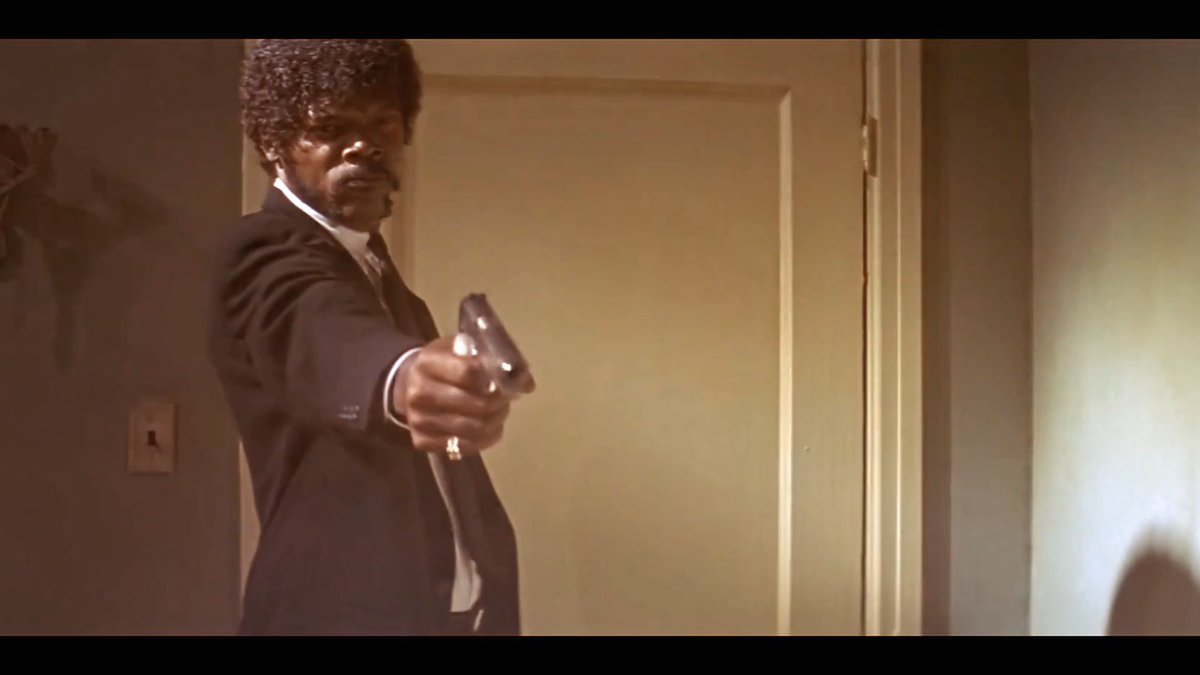
Paul Schrader explains how 'Rolling Thunder'(1977) ended up being a fascist film: "'Rolling Thunder' (1977) was going to be my first film as a director. That film has an ironic history. I originally sold it to Larry Gordon at AIP, and then Larry moved from AIP to Columbia and...

15,929 görüntüleme • 10 ay önce •via X (Twitter)

0 Yorum

Yorum bulunmuyor

Orijinal gönderinin yorumları burada görünecek

Benzer Videolar

On this day, 52 years ago, John Cassavetes' "The Ki!!ing of a Chinese Bookie" (1974) was released in the USA. John Cassavetes explaining why he made the movie: "'A Woman Under the Influence' (1974) was the first picture I’ve had anything to do with that wasn’t made out of plain, simple feeling, but rather out of a real desire to do something in my profession. It was extremely frightening for me not to come to work out of enthusiasm and instead put myself up as something of a craftsman. Earlier films such as 'Shadows' (1958) and 'Husbands' (1970) grew out of personal experiences reaching all the way back to my childhood days. They were expressions of my innermost feelings, and now that I’ve dealt with all that, I feel obligated to view life in other terms. I want to explore other areas of human and artistic experience. I made 'The Ki!!ing of a Chinese Bookie' (1976) as an intellectual experiment– not because I am in love with it. I enjoy a more intellectual and less emotionally demanding view than in my previous work. If I can make, out of certain intellectual ideas, films that are complex in their nature, then I’m entering into new ground. And that is certainly something I look forward to. It is a film that has little to do with me and with how I feel about life. It’s interesting to me to see how other people live in our society, to look at them and ask myself, ‘Why do they do it? And how do they do it?’ Without trying to explain. The fun and challenge of the film was to imagine a self-contained world different from the one I live in: to move into it and live in it." ("Cassavetes on Cassavetes", edited by Ray Carney, 2001)

DepressedBergman

86,531 görüntüleme • 5 ay önce

Samuel L. Jackson explains how he landed the role of Jules in Pulp Fiction, and what it was like seeing the film for the first time on the big screen: “Pulp Fiction and I came together in a very strange kind of way. I remember auditioning for Quentin for Reservoir Dogs in New York (for the role of of Detective Jim Holdaway, Mr. Orange’s police contact). And apparently I didn't get that role. But I was at Sundance the year that he screened it for the first time. I was sitting there and I watched that movie - I was awed by it. I mean, there were people running up the aisles when Michael Madsen was cutting the cop's ear off. People were going, "Oh my God, this is horrible!" All these “auteurs” were running out of the theatre. I was like, "This is good. This is happening. This is different." So after the film, I walked up to Quentin and said, "This film's amazing, man. It's great." And he looked at me and said, "Hey! How'd you like the guy who got your part?" And I was amazed that he even remembered who I was - but he remembered me. A year or so later, I got a phone call saying Quentin Tarantino wants to have dinner with you, because he'd seen Jungle Fever and he liked that Gator character. When we had dinner, we were sitting there talking. We started talking about Hong Kong films and cartoons and foreign movies and obscure things that we watched, horror movies. We found out we liked the same kind of stuff. And he told me he was writing this thing, and he was writing this part with me in mind. He was going to send it to me. I went off to do another film. I was in the backwoods of Virginia somewhere doing a film, and the script came. A little plain brown wrapper from Jersey Films. And Jersey's got these gangster images on the logo. And it said, "If you show this script to anybody, two guys named Ernie and Luigi will come and break both of your legs." Whatever. I went, "Yeah, right." So I sat down and read it. Boom. I read this thing. It's like, "Oh my God. This is awesome." And then I said to myself, "Nobody writes a script this good. There's no way that this script is as good as I thought it was." I closed it. I opened it again. I read it immediately. Okay. This is great - If whoever produces this film lets him shoot exactly what I just read, if they stay away from it, they don't try to edit any of this stuff out - this is going to be a great film. It's going to be kind of audience-specific, because I like that kind of stuff. I have friends that I knew would like it. It was a generational kind of film. I never thought it would cross over and do all this stuff. We shot it. We had a great time doing it. And the first time I actually saw the film was at the Cannes Film Festival. That night, it screened, and I was sitting there watching the film. The audience was loving this movie, loving it. About halfway through, I realized there were subtitles at the bottom of it. So I said, "Hey, these people are reading it, and they're getting it. This might be special. This really might be something special." And actually, by the time it was over, there were tears running down my face. I was just so pleased that I was part of that particular film… I never felt that satisfied, and that kind of full about a performance and about being part of something as I was in that particular moment.” Quote comes from an Interview with the American Film Institute 2010

Gangster Cinema Central

85,366 görüntüleme • 1 ay önce

Francis Ford Coppola on how young children convinced him to make 'The Outsiders' (1983) & the reason why he loves the movie: "Interviewer: 'Rumble Fish' (1983) is so completely different a film from 'The Outsiders' (1983), not just in black and white and color, but in the tone. And everybody said, “Well, he’s off in Tulsa, making two films,” rather in a way that, once, people would go up to the desert and make two westerns at the same time. 'Rumble Fish' makes 'The Outsiders' seem an odder film than I thought it was when I first saw it. 'The Outsiders' almost felt like a film in which you weren't quite there all the time. Coppola: No, I don’t think so. 'The Outsiders' (1984) was the type of film that I personally liked, a melodrama with a romantic tone. I liked the book a lot when I read it; I thought it was sweet and youthful and had something in its little, simple theme that was of value, and I wanted to make the picture very much as the book was. Maybe that’s what you're interpreting as my not always being there, except that I did make the decision to make it exactly like the book. The key to 'The Outsiders' is the score; the fact that it’s this schmaltzy classical movie score indicates that I wanted a movie told in sumptuous terms, very honestly or carefully taken from the book without changing it a lot, with young actors—putting the emphasis more on that kind of 'Gone with the Wind' (1939) lyricism which was so important to the young girl [Susie Hinton] when she wrote it. I liked the film on that basis. It’s how I made it and why I made it. But if you think about my career, I’ve never made two films that were alike... maybe the two Godfathers. But every one of my films is very different from one another and I was feeling that I was in kind of a journeyman period of my life, approaching a future style of work as a more serious, older man which would be based on a tremendous amount of exploration while I had the chance to do that. To me it’s nothing to say, well, I’m going to make that film and it’s going to be that kind of film. Like 'The Outsiders'—it’s not that I couldn’t make that sixteen other ways. People suggested, “Well, are we really going to make this book like that?” “Well,” I said, “little kids wrote me a letter and wanted me to make it that way.” Of all the letters I get from movies, 'The Outsiders' is the one where all of these cute little fourteen- year-olds . . . so I’m in it for them. I feel I must have gained something, although it wasn’t as challenging, cinematically or even on the level of acting and other things as, say, the one that came afterwards. But I always had this idea that I wanted to make one film that was romantic and schmaltzy, like 'The Godfather' (1972), and one film that was more of an art film, more in the direction of 'Apocalypse Now' (1979)." (Francis Ford Coppola's interview with David Thomson & Lucy Gray, 1983)

DepressedBergman

36,099 görüntüleme • 6 ay önce

Paul Schrader talks about the racism in "Taxi Driver" (1976, Scorsese): "Interviewer: In 'Taxi Driver' (1976), was the Harvey Keitel character originally black or white? Schrader: Well, you’ve gone right to the heart of the matter. The film is riddled with racism, and Travis, the main character, is a racist not by conviction but by fear. He is everything by fear. He has very few convictions about anything except immorality, but when you feel the pressure coming down, when you feel the world shrinking, one naturally looks for enemies, and what better enemies are there than people who are not like you? Travis’ enemies are people who are at ease. He hates people who are comfortable. He himself is extremely uncomfortable. He’s not at ease anywhere, so he hates. Travis admires the politician but also hates him because the politician is at ease, especially in the world of women. This is where Travis’ feelings about blacks emerge. He sees the blacks out there almost as animals. He sees them out there having fun, out there jiving with women. He sees them dancing and relaxed. He’s so uptight himself and so constipated and attenuated that for him the blacks begin to be some kind of a focus for the thing he can’t have, that relaxation he lacks. So the racism starts to run through the film. It starts to rear its head very overtly. You see him looking at these people and you know it’s not a matter of conviction, because he doesn’t have any real beliefs or strong theories about blacks. It’s just that he has this thing about people who are at ease. The logical conclusion of the film would have been that all the people he ki!!ed were black. It was in my mind when I wrote the script that he ki!!ed only black people, but that was just too much. Marty and I were just too terrified of it. I mean, the film explores the borders of bad taste as it is, and there is just so far you can go in the commercial cinema before people get up and throw stones at you. I think that if we had followed his racism to the natural conclusion, which is him ki!!ing three black guys, the audience would have just said, “Holy f**k, that’s just too much.” So we made them white, which is a thin cover. Somebody asked Pauline Kael if the film was racist, and she said, “No, it’s not racist, because he doesn’t ki!! black guys at the end.” She missed the point completely. His actions are racist, and the only reason he doesn’t ki!! black guys at the end is that we didn’t want anybody st@bbed in the theaters. That’s my opinion. Marty may dress it up and put it in a different language, but the racism of the film really is quite clear. I think it’s possible to distinguish between the racism of the main character and the racism of the filmmakers. I mean, Marty and I and De Niro are racists to the extent that all people are racists. I think it’s part of the job of a writer or anybody worth his salt to explore his closets. We’re all in the dirty-laundry business. An artist gets to a certain point where he says, “I’m not afraid to explore my Jewishness,” “I’m not afraid to explore my homicidal tendencies,” “I’m not afraid to explore my s**ual deviations,” “I’m not afraid to explore my racism." I mean, the whole f***!ng film takes place in his head. New York consists of a lot more than Forty-second Street and Broadway. All you see of New York is his very peculiar vision of it, and he has a very sordid view of things. You only see blacks through his eyes, and the only exception is the black he works with, who he borrows money from. You are given no alternative view of reality. One of the rare things about Taxi Driver is that this character, Travis Bickle, has been in a lot of movies, but you’ve always been given another perspective on him. In 'In Cold Blood' (1967) you see him through John Forsythe’s eyes. In 'Psycho' (1960) you see him through Martin Balsam’s eyes. In 'White Heat' (1949) you see him through Edmond O’Brien’s eyes. But this is as though you see White Heat solely through Cagney’s eyes, which makes for something very different, because Cagney is very mentally disturbed in that film. You have the same situation here. You’re getting Travis’ perceptions of the world, which are very distorted and unrealistic." (Paul Schrader's interview with AFI, 1976)

DepressedBergman

102,144 görüntüleme • 2 ay önce

Watch This Video to Know Why #AkshayKumar is the biggest flop actor of Bollywood right now.. Akshay Kumar could never become a super star, the reason behind this is releasing 4 films in a year and making all of them flop.. Even today he remakes 9 out of 10 films and does the same 1-2 films with worn out knowledge, when he saw that every one of his films started to flop, he clashed with #Gadar2 and made it overflow in Pankaj Tripathi's film in which he was doing a cameo, after that he named a big Bakwas film as Kesari 2 and kept giving Bogo offers every day, consider that the film is based on Bogo offer only..the biggest one It was surprising when they showed a film like Sky Force to everyone for free and the ticket offer was such that the public was watching it for Rs 20. The budget of a film like Welcome to the Jungle was 300 crores but its budget was reduced to 150 crores. A film like Selfie was taking an opening of 2 crores and a film like Bade Miya Chote Miya earned 50 crores instead of 350 crores. They wasted all the producer's money and now they are not even getting films. A film like Bhoot Bangla had full corporate booking. A film like Housefull 5 flopped even after taking corporate booking. Akshay Kumar could never give a 250 crore Hindi net in his life. An all time blockbuster in his life. He could not give it. He has given only solo blockbuster in his entire career, apart from this, the biggest record in his career is that 18-20 films flopped continuously after which he had to take Canadian citizenship. The film left by Sunny Deol saved his career and that film was also average. Today if we compare Akshay Kumar then it happens with actors like #ArjunKapoor , Tushar Kapoor, Vivek Oberoi...

Rahul Gupta

49,729 görüntüleme • 5 gün önce

In 1977, before anyone knew what Star Wars would become, Alec Guinness sat down to explain how a knighted Shakespearean actor ended up in a science fiction film he almost turned down. The script arrived while Guinness was finishing a picture in Hollywood. The name attached to it impressed him. "I heard it had been delivered by George Lucas, and I thought that was impressive because he was a respected young director." Then he learned what kind of film it was, and his enthusiasm collapsed: "When I found out it was science fiction, I thought, 'oh crumbs,' and felt it simply wasn't for me. But then I started reading." What kept him going wasn't the writing. By his own account, the writing was a problem: "It seemed to me the dialogue was pretty ropey, but I had to keep turning the page. That is an essential quality in a script. You have to want to know what happens next." That instinct, the inability to put the pages down, was enough. He met Lucas, the two got on well, and Guinness found himself signing on. Then comes the part of the interview that has since become legend, told here in 1977 with no idea of how the numbers would balloon. Guinness recounts the percentage deal: "My agent asked for 2% because we didn't think it would make any money. I'd never had a percentage on a film before." The story of how it grew is almost comic in its modesty: "The day before the film opened in San Francisco, George Lucas phoned me. He's very diffident and shy, and said he thought the movie was going to be all right. He said they were grateful for the little alterations I suggested and offered me another half percent, making it two and a half. A few weeks later, I asked the producer for something in writing, and he mentioned a quarter percent, so it ended up being 2 1/4%." A modest slice of a film nobody expected to earn anything. Asked what fascinated him about it, Guinness reached past the genre and landed on something simpler: "I think it has a marvelous healthy innocence. It has great pace, it's wonderful to look at, and it's full of guts. There are no horrors and no sex at all." He described the strange aftereffect of watching it: "It had a sort of wonderful freshness about it. It was like fresh air. When I came out of the cinema into London, I thought the city looked gritty and full of rubbish because the film had been so invigorating. It's simple stuff for all ages." And already, before the franchise existed, people were reading more into it than Guinness ever intended. Asked if he was becoming a kind of guru figure, he answered with characteristic dryness: "I am getting some pretty strange letters. One said, 'my wife and I have got problems, would you come over and live with us for a few months?'"

History Nerd

94,626 görüntüleme • 2 ay önce

In 1977, Sylvester Stallone explained why he wrote Rocky and how he convinced Hollywood to let an unknown actor play the lead. When asked why he wrote the script, Stallone described what he saw as a problem with the films of that era: "I felt at the time that cinema, at least the movies I had been seeing were at an all-time low. It was everything was anti-society, anti-Christ, anti-government, anti-everything. And there was no one to root for." He believed films move in cycles, and he wanted to bring back something that had been lost: "I wanted to get back into the cycle of the films of the 40s and the 50s where people say, 'Hey, gee, I missed the good old films.' Yet Hollywood hasn't taken heed and hasn't made any good old-fashioned type films where morality was at the forefront." Up to that point, Stallone's career had been built on tiny roles, what he called "atmosphere": "I was mostly what is known as atmosphere, always in the background or the guy that was being the drunk that was being stepped over in the gutter and other lame roles." Writing Rocky was his way of giving himself one real shot before disappearing: "I felt that gee, if I was going to go down at least into professional obscurity, I wanted to at least have the opportunity to say to myself, well, you tried. You put your best foot forward and you didn't make it." He knew the character had to match what he could authentically play: "I surely couldn't pass myself off at least as a lawyer in a three-piece suit. I just don't think I have that kind of appeal or whatever it is. So I wanted to take it much more basic. A man from the street. All right. What kind of a man? An underdog. And that being a professional fighter I think has that connotation to it." When the script reached studio executives, they wanted a star. They floated James Caan, Burt Reynolds, Ryan O'Neal, Gene Hackman, and Robert Redford. Stallone's pitch for himself came down to persistence and economics: "Usually it's the old syndrome of knocking on the windows, pestering them, pressing my face in the door, honking their horn in the driveway. In other words, making a real pain in the neck out of myself." "I kept saying I work a lot cheaper and a lot harder and for a lot longer." The film was eventually made for $960,000, which Stallone described as roughly the cost of "a good toothpaste commercial."

History Nerd

377,308 görüntüleme • 3 ay önce

Zack Snyder expected fans to edit 300 and 300: Rise of an Empire into a single chronological edit. "Well, this film takes place on the same three days as the Battle of Thermopylae. We just get to see a different perspective. We're not from the Spartan perspective. We're from the Free Greek perspective. And we're following this leader, Thermistocles, who is a naval commander." "Yeah, and the other thing we get to see, I think, that's different in this film is it sort of, it also, it jumps forward and backward a little bit because it also goes and sort of paints the origins of Xerxes. So you get to see Xerxes' birth, what caused him to sort of become the character that you saw in the original film. "And you get to see him, you know, transform before your eyes. So it's a, and that's a mystery too. And it's kind of fun to watch that. And I think it, and then you also get to see sort of some elements of the original film kind of woven through to sort of let you see where you are in context of the timeline of the original film. "So you kind of, every now and then you're just checking in with that sort of, the, you know, the Spartans and their, what they're up to. So it's kind of fun that way too." "I love that there's moments where you go, 'Oh, that's the messenger.' And it's not just the characters you expect to see coming back." "Or like when Daxos rides up and tells Thermistocles, like, 'The hot gates have fallen.' You're like, 'Oh, that's awesome.'" "'That's where he went. I remember him leaving.'" "'That's where he went off on the horse. Remember, he rides in the, it's cool.'" "It's a fun way to see the characters that, you know, that connect us to the original film." "I thought it'd be cool, like, if some fan, you know, once this movie comes out on DVD, they can, some fans could cut the two movies together into a single, like, you could cut them into a single film."

Zack Snyder Film

20,182 görüntüleme • 6 ay önce

Quentin Tarantino recounts a dinner with Robert De Niro during the making of Jackie Brown, where he asked him whether he understood when he landed the role of Vito in The Godfather Part II, that it would change his life. De Niro’s answer revealed a great deal about his mindset at the time. “I was working with Robert De Niro on Jackie brown, and we went out to dinner once. - When he got Vito in the Godfather Part II, that was going to be a big thing for him. He won the Oscar for it - it set him up to be a movie star. So I asked him - and I've asked this to quite a few actors when it comes to when they got the role that would end up changing their career - did he realize that the moment when he got the role, that it would have this sort of effect? And he goes oh, “I tried not to let it do that. I tried not to think about that” I go, "really? and why did you try not to think about that?" “Well because I’ve seen it happen and then go the other way” And then he used an example. “There was this guy, he was a young actor, and he was part of our crowd in New York. He'd been doing okay, but we were all in the same boat. Then all of a sudden he got a lead role. He's one of the two leads in a brand new movie by a director who had just done a smash hit.” And he's talking about Larry Pierce (the director) and uh... Goodbye Columbus. ”And he started dining out on it. And all of a sudden I go to the places that we used to go to, and now he's there and everyone's kind of revolving around him. He's kind of holding court. He's not doing anything bad; he's just arisen in the way that none of us have - and we're all treating him different. Then the movie comes out; nobody likes it - The movie comes out, and it goes away, and he's exactly in the same place he was. And I just wanted to make sure that that would never happen to me because I watched it happen to him.” Quote from Video Archives Podcast, sourced from James Whale Bake Sale YouTube channel. Clip below from the Godfather Part II (1974)

Gangster Cinema Central

97,458 görüntüleme • 3 ay önce

Hou Hsiao-Hsien on the autobiographical nature of "A Time to Live and a Time to Die" (1985): "In 'A Time to Live and a Time to Die' (1985), I wanted to get back to a one-to-one relationship between filmmaker and subject, much as I had in 'The Sandwich Man' (1983). 60-70% of the film is drawn directly from my own memories, the rest from conversations with other members of my family and from research. Of course, the narrative isn’t structured in terms of chronological autobiography. The strongest structuring elements are the three deaths; beyond those, it’s structured in terms of memories and impressions. Both the family in the film and my own memories are essentially vehicles for the discussion with people of my generation of some things that should be discussed: the political and social predicament of those people in Taiwan who originally came from the Mainland. It’s something that simply hasn’t been talked about, least of all in films. After I had shot the film, but before I edited it, three images came together in my mind that helped me to rationalise what I was doing. First, a guy from Hong Kong told me how he used to make annual trips with his family to visit his old grandfather in Guangdong province. One year the grandfather took them all out to a mountain overlooking the sea. He clutched a compass in his hand and said: ‘This is where I want to be buried’. I somehow made a mental connection between this faintly absurd scene and the man who carries a magnet everywhere to prospect for precious metal in 'One Hundred Years of Solitude', which I was reading at the time. And then I made the association of both images with my grandma and her road back to the Mainland. It struck me that all three images combined something fundamentally real with something surreal or absurd. I’d never thought of things in terms of the coexistence of the real and the surreal before. For me, this was a kind of conceptual breakthrough. I suppose that many people in Taiwan must have thought that bringing up the question of our isolation from the Mainland was a touchy thing to do. It obviously is a delicate issue. But the very existence of the film proves that it needn’t be touchy, which strikes me as useful. I guess the authorities let me do it because my other films have shown that I try to be sincere and that I don’t have ulterior political motives." (Hou Hsiao-Hsien's interview with Tony Rayns, Film Buletin, 1988) P.S: On this day, 41 years ago, "A Time to Live and a Time to Die" (1985) was released in Taiwan.

DepressedBergman

27,463 görüntüleme • 4 gün önce