Loading video...

Video Failed to Load

Go Home

$PEED DAY (on a shortened class period) After Performance Prep we do some spinal engine & dynamic groin drifts from Vern Griffith (BIGS) Sled Broads > Med Ball Throw (Skill/Mids) Plyos: Multi-Directional & SL -Sprint-Float-Sprint -(1) 30YD sprint at end GPS will tell me.
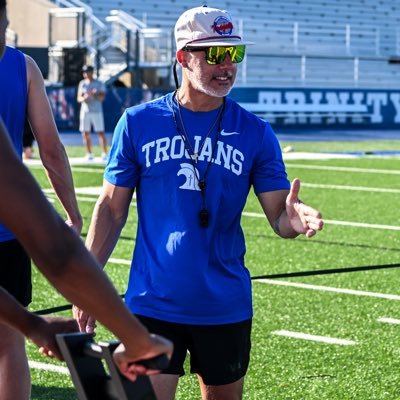
38,415 views • 1 year ago •via X (Twitter)

2 Comments

Mason “The Flash” Fields's profile picture
Mason “The Flash” Fields1 year ago

Great workout

TappAlpha's profile picture
TappAlpha1 year ago

Designed to generate daily income while capturing the growth potential of the S&P 500, $TSPY helps unlock new financial opportunities. For important information about the fund visit: #ETFs #Investing #IncomeGeneration

Related Videos

This American needs to lead the Department of Education “This is my audition to become the head of the US Department of Education - My first act of office will be immediately abolishing the No Child Left Behind Act. Yes, we will be leaving children behind. If they fail a class, they will have to repeat it - My second act is one that I'm very passionate about. We will be bringing zeros back. If you don't know, in many schools in the US right now, students receive 40% or 50% if they do zero work, if they do not complete an assignment. And my school included, and many other schools, are not going to be allowed to give a student a 50% if they do not turn in any work. They will have to receive a zero. Likewise, there will be no completion grades, If you just attempt an assignment, that doesn't mean you get a 55%. Like, if you get a 1 out of 10, you earned a 10% on that assignment, and that's okay. Sometimes failing happens, and we don't need to just inflate the grades just for fun. Grades will reflect students' actual performance and understanding of the content - The third one I'm very excited for as well. Teacher evaluations will take place once a year and teachers will be observed by another current teacher from a different school. Teachers would volunteer to be evaluators. They would get a sub for the day, no questions asked, and then they would evaluate objectively. That way the person evaluating you does not know you and does not have any personal bias towards you. Hopefully. - The fourth one, I think this should be common sense, but I hear that it happens all the time at some schools. Never at mine. But teachers shouldn't be expected to work for free. I hear elementary teachers are doing these before and after work things that they aren't getting paid for, like lunch duty or recess duty or pickup duty, whatever it is. The school needs those things covered. People can volunteer for it, and then they have to get paid for it. They can't force you to cover other people's classes for free. They have to pay you extra if they're gonna take away your lunch or your prep or whatever time that is supposed to be yours and then force you to do something without getting paid. There will be no more voluntelling. Hire this woman. The most important thing we need to do is hold students back and force them to learn the work. No more dumbing down out standards

Wall Street Apes

286,643 views • 2 months ago

Pylon's 𝗺𝗼𝘀𝘁 𝗵𝗮𝘁𝗲𝗱 𝗳𝗲𝗮𝘁𝘂𝗿𝗲 is our Analytics. That ends today. We've completely rebuilt our Analytics from scratch. Here's what we tried, what we screwed up, and what's coming. 𝗩𝗲𝗿𝘀𝗶𝗼𝗻 𝟭, The Basics (Nov 2023) Our first attempt at analytics was quite loved by customers. At the time our customers were mostly small startups with simple needs. We built an out-of-the-box set of dashboards that covered the common use cases of support analytics (SLA-tracking, CSAT, TTFR, TTR, basic filtering...). As we moved upmarket... 1/ Everyone was requesting custom metrics 2/ Queries were becoming inefficient and slow We needed an upgrade. 𝗩𝗲𝗿𝘀𝗶𝗼𝗻 𝟮, Advanced Reporting (June 2024) We knew custom reporting was going to be blackhole of work that long-term led to fully customer-customizable dashboards. We had four choices: 1/ Do nothing for now 2/ Do custom work per customer 3/ Build full custom reporting in-house 4/ Use an embeddable analytics vendor At the time Pylon was under 10 people total and we had no capacity to do the frontend work so we chose Option 4 (use a vendor). This was the first time we chose to not build a core feature like this in-house as we ultimately want full control of the end-user experience. We built out the new reporting with the chosen vendor over ~3 weeks. On the surface the new reporting looked really good (not visually, but in terms of functionality). You could add custom charts of any type, create custom formulas, label the Y and X axis, and effectively build most of what you would want. It was really great for demos. But in practice it was incredibly hard to use, lacked core capabilities (like the ability to filter off of dynamic custom fields), and visually looked not stylized to the rest of the product. We started to discover some of these issues during the implementation, but it still felt like there was more upside than downside so we released it. Feedback was not great but we hoped our vendor would fix changes quickly. Unfortunately they weren't fast enough and we lost confidence that they would be a good long-term solution. As a stop-gap we also built out a data warehouse integration so customers could export their data back to Snowflake or BigQuery to use with their own BI tools. Finally, a few months ago the vendor told us they were being acquired. That was the final straw. We needed to move off ASAP. 𝗩𝗲𝗿𝘀𝗶𝗼𝗻 𝟯, New Reporting (Today) Today's release is back to being built entirely in-house. It's been rolled out in beta to all customers with an option to flip back to old analytics until we plug some custom reporting gaps. This time we have the capacity to do it right between Wendy (prev product design at Amplitude), Matt, and Tom. We've managed to greatly improve: 1/ Desired filter options (custom field support) 2/ Performance 3/ Setup UX 4/ Style (looks native) Early feedback has been really positive so far and as we bring it out of beta we're thinking about how to make the best natively-offered reporting of any support platform. 𝗩𝗲𝗿𝘀𝗶𝗼𝗻 𝟰 (What's coming soon) To get to first-class reporting, we need to study not only our learnings, but also what the incumbents have screwed up as well. Funny enough, Zendesk's analytics have similar complaints to our v2, and for the exact same reason as we did: they integrated an external tool. In 2015 they bought a company called BIME Analytics which they became Zendesk Explore. The complaints they have to this day are similar to our v2: 1/ Steep learning curve 2/ Advanced, yet still not enough flexibility 3/ Random feature gaps 4/ Data accuracy and reliability concerns 5/ Performance issues 6/ Complicated UX v4 will follow three core principals: Offer a simple default setup. We want to continue being startup friendly and we'll feature gate custom reporting and data exports by tier in the product. Offer maximal configuration, with AI-assisted setup. As we go upmarket, customers will want to Explore (pun intended) data in every single direction. We need to allow them to do that. For those more complicated use cases we think AI will be the Ultimate (also pun intended) way to reduce setup friction. Build it all in-house. Although using a 3rd party embedded analytics provider didn't work for us, we don't think that is the case for everyone. It's just in customer support, reporting is REALLY important. They are probably some of the highest-complexity reporting of most SaaS vendors (maybe second to marketing products). So... we have to do it right. And since this is end-user facing, we have to own every detail of it. If you got this far, thank you for reading. See our new Analytics at

Marty Kausas

115,123 views • 1 year ago

** Mega Parodius Update ** The team have been busy over last couple of weeks , implementing more of the games engine. WIP since last update : White Bell power up ( this is the text attack ) Blue Bell power up ( full screen explosion ) Catboss & animating Trees Updated Lazers to work on the BGB layer ( Plane A updated to 64x64 tilemap ) . Pyron has been doing excellent work on Blue bell Explosion, Whitebell power up text gfx - the slogans are great !! Arcade quality tree animations have been added. Feeding me a lot of videos so we can replicate the arcade port more accurately. Vector Orbitex has updated the music to mark IV for stage 1 making it smaller yet again , he's also added the Orchestra Hit in , potentially more samples can be added back in now also as the song now is a miniscule 57 kb. I keep telling him its 2025 - not 1990 for rom sizes haha , a professional is always a professional though !! The Blue Bell power up uses the static large sprite class I made for SOTA where it supports unlimited amount of sprites per object and detects all the reverses / flips & uses the same tile pointers where it can and crunches it down into single sprite object. We use up to 40 sprites in the Explosion but only 147 tiles needed in vram thanks to clever use of mirroring. The Catboss is easily the hardest enemy in the level for a few reasons - we also had to free up Plane A so the boss could shift upwards onscreen, so lazer effects were shifted to Plane B. The bit that caused me the most issues was when he sits in the water line between the two islands. He is quite wide and also has overlapping palettes and animating parts , to do it solely with sprites would have lead to severe dropout at times. At the waterline we have to simulate 3 background planes and sprites at that point and we only have 2 background planes. Luckily the MD sprite engine is very flexible and we were able to recreate the arcade look at this point with some sprite trickery, the water-line is now sprites . So we use Plane A + sprites to recreate him and use a lot of plane animation to reduce the amount of sprites needed. For example the face, the tail the propeller are all plane A animations . I analysed the SNES/PCE versions and we use less sprites than those versions for him so that will help reduce the chance of sprite dropout when attacking. The Catboss is only about 1/2 done , all damage states, the onboard penguin factory, bullets from Cannons yet to added etc. He wraps around at the end of the vid as theres no destruction routine in for him yet . No extra enemies in at this stage , tackling the hard parts first etc. We took the arcade GFX for the Trees that sway around under the Catboss, all the animations are in. There were some DMA bandwidth issues originally I had to sort out as the Catboss has several animating parts + swaying Trees was leading to overload so after some load balancing it all is playing nicely !! We still have loads of stuff to add , collisions are not in - normal enemy waves etc but yeah a lot of future issues were sorting out just getting this far. So the team is very happy with the progress !! #SGDK #Parodius #SegaGenesis #SegaMegadrive #indiegame

Shannon Birt

19,284 views • 10 months ago

⃤ Video of a Black Triangle - What's the Frequency, Gerry? ⃤ "A very clear visual representation of what was on the radar. It resembled a very black, triangular or delta shape to it" "It was always slightly out of focus for some reason." "Garry Nolan told us to watch for the cloud formations." (If you scroll down to the bottom, I'll tell you the exact time stamps for each the UAP videos that were shown.) "We believe [it's NHI]. Either that or some very sophisticated technology that maybe we're reverse engineering." "There was a specific electronic signature (frequency) emanating from them when they were going into or coming out of the water, so they were easy to track." ~Bob Fish ~ Gerry Tedesco: August 29th, "we were in the RV, running tests on our equipment because we was planning on going out that weekend." John Tedesco: "And we noticed that we had a signature (on their spectrum analyzer) there that was well presented, very unusual for the area. And we kind of collaborated that with some radar data. Radar seemed to align with what we had on the spectrum analyzer. The object, we believe, was over the water at that point, simply because of the distance that we were able to capture it on the radar. It presented in a cloud layer, exited a cloud layer, produced a signature." Gerry; "This was a single thunderstorm cloud in the sky and the weather was great. We had cumulous clouds out there, mostly clear. And this was a dark, cumulonimbus cloud. It was a very dark thunderstorm cloud, and it looked out a place. " Ross Coulthart: "Do you think that that cloud might have been a fake cloud?" Donna Lee Nardo: "So Garry P. Nolan, he came out with us for our field study one night. He told us, Watch for the cloud formations.' And John, Gerry, and I saw one really nasty-looking...it looked like 10 motherships situated...oriented north to south, one night when we were doing the field study. And I believe this was early on in 2022. And it also was a clear night, but it just looked out of place. It was dark, yet there were lighted portions. But it was just so humongous. And we always remember that Garry had said, look at the cloud formations." Gerry: "Yeah, we definitely had some oddities out there." Coulthart: "I've had people, multiple people have sent me imagery. There's quite famous ones on YouTube where you see what looks like a cloud, and it's shaped just ever so slightly like a disc or a craft. And it's got the fluffy edges of a cloud, and then it suddenly maneuvers and just moves away. And I sometimes wonder whether something or someone is using clouds as a form of stealth or signature management." Gerry: "That's a possibility. We look at that, we look to see if it is a cloud. We use shortwave infrared, which does pick up moisture. And it'll actually differentiate the precipitation in a cloud, or moisture in a cloud, so we know it is a real cloud." Coulhart: "Did you do that with this cloud that night?" John: "Exactly, exactly. And this is something that we could determine that there wasn't moisture content." Coulthart: "So you were able to show it wasn't a classic cumulonimbus cloud, even though it looked like one." John: "No, no. Yeah, and the object was well hidden for a short period of time. Actually, relatively long period of time before it emerged from the cloud body." Coulthart: "So Donna is probably right: This is probably some kind of intelligent stealth management by something." Gerry: "It's a possibility." Donna: "Possibly." John: "It could very well be." (I like how all three will only go as far as, Possible and Could be.) Coulthart: "This is where it gets really interesting. Talk me through what happens next. " Gerry: "Okay, so we watched an object emerge from the cloud on radar. John and I quickly went to get our binoculars, we have what's called Vortex binoculars. These are high-end binoculars, great optical glass. John had began looking at the cloud with those, and he told me, we both went outside. I was trying to find one of the other cameras, scrambling, trying to get one of the other cameras going. "And John said, 'There's a black object moving between the cloud.' And then it was emerging from the cloud. So I grabbed my cell phone and videotaped it. While John was looking at them, we switched. And what we saw was something...originally it resembled a very black, triangular or delta shape to it, or bell shape to it. It had that Delta shape, or triangular shape." Coulthart: "And was this showing up on radar at this stage, that delta shape?" Gerry: "Yes." John: "Yes." Coulthart: "Wow!" John: "Yes, we did have a radar target." Gerry: "We tracked it on radar. On radar, it appears to separate into two more objects, which is quite interesting." Coulthart: "You found something interesting in the frequency, and you can't talk about it, can you? Has the FBI asked you, not to talk about it?" Gerry: "Yes, that's the sensitive part. There was quite a bit of interesting signals, but that goes into signals intelligence, which we can't talk about." Coulthart: "Just let me guess. 1.6 by any chance?" (They all laugh) Donna: "You've been talking to people." Gerry: "No comment." Coulthart: "No, it just fascinates me. Is it 1.6 gigahertz, or megahertz? I'm trying to remember." John: "It's gigahertz. Yeah, I know with Skinwalker Ranch, I know the one, 1.6 seems to come up quite a bit. There's also a three-gigahertz signal, supposedly." Gerry: "There's a few others, too. We'll leave it at that." Coulthart: "No, but it's interesting. It's such a consistent thing, and I'm really interested because all around the world, people are contacting me, talking about 1.6, in particular, but also about three gigahertz. And nobody's explaining it. But often it's an indicator." ~~~From My Bob Fish Blog~~~ Bob Fish: "In that same TS/SCI building cafeteria in El Segundo, I had lunch with a senior USAF NCO who had worked for Project Blue Book in the 1970s (after it had been 'officially disbanded'). He was an ELINT technician (electronic intelligence) who flew in RC-135s from MacDill AFB in Florida. The 'normal' target was Cuba where they did lots of snooping and sometimes challenging the Cubans to turn on radar and other systems. "He said there were times when they were diverted from these missions to track UFOs off the east coast of Florida. His claim was that UFOs had a landing and takeoff spot in the ocean east of Miami, north of Bermuda. He also claimed there was a specific electronic signature (frequency) emanating from them when they were going into or coming out of the water, so they were easy to track. On several occasions they filmed the UFO as it transitioned from water to air or vice versa. High quality film of UFOs is 'out there' somewhere!" (What was the signature? 1.6 gigahertz? 3.0?) ~~~End Bob Fish Excerpt~~~ Coulthart: "And as you say - without giving away the frequency that you detected - you detected a frequency anomaly on your spectrum analyzer. You saw it there. Then you got it on your radar. And then when you visually observed it with the binoculars, the vortex binoculars, you then corroborated that object on the radar as well. So you've got four separate data points to corroborate something anomalous." John: "And a very, very clear visual representation of what was on the radar. The interesting thing I will say that we had observed flights of commercial aircraft at the same time through these lenses, these very clear lenses that we use. The commercial aircraft was extremely detailed, in focus. You can even make out the writing on the on the aircraft. The object itself? No." Gerry: "It was always slightly out of focus for some reason." John: "It was poorly presented." Coulthart: "And you gents would understand, and I'm sure Donna as well, that the Alcubierre-drive principles. That, essentially, if something is coming, if it's warping space time, there's allegedly some kind of plasma or some kind of distortion field around the object. Do you think that might explain what you were seeing? Gerry: That's a possibility." John: "That's a very strong possibility." Gerry: "It's something we're looking into. There was also, there was a shimmer around it. Definitely a possibility of some kind of field effect around it." ~~~ Time Stamps Extremely bright, luminous sphere over the ocean. Not visible to the naked eye. - 13:33 The Black Triangle - 33:31 Orb-Like Object Over Land in Farmingville, N.Y. (Where my sister lives) ~ 58:18 Similar to what @MeaganOurada saw - 1:14:05

Joe Murgia

14,232 views • 9 months ago

At 14, Jim Simons got a job putting away stock in a basement. He was so bad, they demoted him to floor sweeper. When he said he wanted to study math at MIT, his bosses laughed. He went on to make $100+ billion in trading profits. More than Buffett, Soros, & Dalio combined. In 2010, he spent 60 minutes at MIT explaining how a mathematician became the world's greatest trader: "They thought that was the funniest thing they had ever heard. The guy who couldn't remember where to put the sheep manure is going to be a mathematician at MIT." He applied to MIT. Got accepted. Studied mathematics. It went all right. After graduating, Simons took a job at the Institute for Defense Analysis. Secret government work. Good pay. Half your time on their work, half on your own mathematics. Then the Vietnam War happened. General Maxwell Taylor, the head of the organization, wrote an article in the New York Times about how victory was days away. Simons disagreed. He wrote a letter to the Times expressing that view. "They kindly published it." A few months later, a reporter asked to interview him about people who work for the defense department but oppose the war. Simons agreed. Told his local boss afterward. "He said, 'You did what?' And he picked up the phone and called General Maxwell Taylor." Silence on the other end. "He hung up. Looked at me. Said, 'You're fired.'" "I said, 'I'm fired? I'm a permanent member.'" "He said, 'I'll tell you the difference between a temporary member and a permanent member. A temporary member has a contract.'" "It was the first time, and happily the last time, I was ever fired." On starting Renaissance: Simons left mathematics at 38. Frustrated. Stuck on a problem he couldn't solve. He had some money from an investment that finally paid off. He invested that money. Found out he wasn't bad at it. He brought in the best modeler he knew. A guy named Lenny Baum. "Lenny started making models. But then he seemed to get less interested in models and more interested in reading the news." "Then he started having opinions on what was going to go up and what was going to go down. And he was right enough times." "I said okay, to hell with the modeling. Let's just try to make some money." What happened next: "We multiplied our investors' money by 12 in two years." "We were incredibly lucky." But in the back of his mind, he knew models were the answer. "If you're doing fundamental trading, one morning you come in, you feel like a genius. Your positions are all your way. You think, God, I'm really smart." "The next day you come in, they've gone against you, and you feel like an idiot." "It just didn't seem like a way to live your life." In 1988, he made the decision: 100% models. No human override. "Some firms say they have models. What they typically mean is the model advises the trader what to do. If he likes the advice, he'll take it. If he doesn't, he won't." "That's not science. You can't simulate that. How were you feeling when you got out of bed 13 years ago? Did you like what the model said?" "If you're going to trade using models, you slavishly use the models. You do whatever the hell it says. No matter how smart or dumb you might think it is at that moment." "That turned out to be a wonderful decision." On the secret sauce: "People always ask me, what's the secret? We're not the only quant firm in the world. But we seem to have done better than anybody." "The real secret sauce is that we start with great scientists. First-class people who've done first-class work." "Second, we provide people with a great infrastructure." "The most important thing is an open atmosphere. Everybody knows what everybody else is doing. No compartmentalization." "And people get paid based on the overall profits. Not just on your work. Everyone has an interest in everyone else's success." "Those policies, no one of which seems so remarkable, turn out to be a pretty winning combination." On guiding principles: His wife told him to end with values. He said he wasn't sure he had any. "She assured me that I had some values, if only I could think hard about them." Here's what he came up with: 1. Do something new. "I don't like to run with the pack. For one thing, I'm not such a fast runner." "If you're one of n people all working on the same problem, I'd be last. But if you can think of a new problem that other people aren't working on, maybe that'll give you a chance." 2. Collaborate with the best people you possibly can. "That gives you some reach and some scope. And it's also fun to work with terrific people." 3. Be guided by beauty. "What's aesthetic is doing it right. Getting the right kind of people. Approaching the problem and doing it right." "It's a beautiful thing to do something right." 4. Don't give up. "Sometimes it's appropriate to be trying to do something for a hell of a long time." 5. Hope for some good luck.

Jaynit

73,790 views • 3 months ago

🧵 As a penny-stock swing trader, obsessed with data. I spent months building something most retail never bothers with - an 816-event reverse-split dataset, hand-labelled for a statistical deep dive to find the edge here Thesis - you can go long after the reverse split to harvest the mega pumps (>1,000%) like we saw in $TNON, $AREB, $SMX and $AKAN lately. 📁 My key intellectual asset is the .xls dataset 816 US R/S events, Sept 2024 → May 2026. Manually curated from TradingView , SEC filings, dilution trackers. The brutal part wasn't the dates - it was nailing the exact shares outstanding immediately after each split back in the day - took months, but I made it. Companies not always broadcast that number in their pre-split PR(especialy if ADS are involved). You back it out from the next 10-Q, an 8-K Item 3.02, or float-compression math inside a 424B. Sometimes three filings to confirm one row. What do I concider as a Pump⛽️ = any 1-day intraday ≥50% move within D+1–D+10 of effective date (incl. pre/post-market which is the most common). 🚨FIRST FINDINGS: post R/S pump rate - 30.3%. Sub-1.4M S/O cohort it is even bigger - 38.2%. Now I need to find additional predictors and develop a backtested trading strategy!🚨 🧪 Methodology 15 pre-registered hypotheses across float, split ratio, geography, toxic underwriters, structured-finance funds, cash runway, prior R/S, sector, VIX, entry-day etc.. Two layers: P(pump), and P(extreme | pump) - the 300%+ TNON/SMX archetype. 🔬 The pipeline Contingency tables + χ²/Mann-Whitney univariate, ORs with 95% Wald CIs, Benjamini-Hochberg FDR at q=0.10 across the family. Phase 4 (out of 10) will cover logistic regression with stability selection (500 bootstrap resamples, retention ≥60%), XGBoost under nested time-based 5-fold CV - outer loop for performance, inner Optuna for hyperparams (no tune-on-test leakage), SHAP for direction, RuleFit for lift-≥2 / support-≥30 rules, decision-curve analysis for net trader gain, reliability + Brier on a time-held-out test set. 📊 So far I'm at Phase 2a and preliminaty result are really encouraging. 🚀 What's next? Hypothesis 1 held! Already enriching - toxic-fund 13Gs, last-424B underwriter ID, going-concern flags, warrant overhangs (edgar data collection). If the multivariate gate (PR-AUC ≥0.30, top-decile precision ≥30%, out-of-sample) holds, Claude builds a Claude Skill and a Dashboard so I can automate the future research: ticker + R/S date (usually given in advance) → instant pump probability with SHAP reasoning 🔒 Disclosure: I made sure, the research is not replicable from this post as the signal lives in the locked .XLS dataset (only dataclearance took me one week🤓) and you can see the stevendu acknpwledgment of the key constrain for such project. If Phase 4 fails the gate, I close with a null-result write-up. That's still on the table. Let me know below if you are big on coding / statistics / have tons of Claude tokens😄 to participate in this research and as a result get access to the destilled trading strategy and finally find your statistically-proven edge, gave up gambling 🫂

Dogtor🎰📈

11,537 views • 3 months ago

Anthony Kim will play with Bryson DeChambeau and Jon Rahm tomorrow in the final group at LIV Golf Adelaide. They spoke about AK’s story: Bryson: “What an incredible story, first off. Going from the lowest of lows, almost moving away from this earth and then coming back and really taking accountability and raising his little girl and being a family man and being 1 percent better every day. It's an inspiring story that I think honestly should have a lot more media attention than it does. It deserves that. “It shows some of the opportunities that LIV Golf can provide and give hope to people. It's another opportunity to play. I think that's what's so brilliant about it is you've got a guy like that that's struggled pretty much his entire career, and this is really when he has become more of himself than any other time, more of a family man, a father, a great person that cares deeply about playing good golf now. That's all he cares about, and he loves it. I think that's really inspiring for anybody at any age, that you can pick it up and be a better person. “My hats off to him for doing everything he's doing, working as hard as he has to get back. He's an incredible talent, obviously; we know that. He's starting to show it, and for him to be in the final group will be fun. I actually haven't played with him yet, so it'll be fun to see how he golfs his ball.” Jon: “I was able to enjoy a car ride back to the hotel from the golf course in Riyadh, which somehow there's traffic at midnight there, so it was quite a bit over an hour, and he shared quite a bit of his story with me. What he's doing is nothing short of remarkable. “I really hope he can find the right person to tell his story, however form, movie, documentary series, book, whatever it is, because what he's doing is so impressive. Where he was at in life to where he's at now -- I've been able to play with him. I played in Singapore in his first season with him early on. Both of us played with him here last year in the first round, and I played with him yesterday, and the progression, the jump from those two times to yesterday, it's impressive. “The round he played yesterday on not the easiest golf course was incredible. Didn't really miss a shot. Shot 5-under and should have been lower because he did not make many putts. It was a flawless round of golf. It's impressive. It's impressive. “To see him now being part of a team after earning his spot back in the league, making a 15-footer on the second day to get into the final qualifying day, he's been proving it. “After everything he's gone through, if there's somebody that's not going to be scared to be out here and have to make the putts, it's somebody him like. I wouldn't be surprised if at this point this season he's somebody who's hoisting the trophy at the end of the week.” Hopefully AK can put on a show tomorrow and contend with them 👊

Flushing It

426,617 views • 6 months ago

$IREN My Earnings Wishlist pt1 Since many have posted their wishlist before me, I will take a different approach, and will just write down anything that I think is likely to happen in the coming 6-12 months, which interests me, and hasn't been talked about yet, or not into much detail. Chapter 1: New Sites IREN has always said they have a >1 GW pipeline. Last year, Dan Roberts said: "And that can be any number above 1GW". More recent communication mentioned "Multi-GW Pipeline", which brings the bare minimum to 2GW, and that's on top of 2.91GW of disclosed, contracted power. Yesterday, Mike Alfred said that the current 200MW deal with $MSFT is a "tiny part" of their total portfolio. He has also made comments like "Just wait until you see the entire pipeline". Also yesterday, we heard Dan mention "Outside of Texas & Globally", for the locations of their other sites. Within my subscriber group, we keep track of the land that is being optioned and bought by $IREN. Amongst these sites, we try to assess which one is the most likely to be a candidate for a connection agreement, and subsequent energization approval. Currently, the interest has shifted outside of Texas, and I believe that's why more recently we have heard the "global" pipeline come back into the picture. This is also why Dan said "Outside of Texas and Globally". Now, I wasn't going to really talk about development sites. And I think your guess is as good as mine, if you would have the information that I have. So I will not be speculating on particular sites. But will give my realistic expectation for these earnings, or at the latest, somewhere in the coming 6-12 months. Because we know that the 2025-2027 window is the most valuable when it comes to Megawatts, and we have some information that indicates a choice will have to be made before the end of this year with regards to a specific new project — I think a general expectation is in order for the wishlist of the earnings of Thursday. Prediction: $IREN's first new project will either be in Asia-Pacific ("Globally"), or in Oklahoma ("Outside of Texas"). Now I promised not to speculate on particular sites, so I will mostly focus on explaining why I think Asia-Pacific is the most likely to be next. Thanks to one of my best $IREN informers, I was notified of a new job listing by a recruiter in Sydney that is specficially looking for commercial jobs. You may be aware of IREN's job listings on HiBob or LinkedIn, but despite there being 93 open positions listed there, it's still not all that they are looking to hire. But lo and behold: there is a new listing at their commercial recruit which mentions the following: Senior Manager, Corporate Development (AI Data centres - Sydney & Vancouver Our client is a global operator in the digital infrastructure sector, developing and managing high-performance computing (HPC) facilities powered by renewable energy. The business owns and operates large-scale data-centre campuses across North America, with active expansion into the Asia-Pacific region. By combining low-cost renewable power with advanced compute infrastructure, the company is helping accelerate the global energy transition and support the next generation of AI and HPC applications. Now it gets even more interesting when we read the job description: We are seeking two commercially focused professionals to lead M&A transactions from origination through execution. Sitting at the intersection of corporate development, project development, and investment execution, these roles will drive complex deals that underpin the company’s global expansion pipeline. End-to-end transaction management: Lead or co-lead M&A processes including initial engagement with counterparties, structuring, due diligence, negotiation of binding documentation, and execution. Financial and risk analysis: Build and review models to evaluate potential returns, sensitivities, and risk exposures across acquisition, partnership, and joint-venture structures. Now, you may remember I made a post last week about IREN's ARS: One interesting paragraph that I didn't talk about yet, was the M&A paragraph: Consider pursuing strategic acquisitions and other value enhancing opportunities We may strategically assess acquisition opportunities where we believe such transactions can accelerate our strategic roadmap through horizontal or vertical integration, expanding capacity, or gaining intellectual property that may help strengthen our competitive advantage. In addition, we may from time to time, seek to dispose of, or monetize, assets where we believe we can receive value from any such disposition, or monetization, that is accretive to the business. Now before I close this topic, and give my final words on the expectations I have for the announcement of a new site, I want to shortly address the McNallie Money interview with Patrick Fleury that was released yesterday. I think it's one thing to be proud of your own customers and partners by calling them "the best in the world", it's also fine if you think that everyone is imitating your "first ever financial engineering". But I think it's not very classy to throw shade on Texas data center companies, especially peers, that have a pipeline, and long standing relationships with T(D)SP's, and have a realistic line of sight to power. Just because there is 200GW of queued capacity, doesn't mean that seasoned operators like $CIFR and $IREN are making things up. I have evidence in my possession that demonstrates that the companies I am invested in that operate in Texas, have all the means and connections to get these new sites energized. But for the sake of this notion that "having all your sites in Texas is a concentration risk", I am happy to reiterate that $IREN has in fact got a pipeline that expands outside of Texas, and most likely will see an announcement in Asia Pacific, or Oklahoma, within the coming 6-12 months. So let's see if we get something tomorrow, or if it will just be some extra power coming to Childress or Canada. But almost 1 year after the announcement of Sweetwater 2 — I am confident that the time is near that we hear from a new site, potentially outside of Texas or globally.

Frans Bakker

142,574 views • 9 months ago

12 months ago i was surviving on tuna cans in Dubai this was the disgusting 12m² apartment I got kicked out for unpaid rent today I'm making $62K+/month from AI & live wherever I want in September 2024, i paid $4,000 to flew to Dubai for Hassan Haider's mastermind thinking I'd network for 3 days and go home what happened next was the most unhinged year of my life on day 1 I had a Closer Cartel sales interview at 12 AM Dubai time while staying at Paramount Hotel 1 AM: went to the balcony and met two men in their 40s first time I'd ever talked to actual millionaires they had yachts, showed me pictures with Real Madrid footballers, chain smoking on the top floor bars until 4 AM as a naive kid fresh out of college, i was completely enchanted by these guys they gave me the "sell me this pen" test on the spot - i remember nailing it half drunk lmao they were impressed enough to spend hours with me, showing off their lifestyle, promising rolexes, talking about making me rich after ONE conversation with these strangers, my 21-year-old brain made the most impulsive decision of my life: abandoned my entire US setup to move to Dubai permanently and join them on their venture of 'commodity trading' i thought i'd found my ticket to the top i didn't even attend a single mastermind event I paid $4,000 originally for my parents lost their fucking minds the household was in complete chaos for months thought I was getting scammed by "retarded people" I'd just met the honeymoon phase in dubai lasted exactly 14 days. then reality hit... these "mentors" were complete amateurs one was an alcoholic who'd be supportive one day, then threaten me the next would threaten me over 200 dirhams ($50) convinced me to invest my entire $4,000 net worth in commodity trading told me he had CIA connections who'd "take me down" as a 21-year-old dependent on visa sponsorship, these threats felt like death sentences a year later, still haven't seen that money back spent months trying to broker copper cathode, crude oil, gold deals worth tens of thousands thinking I'd make $50K commissions that would solve everything none of the deals ever closed just endless paperwork leading nowhere we were all inexperienced amateurs pretending to be commodity traders the survival period was insane my relationship w/ the landlord broke down when I couldn't pay rent for 2-3 weeks, i survived on 1-2 cans of tuna daily lost 22 pounds, went from 67kg to 57kg all my credit cards were over limits, all debit accounts negative, rent in dallas was overdue literally "live or die trying" mentality for 3 days couldn't even go back to my place had to go to bars and pick up different women just to have somewhere to sleep one from Iran, one from Eastern Europe, third i don't remember meanwhile i'm still trying everyday to make cash - training people at the gym, doing random gigs for anything get money in yet funnily enough despite being financially broke, i somehow maintained access to exclusive social circles would be invited to private superyachts with 7 millionaires and 30-40 Russian, Ukrainian, Swedish supermodels private mansion parties in Marina Bay the contrast i'd see on a day by day was surreal: one day surviving on tuna cans, next day in the burj khalifa at 3am at a girls place overlooking the business bay, then 4 hours later, i'm in my shoebox room the entire experience in dubai definitely taught me more lessons about life than i ever would watching a podcast or reading a book i learnt that personal energy & charisma matter more than financial status if i could access the highest social circles while being completely broke, then what can i not do? meanwhile, I was working remotely for Ticketmaster with massive timezone conflicts - getting warnings for poor performance daily. I wasn't even showing up to team meetings because I'd fuck off to random establishments to connect with people and try to make something happen if I'd been fired, would've lost my visa status and been permanently unable to return to the US was literally playing with my entire future amidst all this chaos, i did end up making one or two really good friends however the only solace i'd get once in a while was going to the Dubai Mall for hotpot, just having normal fun conversations one of them actually worked for the CIA - he'd have the coolest & most surreal stories, we would often hit the gym together and finally, the turning point came in November 2024 at 2 AM when i discovered a video about AI chatbots with nothing to lose, i built my first chatbot that night started selling basic AI services on Upwork began making real money from AI systems and kept doubling down on it around the start of this year, i returned to the US when AI work generated consistent income and since then, its been only up so yeah there was a fair amount of loneliness during that stint complete uncertainty on a day by day basis. in flight or fight mode pretty much 24/7 constantly thinking where i'm going to get my next 10 AED from but exposing myself to all of that turmoil has definitely given me an edge in business, whether it comes to negotiation, deal-making, seeing through shit, leading people, putting people in their place, etc if you're also chasing any kind of goal/ mission just remember that its never truly over it only is when you convince yourself it is you can always rise from the ashes and have an epic comeback story to tell

Aryan Mahajan

53,637 views • 11 months ago

If you watch this ~50 minute screen recording closely (yeah, I know, it's long; there are also some times when my computer was very slow and laggy, just skip past that part. And at one point I had to run and get my 9-month-old a new bottle and left it on a boring screen, sorry!), I believe you can see real signs of the kind of runaway, recursive AI self-improvement that people have been warning of for a while (Mr. Kurzweil most notably and prophetically). Why do I say that? What's different now? Well, there's a reason my set of agent coding tooling is called the Flywheel. These tools all mutually self-reinforce each other. And they all flow directly into my ntm tool (short for "named_tmux_manager"), which acts as a sort of integration point and nerve center for the tools (this is becoming more true by the minute as I'm now seriously working on ntm). Now, ntm was something I started making to automate some aspects of my workflow, but it was the kind of thing where, until it was perfect, it sort of just slowed me down. So I didn't actually use it even though I kept working on it and trying to improve it, and suggested to users that they try it in my tutorials. Well anyway, I finally got around to "dogfooding" ntm last night, and now it's going to get very dramatically better at an alarming rate. Some of that is from applying my "idea wizard" prompt to generate more useful features and building that stuff out and addressing obvious pain points I encountered during my newfound usage of the tool. But a lot comes from my realization that, once again, ntm's true utility is not as a tool for ME, but for an agent. That is, ntm lets one instance of Claude Code or Codex act as, well, me, do the things that I had been doing manually. Do I wish I had started using ntm earlier? No, for two big reasons: 1) Doing it manually helped me build up my intuition massively, which directly led me down the path of creating useful prompt strategies and workflows; these often began as ad-hoc prompts that I realized could be generalized and made more versatile/universal. Lesson: don't prematurely automate until you have an intimate, intuitive feel for your "core value-add loop." Otherwise you'll have a fully automated system quickly that efficiently and automatically does a stupid or otherwise sub-optimal thing. 2) My eyes have been opened to the beauty and power of Skills. I'm not talking about your garden-variety skills that are just a simple markdown file. I'm talking about true tour-de-force directories of perfectly structured and organized files that are filled with good information, insights, workflows, etc., but presented in a way that is highly optimized for consumption by AI agents, with extreme attention paid to things like perfect progressive disclosure, token density, agent-ergonomics, agent-intuitiveness, etc. And also Skills that go way beyond markdown files, with full integration into Claude Code where it makes sense via hooks, sub-agents, and even Python scripts. These kinds of skills are a qualitative difference in expressive power and usefulness and a total game changer. They are also effectively composable, creating almost an algebra of skills that let you use them together in powerful ways. I'm working on a subscription service website and CLI tool now to share what I've learned here most effectively, stay tuned for that in the coming days. Anyway, I now know what to make and how to make it. So, getting back to that screen recording, what does it show that makes me claim recursive self-improvement is here? If you keep your eye on the upper left tmux pane, that's the "controller" agent. It is using ntm to control all the other panes which are also running Claude Code (but ntm fully supports other agent types like Codex and Gemini-CLI, and it's trivially easy to mix and match them if you wanted to have, say, 8 CCs and 6 Codexes for writing the code and 3 Gemini-CLIs for reviewing code.) Now, there's nothing that crazy about this much so far. But where it starts to get very cool is that as the session continues and we encounter real-world problems, things like my ridiculously overloaded computer that keeps hanging for long periods, Claude Code instances that crash and get into a frozen, unresponsive state, it can learn from that. And you can see it using my skill writing skill to refine its ntm vibe coding skill in real time. And then take that skill and refine it to be more intuitive for itself. Or use my cass tool skill to search all the session histories to look for problems that came up and strategize how to solve them. The most useful part was when, towards the end of the session, I told it to reflect on all the things we had done and problems we encountered. One way it can usefully leverage those reflections is by improving its ntm vibe coding skill to make it cover more edge cases and exigencies. But the other, more fundamental, way is for it to conceive of and design the optimal new features and functionality for ntm itself so that the tool embodies those lessons in a first-class way. This offloads cognition from its brain onto its tooling, just like how a person can lean on spellcheck or a calculator. It codifies correct, effective reasoning at the tool level, where it's more reliable and robust and repeatable. And btw, did you notice what code base it was working on the whole time? It was none other than ntm itself! So as it worked on its own tool, it had reflections and ideas about how to further improve the tool. Now, it could have just as easily gotten those insights and ideas while using ntm to work on a different project, but the fact that it was working on itself is almost gloriously meta and recursive. So by the end, after learning from tending to a big group of agent workers (btw, I have previously emphasized doing everything in a really distributed/decentralized way, where each fungible agent gets identical marching orders that tell it to use my bv tool to find the optimal bead to work on. This does work very well, but occasionally results in some contention and overlap from thundering herd, or at least wastes time/tokens/communication in avoiding that before the agents waste time duplicating work. But in this new ntm-oriented workflow, I was able to have the controller agent in the upper left use bv itself and then optimally parcel out the instructions to each agent so that we could know for sure that there's no overlap), I ended up with a ton of new beads for new features, which I had it optimize and polish a few times. Now I can swap to a new Claude Max account and have the swarm implement all those new features! It should only take a couple passes like the one shown in the screen recording to get everything implemented. Then we can rinse and repeat, having the agent read through the full session histories of each agent and its experience from its own session in sending ntm commands and seeing how they worked out in practice, to come up with the next batch of changes to both its ntm vibe coding skill AND to the ntm tool itself. Do you see how rapidly this turns into Skynet? My mistake earlier was in focusing on making myself a "faster horse" as Henry Ford used to joke about customers wanting before he showed them what they should really want (a Model T). That is, something that would make my experience nicer while doing this agent swarm based development workflow. But the obvious lesson is that you should make all your tooling agent-first because the agents are just better at this stuff. You can still watch, and of course I did add a ridiculous number of very nice human-centric features to ntm that you'll be seeing in the next day or two, but those are really kind of "for fun" to make us humans feel better about the process. All the real value-add is happening "by agents, for agents." PS: Towards the end, you can see me switch to my Mac and tell Claude to improve the skill that I made earlier today for taking the mkv screen recording files from OBS Studio and muxing them into MP4 files for sharing, while downloading songs from YouTube to serve as the background music. I made it so it can also grab the thumbnails and generate little song credit cards that show up in the lower right corner. This worked perfectly the first time! I'll include some screenshots in a response post showing how that worked, but it was awesome to witness. Skills are POWERFUL. I'll also post a link to this video on YouTube if you prefer to watch it there.

Jeffrey Emanuel

25,483 views • 6 months ago

I watched every SEC Football Media Day press conference so you don’t have to. Here’s the best answer from every head coach: -- LSU Coach Lane Kiffin on why personal growth often comes from subtracting, not constantly adding: “If you really want to keep growing, a lot of people add things as they go versus subtracting things that are issues.” “Once you remove something from your life, you start to realize how many other people are addicted to it or need it.” “To be free of that has been interesting because you don’t compare.” “Social media… makes you compare your job, the city you live in, your vacation, your kids, your clothes, your car, your significant other.” “When you don’t see that all day, you’re free of that comparison.” “It’s been a way of being more present.” — Georgia Coach Kirby Smart explains how leaders should operate when their industry is changing rapidly: “What wins football games has not changed. Each coach has to decide within their own program what they want to major in.” You’ve got to be able to wear multiple hats. But you’ve got to choose which hats you want to wear the best.” “I’m not afraid to change what we need to change to be successful. I don’t have an ego that says you have to do it my way. I want to hear how you want to do it, and let’s find the best way.” — Oklahoma Coach Brent Venables on the player who asked for more money before he had earned a role, and how he responded: “Why don’t you worry about playing first before we worry about incentives?” — Kentucky Coach Will Stein on why he believes Kentucky can overcome its history and win at a championship level: “I think because of me, to be honest.” “I know what it takes. I’ve seen it at the highest levels. You’ve just got to believe. You’ve just got to put the ball down and play.” “The best determination of whether what you’re doing is working is putting the ball down and playing football.” “There are going to be bumps in the road. I’m prepared for tough moments and tough times. I already do self-talk with myself: ‘How can I stay neutral when stuff’s bad?’” “You’ve got to go attack. You can’t sit back and wait.That’s one thing I refuse to do at Kentucky—wait.” — Missouri Coach Eli Drinkwitz explains what Ahmad Hardy’s recovery taught him about the real purpose of coaching: “There was that moment where he realized he was mortal. I’ve been very proud of the way he’s approached his recovery and his rehab. His number one responsibility is to be a father, and then after that, to continue to be a great teammate.” “That’s exactly what coaching is all about. It’s about taking young men on a journey from 18 to maturity—and it’s a lifelong process.” “Regardless of how much the business changes or is disrupted, it’s still about helping players achieve their dreams.” “When Ahmad scores his first touchdown this year, I’ll be thinking about that journey from hospital bed to end zone.” — South Carolina Coach Shane Beamer takes complete ownership of South Carolina’s disappointing season and explains how adversity revealed the strength of the program’s culture: “There was no ceiling on the football program at South Carolina, and nothing has changed. We fell woefully short, and that’s on me. We don’t seek comfort from how close we were.” — Vanderbilt Coach Clark Lea on Vanderbilt’s disastrous 2023 season and explains how it became the turning point that eventually led to a 10-win season: “That’s called getting your ass kicked.” “It may have been the most important thing that’s ever happened to me as a head coach and to the program.” “The vision never left us.” “In 15 years, when I look back on this moment, what am I learning right now—not what am I feeling right now?” — Tennessee Coach Josh Heupel explains how to develop an inexperienced quarterback without coaching away what makes him special: “The players have to go learn it, earn it, and compete for it every single day.” “Each one of them is a little bit different. They’re the artist. You’ve got to hand them the paintbrush and let them go paint it.” — Florida Coach John Sumrall explains the attitude he wants to establish at Florida: “I may have some bad moments. I don’t have bad days.” “Attitude is demeanor, drive and desire. Demeanor is your body language. Your drive and desire is the mindset that you’ve never arrived, you can always get better.” — Texas A&M Coach Mike Elko on how he prevents complacency after a playoff appearance: “I show them our trophy case, and it’s empty.” — Ole Miss Coach Pete Golding explains how he defines an elite program beyond wins and football performance: “Elite programs aren’t designed for when they’ve got cleats on. Elite programs are designed for when they take them cleats off.” “Are they a better dude? Are they a better husband? Are they a better father?” — Auburn Coach Alex Golesh explains where real confidence comes from: “Real confidence, not fake confidence, but real, authentic, genuine confidence, comes from elite-level process day in and day out.” — Arkansas Coach Ryan Silverfield explains why rebuilding Arkansas required examining every detail: “The night I got there… I said, ‘We need to fix the light bulbs.’ How you do anything is how you do everything.” “People now are starting to catch on: this is how we need to do this. We need to be better here. We need to support this more.” — Mississippi State Coach Jeff Lebby explains why the next step for a talented young quarterback is not always making more plays—it is learning which plays not to make: “I don’t necessarily put a ceiling on K1. The way he goes about his business on the day-to-day to prepare himself to have success between the white lines—it’s elite.” — Alabama Coach Kalen DeBoer explains why reputation, returning talent and last year’s progress mean nothing until the new team proves it again: “That’s okay, because we’ve got to go prove it. It doesn’t matter how many guys you return.” “Until we prove it, we understand there’s going to be doubt.” — Texas Coach Steve Sarkisian explains how Arch Manning handled being hyped by outsiders, blamed when their predictions failed, and refused to respond publicly: “Arch Manning wasn’t on social media or television saying, ‘I’m going to be the first pick of the draft.’ All he did was work really hard.” “Then those same people wanted to criticize and demean him almost for letting them down because he didn’t live up to what they thought he was going to be.” “What he got put through probably would have melted or destroyed 99% of people in his shoes.” “All he did was stay consistent and true to who he was. He didn’t go back on social media and say, ‘I told you so.’” “I think right now he’s a very dangerous player because he learned a lot from last season.”

Josh Chambers

62,975 views • 21 days ago

Claude Code can ship a 45-second animated explainer ad in 30 minutes. No video editor needed, just CC + skills. Here's how I made this video for Soteri Skin 👇 1. /plan Concept Brief (Claude Code) I handwrite a concept brief, then chat with the agent to iterate on it. The agent gathers any raw materials we might need - context about the brand, product images, end card, etc. The concept brief details the concept, characters, visual style, script, etc 2. /prepare a moodboard (CC + GPT Image 2 + ElevenLabs) After reviewing the script, generate: - character reference images - voiceover samples for the characters / narrator - the storyboard (scene by scene grid) - a few keyframe scenes 3. /generate Keyframes for each scene (CC uses Nano Banana or GPT Image 2) Uses the character references from the previous step to generate keyframes for each scene. I probably should have done a round of iteration at this step – there's some character drift and the pH meter representation could have been better. 4. /animate Keyframe → Animated Clip (CC uses Fal Seedance) Generate 2-4 representative scenes first to see a preview. If it looks good, then generate everything. 5. /stitch (CC + ffmpeg + ElevenLabs) - Stitch clips together with hard cut - Add a music score + SFX - Sync clips to the VO - Add captions - Review and edit timing / pacing issues 6. /watch the final cut and review it - as a video editor for technical errors (mismatched voiceover and visuals, AI hallucinations, etc) - as a viewer (ICP). I delegate most of the review to the agent because it catches more things and keeps me out of the loop as much as possible. It also fixes any issues found in the review. That's it. This video took me 30 minutes because I have already created skills for everything I described above. Some day, this will be < 5 minutes. I just review and chat to provide direction and feedback. The skills do all the technical work. 7. /learn Extracts learnings and updates the skills. This final step is really important. It turns this process into a closed loop system that makes the next video much easier to create because all the learnings from the human-in-the-loop process get encoded into code. Skills are code too. If you want access to the skill, drop a comment, and I'll DM it to you (must be following). If you want to make AI video ads like this, DM me.

Shiv

11,679 views • 2 months ago

Warren Buffett turns 93 today! To celebrate, I'm sharing the greatest lecture he ever gave together with his 94 (!) best investment quotes. 1. Rule No. 1 is never lose money. Rule No. 2 is never forget Rule No. 1. 2. Diversification is a protection against ignorance. It makes very little sense for those who know what they're doing. 3. Do not take yearly results too seriously. Instead, focus on four or five-year averages. 4. All there is to investing is picking good stocks at good times and staying with them as long as they remain good companies. 5. American business - and consequently a basket of stocks - is virtually certain to be worth far more in the years ahead. 6. An investor should act as though he had a lifetime decision card with just twenty punches on it. 7. And so the important thing we do with managers, generally, is to find the .400 hitters and then not tell them how to swing. 8. The most important quality for an investor is temperament, not intellect. You need a temperament that neither derives great pleasure from being with the crowd or against the crowd. 9. Bitcoin has no unique value at all. 10. Buy a stock the way you would buy a house. Understand and like it such that you'd be content to own it in the absence of any market. 11. The years ahead will occasionally deliver major market declines - even panics - that will affect virtually all stocks. No one can tell you when these traumas will occur. 12. I insist on a lot of time being spent, almost every day, to just sit and think. That is very uncommon in American business. 13. Buy companies with strong histories of profitability and with a dominant business franchise. 14. For the investor, a too-high purchase price for the stock of an excellent company can undo the effects of a subsequent decade of favorable business developments. 15. I believe in giving my kids enough so they can do anything, but not so much that they can do nothing. 16. The world went mad. What we learn from history is that people don’t learn from history. 17. The key to investing is not assessing how much an industry is going to affect society, or how much it will grow, but rather determining the competitive advantage of any given company and, above all, the durability of that advantage. 18. Among the various propositions offered to you, if you invested in a very low cost index fund - where you don't put the money in at one time, but average in over 10 years - you'll do better than 90% of people who start investing at the same time. 19. Because if you're wrong and rates go to 2 percent, which I don't think they will, you pay it off. It's a one-way renegotiation. It is an incredibly attractive instrument for the homeowner and you've got a one-way bet. 20. Cash is to a business as oxygen is to an individual: never thought about when it is present, the only thing in mind when it is absent. 21. Don't get caught up with what other people are doing. Being a contrarian isn't the key but being a crowd follower isn't either. You need to detach yourself emotionally. 22. For 240 years it's been a terrible mistake to bet against America, and now is no time to start. 23. I never attempt to make money on the stock market. I buy on the assumption that they could close the market the next day and not reopen it for five years. 24. I have no views as to where it (gold) will be, but the one thing I can tell you is it won't do anything between now and then except look at you. Whereas, you know, Coca-Cola will be making money, and I think Wells Fargo will be making a lot of money, and there will be a lot -- and it's a lot -- it's a lot better to have a goose that keeps laying eggs than a goose that just sits there and eats insurance and storage and a few things like that. 25. I just sit in my office and read all day. 26. I won't say if my candidate doesn't win, and probably half the time they haven't, I'm going to take my ball and go home 27. If returns are going to be 7 or 8 percent and you're paying 1 percent for fees, that makes an enormous difference in how much money you're going to have in retirement. 28. We want products where people feel like kissing you instead of slapping you. 29. If you aren't willing to own a stock for ten years, don't even think about owning it for ten minutes. 30. The most important investment you can make is one in yourself. 31. If you buy things you do not need, soon you will have to sell things you need. 32. If you don't feel comfortable making a rough estimate of the asset's future earnings, just forget it and move on. 33. If you like spending six to eight hours per week working on investments, do it. If you don't, then dollar-cost average into index funds. 34. If you're in the luckiest 1% of humanity, you owe it to the rest of humanity to think about the other 99%. 35. If you're smart, you're going to make a lot of money without borrowing. 36. In the 20th century, the United States endured two world wars and other traumatic and expensive military conflicts; the Depression; a dozen or so recessions and financial panics; oil shocks; a flu epidemic; and the resignation of a disgraced president. Yet the Dow rose from 66 to 11,497. 37. In the 54 years (Charlie Munger and I) have worked together, we have never forgone an attractive purchase because of the macro or political environment, or the views of other people. In fact, these subjects never come up when we make decisions 38. In the business world, the rearview mirror is always clearer than the windshield. 39. Investors should remember that excitement and expenses are their enemies. 40. It is a terrible mistake for investors with long-term horizons to measure their investment 'risk' by their portfolio's ratio of bonds to stocks. 41. It is not necessary to do extraordinary things to get extraordinary results. 42. It takes 20 years to build a reputation and five minutes to ruin it. If you think about that, you'll do things differently. 43. The one thing I will tell you is the worst investment you can have is cash. Everybody is talking about cash being king and all that sort of thing. Cash is going to become worth less over time. But good businesses are going to become worth more over time. 44. It's been an ideal period for investors: A climate of fear is their best friend. Those who invest only when commentators are upbeat end up paying a heavy price for meaningless reassurance. 45. It's better to hang out with people better than you. Pick out associates whose behavior is better than yours and you'll drift in that direction. 46. It's better to have a partial interest in the Hope diamond than to own all of a rhinestone. 47. It's far better to buy a wonderful company at a fair price than a fair company at a wonderful price. 48. Just pick a broad index like the S&P 500. Don't put your money in all at once; do it over a period of time. 49. Keep things simple and don't swing for the fences. When promised quick profits, respond with a quick "no”. 50. Lose money for the firm, and I will be understanding. Lose a shred of reputation for the firm, and I will be ruthless. 51. Many management teams are just deciding they're gonna buy X billions over X months. That's no way to buy things. You buy when selling for less than they are worth. ... It's not a complicated equation to figure out whether it is beneficial or not to repurchase shares. 52. The difference between successful people and really successful people is that really successful people say no to almost everything. 53. Most people get interested in stocks when everyone else is. The time to get interested is when no one else is. You can't buy what is popular and do well. 54. Never invest in a business you cannot understand. 55. Your premium brand had better be delivering something special, or it’s not going to get the business. 56. One can best prepare themselves for the economic future by investing in your own education. If you study hard and learn at a young age, you will be in the best circumstances to secure your future. 57. The most important thing to do if you find yourself in a hole is to stop digging. 58. One thing that could help would be to write down the reason you are buying a stock before your purchase. Write down "I am buying Microsoft at $300 billion because..." Force yourself to write this down. It clarifies your mind and discipline. 59. Only when the tide goes out do you discover who's been swimming naked. 60. Opportunities come infrequently. When it rains gold, put out the bucket, not the thimble. 61. Price is what you pay. Value is what you get. 62. Read 500 pages like this every day. That's how knowledge works. It builds up, like compound interest. All of you can do it, but I guarantee not many of you will do it. 63. Risk comes from not knowing what you're doing. 64. If a business does well, the stock eventually follows. 65. Since I know of no way to reliably predict market movements, I recommend that you purchase Berkshire shares only if you expect to hold them for at least five years. Those who seek short-term profits should look elsewhere. 66. Someone's sitting in the shade today because someone planted a tree a long time ago 67. The best thing that happens to us is when a great company gets into temporary trouble... We want to buy them when they're on the operating table. 68. Speculation is most dangerous when it looks easiest. 69. Stay away from it. It's a mirage, basically...The idea that it has some huge intrinsic value is a joke in my view. 70. The best chance to deploy capital is when things are going down. 71. The stock market is a no-called-strike game. You don't have to swing at everything -- you can wait for your pitch. 72. There is nothing wrong with a 'know nothing' investor who realizes it. The problem is when you are a 'know nothing' investor but you think you know something. 73. This does not bother Charlie and me. Indeed, we enjoy such price declines if we have funds available to increase our positions. 74. Too-big-to-fail is not a fallback position at Berkshire. Instead, we will always arrange our affairs so that any requirements for cash we may conceivably have will be dwarfed by our own liquidity. 75. There are all kinds of businesses that Charlie and I don’t understand, but that doesn’t cause us to stay up at night. It just means we go on to the next one, and that’s what the individual investor should do. 76. You can’t buy what is popular and do well. 77. We never want to count on the kindness of strangers in order to meet tomorrow's obligations. When forced to choose, I will not trade even a night's sleep for the chance of extra profits. 78. We will reject interesting opportunities rather than over-leverage our balance sheet. 79. We've long felt that the only value of stock forecasters is to make fortune tellers look good. Even now, Charlie and I continue to believe that short-term market forecasts are poison and should be kept locked up in a safe place, away from children and also from grown-ups who behave in the market like children. 80. What is smart at one price is stupid at another. 81. What we learn from history is that people don't learn from history. 82. When stock can be bought below a business's value it is probably the best use of cash. 83. When trillions of dollars are managed by Wall Streeters charging high fees, it will usually be the managers who reap outsized profits, not the clients. 84. When we own portions of outstanding businesses with outstanding managements, our favorite holding period is forever. 85. When you have able managers of high character running businesses about which they are passionate, you can have a dozen or more reporting to you and still have time for an afternoon nap. Conversely, if you have even one person reporting to you who is deceitful, inept or uninterested, you will find yourself with more than you can handle. 86. Whether we're talking about socks or stocks, I like buying quality merchandise when it is marked down. 87. Widespread fear is your friend as an investor because it serves up bargain purchases. 88. You are neither right nor wrong because the crowd disagrees with you. You are right because your data and reasoning are right. 89. You can't borrow money at 18 or 20 percent and come out ahead. 90. You can't produce a baby in one month by getting nine women pregnant. 91. The most important quality for an investor is temperament, not intellect… You need a temperament that neither derives great pleasure from being with the crowd or against the crowd. 92. You don't need to be a rocket scientist. Investing is not a game where the guy with the 160 IQ beats the guy with 130 IQ. You only have to be able to evaluate companies within your circle of competence. 93. The size of your circle of competence is not very important; knowing its boundaries, however, is vital.

Compounding Quality

620,965 views • 3 years ago

Zionist-Mafia Rubio Set to Oust Vance, Impeach Trump as BlackRock’s Merz Steals German Pensions—Soros Operative Bessent Loots U.S. Treasury While Global South Rises Against Dying Petrodollar Empire Harley Schlanger (Harley Schlanger): They’re going to set up Vance. And you know, Vance is not squeaky clean. Peter Thiel from Palantir has his hands all over Vance. But Vance was set up to follow through on the Memorandum of Understanding, which Rubio is now sabotaging. So the idea—and I got this from several people, different people in intelligence—is that Vance will be knocked out because of the failure of the attempt to have a ceasefire with Iran. Rubio will be put in as vice president, and then, after the midterm elections, Trump will be impeached. Now, that is a conspiracy theory, but it’s plausible, because the reason they want Rubio: Rubio goes back as a child to Cuban drug-pushing networks. He lived with his uncle, who was a drug pusher. When he got into Congress, who did he get in with right away? The veterans from the Bay of Pigs. Now, the Bay of Pigs, remember, was the CIA attempt to overthrow Castro. Now, furthermore, Rubio became a very close ally of Jeb Bush in Florida. And then on top of that, he has the Zionist connections. And these include billionaires like Paul Singer of Elliott Management, who calls himself a vulture capitalist, and Larry Ellison of Oracle, who was very close to Epstein. These are the Epstein billionaires. They’re the ones who pulled together the British, the Americans, the Israelis. Remember, Ehud Barak was part of the Epstein network—the former prime minister of Israel. But here’s the point, Sean: They’re trying to protect a collapsing empire. The empire is collapsing because of debt. Now, if people are quiet and accept cuts in their standard of living, they’ll be able to bail themselves out. That’s what they’ve always done. They use the Plunge Protection Team, which is another way of saying printing money or creating new credit that goes into the pockets of the swindlers, the international bankers, and is paid for out of the taxes of the average working person. And they use the wars to loot other countries. Now, what’s happened is they’re in a squeeze right now, because the nations of the Global South—the so-called developing sector nations—are now starting to say, “We want to have sovereignty.” You know, we were talking about this before, the Declaration of Independence. I was at an event with an ambassador from Ethiopia. He loves the United States. And he said, “We in Ethiopia want to be like the United States used to be, where we control our own sovereignty, our own future.” That’s the thinking of a lot of young people in Africa, in Asia, that are trying to break with the International Monetary Fund and the petrodollar empire. And who are they getting support from? Russia and China. Now, what happens in the West? We have Trump, who understands this is going on but doesn’t know what to do because he’s conflicted. He’s got these people in his cabinet: Scott Bessent, the Treasury Secretary. Sean, you know Bessent’s background—George Soros. So, why is Trump having a Soros operative running the Treasury? And they’re going to try and bail out the 20 or the 30—whatever it is now, $39 trillion—debt. They’re going to try and bail it out with your tax dollars. Let me just tell you what they’re doing in Germany, because this will give you a sense that the uprising that’s going to occur will be international. Merz, the chancellor of Germany, who wants more money for war against Russia, is going to try and cut the pension—the state pension fund in Germany—which will cause an explosion. But here’s what he wants to do: He wants to privatize it, turn it over to private funds to manage. What was Merz doing before he became chancellor of Germany? Head of BlackRock in Germany. So, this is the BlackRock hedge fund operation to steal the pensions, the same way they’re going to try and steal Social Security in this country. Now, will people put up with it? That’s the question. We’re seeing a blowback. You know, Merz is at 20% popularity. Starmer got driven out because of his connection to the Epstein class. Macron is basically a corpse—no support, under 10%. Now Trump is heading in that direction. If he doesn’t break with this network, he’s going to be next, and that will mean we’ll end up with Marco Rubio as president. So the rebellion is taking place internationally. Now, one of the things that happened with this Iran war is that because the Iranian people did not capitulate, they showed that the United States has hollowed out our military and that we depend on Israel’s intelligence. The Israelis told us—Barnea, the head of the Mossad, told Trump—“The Iranian government will collapse as soon as you kill the Grand Ayatollah.” Well, we just saw a funeral with 12 million people in the street. Doesn’t look like it’s collapsed. Trump was lied to. Will he learn the lesson? Has he learned from Russiagate? Has he learned from the opposition to him that you have to throw these people not only out of the cabinet but put them in jail—the Epstein crowd? And that’s where the American people come in. It’s really going to be up to us to raise a stink. And one of the things we can do is use Section 219 of the merger of the U.S. military with the Israeli military as a way to force Congress to recognize that the American people aren’t buying this anymore. So, you know, Sean, here’s the answer to your question: Is there a reason to see the glass as half full? Well, it depends on the American people. We’ve let the nation down quite a bit in recent years. We bought into the idea of entertainment and the rock-sex-drug counterculture and so on. But it’s rotten. The Epstein class shows us how rotten and corrupt this is, including the people at the top of the establishment. If we get our act together—and there are people running in the elections who are independent and not part of the Democratic and Republican parties—you know, it’s funny: some of them are leftists who oppose the Epstein class, and some are conservatives who oppose the Epstein class. I don’t really care what they call themselves. We’ve got to take this corrupt core down.

🅰pocalypsis 🅰pocalypseos 🇷🇺 🇨🇳 🅉

22,133 views • 1 month ago

Dear Friend, I wrote this book for you. For the past year, I have labored to create a product that will help you learn and master SQL. I have been there. I have felt the frustration of trying to learn SQL and not knowing where to begin. I have lived through the struggle of setting up a platform to run SQL queries. Most platforms require sign-ups and logins that create a headache for learners. I also know the challenge of finding proper SQL exercises that mirror the real-world experience of a data analyst. Yes, I have been in your shoes. That’s why I created SQL Essentials for Data Analysis: A 50-Day Hands-on Challenge Book (Go From Beginner to Pro). Yes, to give you a clear, practical path from beginner to confident SQL user. ✅Why SQL Still Matters You may be wondering if SQL still matters in 2025. The answer: it has never mattered more. SQL is the lingua franca of data. Data still lives in databases, and the only language it truly understands is SQL. Think about it, even in Python, SQL is there. You’ve probably heard about the powerful pandas library. Guess what? It also has some SQL. And don’t get me started on BigQuery, Tableau, Power BI, and Databricks; the answer is the same: they all rely on SQL. SQL is the big shadow that hovers over everything data. This is why learning SQL is a must for data analysts, engineers, scientists, and anyone working with data. SQL connects everything: exploration, extraction, transformation, modeling, validation, and reporting. ✅Why I Wrote This Book Dear friend, I wanted to create a resource that gives you everything you need to learn SQL for data analysis. Quite often, resources are scattered across different places. You might learn theory in one place, search for datasets in another, and hunt for questions somewhere else. More often than not, the only place you can tackle SQL challenges is online. But online platforms usually focus on syntax and don’t reflect the messiness of real-world data. I wrote this book to give you the best of both worlds: theory and practice. I don’t want you to be worrying about where to find resources. I want you to focus only on learning SQL. If you are new to SQL or need a refresher on the fundamentals, Part 1 of the book has you covered. If you are looking for practice, Part 2 is 49 days of hands-on SQL challenges designed to mirror real-world tasks. Each day in the book is designed to feel like a mini project, rather than isolated exercises. Take Day 15: Standardize Climbers Data, for example: On this day, you’re not just writing a single query; you’re working with a dataset from start to finish. By combining these tasks, you experience a full data preprocessing workflow, just like a real project. You get to practice loading, transforming, cleaning, and validating data, all in one challenge. This approach makes every day a hands-on project, not just an isolated query. You’re learning how SQL is used in real-world scenarios, not just memorizing syntax. By the end of each day, you’ve solved a problem that feels meaningful and practical: yes, something that mirrors data analysts’ and engineers’ work in real life. In this book I use SQLite. I chose SQLite because it’s simple, lightweight, and runs on any system without complicated setups or cloud accounts. You don’t need to worry about complex configurations. SQLite allows you to focus entirely on learning SQL concepts, queries, and logic without distractions. You will just have to import it. I also structured the book for use in Jupyter or Google Colab notebooks. These are playgrounds for data analysts, engineers, and scientists. These environments are interactive and flexible. They let you run queries, visualize results, and experiment in real time. Using notebooks ensures that you can practice SQL while documenting your work and learning at your own pace, all in one place. No need for sign-ups. ✅Why 50 Days? I chose 50 days intentionally. Learning SQL isn’t a sprint; it’s a habit. You can’t truly master a language by cramming a few queries in one sitting. 50 days creates a commitment. You attach yourself to a goal, a tangible outcome. Every day is a small win, a step forward, and by the end of the journey, you’ve transformed your understanding of SQL. By spreading the learning over 50 days, you build momentum, consistency, and confidence. Think of it like training for a marathon. You don’t run 26 miles on the first day. You run a little each day, gradually building strength, endurance, and skill. By the end of the 50 days, you’ll have tackled a wide range of SQL tasks: from simple filtering to window functions, date operations, joins, and performance tuning. You’ll have not just learned SQL but truly internalized it. The goal isn’t to overwhelm you. It’s to give you a structured, achievable path that fits into your daily routine, so learning SQL becomes natural, steady, and rewarding. Even if you don’t finish within 50 days, the 50-day structure gives you a rhythm, a habit, and a sense of accomplishment. The kind of outcome that sticks long after the book is finished. In summary, I wrote the book to address these pain points: 🔶Not knowing where to start: The book gives you a clear roadmap that guides you day by day. 🔶Too much theory, not enough practice: Reading about SQL is not the same as doing SQL. This book includes hands-on challenges that mirror real-world scenarios, so you’re not just memorizing commands; you’re learning to think like a data analyst. 🔶Complex setup: Many learners get stuck setting up databases or configuring environments. You will not worry about complex setups; everything runs in SQLite3 inside Jupyter Notebook, so you start immediately. 🔶Disconnected learning: The challenges mirror real-world analytics problems. Every day here is like a mini project, giving you the experience of exploring, cleaning, transforming, and analyzing data ✅What I ask of You I wrote this book for you because I want you to succeed, but books alone don’t create mastery; your effort does. I have provided the tools. All I ask is that you show up every day. Even if it’s just 20–30 minutes, take the challenge seriously. Tackle the problems, experiment with your queries, make mistakes, and fix them. That’s how real learning happens. I also ask that you trust the process. The book is designed to guide you from beginner to confident SQL user, step by step. Some days will feel "easy" and others "hard." Stay the course, and by the end, you’ll see how all the pieces fit together. Finally, I ask that you bring curiosity and persistence. SQL is a language of logic and structure, but it’s also a language of insight. The more you explore, the more patterns you’ll discover, and the more confident you’ll become in solving real-world problems. Don’t be scared to experiment. If you commit to this, I promise you’ll finish 50 days with more than just knowledge. You’ll have the skills, confidence, and habit of thinking like a data analyst. To make starting even easier, as a subscriber to this newsletter, I’m giving you an exclusive 35% launch discount. You can grab your copy today and start the 50-day journey at a reduced price. Grab SQL Essentials for Data Analysis here: I can’t wait to hear about your progress, the insights you uncover, and the confidence you gain along the way. If you have any questions, feel free to reach out to me or post them in the comments section. Let’s start this journey together: one challenge, one query, one day at a time. Warmly, Benjamin PS. Please repost.

Benjamin Bennett Alexander

16,883 views • 9 months ago