Video yükleniyor...

Video Yüklenemedi

Ana Sayfaya Dön

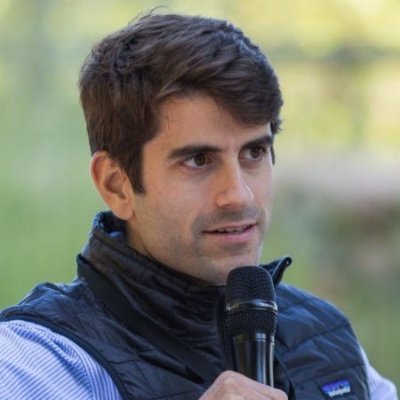
Peter Thiel has a blunt test for whether a startup team is thinking clearly. Watch how they talk about their own outcomes. His observation: when founders start framing results as luck — "maybe it works, maybe it doesn't, so let's just invest a little and see" — that's not...

186,618 görüntüleme • 15 gün önce •via X (Twitter)

5 Yorum

Benito Tortellini profil fotoğrafı
Benito Tortellini15 gün önce

bruh

Harley Lewis Foote profil fotoğrafı
Harley Lewis Foote15 gün önce

The "let's just invest a little and see" founders are exactly the ones I end up quietly unfollowing.

Beautiful SIM profil fotoğrafı
Beautiful SIM15 gün önce

Maybe if folks hired competent Risk Planning/Strategists/Analysts they’d get the correct assessment and Planning Strategy. My husband is an expert in that, if you need one done exceptionally well, I’ll connect you.

Carlos Alberto profil fotoğrafı
Carlos Alberto15 gün önce

This guy is a genius. It's true, real founders apply the scientific method, develop hypothesis and develop every product and service as an experiment.

Kelvin profil fotoğrafı
Kelvin15 gün önce

survivorship does a lot of work in that google amazon apple list

Benzer Videolar

Rick Rubin: "Make what you love, not what you think people will like" "If you want to live in a creative way, which will benefit everything in your life, be a better person in your family, do a better job starting a new business, it's all the same. I don't really know anything about music. It's more a way of looking at the world and wanting it to be the best it could possibly be. And doing whatever it takes to be the best it could possibly be." Rubin shares how his career happened: "From the beginning, I never thought any of the things I'm doing were possible or realistic. I just did things out of the love of them, thinking I would have real jobs. That my passion would be my hobby, and I'd have a job to support my hobby. And it just magically turned out different than that without me knowing it was possible." On why some things connect and others don't: "The stars line up at certain times for certain things to happen. Sometimes you can make something great, and it doesn't connect for whatever reason. Sometimes you make two things you think are the two best things you've ever made. One of them connects with the world. One of them doesn't. And it might not have anything to do with what's in the art. It might be that it came out the same day as something else. Or there was a bigger story at the time. There's so much to it that we don't understand." He continues: "All we can do is make something good and put it out and hope for the best. That's all there is. We never know why things work. Even if you make a piece of art and it works, you may not know why." On talent versus work ethic: "There are a lot of talented people who never make it because they don't have the work ethic. It's not just talent, talent's a piece. And you could argue for some people, the work ethic trumps the talent." Rubin explains what real collaboration is: "Having worked with a lot of bands, I see there's often this friction where people are trying to get their idea in. That's not a collaboration. A real collaboration is when everyone who's there is working together towards whatever is the best thing for the whole. Whether it's your idea or someone else's idea, it doesn't matter. If you're invested in the collaboration, you want the best idea to win. You don't want your idea to win." On what makes art great: "What makes it great is the personal. With all of its imperfections. With all of its quirkiness. That's what makes it great. How you see the world that's different from how everyone else sees the world. That's why you're an artist. That's your purpose in sharing your work with the world." He warns against being derivative: "There are these derivative voices where they're finding what they think other people want to hear, and they start saying it because they've heard other people say similar things that are now successful. Even if they have some short-term success doing that, it's not revolutionary. It doesn't change the world. It doesn't last. The people who you first see and you might not like that you come to like because you don't understand them at first, those are the ones that change the world. Those are the ones you dedicate your fandom to for life." Rubin shares his philosophy on taste: "You can't second-guess your own taste for what someone else is going to like. We're not smart enough to know what someone else is going to like. To make something thinking, 'Well, I don't really like it, but I think this group of people will like it,' it's a bad way to play the game of music or art. You have to do what's personal to you. Take it as far as you can go. Really push the boundaries. And people will resonate with it if they're supposed to resonate with it." He describes creativity as catching waves: "We're really talking about magic. The universe conspiring on our behalf if we let it. Being in this flow of catching these waves that anyone can catch. If you're trying to catch it, you're open to it, you see it coming, you take off on every chance you get. And sometimes the ride happens. It's remarkable how it happens. It doesn't come from preconception. It's not an idea. It's through the doing." Rubin explains how ideas exist in the universe: "Have you ever had that experience where you have an idea for something, you don't do it, and then six months later you see someone else has done it? It's not because they took your idea. It's that it's time for that, and you can act on it or not. The best artists are the ones who have the best antenna for this material that's available. It's coming through. The best comedians see the best jokes. They see them coming. We all live in the same world; the way you see it, you have the best joke because you see it best." He closes with how to stay open: "If we listen to what's going on around us, you can overhear a conversation in a coffee shop, and it is the setup for an idea you're working on. You hear a phrase you don't commonly use. My experience is: when you are open and looking for these clues in the world, they're happening all the time. And they're happening often right when you need them."

Jaynit

109,609 görüntüleme • 7 ay önce

Steve Jobs on how he learned to run a company: Question: "You're 21. You're a big success. You know, you've just sort of done it by the seat of your pants. You don't have any particular training in this. How do you learn to run a company?" Steve Jobs: "You know, throughout the years in business, I found something, which was that I always ask why you do things. And the answers you invariably get are, oh, that's just the way it's done. Nobody knows why they do what they do. Nobody thinks about things very deeply in business. That's what I found. I'll give you an example. When we were building our Apple I's in the garage, we knew exactly what they cost. When we got into a factory in the Apple II days, the accounting had this notion of a standard cost, where you'd kind of set a standard cost and at the end of a quarter you'd adjust it with a variance. And I kept asking, well, why do we do this? And the answer was, well, that's just the way it's done. And after about six months of digging into this, what I realized was the reason you do it is because you don't really have good enough controls to know how much it costs. So you guess, and then you fix your guess at the end of the quarter. And the reason you don't know how much it costs is because your information systems aren't good enough. But nobody said it that way. And so later on, when we designed this automated factory for Macintosh, we were able to get rid of a lot of these antiquated concepts and know exactly what something cost to the second. So in business, a lot of things are, I call it folklore. They're done because they were done yesterday and the day before. And so what that means is if you're willing to sort of ask a lot of questions and think about things and work really hard, you can learn business pretty fast. It's not the hardest thing in the world. It's not rocket science. It's not rocket science."

Founder Mode

32,346 görüntüleme • 9 ay önce

Jordan Peterson: "If you can't fix your room, you can't fix your life" "Why should you even bother improving yourself? The answer is something like: so you don't suffer anymore stupidly than you have to. And maybe so others don't have to either. It's not some casual self-help doctrine. If you don't organize yourself properly, you'll pay for it. In a big way. And so will the people around you." Peterson continues: "You can say, 'Well, I don't care about that.' But that's actually not true, you do care about it. Because if you're in pain, you will care about it. It's very rare that you can find someone in excruciating pain who would say, 'Well, it would be no better if I was out of this.' Pain brings the idea that it would be better if it didn't exist along with it. It's incontrovertible." On how to start: "Look around for something that bothers you and see if you can fix it. You can do this in a room. Sit in your bedroom and think: 'If I wanted to spend ten minutes making this room better, what would I have to do?' You have to ask yourself that, it's a genuine question. And things will pop out. There's a stack of papers bugging you. Some rubbish behind your computer monitor you haven't attended to for six months. Cables tangled up." He explains why this matters: "If you were coming to see me for psychotherapy, the easiest thing would be to get you to organize your room. You think, is that psychotherapy? It depends on how you conceive the limits of your being. Start where you can start. If something announces itself as in need of repair that you could repair, fix it. Fix a hundred things like that, your life will be a lot different." On fixing what you repeat every day: "People tend to think of their daily routines as trivial. You get up, brush your teeth, have breakfast. Those probably constitute 50% of your life. People think, they're mundane, I don't need to pay attention to them. No, that's exactly wrong. The things you do every day are the most important things you do. Hands down. Just do the arithmetic." On staying within your competence: "Sometimes you don't know how to fix something. Imagine you're walking down the street and there's a guy who's alcoholic and schizophrenic and has been homeless for ten years. That's a problem. It would be good if you could fix it, but you haven't got a clue. You walk around that and go find something you could fix. Just because something announces itself as in need of repair doesn't mean it's you, right then and there, who should repair it. You have to have some humility. You don't walk up to a helicopter that isn't working and just start tinkering away." Peterson shares the key insight: "As soon as you give your mind a genuine aim, it'll reconfigure the world in keeping with that aim. That's actually how you see to begin with. You've all seen the video where you watch basketballs being tossed back and forth, and while you're doing that, a gorilla walks into the middle of the video and you don't see it. If you thought about that experiment for five years, that would be about the right amount of time to spend thinking about it." He explains what it reveals: "What it shows you is that you see what you aim at. If you can get one thing through your head, that would be a good one. You see what you aim at. One inference you might draw from that is: be careful what you aim at. What you aim at determines the way the world manifests itself to you. So if the world is manifesting itself in a very negative way, one thing to ask is: are you aiming at the right thing?"

Jaynit

68,915 görüntüleme • 6 ay önce

🚨 BREAKING: Florida Governor Ron DeSantis just called out Republicans in Congress and says they need to match President Trump's sense of urgency. DeSantis also calls for term limits. "I see the president doing things that are really, really transformative, but I don't see the same energy from Congress." "So much of the modern Congress is just performative. It's just political theater. It's not substantive. They're not engaged in the business of accomplishment. It's all about putting on a show to be able to get returned to office and stay there for as long as possible." It's one of the reasons why I think we need term limits for members of Congress. You turn on cable news and you got these guys jabbing. It's like, what have you done? Okay?" "I know you like to to jab. I know you like to talk. What have you actually done? You've been in now for - President Trump's only been in for 60, a little bit more than that. Congress was in almost, you know, two weeks, three weeks before that. So since January 3, what have they done?" "How many weeks have they had off for fundraising and all this other stuff, and why aren't they really attuned to what needs to be done to deliver support for the president's agenda?" "But just as importantly, solidifying these changes, so that it is actually in law. And don't say it can't be done. Biden, they only had 50 senators when he came in. They had a very narrow majority in the house. Did that stop them from doing all this stuff?" "They did a lot of bad legislation, but they did it. They got it done. You look in the 90s, when Clinton was president, they passed very tough immigration laws back then. It's popular. And so I don't even see an effort really to push this forward." "The thing is is when you have a new president come in, you have a certain period of time where you have a lot of momentum. Right? Just political physics, naturally, the momentum for the first hundred days is gonna be greater than the momentum two years later. That's just the way politics works. And what I just see is - I don't see them really working to seize the moment, and to understand that this is different, that we actually have a chance to to really make serious changes."

Eric Daugherty

1,174,506 görüntüleme • 1 yıl önce

The founders of Stripe and Pinterest on how to convince people to join your startup Stripe CEO Patrick Collison argues that part of the reason startups resonate so much is because the outcome is not guaranteed: "If it were guaranteed, it would be boring... Whether or not you're the best person in the world at what you do, you're probably not going to alter Google's trajectory. But if you really want to benchmark yourself and see how much of a contribution and impact you can make--which is a really compelling prospect for a lot of the best people--a startup is a much better place to test that." Pinterest founder Ben Silbermann emphasized this as well: "No smart person that you're hiring is under the illusion that you have a crystal ball into the future and that joining is a guaranteed thing. In fact, if you're telling them that and they select in, you shouldn't hire them because they didn't pass a basic intelligence test. I think it's important to tell them what's exciting and where you think the company can go. But also tell them where it will be hard and chart your best plan. And then tell them why their role can be instrumental--because it will be... What I would discourage doing is whitewashing all of that. If people are joining your company because they want all of the certainty and safety of working at Google but also the perks of working at a small startup with lots of responsibility and transparency, that's a really negative sign." Apparently in the early days of PayPal, Peter Thiel and Max Levchin would tell people after they interviewed all the reasons that the company would fail: "Visa and MasterCard want to kill us. We also might be doing something that's illegal. But if we succeed, we'll redefine payments." Don't whitewash the risks. Instead tell them how your startup will change the world if you succeed and how their role will be instrumental in affecting that change. Video source: Y Combinator (2014)

Startup Archive

11,811 görüntüleme • 11 ay önce

This is why the BC Ostrich Farm matters. It shows clearly that the government has abandoned reason, logic, and fairness. It shows that what they say goes, no matter what they have to take from you to do it or how many years you spent creating the thing they will eagerly destroy. They don't care about proving themselves. They care about doing it and shutting you up. They'll go so far as to throw you in jail to shut you up and they'll create laws to criminalize all speech they don't like. They'll even create laws to kick you off the internet without any due process and make you sign an NDA so you can't tell anyone what happened. They fear your voice. They'll take over your property and build a ridiculous wall of hay to block the world from seeing and rightly questioning the cruelty of what they're doing. They'll make no fly zones so you can't fly a drone and see. They'll harass veterans who dare to even point out to them that they're breaking the law and then they'll bark back that they are the law and what they say goes. It doesn't matter if it's different than what they said ten minutes ago. If they say it, it's true. So shut up and be quiet. They'll fund radical groups to target people they don't like and they'll use circular reporting from the groups they fund to weakly prop up their atrocious disregard for our rights and freedoms. And they'll look you in the face the whole time and tell you that it's for your own good. It's for all of our good. It's for our good that your life's work is destroyed. It's for our good that your speech is silenced. It's for our good that you're thrown in jail to silence you while repeat criminals walk in and out of the court house without even spending a week in jail. It's certainly for their good. Not for our country's. Not for yours. That's why the ostrich farm matters. It shows all of this so clearly in a way that any amount of words never could. And the world needs to see it.

Jon Villeneuve

42,910 görüntüleme • 1 yıl önce