Loading video...

Video Failed to Load

Go Home

Physical Intelligence (Physical Intelligence) is building a foundation model that can control any robot to do any task — what the team describes as the GPT moment for robotics. The company's cross-embodiment approach trains across many different robot platforms, and recent results show tasks being performed zero-shot that last...

117,359 views • 4 months ago •via X (Twitter)

0 Comments

No comments available

Comments from the original post will appear here

Related Videos

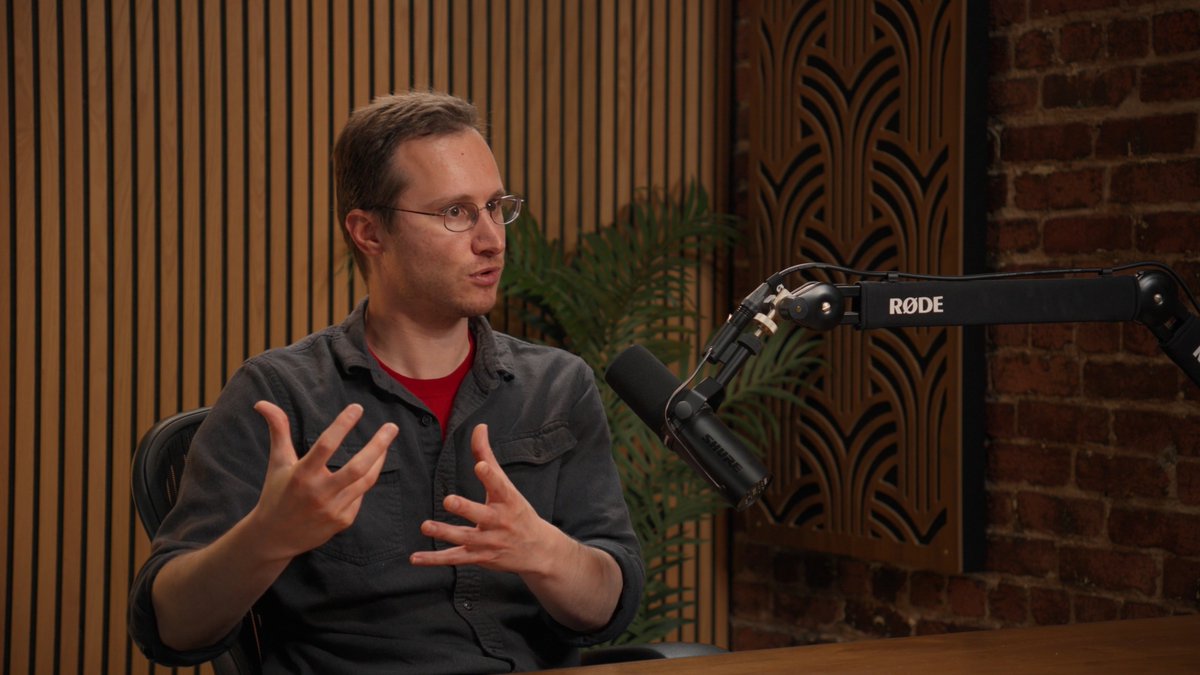
My conversation with Sergey Levine (Sergey Levine). Sergey is the co-founder of Physical Intelligence -- a company building foundation models that can control any robot to do any task in any environment. The company's thesis is that generality is more scalable than specialization, meaning that a model trained across many different robots and tasks will ultimately outperform any system built to do one thing well (eg, just wash dishes). Sergey is a researcher by background, but I think you will appreciate how practical and commercially grounded this conversation is. We discuss: - Why changing a diaper will be the last task a robot masters - The simulation v. real-world data debate - How multimodal LLMs give robots common sense - Moravec's Paradox + Robot Olympics - Why robots can do long-horizon tasks now - A realistic timeline for robots in our homes I should note that I am an investor in Physical Intelligence -- I made the investment because I believe it is one of the most important companies tackling the problem of robotics. Enjoy! Timestamps: 0:00 Intro 2:39 Defining Physical Intelligence 5:19 The Challenge of Building General Models 6:34 The Stakes and Future of General Purpose Robotics 8:15 Pros and Cons of Humanoid Robots 10:12 Historical Milestones in Robotics Research 15:31 Combining Generative AI and Deep RL 21:24 Moravec's Paradox 25:33 Kitchen Robots 29:30 Simulation vs. Real-World Data 30:48 The Robot Olympics 36:31 The Physiological Reality of Embodiment 38:56 Controversies in the Robotics Community 44:18 What Makes a Great Researcher 48:27 How Businesses Should Prepare for Robotics 54:09 Tracking Progress Through Research Papers 57:02 The Next Step: Mid-Level Reasoning 1:02:00 The Kindest Thing

Patrick OShaughnessy

133,833 views • 5 months ago

Karol Hausman is the co-founder and CEO of Physical Intelligence, a robotics company building a general-purpose “AI brain for the physical world.” The company has raised more than $1 billion in funding to develop foundation models that allow robots to operate across many machines, environments, and tasks rather than being programmed for a single purpose. In our conversation, we explore: • The moment a lecture from Sergey Levine convinced him to abandon his PhD research direction and pivot fully to deep learning • The case for building a general “AI brain” for the physical world rather than a single specialized robot • The role of real-world data in training robots, the limits of simulation, and how deployment could create a powerful data flywheel • The unique challenges of physical intelligence and why robots must operate with far higher reliability than language models Thank you to the partners who make this possible - Brex: The intelligent finance platform: - Granola: The app that might actually make you love meetings: Timestamps (00:00) Intro (04:05) Karol’s early fascination with robots (18:21) Karol’s entry point to robotics and PhD program (25:49) Combining robotics with LLMs: The Taylor Swift demo (30:48) The 1970s SHRDLU AI experiment (39:40) How research shapes what Physical Intelligence builds (49:07) The return of reinforcement learning in robotics (1:00:00) NVIDIA’s simulation engines (1:07:31) Compensating for missing senses

Mario Gabriele 🦊

27,871 views • 5 months ago

JUST IN: Dyna Robotics just published one of the most important research papers in robotics this year. It could fundamentally change how robot foundation models are trained. A scaling law that transfers from human video to robot performance. Dyna-2 is out and it's 🔥 Here's what that means in plain terms. Dyna-2 was pre-trained on ONE MILLION hours of egocentric human video, 170 years of continuous human experience, cooking, folding, assembling, cleaning. And as that human data scaled, robot performance improved. Predictably. Monotonically. Across 39 tasks on two different robot embodiments the model had never seen. → 1,000 hours pre-training → 20% normalised task performance → 10,000 hours → 28% → 100,000 hours → 45% → 1,000,000 hours → 53% Human video exists at effectively unlimited scale. Every cook, every factory worker, every craftsperson wearing a camera is generating training data for future robots. But the finding that stunned even the researchers, world modeling is what makes the transfer work. A model trained to predict future video AND actions massively outperforms one trained on actions alone. Video is the new scaling axis for robotics. One more jaw-dropping data point. 13 minutes of teleoperation data was enough to fine-tune Dyna-2 to open a bottle cap using two five-fingered robot hands. The robots are coming, and they're learning from us directly :D Read more here: Congrats Jason Ma and team! ~~ ♻️ Join the weekly robotics newsletter, and never miss any news →

Lukas Ziegler

23,556 views • 19 days ago