Loading video...

Video Failed to Load

Go Home

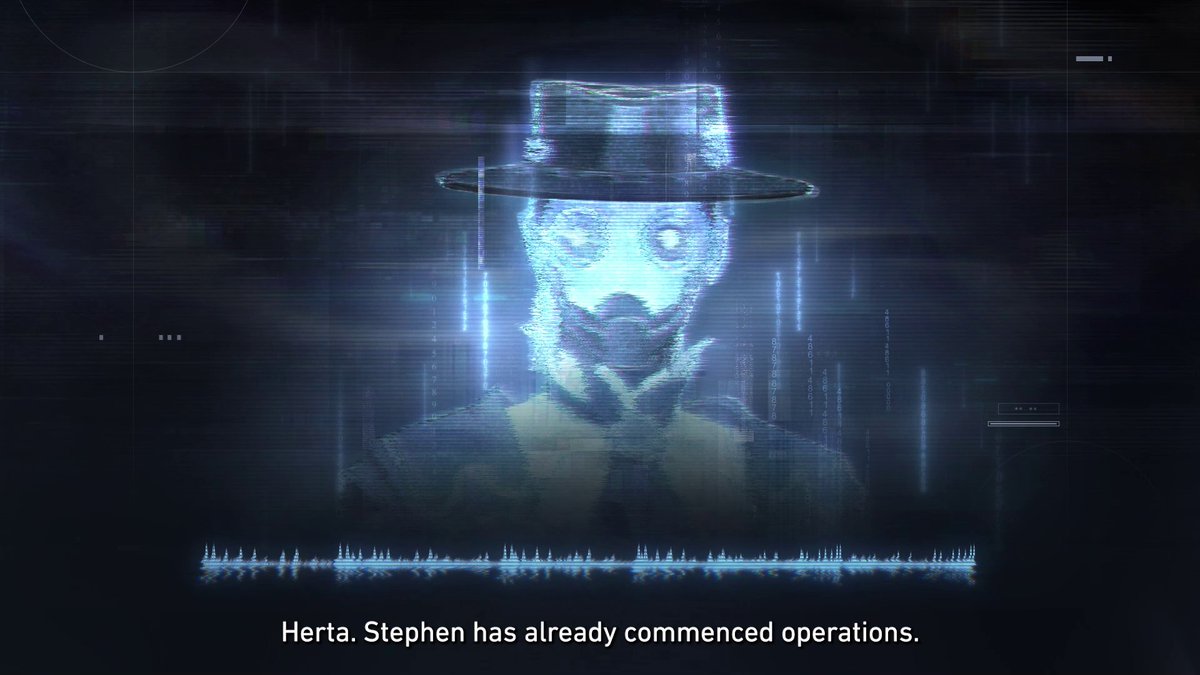
Pre-War News Flash Recap (II) | Irontomb Research Progress Update Authentication successful, ID Aventurine, logged in. "Our analysis indicates that Irontomb's infection is not limited to inorganic life." "Irontomb has not yet fully manifested, yet its negative impact is already comparable to that of a fully formed Lord Ravager."...

287,388 views • 9 months ago •via X (Twitter)

0 Comments

No comments available

Comments from the original post will appear here
Related Videos

One of the most memorable moments in Scrooge (1951) is not the point at which Ebenezer Scrooge begins giving generously to others or raises Bob Cratchit's wages, but the scene in which he awakens on Christmas morning and bursts into irrepressible laughter. It is, on the surface, an extraordinarily simple sequence. There is no dramatic climax, no lengthy speech, and no grand gesture. Yet this quiet moment has become one of the film's most cherished scenes and continues to move audiences more than seventy years after its release. The power of the scene does not lie in Scrooge's laughter itself. It lies in what that laughter confirms. After being visited during the night by the three Spirits of Christmas Past, Present and Yet to Come, Scrooge has witnessed the dreadful end awaiting him: a lonely life, despised by others and ending without having left behind anything worthy or good. When he awakens, he does not immediately rejoice. Instead, he looks around his room, touches the bed curtains, grasps the bedpost, throws open the window, and asks the boy in the street what day it is. Every one of these actions serves as a form of verification. He is not merely trying to discover whether he is still alive. He is trying to discover whether everything he has just witnessed has already come to pass, or whether it was still only a warning. Only when he learns that it is still Christmas morning does Scrooge truly realise that the terrible future he has seen has not yet become reality. His life has not yet reached its conclusion, and the course before him can still be changed. Only then does the laughter burst forth. It is not simply the relief of a man awakening from a nightmare. It is the laughter of someone who has discovered that he still has the opportunity to live differently. What gives Scrooge hope is not the possibility of erasing the past, for that is impossible. What gives him hope is the knowledge that the past has not yet become the final word. So long as a person is alive and still able to choose, the future has not been irrevocably decided. It is this possibility that transforms repentance from mere regret into the beginning of an entirely new life. That is also why this scene continues to move audiences from widely different cultures, even after more than seven decades. For it touches one of the most fundamental longings of the human heart. Not the desire for wealth. Not the desire for success. Not even simply the desire to be forgiven. But the desire to know that one's life can still begin anew. Almost everyone has made mistakes, missed opportunities, or wished they could act differently if only they had another chance. What so often leads people into despair is not the mistake itself, but the conviction that every door has already closed and that it is simply too late to change. At the moment Scrooge realises that Christmas Day still lies before him, the audience is no longer merely watching a character on the screen. They instinctively recognise something of themselves in his laughter: the hope that, if there is still time, what has gone wrong may yet be put right and a different path may still be chosen. Viewed more deeply, the scene also reveals a principle that resonates with a universal human experience. Hope does not arise because time is unlimited. It arises because time is limited, yet has not run out. Had Scrooge awakened after death had already claimed him, every regret would have been futile. But Christmas morning is still before him. That means the final opportunity has not yet slipped away. It is precisely this union of limitation and opportunity that gives Scrooge's laughter its extraordinary emotional weight. If people believed they possessed an endless supply of tomorrows in which to correct every mistake, no single opportunity would carry much significance. Yet because we all know that human life is finite, every moment in which we realise that "it is not yet too late" becomes profoundly precious. The joy does not come from time suddenly becoming infinite, but from discovering that, within the limits of our finite lives, one door still remains open. Seen in this light, the power of the scene extends far beyond the story of a miser who becomes generous. What the film ultimately reveals is the immeasurable value of a final opportunity within the limits of a human life. When Scrooge laughs, he is not rejoicing merely because he is still alive. He is rejoicing because he has realised that his life has not yet been finally determined. He is still free to choose what sort of man he will become. Perhaps that is why Scrooge's laughter continues to touch audiences after more than seventy years. It is not simply the joy of a fictional character. Rather, it has come to symbolise a hope that speaks to every generation: so long as life has not reached its end, the possibility of choice, repentance, and renewal still remains. It is precisely because time is finite that the opportunity to change becomes so profoundly precious.

𝗖𝗹𝗮𝘀𝘀𝗶𝗰𝗮𝗹 𝗠𝗲𝗹𝗼𝗱𝗶𝗲𝘀

14,613 views • 1 month ago