Video yükleniyor...

Video Yüklenemedi

Ana Sayfaya Dön

Private capital isn’t avoiding pipelines because the business case vanished. It’s avoiding Canada because governments turned approvals into a political minefield. When investors can spend billions elsewhere with fewer delays, lawsuits, and moving goalposts, they will. Then Ottawa pretends the lack of investment proves the project never made economic...

20,734 görüntüleme • 1 ay önce •via X (Twitter)

0 Yorum

Yorum bulunmuyor

Orijinal gönderinin yorumları burada görünecek

Benzer Videolar

“Fairness” = give the bureaucracy more money? Canada’s Finance Minister Chrystia Freeland is raising the tax on capital investments to the highest level in the G7. This video reveals a sad, dystopian view of Canadians. She uses the resentful ‘class war’ language of the 1970s, where Canada will be filled with a sad majority feeling ‘wrath’ unless you accept her new tax. Who writes these speeches? Have they travelled? Famously egalitarian nations Belgium and Switzerland and Singapore have zero cap gains taxes. Do they hate fairness? Seriously, this is her proposal: Take $18 billion in risk capital proceeds away from Canada’s small but critical investor class with a globally uncompetitive tax rate. Then give that money - along with another $40 billion in debt - to a federal bureaucracy that currently does not show up for work in person more than twice a week. They will invest it instead. The nation will heal. Thats not fairness. It’s losing. Again. On an international scale. Here’s why this tax will add to her economic losing streak: 1. It kills economic growth. Taxing capital investment discourages the cash that backs the entrepreneurial ideas that turn into the jobs and companies that grow the economy and improve productivity and living standards. Every other large advanced economy will have a lower cap gains tax than Canada. Are they less ‘fair’ than Minister Freeland? Or do they have an economic strategy of shared prosperity that allows for individual success without the sad language of class resentment and envy? Every company whose services we love today - no matter how large - started with an entrepreneur - and some investors crazy enough to fund them with risk capital. Most nations do whatever they can to attract entrepreneurs and investors because they bring growth and economic vitality and jobs. This Minister is taxing them away in the name of fairness. But federal fiscal incoherence is costing Canadians $54 billion interest losses degrading public services and the worst declining GDP performance in the G7 2019-2024 and the worst GDP per capita of all 40 advanced nations in the OECD modelled out to 2030. Fairness for Canadians starts with federal fiscal competence. 2. It kills jobs (the real ones): The private sector creates jobs when good ideas or expansion is funded by risk capital - that is why positive jobs reports are usually signals of economic growth. But Canada’s jobs reports aren’t signals of economic growth anymore because they feature a failing economy where most of the jobs being reported are actually government roles bought with debt. This kills economic productivity. When governments use debt to buy jobs it turns a single debt-funded position into a permanent unfunded annual govt operating cost. Every one of these jobs costs more in tax, debt and interest than it can ever contribute back. Taxing the risk capital that creates real jobs while borrowing money to buy public sector jobs with debt - the current modus operandi of this government and its “jobs” announcements - kills GDP productivity. 3. It takes Canada backwards Canada’s private sector is the only mechanism to fund Canadian prosperity. Risk capital funds the companies and jobs that are the engine that pays for everything - including all government employees and services - and all debt and interest. A previous Liberal government knew this. They dropped this tax back in 2000 to help Canada compete with the rest of the world, who in turn compete hard for the mobile investment capital of the smartest and most successful investors because it has such a positive impact on economic growth. For everyone. Economic prosperity is the best form of fairness. Going backwards to economic policies from the last century, wrapped in the dystopian language of big government ‘fairness’ isn’t helping anyone. Cut taxes, spending and the bloated state. Fairness = fiscal competence.

David Knight Legg

266,287 görüntüleme • 2 yıl önce

The Urannah Dam project was cancelled by the Albanese Labor government in 2022. I wanted to see the final business case and environmental impact study (EIS) to see what they are hiding. The Commonwealth threw $22.65 million into the business case and approvals, then Bowen River Utilities withdrew the scheme from Queensland's environmental assessment processes in December 2022. When I asked why it was withdrawn, where the final business case is, and where the EIS is, the department agreed to provide it on notice. They claimed that because of "Commonwealth-state relations," the ownership of these taxpayer-funded documents rests with the state, though they "encourage" publication. I’ve requested copies if they have access to them. I asked if the bureaucrats are looking at the bigger picture regarding future water demand in the Burdekin Basin. There is massive potential in the Great Australian Infrastructure Project, which would see a major steel mill established at Collinsville, along with other mills in Central Queensland. These visionary projects will have a massive appetite for water. The department representative admitted he only knows about these vital industrial opportunities from reading the newspapers. They did note they are partnering with Queensland on a broader "Burdekin Regional Water Assessment" to look at basin-wide supply and demand, however it’s clear they are disconnected from real-world economic development. Whether it’s Paradise Dam or Urannah Dam, we are seeing the same pattern: endless assessments, massive cost escalations, secret reports and a total lack of urgency from state and federal governments to actually build the water infrastructure Australia.

Malcolm Roberts 🇦🇺

12,798 görüntüleme • 1 ay önce

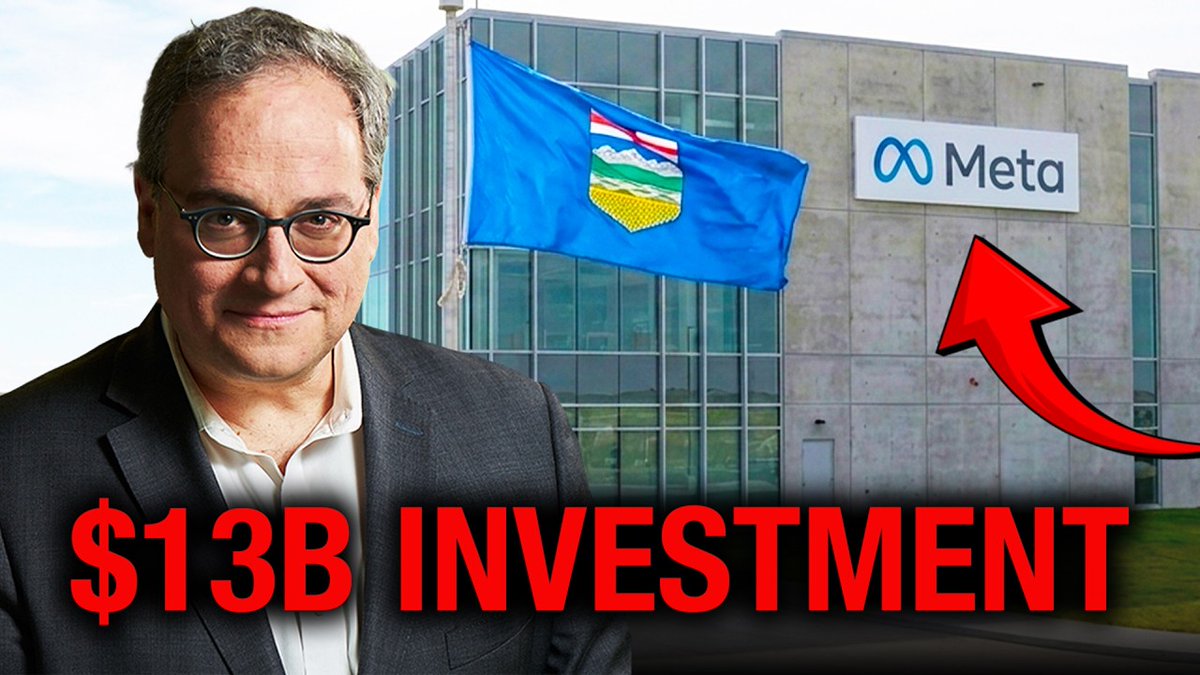
🚨 David David Knight Legg: Why Meta chose Alberta for a $13-billion investment 'This is something that takes Alberta into the next century,' said Legg on Thursday's episode of The Ezra Levant 🍁🚛 Show. On Thursday's episode of The Ezra Levant Show, David Knight Legg joined the show to discuss Meta’s $13 billion Alberta project, the failure of crony capitalism and Alberta’s resurgence as a tech powerhouse. Here’s something you haven’t seen in Canada for a long time, a colossal industrial investment that didn’t come with a government handout. Meta, the company formerly known as Facebook, is putting $13 billion into a new data centre in Sturgeon County, Alberta. Not in Ontario, not in Quebec and not with a single federal minister claiming credit. Private capital, real jobs and a bold new stake in the digital economy. Contrast that with what’s become the norm in Canada. Under Justin Trudeau and Mark Carney, industrial projects have meant government projects, taxpayer-funded battery plants and wind farms, mostly in Ontario and Quebec, with politicians demanding their cut of the credit. Tens of billions shovelled into factories that only exist because governments paid them to. That’s called crony capitalism. But Meta’s announcement flips that script. This isn’t a backroom deal cooked up in Ottawa. There’s no major project office smoothing the path, no prime ministerial intervention. Instead, what Alberta has built is a climate for investment, tax cuts, regulatory reform and a pro-business attitude that says if you want to build, build. And they have. Meta’s data centre will mean 3,000 construction jobs at the peak, more than 300 permanent roles and $60 million in local infrastructure upgrades. Not a cent of it was paid for by taxpayers. In fact, the money that governments are bragging about is tax revenue and salaries, not outflows but inflows. David Knight Legg, who helped shape Alberta’s investment strategy, spells it out: Alberta’s approach is paying off. Private investors are coming back. Meta isn’t alone. Dow, Linde Corporation, and Air Products have all chosen Alberta recently, drawn by the same formula: low taxes, stable regulation and abundant energy. Alberta has done what the Irish Development Agency did for Ireland, turning the province into a magnet for global capital with policy, not handouts. This is the clearest sign yet that Canada can compete when the government gets out of the way. Meta’s centre is a next-generation, AI-optimized hub, one gigawatt of power, fully matched by renewable energy and designed for zero operational water consumption. It’s the 33rd in Meta’s global fleet but the first in Canada and the largest outside the United States. This is exactly the kind of project politicians say they want: high-tech, green and future-focused. Only this time, they didn’t write the cheque. What those advocates for government-led industrial policy won’t tell you is this: When you let the market work, when you set the right incentives and when you stop treating business as a cash cow, real investment follows. Alberta is proving it. And Meta’s $13 billion bet is just the start.

Rebel News

13,097 görüntüleme • 8 gün önce