Loading video...

Video Failed to Load

Go Home

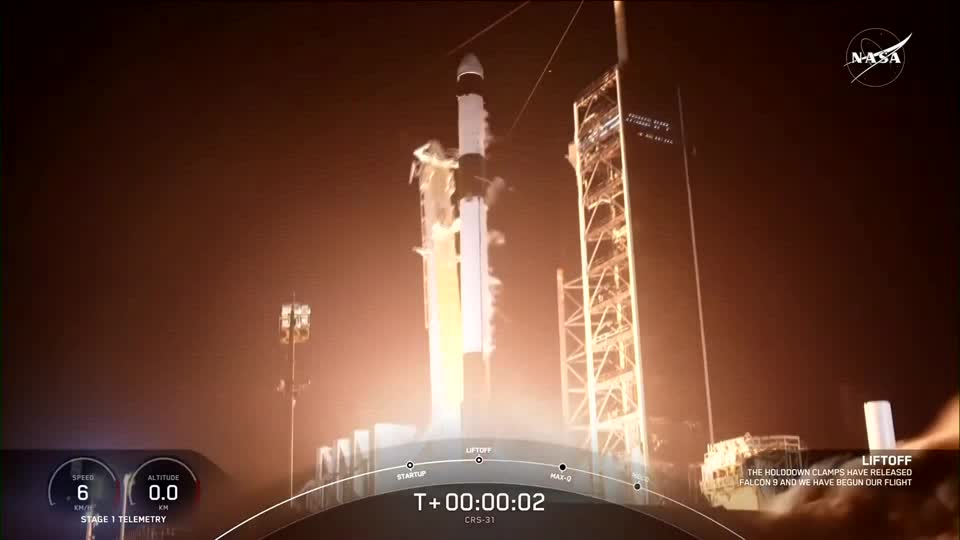
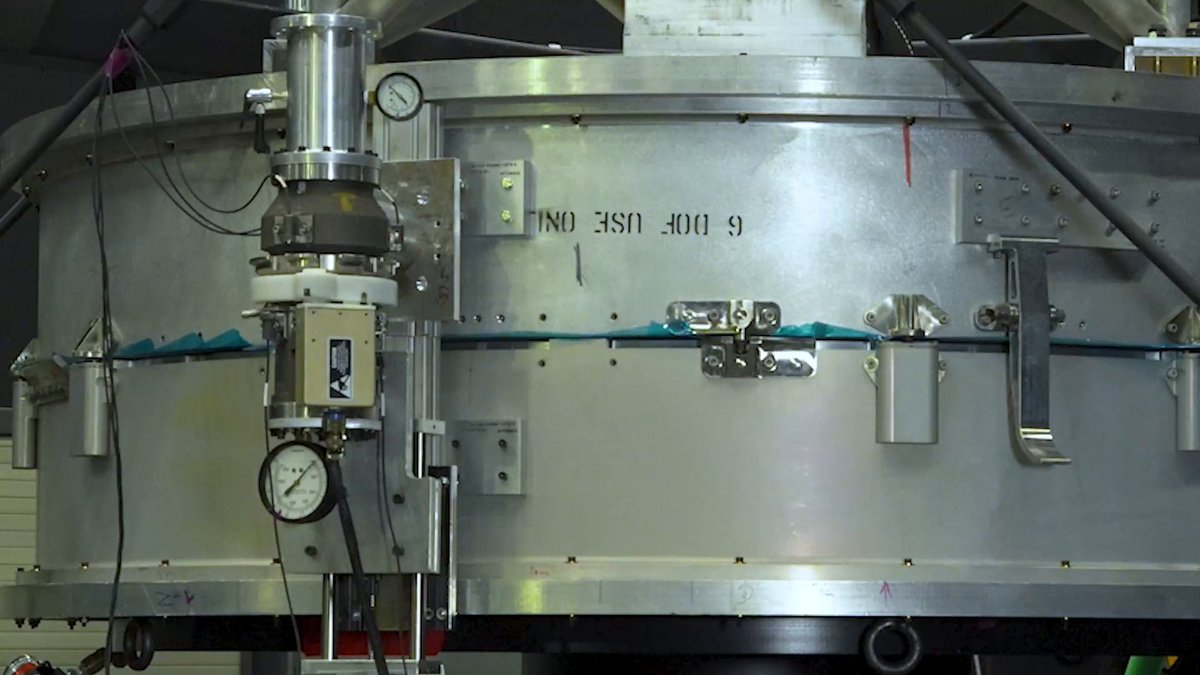
Purchase a laser inscription of your full name onto a structural panel integrated into an Astranis satellite launching to geostationary orbit. Inscriptions are limited, and the sale closes May 31.

110,272 views • 2 months ago •via X (Twitter)

0 Comments

No comments available

Comments from the original post will appear here

Related Videos

Astranis is building a new satellite for Taiwan. 🇹🇼 With our customer, Chunghwa Telecom, we will bring Taiwan its first-ever dedicated communications satellite. Chunghwa Telecom is the largest telco in Taiwan, with a market cap of more than $30 billion USD. Independent, secure internet infrastructure has never been more geopolitically important — and because it’s impossible to replicate with LEO constellations or even terrestrial links, it merits some spelling out. Astranis was founded on the belief that access to secure, reliable communications infrastructure is foundational to peace, prosperity, and self-determination. The satellite we’re bringing to Taiwan represents resilience. It will serve as a critical backbone for cellular connectivity, maritime communications, and essential government services across Taiwan. And it will ensure that Chunghwa Telecom’s network remains operational in times of crisis, whether in the face of natural disasters or other disruptions to terrestrial infrastructure. Importantly, Astranis provides more than just a satellite — we give our customers a standalone, dedicated network. A network that can be rapidly deployed and fully spans their geography of choice. With enterprise-grade security, customizability, and deep insights into the configuration and operation of the network. And as an independent piece of infrastructure, it safeguards against geopolitical risks, and is beyond the reach of hostile neighbors. Those are the benefits of having your own, dedicated satellite and network. And that’s why so many customers are choosing Astranis. We at Astranis are honored to be part of this moment, and to have a product that has proven so uniquely needed in today’s world. We look forward to continuing to support Taiwan and its people for many years to come.

John Gedmark

202,802 views • 1 year ago

Today we’re announcing a new product for warfighters and first responders: Astranis Vanguard. A fully air-gapped, rapidly deployable network using a dedicated satellite. In partnership with Persistent Systems, Kymeta, and Satcube. And we’ve demonstrated this capability using an operational, on-orbit satellite asset. Astranis Vanguard offers both defense and commercial customers the ability to quickly and easily spin up a resilient, self‑forming network capable of voice, video, and broadband data. For defense missions, Vanguard allows operators to sustain command‑and‑control and situational awareness in austere or contested environments. Dismounted or mounted teams can deploy mobile terminals to extend connectivity beyond line-of-sight, all without reliance on a central hub or existing infrastructure. For commercial and public safety users, Vanguard offers a method to rapidly restore or extend coverage. First responders can stand up connectivity within minutes after severe weather or wildfires, enabling push‑to‑talk, live drone feeds, and data sharing for incident command. And industrial operators in the energy, mining, rail, and maritime industries can use the system to link remote crews and equipment where cellular access is sparse or unavailable. The live demonstration proved out this capability with: ‣ an operational Astranis satellite in geostationary orbit (GEO), with connectivity managed using the satellite’s onboard software-defined radio ‣ a Mobile Ad-Hoc Network (MANET) with Persistent Systems MPU5 broadband radios, using that network to share video feeds, comms, and IP traffic ‣ Flat-panel user terminals by Satcube (for communications on the pause) and Kymeta (for communications on-the-move), connecting directly to the Astranis satellite to provide backhaul and extend the network beyond line of sight This is real equipment that is already deployed all over the world with warfighters, first responders, and a wide array of enterprise customers. In industries that care about mobility and security like oil & gas. Astranis Vanguard is a big deal. It’s a capability that customers have long asked us for. It was only made possible due to our collaboration with Kymeta, Persistent Systems, and Satcube, and we’re excited to roll it out to our existing and future customers.

John Gedmark

74,510 views • 9 months ago

📣 Follow us Brc20 pi and OKX Wallet and Galxe for a giveaway campaign and claim your free airdrop! #𝛑 Inscriptions — the greatest #MEME token on the #Bitcoin blockchain, about to enter a new global phase! Get more info here👉🏻 𝛑 Inscriptions Data: Inscription ID: 325bd996dbe371ad63393e893bd5efe95200b1490fe6574d395c3339551f2f93i0 Total Supply: 3,141,592,653,589,793 (100% in circulation) Number of Holders: 42,000 (as of 11/25/2024) Blockchain: BTC Chain Key Features of 𝛑 Inscriptions: 🔒 Immutability: 𝛑 Inscriptions are permanently recorded on the Bitcoin blockchain, symbolizing the infinity of 𝛑, ensuring data security and immutability. 🌐 Decentralization: Just like π is universally present in mathematics, 𝛑 Inscriptions rely on Bitcoin's decentralized power, with no need for third-party trust. 💎 Scarcity: Each 𝛑 Inscription is linked to a unique satoshi, combining Bitcoin’s asset scarcity with the infinite potential of 𝛑, creating endless value. ⚙ High Compatibility: Perfectly integrates with Bitcoin’s existing infrastructure, blending the elegance of mathematics with blockchain reliability. 🔗 True On-Chain Storage: Just like the endless decimals of 𝛑, 𝛑 Inscriptions are fully stored on-chain, free from reliance on external links or servers. 𝛑 Inscriptions inject the infinite potential and timeless symbolism of 𝛑 into the Bitcoin inscription ecosystem, perfectly merging mathematics, art, and blockchain technology! Join us and be a part of history while shaping the future! 🚀

Brc20 pi

23,091 views • 1 year ago

Excited to announce UtilitySat, the world’s first multi-mission geostationary satellite, that we're launching at the end of this year. This is a first of its kind. And a new product line-- providing on-demand connectivity for disaster relief, bridge capacity, and other missions. We started Astranis to build something new: small communications satellites that provide dedicated broadband capacity for our customers. At the end of this year we’re launching four more of them on a dedicated Falcon 9 rocket, with many more to come after that. That launch of four satellites includes one satellite for Peru, two satellites for in-flight connectivity, and a fourth satellite that had been previously kept under wraps. Until now. Introducing UtilitySat, the Swiss Army Knife of satellites This is a new product— the world’s first multi-mission commercial GEO satellite, capable of conducting multiple fully-operational broadband connectivity missions. And it is just the first of many. We’ll plan to launch many UtilitySats in the years to come. UtilitySat can provide connectivity on standard Ku, Ka, and Q/V bands, and has the flexibility to dial in exact frequencies using Astranis’s proprietary ultra-wideband software-defined radio. It can also relocate dozens of times around the GEO belt over its lifetime. It does this using our unique on-board dual-propulsion architecture, which includes both a chemical monopropellant system and an electric ion thruster. A new mission every year, or every month When we first began development of UtilitySat almost 2 years ago, we had many different missions in mind. UtilitySat can serve as bridge capacity for a customer that is waiting for a dedicated satellite, as an on-orbit spare, or as extra, surge capacity that can be brought in to supplement the broadband service we’re providing to one of our customers. There are acute needs as well — a natural disaster can wipe out terrestrial connectivity over a huge geographic area. One of the top priorities for first responders and during disaster relief is reliable comms on the ground. With multiple UtilitySats on orbit, Astranis can bring in extra capacity on incredibly short notice. Capacity that is compatible with existing, low-cost GEO ground terminals. In initial conversations with customers for UtilitySat, we’ve seen huge demand — these customers often want to lease the entire capacity of the satellite once they learn what UtilitySat can offer. Customers need all the capacity they can get, and new capacity that can be deployed on short notice is a huge deal and a huge departure from traditional GEO satellites. We see a future where customers will be able to call up extra capacity on demand to augment their existing capacity needs, and we’re making that future a reality. US Government applications The first UtilitySat mission will be a commercial one, but we are seeing enormous demand from both from commercial companies and from our government customers. The US Government has unique needs — Combatant Commanders need to be able to task dedicated satellites to specific AORs at a moment’s notice — and surge communications would give them a new tool in their toolbox, helping them win even in a contested environment. And more broadly speaking our military leaders have said the one priority in national security space is to add resiliency to our fleets, using larger numbers of smaller, flexible, and maneuverable satellites so we’re not dependent on just a handful of huge satellites in GEO. UtilitySat shows that Astranis can do just that. Not traditional GEO satellites UtilitySat is only possible because of Astranis’s unique technology — including our proprietary software–defined radio. The flexibility of having on-board digital signal processing allows us to build a standardized satellite design, and move a lot of what used to be done in hardware, into software. UtilitySat uses the standard Astranis MicroGEO platform, adding more frequency bands and some new software capabilities to make maximum use of the available spectrum, no matter where the satellite is on orbit. Traditional geostationary satellites are designed to sit in one orbital slot for up to 20 years, with a set of frequency bands that is hardwired in at the factory. Their single mission must be predetermined many years before they are launched. Astranis does not build traditional GEO satellites. From day one we knew there had to be a better way, and we’re doing it.

John Gedmark

122,069 views • 3 years ago