Загрузка видео...

Не удалось загрузить видео

На главную

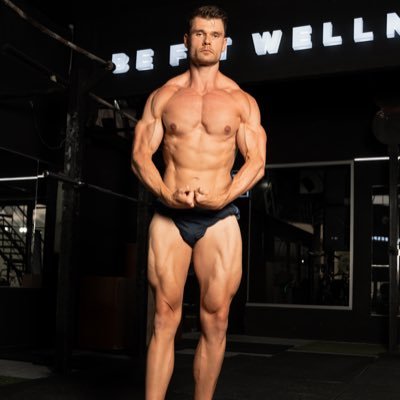
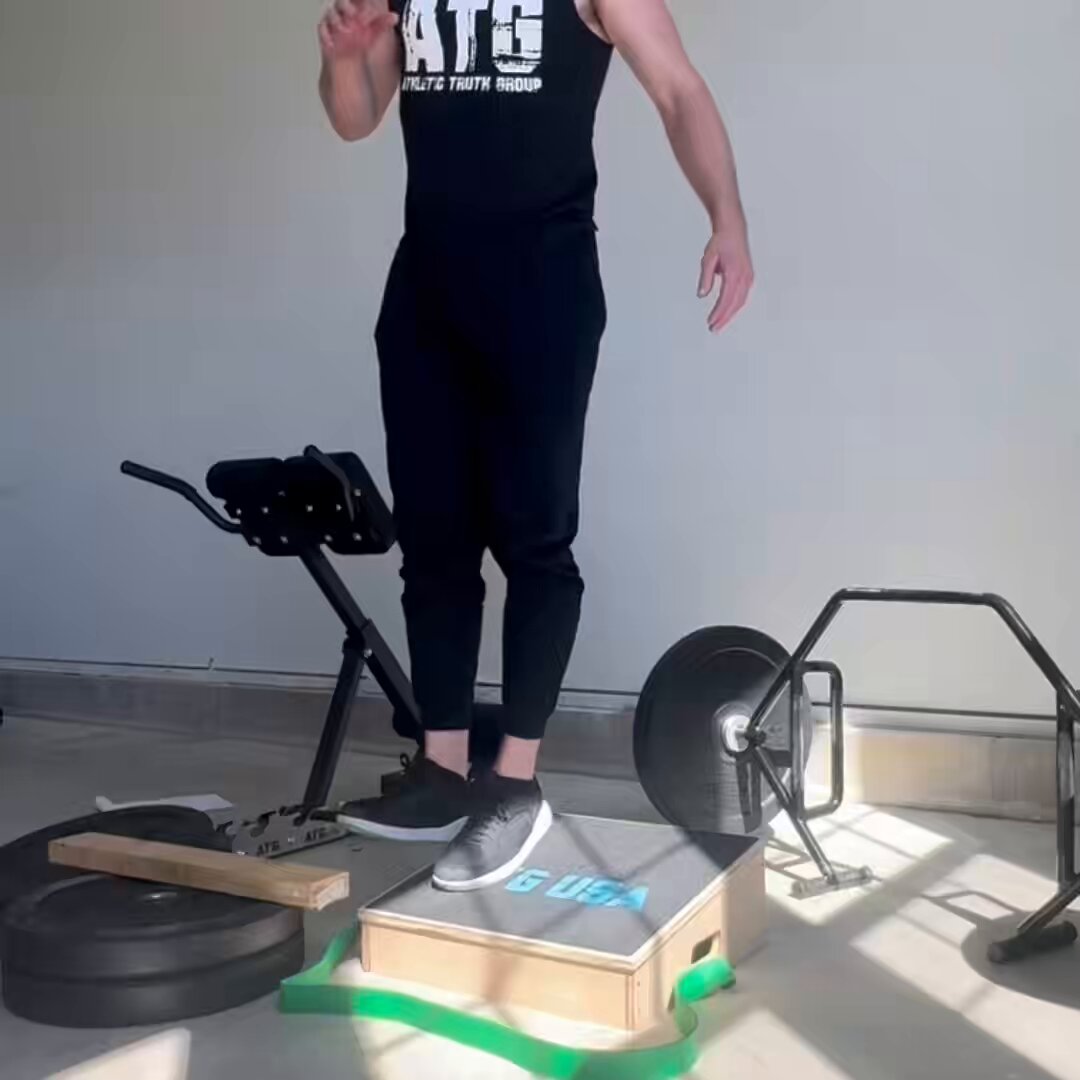
Quad training tips ⬇️ -Pendulum squats, hack squats, barbell squats, smith squats, leg presses are all great choices (pick things that allow you to nail the quads accurately) -Get as deep as you can, closer you can get hamstring to calf with no pain the better. -Don’t be scared...

16,167 просмотров • 6 месяцев назад •via X (Twitter)

Комментарии: 0

Нет доступных комментариев

Здесь появятся комментарии из оригинального поста

Похожие видео

7 Reasons I Love Full Hex Squats! 1. Step-ups and split-squats on some sort of podium have already been go-tos for me for the past 15 years of knee rehab and coaching, and anyone can access these for free or dirt cheap. 2. Not everyone wants to jump into barbell squats. My parents maintain bodyweight. I advise young athletes to master one leg at a time first. Both user-friendly from this. 3. Sophomore year of high school I injured my neck from being pushed into heavy barbell squats. Full hex squat allows you to build some upper back first. 4. My best friend in high school broke his back while maxing out barbell squats. Spent the next year in a metal brace. When your legs can’t handle a full hex squat, you’re in a DEADLIFT, not a GOODMORNING. Deadlift has way easier leverage, so you’re way safer. 5. Hex squat isn’t as good for lower back building, but for me, my parents, and my teenage students, back extension is already my go-to to build lower back muscles at higher reps BEFORE worrying about max loads. (To be clear: 1-5 above are amazing PREP/HELPERS for barbell squats if you so desire!) 6. If a young person does want to see their peak strength, a regular hex deadlift is a very safe and accurate option. 7. The same hex is advantageous for forward and backward farmer’s walks to help your ankles and grip keep up with your new power! (These podiums won’t be good biz since they’re made in USA, small batches, but these are easy to mimic or copy. ETA 6 weeks to first batch for sale, for those interested.) Pre-assembled, fold-out-and-get-to-work back extension: Mobility Made Simple program and coaching:

KneeOverToesGuy

38,946 просмотров • 4 месяцев назад

Strong legs are the foundations of a stable posture, yet many let theirs weaken over time. You lose your ability to move and stand upright. Much of my work with chronic pain clients involves strengthening the legs. This video shows 8 essential lower body motions: 1- Hip Extensions Standing upright involves straightening your torso to align it with your lower body, an extension of your hips executed by your Glutes and Hamstrings. The problem is you sit on these muscles all day, weakening them over the years to the point where they fail to do their job. Your lower back picks up the slack against its will and becomes overworked. I'll start chronic pain clients with Hip Bridges on the floor to ensure everything is balanced, then progress to Hip Thrusts and eventually Standing exercises like the Romanian Deadlift. As for the Deadlift off the floor, those are great if you can access a barbell or kettlebell. - Hip Bridge (0:05) - Hip Thrust (0:11) - Romanian Deadlift (0:17) - Deadlift (0:23) 2- Split Squats Split Squats are excellent for strengthening the knees. In the case of a chronic pain client, I use them to stretch the quad and Hip Flexors of the back leg, which are often extremely stiff due to sitting. This stiffness makes the body collapse forward and is often the limiting factor when people try this exercise for the first time. I'll start someone with the Front Foot elevated because it's easier on the front leg and gives a great stretch, then progress to flat and rear foot elevated. - Front foot elevated (0:30) - Flat (0:36) - Rear-foot elevated (0:42.2) 3- Lunges Lunges are the dynamic version of the Split Squat. Besides being excellent for strengthening your leg muscles, the one thing I love about this exercise is that it teaches you how to brace yourself as your foot lands. Many people lack the core strength to absorb an impact. Lunges develop that shock absorption capacity, especially when done with weights. Ensure you have mastered the Split Squats before doing them, and use different directions to target your muscles differently. - Forward (0:48) - Back (0:54.7) - Side (1:07) 4- Squats The king of all exercises is crucial for your ascension. The vertical motion improves your ability to overcome the world's weight crashing down upon you. It's also an amazing Glute and Quad stretch in the bottom position. I'll start chronic pain clients with the bodyweight variation before progressing them to weighted and eventually one-legged, also known as Pistol Squats. Doing one leg at a time is one of the best ways to balance your body's left and right sides from head to toe. - Body weight (1:12.5) - Loaded (1:19) - Pistol (1:25.5) 5- Step-ups Step-ups are amongst my favorite one-sided exercises to strengthen the Glutes and Quads. They are excellent for improving the stability of your hips and abdominal muscles. Use the Front and Lateral variations to maximize your results. - Front (1:31.5) - Lateral (1:38) 6 - Leg Curls Leg Curls strengthen the lower attachment of your Hamstrings. They are an integral part of my knee and lower back recovery programs because many people are weak due to sitting. I'll have chronic pain clients use a towel to create muscle resistance, though you can do them standing to get some much-needed blood flow. The best way to benefit from this exercise is by using an exercise ball or a machine at the gym. - Standing (1:43) - Towel (1:49) - Exercise ball (1:55.4) - Machine (2:02.1) 7- Adductions The inner thigh muscles become problematic when people sit with their legs crossed. They either get stiff or weak depending on whether you cross one leg over the other or with your foot on the opposite knee. I love Copenhagen Planks to restore the balance in your adductors. - Knee-bent (2:08.8) - Straight-leg (2:14) 8- Calf Raises The ankles are the cornerstone of your posture because they affect the alignment of every other joint above. Strong Calves are essential to their stability, yet many omit them from their workouts. Standing Calf Raises also strengthen the knees from behind. Doing the Donkey variation, you'll feel an intense stretch from the knee to the ankle. Seated Calf Raises work a different lower leg muscle essential to pump blood back up from your feet. - Standing (2:20.5) - Donkey (2:26.6) - Seated (2:33.3) Include these 8 types of motions in your routine as an insurance policy against serious mobility problems down the line. Keeping your legs strong ensures a stable posture and quality movements, two crucial factors for a high quality of life.

Alex Bernier

696,133 просмотров • 2 лет назад

Knee cave is good for glutes? 😱 This video is bound to upset some people. A new study directly examined knee cave a.k.a. knee valgus vs pushing knees out in a squat on muscle activations# well as forces acting on the knee The researchers found MORE glute activation when the participants cued knee cave vs knees out where they saw more adductor activation. This may seem strange since a lot of exercises for the glutes utilize knees out. But these are typically exercising involving abduction, not squats Not only that, but they found the forces on the knee during knee cave were not even close to the level required to cause knee injury I am NOT saying you should purposefully valgus, but if you have strong glutes & you find that your knees naturally track in during heavy squats, you are probably better off training all your sets that way so that those tissues appropriately adapt, rather than squatting how you ‘think’ you ‘should’ on lighter sets only to have them cave in on heavy sets A perfect real life example of this is my friend Lya Bavoil, current world record holder of a 225kg squat in the 69kg class (496 lb squat at around 152 lbs body weight for my Americans who hate math) drug free. Her knees have always caved during squat. This is likely BECAUSE she has such strong glutes (she also deadlifts well over 500 lbs) so her body naturally goes into the position where she is strongest. She’s also never hurt her knees 🤷🏼‍♂️ If you don’t knee valgus naturally during squats don’t make yourself do it but if you find you still have some knee cave even though your glutes are strong, I wouldn’t worry too much about it unless you consistently find it painful It’s time to let go of these dogmatic ideas around ‘perfect’ form. Perfect form is the form for the INDIVIDUAL that allows them to perform best without pain DATA>your feelings

Layne Norton, PhD

36,568 просмотров • 2 лет назад