Video yükleniyor...

Video Yüklenemedi

Ana Sayfaya Dön

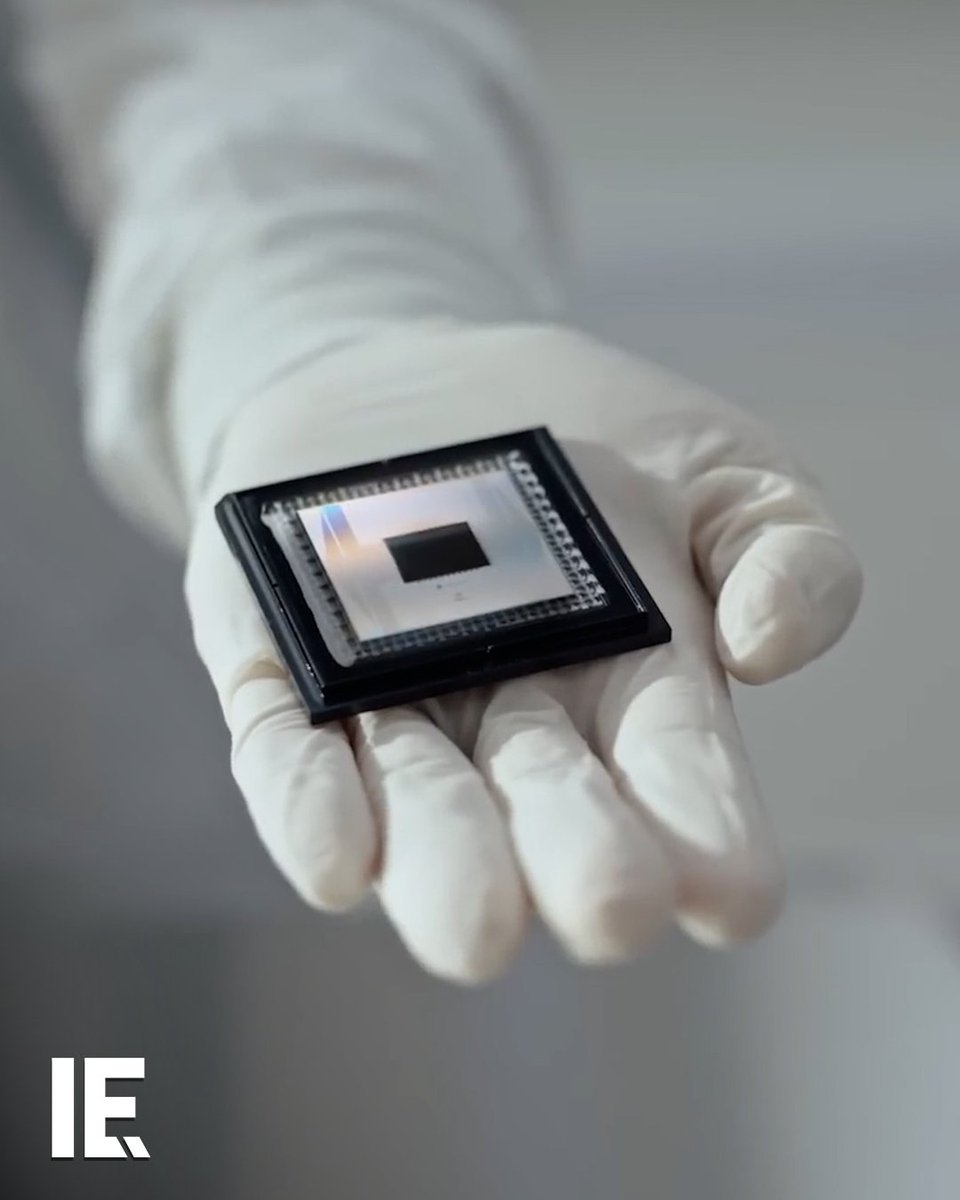
QUANTUM COMPUTING COULD UNLEASH THE MOST POWERFUL AI EVER BUILT. BUT WHO REALLY CONTROLS IT? The Pentagon has invested more than $150 million in quantum computing, a technology most Americans have never used, but one that could reshape artificial intelligence, drug discovery, encryption, national security, and surveillance. Quantum computers...

11,746 görüntüleme • 1 ay önce •via X (Twitter)

7 Yorum

Luke Slywaker profil fotoğrafı
Luke Slywaker1 ay önce

Austin is amazing. I’m happy to see him on your show

David Doyle James 🕊️💜 profil fotoğrafı
David Doyle James 🕊️💜1 ay önce

Great expose. Quantum computers are extremely pricey. Only governments or big corporations can afford them for national defense. Biggest problem is in security. Quantum computers can crack modern 512 bit encryption in seconds that would take the fastest modern computer weeks.

Cameron profil fotoğrafı
Cameron1 ay önce

Hell yeah great to see you have Austin on, have respected you for years but my respect level just multiplied. Takes a real critical thinker to recognize Austin as a serious voice

Michael Mustelier profil fotoğrafı
Michael Mustelier1 ay önce

"The question is not just what quantum-powered AI can do. It is who controls it, and whether the public will have any protection from it." Exactly.

Spencer Devino profil fotoğrafı
Spencer Devino1 ay önce

Nailed it again, Ben. Keep hammering. 🔨

3SL26 profil fotoğrafı
3SL261 ay önce

Technology doesn’t improve our character. It scales it. AI, quantum computing, the rest—they don’t invent new sins. They just make the old ones faster, cheaper, and harder to contain. Whatever was already rotten in us now ships at industrial speed. Havoc with better tooling. Ego trips with a god-mode button.

washingtonian_province profil fotoğrafı
washingtonian_province1 ay önce

Those who shape the models source weighting (transformer model) and parameters. They want to build a god in order to enslave it.

Benzer Videolar

6,100-Qubit Processor Shatters Quantum Computing Record | David Nield, ScienceAlert Another major quantum computing record has been broken, and by a considerable margin: physicists have now built an array containing 6,100 qubits, the largest of its type and way above the thousand or so qubits previous systems contained. It's the work of scientists from the California Institute of Technology, who used cesium atoms as their qubits, trapping them in place with a complex system of lasers that acted as tweezers to keep the atoms as stable as possible. Qubits differ from the classical bits of traditional computers by exploiting what's known as a superposition: not just binary states of 1 or 0, but a spread of probabilities that allows for algorithms that can solve problems considered out of reach of conventional computing methods. Related: Quantum Advantage: A Physicist Explains The Future of Computers A lot of qubits will be needed to make quantum algorithms practical, however. One reason for these large arrays is error correction, which helps overcome the inherent fragility of the qubit by providing a surplus to double-check the machine's operation. "This is an exciting moment for neutral-atom quantum computing," says physicist Manuel Endres. "We can now see a pathway to large error-corrected quantum computers. The building blocks are in place." There was no single breakthrough that enabled this jump in qubit numbers, but rather a series of engineering advancements in many key areas – from the laser tweezers to the ultra-high (very low pressure) vacuum chamber. Stability has also been a problem for quantum computing systems. The innovations in this latest array kept qubits in a superposition state for almost 13 seconds – almost ten times longer than previous configurations had managed. What's more, individual qubits could be manipulated with 99.98 percent accuracy, establishing a significant benchmark in the programmability of quantum technology. "Large scale, with more atoms, is often thought to come at the expense of accuracy, but our results show that we can do both," says physicist Gyohei Nomura. "Qubits aren't useful without quality. Now we have quantity and quality." To make quantum computers a practical alternative to modern supercomputers, more qubits and even greater levels of stability will be required. Experts are tackling the problem from several different angles, which is why records for some types of quantum computer don't necessarily apply to others. Next, the researchers need to work on exploiting entanglement, which will enable the system to make the leap from storing information to actually processing it. Not too far in the future, we could be using these computers to discover new materials, matter, and fundamental laws of physics. "It's exciting that we are creating machines to help us learn about the Universe in ways that only quantum mechanics can teach us," says physicist Hannah Manetsch. Read more:

Owen Gregorian

45,324 görüntüleme • 1 yıl önce