Загрузка видео...

Не удалось загрузить видео

На главную

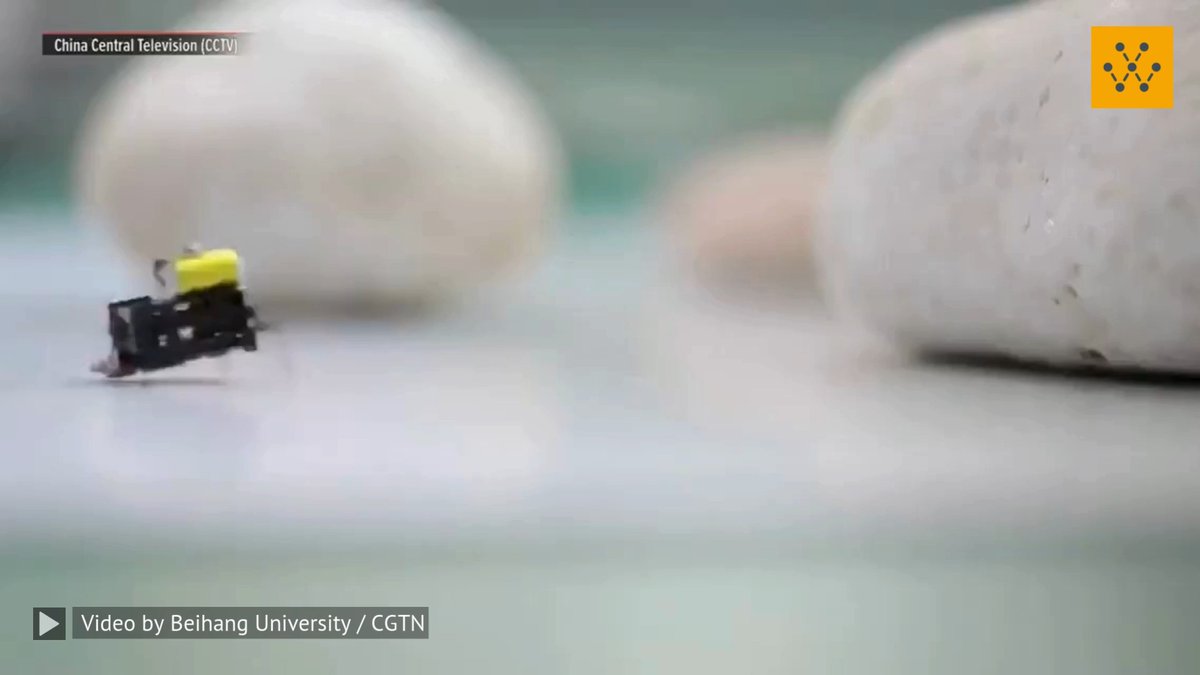
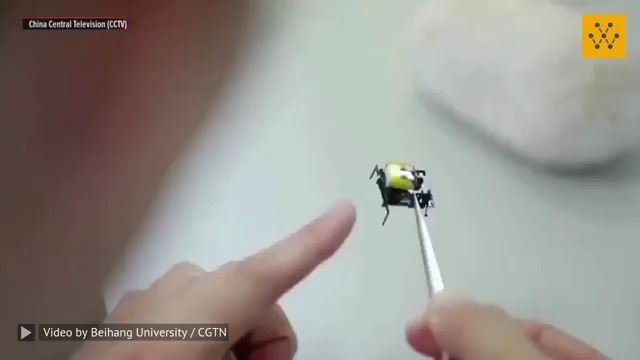
RailScan Multi-Function Robot: Railway Surface Inspection The RailScan robot is designed for track inspection, using a self-moving platform and precise sensors to quickly detect track defects. It assists track inspectors with nighttime inspections, addressing challenges in traditional manual inspections such as heavy workload, missed detections, and difficult tasks. The...

26,459 просмотров • 1 год назад •via X (Twitter)

Комментарии: 10

Фото профиля James Mishra (new account)
James Mishra (new account)1 год назад

@cheese_mishra

Фото профиля Lucid Scientific, Inc.
Lucid Scientific, Inc.1 год назад

Expand the possibilities of your metabolic research. Resipher tracks real-time cellular oxygen consumption in standard 96-well plates, delivering continuous real-time data directly from your incubator. Request a free virtual demo or quote today >>

Фото профиля TeslaElon SpaceXFan
TeslaElon SpaceXFan1 год назад

👍

Фото профиля Harsh Kothari
Harsh Kothari1 год назад

@AshwiniVaishnaw why can't we implement this in our railway trains to avoid accidents?

Фото профиля Michael Nwaehiodo
Michael Nwaehiodo1 год назад

I've had this idea for 2 years, but the railway system in Nigeria is nothing to write home about.

Фото профиля Frits Karl
Frits Karl1 год назад

Needs more speed to be practical.

Фото профиля Molecule
Molecule1 год назад

Nighttime inspections are tough, robots like RailScan enhance precision while reducing human workload

Фото профиля Edward S… 🔋
Edward S… 🔋1 год назад

@sierracatalina1 cool

Фото профиля Appy Pie
Appy Pie1 год назад

RailScan Multi-Function Robot: Revolutionizing railway inspection with AI-powered precision! Detects defects, boosts efficiency, and enhances safety—especially during nighttime inspections.

Фото профиля Nerdkidz_DE
Nerdkidz_DE1 год назад

Awesome.

Похожие видео

Get ready for more East Palestine Ohio situations Rail lobbyists representing industry giants like Union Pacific are spending big money to pay off regulators to automate track inspections, even allow for trains carrying chemicals to drive over broken tracks for 72 hours before being fixed “Keeping railroad tracks safe is supposed to be their job. — But the biggest railroads want them to do it less. The class one railroads have requested a safety waiver to reduce visual track inspections from twice a week to twice a month. Nobody in the rail industry on the executive side can explain why that's rational. Big Rail, it seems, wants to go automated. They use this creative language of automated track inspection” “Every single day. We have the opportunity for an East Palestine three times.” “The carriers asking for those inspections to be reduced to twice a month. 75% reduction in the required inspections” “There is another concerning aspect of the waiver request. same waiver would allow railroads up to 72 hours to address a defect after it is identified. For years, it's required that defect to be remedied. — You're going to be running trains at full speed, 65, 70 miles an hour over that defect while it's still in the track for up to three days. I don't think anyone living around a railroad track or within a mile or two of the railroad track wants to have chemicals running over defects or wants to have passenger trains running over defects in their area. It's dangerous. It will cause derailments and it will cause death and it will cause harm and it will destroy the environment.”

Wall Street Apes

32,552 просмотров • 11 месяцев назад

🔥 JUST IN: Open-source robotics dataset from 100% real-world scenarios! 🤯 Chinese robotics company AGIBOT just released AGIBOT WORLD 2026, an open-source dataset systematically covering key embodied AI research directions. Built entirely from real-world environments: commercial spaces, and homes. Collected using AGIBOT G2 robots in free-form collection mode, providing structured, accurately annotated, high-quality data. Digital twin technology creates 1:1 scale replicas in simulation matching the real environments. Both real-world and simulation data are open-sourced. The AGIBOT G2 platform collects multiple data types simultaneously: RGB(D) cameras, tactile sensors, force sensors, LiDAR, IMU, and full-body joint states. Whole-body control coordinates arms, waist, and hands for complex tasks. First-person teleoperation lets operators control the robot from its perspective. The tasks covered are fine-grained manipulation, ultra-long-horizon tasks, spatial navigation, dual-arm coordination, and multi-agent/human-robot collaboration. The dataset includes error-recovery trajectories with annotations. Most datasets only show successful demonstrations. AGIBOT includes failures and how the robot recovers, teaching models how to handle mistakes. After collection, data is tested through policy training and real-robot deployment to ensure quality. Then processed through industrial quality control with multiple screening and cleaning rounds. Making it open-source accelerates embodied AI research by giving researchers access to high-quality real-world robot data at scale. 🇨🇳 Learn more here: ~~ ♻️ Join the weekly robotics newsletter, and never miss any news →

Lukas Ziegler

40,583 просмотров • 4 месяцев назад

China unveils humanoid robot with lifelike skin and blinking eyes built for daily life | Prabhat Ranjan Mishra, Interesting Engineering Large Language Models (LLMs) and Vision-Language Models (VLMs) help process and interpret complex data from human interactions. A Shanghai-based company has developed humanoid robots that appear as real as humans. The advanced bionic humanoid robot is integrated with self-supervised AI algorithms. Named Elf V1, the robot can perceive the world, communicate, learn, and interact intelligently with its surroundings. Developed by AheadForm Technology, the robot offers up to 30 degrees of freedom, powered by a precise control system and an advanced AI learning algorithm. Robot offers expressive facial features The robot offers expressive facial features, moving eyes, and synchronized speech. It can also convey emotions and understand human non-verbal cues, making interactions more natural and engaging. The robot has highly interactive capabilities and lifelike appearances. AheadForm expects that its robots could soon seamlessly integrate into daily life, providing assistance, companionship, and support across various industries. “We believe that by developing realistic and expressive robot heads, we can bridge the gap between humans and machines, fostering a new era of interactive and intelligent robotics,” said the company in a statement. Reports revealed that to avoid the “uncanny valley” effect and be able to interact with us, they are given lifelike skin and capabilities to read our emotions and respond appropriately using dynamic expression simulation and emotion generation tech. Bionic skin and high-precision control system The Elf V1 series of humanoids features 30 facial muscles animated by brushless micro-motors and managed by a high-precision control system. Paired with an ability to detect their users’ emotions with low latency and bionic skin, their facial expressions are nearly identical to those of humans, reported CGTN. The company claims it’s pioneering the development of realistic humanoid robots designed to revolutionize human-robot interaction. It’s enhancing sophisticated humanoid robot heads that can express emotions, perceive their environment, and interact seamlessly with humans. By combining cutting-edge AI and advanced robotics, AheadForm aims to bring life to machines and transform how humans engage with technology. AI models boost robots’ responsiveness Seamless integration of Large Language Models (LLMs) and Vision-Language Models (VLMs) into the humanoid robots can help them process and interpret complex data from human interactions, enabling the robot to learn and adapt in real-time, achieving human-level understanding and responsiveness. AheadForm uses Brushless Motors that deliver ultra-quiet operation and high responsiveness, specifically designed for precision facial movements in humanoid robots. With its compact size, lightweight design, and energy efficiency, this motor is the ideal choice for next-generation robots that require precise, subtle facial control to create a truly human-like experience. Previously, the company unveiled the Lan Series that features realistic humanoid robots with soft skin and 10 degrees of freedom, offering a lifelike appearance and intuitive movements. This series is designed for cost-efficiency, for applications prioritizing mobility and manipulation.

Owen Gregorian

179,005 просмотров • 10 месяцев назад