Video wird geladen...

Video konnte nicht geladen werden

Zur Startseite

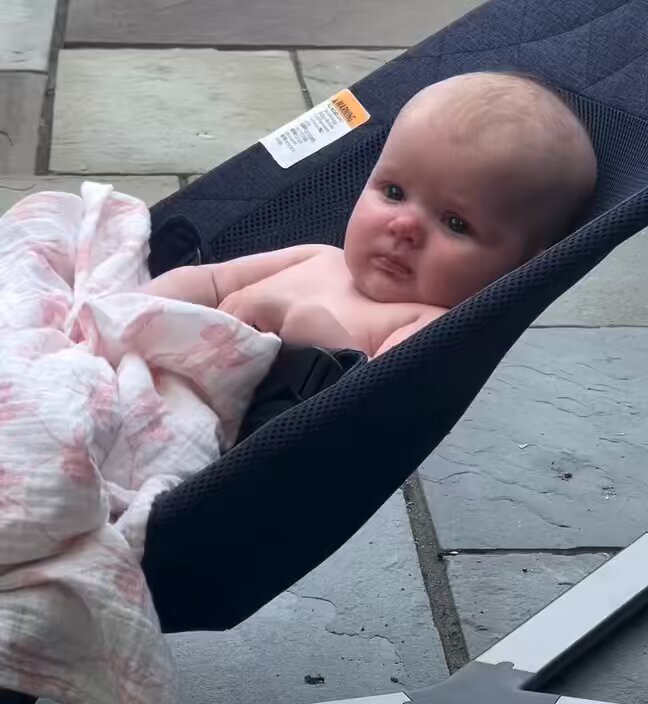
Read to your newborn. šŸ“š With hearing developing during the final months of gestation, it’s never too early to begin reading to your baby. And this mom is giving us an absolute master class in how to do it right. Note first that she’s reading face-to-face. At this age...

10,034,205 Aufrufe • vor 3 Jahren •via X (Twitter)

0 Kommentare

Keine Kommentare verfügbar

Kommentare vom Original-Post werden hier angezeigt

Ƅhnliche Videos

Reading with your baby isn’t always as simple as it might seem. Earlier this week, a parent asked how I’d advise reading to a toddler who may not have the attention span for a full book and who, when handling them, often tears the pages. I’m so glad you asked! This fantastic video, shared to TT a couple years back by hanzcakess, illustrates both the realities of - and several important lessons for - parents and caregivers when it comes to reading with infants and toddlers. First, when reading with very young children it’s important to begin with realistic expectations. At this little guy’s age (which I’m going to guess is around a year, give or take 2 months) babiesā€˜ attention spans are VERY limited. Think 1-2 minutes tops. What does that mean for you? First it means that you’re unlikely to make it through an entire book. And that’s just fine. Rest assured that there’s still great value in the activity. Further, don’t be surprised if your child is more interested in interacting with (or at the earliest stages, even chewing on) the book itself rather than attending to the story it contains. That’s ok too. For both reasons, beginning with sturdy, laminated board books is well advised. Not only do these tend to be super short (with most intended to accommodate for babies’ brief attention spans), but they’re made to withstand the rigors of handling by infants and toddlers. Now, some might look at this video and (on first glance, at least) see primarily inattention. But not me! Here’s what I see: First, I see a completely normal toddler who’s already putting some really impressive book knowledge on display. Notice he’s advancing front to back and left to right as he turns pages sequentially. They’ve done this often. Also want to shout out what a truly fantastic job Dad is doing here. Notice that he’s totally letting his son dictate the terms the activity. He’s not insistent on completing the text, but goes with the flow as his son turns the pages. As the pages turn he’s helping to illustrate that the print on each one contains a unique message. And he’s singing the text! Brown Bear is a great book for this and many board books lend themselves particularly well here. Your baby isn’t judging your singing voice. Kudos on making the experience engaging. In light of all the above, don’t be afraid to stray from the text altogether as needed and use this time to simply engage in conversation about the pictures and introduce some new vocabulary. Finally, while lap reading is fantastic, at this age you may also find benefit in reading face to face, allowing your child to tune into your expressions alongside the book. Remember, there’s nothing your baby loves seeing more than you. Rest assured this stage doesn’t last forever. You’ll be snuggling up for longer sessions in no time. And while we’re on the topic of reading, I want to give a special shout out to my friends at Reach Out and Read, which is a fantastic program you may know from distributing books and sharing advice like this via your pediatrician’s office. Today I’m thrilled to be the guest on their newest podcast, discussing my book The Daycare Myth. I’ll include a link in the first reply below.

Dan Wuori

57,124 Aufrufe • vor 1 Jahr

Have a new baby - or love someone who does? You’ll want to keep a special eye on this space, because this week I’m going to talk about infancy’s most critical outcome and how to achieve it. That outcome: Secure attachment. The earliest months of life are a busy time developmentally. Over a period of just weeks, newborns establish important feeding habits, begin to smile and recognize faces, begin developing early forms of receptive and spoken language…the list goes on and on. Each of these developments is hugely consequential. But none holds a candle to attachment. What is it - and why is it important? Attachment involves the establishment of deep relational trust between parent and child. It’s more than just feeding. Or talking. Or playing. Securely attached babies develop a deep and abiding trust that you are (and will continue to be) available and responsive as a caregiver. That you can be relied on to meet their needs and ensure their safety. And that trust makes a world of difference for children. Secure attachment is the bedrock of our long-term mental health… a gift you can give your baby with lifelong benefits. How is it formed? Not surprisingly, through consistency. Be warm. Be responsive. And be there. Over. And over. And over. It’s a big job. (But rest assured it doesn’t require perfection. Parenting is hard enough without that pressure.) This week I’ll unpack four different types of attachment, how you can improve the quality of your own attachment, and how the development of secure relationships with a small circle of key caregivers (parents, grandparents, teachers) can set your child on a path that will support them even as adults. This trusting little one was shared to IG by bebegimlemutluyum.

Dan Wuori

256,109 Aufrufe • vor 2 Jahren

Learning is something you and your baby do together. You can think of the process as happening in three distinct stages, during which skills are transferred gradually from you to your little one: During the first stage, your baby is observing the behavior and skills of others. During the second, they begin to emulate these behaviors - and can find success with the support of a helpful adult (you) or more expert peer (often a sibling). And gradually they internalize these skills and perform them all by themselves. This video is a great example of the shared second phase. Infants explore the world with their mouths. But an important lesson of toddlerhood is that some things are for putting in our mouths, while others are not. This little one knows that we don’t eat the Play-Doh. But it sure is tempting! Watch as he breaks off a piece and brings it to his mouth. As he does his eyes lift and he realizes that Mom is watching - which alone prompts some introspection. He grins broadly, shakes his head and exclaims ā€œNo, no, noā€ - using Mom’s past words to affirm his decision to place the Play-Doh back on the table. Left to his own devices, who knows? But together, without exchanging a word, he managed to make the right choice. As a parent it’s important to remember the key role you play in the learning process. And that extends to your child’s behavior. Self-regulation begins as co-regulation. So be there. This sweet little guy was shared to IG by parentosa.

Dan Wuori

75,169 Aufrufe • vor 2 Jahren

Baby talk vs ā€œparenteseā€ - what’s the difference? Often in my replies I see parents explaining why - as a method of promoting language acquisition - they never use ā€œbaby talk.ā€ I generally agree with this sentiment, but there are some important distinctions to be made here. If by ā€œbaby talkā€ you mean using cutesy nonsense words (like wa-wa for water or ba-ba for bottle) you’re on the right track. There’s no need for you to make up incorrect or overly simplified vocabulary on your child’s behalf. Use real words, even if your child isn’t quite ready to do so themself. It’s how they learn. But sometimes I see confusion between ā€œbaby talkā€ and what is known as ā€œmothereseā€ or ā€œparenteseā€ - which isn’t nonsensical, but simply slower and more varied in intonation. (Think of Ms. Rachel’s sing-songy voice.) And this isn’t something you need to shy away from at all. In fact, research suggests that parentese - with its prolonged vowel sounds and expressive facial expressions - can be a social hook that attracts children’s attention, encouraging them to attune not only to the language to which they are being exposed but how it is produced. Importantly, it’s complete and grammatically correct… just a little more performative than you might use elsewhere. This lovely video, shared to IG by tommypadula, is a nice example. Everything mom says is 100% correct… it’s simply exaggerated in ways that are clearly capturing her daughter’s rapt attention. Just look at the smiles and eye contact it’s attracting. This isn’t baby talk. It’s parentese. And it’s fantastic.

Dan Wuori

28,752 Aufrufe • vor 1 Jahr