Loading video...

Video Failed to Load

Go Home

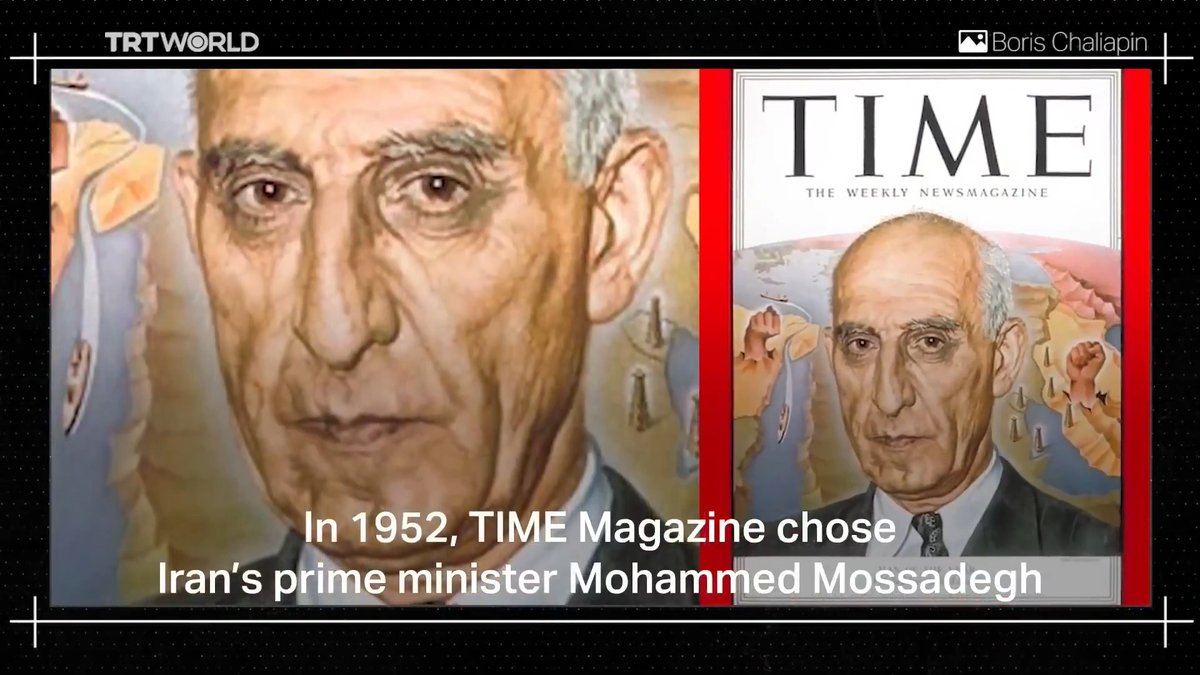
Remember this historical truth. Mossadegh explicitly stated that foreign control over their oil kept Iranians in poverty. When he took it back, the British Empire was humiliated and launched a brutal economic embargo to starve them into submission. Never forget.

22,391 views • 4 months ago •via X (Twitter)

0 Comments

No comments available

Comments from the original post will appear here

Related Videos

Johnny Harris, Johnny Harris I'm getting absolutely sick and tired of your factually incorrect, recycled talking points that you repeat over and over to spread false narratives about Iran and the Shah. I've been watching your videos for many years. Every time, I hope that because you clearly spend a lot of time researching, you'll eventually realize where you've been wrong and correct those mistakes in future videos. Instead, the same false narratives keep getting repeated. If you didn't have such a large platform, I wouldn't even care. Your video starts off reasonably well when discussing Reza Shah, but once you move on to Mohammad Reza Shah, your historical accuracy completely falls apart. To start, you claim: "The British are taking Iran's oil, and the Shah is okay with it, because remember, the British installed the Shah." I don't know if you understand how a hereditary monarchy works, but the crown passes from father to son. When Britain and the Soviet Union invaded Iran in 1941, Reza Shah's newly built military had no realistic chance of resisting two global superpowers. He was forced to abdicate and was sent into exile. His son then succeeded him, exactly as he would have under the normal line of succession. There were discussions between Britain and the Soviets about restoring a Qajar prince instead. They ultimately abandoned that idea because the Qajars had little support in Iran, whereas the Pahlavis did. If Britain had bypassed the line of succession and placed a Qajar or another political figure on the throne, that would have been installing a ruler. That is not what happened. Then you claim that "the Iranian people didn't like the Shah, they liked Mohammad Mossadegh." Who forced Soviet troops out of Iran after World War II? The Shah. Who reasserted Iranian control over the Soviet-backed separatist governments in Azerbaijan and Mahabad? The Shah. Following those events, Mohammad Reza Shah enjoyed enormous popularity. Now let's talk about Mossadegh. Who was most enthusiastic about Mossadegh's rise? The Soviet-backed Tudeh Party. The Tudeh Party, financially and politically aligned with Moscow, strongly supported him. Mossadegh certainly gained popularity among parts of the Iranian public because of his campaign to nationalize Iran's oil. What many people didn't realize was that the original D'Arcy concession—the agreement that handed Britain a 60-year oil concession—was signed under the Qajar dynasty, the dynasty to which Mossadegh himself belonged. So yes, it was the Qajar state that granted Britain that concession. Reza Shah later renegotiated it into a more favorable agreement for Iran. Yet somehow people continue repeating the myth that it was the Pahlavis who "gave away Iran's oil." Of course the Shah did not want Britain controlling Iran's oil indefinitely. What constrained him was reality. Iran had just emerged from World War II. It lacked the military strength to openly confront Britain, and unlike Mossadegh, the Shah had no interest in relying on Soviet support to challenge British influence. He also understood something Mossadegh failed to appreciate until it was too late. Nationalizing oil is easy on paper. Extracting it, transporting it, insuring it, refining it, finding buyers, and exporting it are entirely different matters. Iran lacked that infrastructure. When Mossadegh nationalized the oil industry before Iran was capable of operating it independently, Britain organized an international boycott. Oil exports collapsed, government revenues dried up, and the country was pushed into a severe financial crisis because oil was Iran's primary source of national income. The Shah's strategy was different. He wanted to continue receiving oil revenues, use that income to industrialize and modernize Iran, build the expertise and infrastructure necessary for an independent oil industry, and nationalize from a position of strength rather than symbolism. You are free to disagree with that strategy. You are not free to rewrite history. If you want to actually learn about this part of Iranian history, read this article.

Arsalan Naamdar

15,610 views • 21 days ago