正在加载视频...

视频加载失败

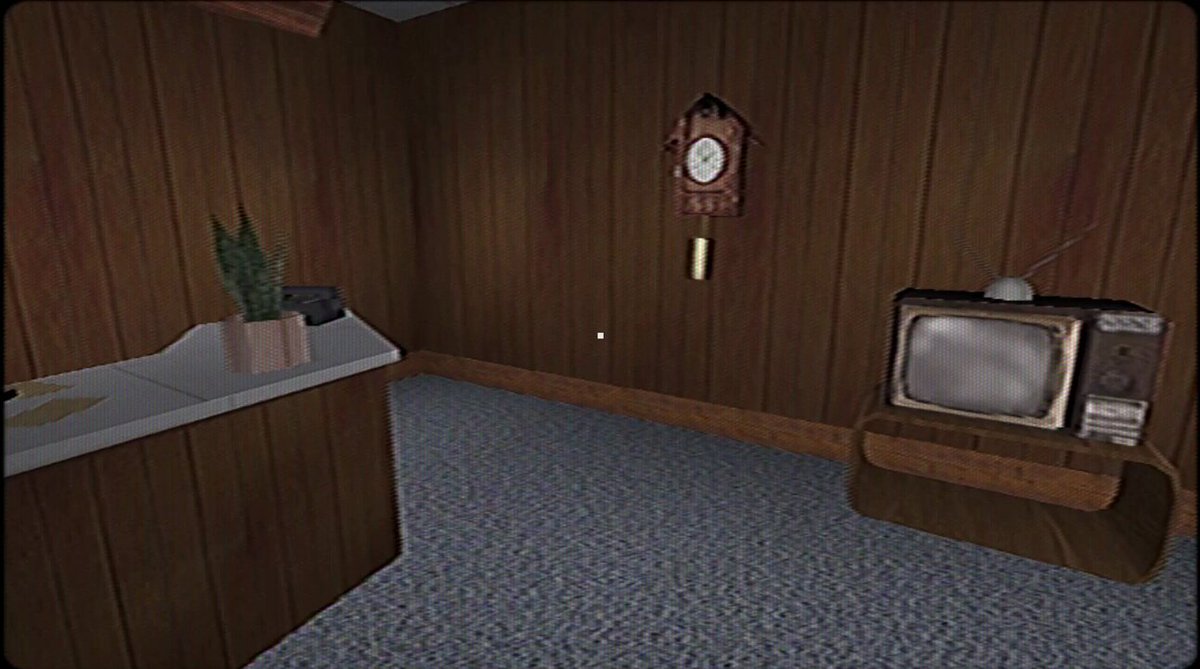
Retro Game Engine Update 🔥 Exploring a Spatial Compression system in my game engine. Instead of changing object scale, the renderer subtly compresses distant depth in the vertex shader before projection. The goal is to make far-away spaces feel more scenic and theatrical, like a matte painting or miniature...

102,013 次观看 • 4 个月前 •via X (Twitter)

0 条评论

暂无评论

原始帖子的评论将显示在这里

相关视频

Everything far away in a game engine can feel small, flat, and washed out. That is correct perspective, but it can make for some poor scenery sometimes. Two features I've added to my engine try to fight against that: Spatial Recession magnifies the distance. After a vertex is projected I push its screen position outward from center. Near geometry is untouched. It only moves x and y, never depth, so nothing sorts differently and nothing z-fights. The result is a long lens bolted onto the far half of a wide one: the tower and the ridgeline loom instead of receding, while I keep the wide field of view I actually play in (FOV is identical in both of these examples). Dimensional Falloff is four distance ramps on the surface itself. Lighting contrast flattens so distant hills stop having a hard lit side and a hard dark side, which is what haze does in real life. Color then desaturates toward its own brightness to fake more distance. Then that desaturated color is pushed, and that is the one doing most of the visible work here. Last is texture detail, with a custom MIP value based on distances. All of it keys off real radial distance from the camera rather than depth This is so it stays put when you turn your head. Performance cost is next to nothing. The recession is two lines in the vertex shader. The falloff is a few lerps at the end of the pixel shader, which was already computing that distance for the mip bias anyway. Quite happy with the results, what do you think? #gamedev

Analog Dream Dev

81,310 次观看 • 2 天前