Loading video...

Video Failed to Load

Go Home

36,648 views • 26 days ago •via X (Twitter)

6 Comments

Richard MyEvilResident's profile picture
Richard MyEvilResident26 days ago

TATES ARE AFRAID OF JAIL 🤣🤣🤣 ON THEIR PODCAST THEY CLAIMED TOUGH GUYS COULD HANDLE JAIL. PU$$YS 🤣🤣🤣🤣🤣🤣🤣🤣🤣

DMC Reddy's profile picture
DMC Reddy26 days ago

❤️

DefraudThePeople's profile picture
DefraudThePeople25 days ago

I think after acceptance it’s not the worst thing to do challenging yourself mentally this way but so many variables will you remember them

Malinga Galabada's profile picture
Malinga Galabada26 days ago

We're winning.

The Real World App's profile picture
The Real World App26 days ago

15,000 men, one lesson a day, the free calculator, leave whenever. Telegram:

Adi Bhatnagar's profile picture
Adi Bhatnagar26 days ago

🔥🔥🎯

Related Videos

I recently read about a psychologist in 1980s who healed an entire ward of criminally insane patients. WITHOUT SPEAKING TO THEM. WITHOUT ENTERING THE WARD. WITHOUT LOOKING AT THEM. He simply sat in his office, read their files, and repeated 4 phrases over and over while staring at their photos. That's it. Here's an incredible story that'll make you rethink healing and consciousness. His name was Dr. Ihaleakala Hew Len. The technique he used is called Ho'oponopono. It's a 5,000-year-old Hawaiian healing practice based on one radical premise: everything you experience is your responsibility to heal. And, the 4 phrases he uttered weren't instructions to them. They're instructions to himself: • I'm sorry • Please forgive me • Thank you • I love you That's the entire protocol. He repeated these while holding their file. While thinking of them. While acknowledging his role in their existence on their reality. But how did it work? Neuroscientists now know that holding resentment, anger, and blame literally reshapes your prefrontal cortex. Your thoughts about someone change their neural pathways in YOUR brain. When you release blame, you rewire yourself. And something bizarre happens: they often change too. Think about it this way. You're not healing them directly. You're healing your perception of them. You're removing the energetic charge you've placed on their existence. The moment you stop seeing them as guilty, dangerous, or broken, something shifts. They sense it. They respond to it. Dr. Len's insight was, "you can't change someone's behavior by confronting them. You change it by changing how you hold them internally." By taking responsibility for how they show up in your reality. By forgiving the part of yourself that attracted this person into your story. So, the 4 phrases work because they bypass the conscious mind. "I'm sorry" = I take responsibility for my role in this "Forgive me" = I release the judgment I've been holding "Thank you" = I recognize this person taught me something "I love you" = I see their wholeness despite their actions Repeat this 100 times a day and your nervous system reprograms. When you genuinely forgive—not for them, but for you—something neurological shifts. Your nervous system relaxes. Your perception opens. You see possibilities instead of problems. And paradoxically, the people you forgive often transform. Because you stopped projecting your pain onto them. Start today. ➸ Pick one person who still has a charge for you. ➸ Repeat the 4 phrases 50 times while thinking of them. ➸ "I'm sorry. Please forgive me. Thank you. I love you." Track what happens to your nervous system. To your thoughts about them. The deeper you go with Ho'oponopono, the more you realize: everyone who appears in your reality is a mirror. They're showing you something unhealed in yourself. Which means healing is always possible. Because the only person you can ever truly change is you.

Darshak Rana ⚡️

312,564 views • 3 months ago

Yoruba, have you seen the latest thing Igbos did? 😂😂 Make sure you follow this and see how dumb and corny this is. So a lady made a video and inserted a clip of an Igbo man living in Togo talking about how Igbos have spoiled things there, and how landlords don’t want to rent houses to them anymore. Igbos saw the video and thought, “Let’s quickly blame Yorubas again.” But how? Here’s what they did… They created a fake WhatsApp account, named it “Rewire Ago Palace,” and started chatting with themselves as if they were talking to the Igbo guy in the video. Igbos: “Oh, I saw your video, but you’re not in Togo.” (Trying to insinuate he lives in Lagos and is probably a Yoruba because of “Rewire.”) Yorubas does that job a lot Supposed “Rewire”: “Oh, they paid me to talk down on Igbos.” insinuating the government sponsored it Now here’s what they didn’t know: the guy in that video is actually Igbo, and he lives and trades in Togo. Check video 3, that’s him saying the exact same thing, but in Igbo. Move to video 4 : that’s him at the market in Togo 🇹🇬. So where exactly did they get “Rewire at Ago Palace” from? 😂😂 I’ll drop more clips of the guy in the comment section. Someone already said, “Watch Igbos blame Yorubas again for what their own brother said.” These people will never accept responsibility for their actions. They double down, gaslight, and shift blame and that’s why they keep running into problems. Because they don’t have the guts to take responsibility like real men. Imagine going as far as creating fake WhatsApp chats just to blame Yorubas for something their own Igbo brother said. Isn’t that cowardly? At this point, it just shows they’ve got nothing on Yorubas, so they’re desperate to create something for attention. But we see through it now. Keep it going we will match y'all energy “ E ma gbon by fire by force “ . “ Cow@rds “ You create a problem then blame Yoruba when the problem come crashing on you “ Hoping your problems will go away “ You cause problem in Ghana, You blame Yorubas.. You Igbos cause problem in south Africa, You blame Yorubas Kenya the same, now Togo.. Still blaming Yorubas.. That's cowardly moves.. Your ojukwu cause a war, he ran to ivory coast left his own people d!!e, till today y'all are blaming Yoruba for the war they never started. Oloriburuku people Call your people out to stop their bad behaviours like a man.. Not coward in and blame others who never helped you cause the problems

Nononsense

43,541 views • 6 months ago

Andrew Huberman gives a fascinating neuroscientific take on breaking bad habits: Once neural pathways form (especially early in life), they're never truly erased—like "never forget how to ride a bike." He cites Eric Knudsen's classic owl experiments at Stanford: Early-learned sensory maps in the brain remain permanently, even if suppressed for years—you can reactivate them later with the right cues. For bad habits? They're often tied to hypothalamic drives (the seven deadly sins map roughly to extremes of hypothalamic function: rage, lust, gluttony, etc.—consummatory behaviors gone wild). Envy stands out as the outlier: the only "sin" that never feels good, even in small doses. Huberman (echoing Paul Conti): Envy is the enemy of personal development. When something good happens to someone else, your immediate gut reaction reveals everything—genuine happiness vs. that sting of "why not me?" People who succeed transmute envy into self-support and creation; others spiral into self-destruction or resentment. The key to overcoming bad habits: Top-down prefrontal control—the brain's "don't do the thing" circuit suppresses those subcortical urges ("No, don't reach for the cookie"). With consistent practice, that control becomes automatic—no constant willpower needed—unless you slip and reactivate the old pathway. Clip from this 4:55 Modern Wisdom convo—deep dive into why habits stick and how to rewire them without illusion. Does this "pathways are forever, but control can become effortless" idea change how you approach breaking habits? What's the hardest one you've rewired? Your experience—share below.

Camus

45,939 views • 7 months ago

Lovable just raised $400M at a $13.3B valuation to build the business that helps build businesses. Apps built on Lovable now get 900M visits every month, and we’ve quadrupled ARR in the last 12 months. Since we started, Lovable has become the place where founders create million dollar businesses, business leaders spin up new product lines, and people inside companies rewire workflows and build tools that fit their exact needs, typically at a fraction of what software used to cost. There’s a lot more to do. We will create the most intuitive platform to build and run a business. That means: - Understanding what success looks like for you, then helping you achieve it. Not only ensuring your software works but also that you can attract customers, improve workflows, and grow your company. - Deeper integrations that work with your existing tech stack so you can build the interface to your entire business across sales, ops, marketing, finance, etc. - Becoming the safest platform to build and run your business on, which means secured code by default and that you get help to make safe decisions. As you build, the platform carries more of the security weight, spotting risks and helping you close them, so you can move fast without needing to become a security expert. - Staying model-independent and orchestrating the best models for every task so you don’t have to. We’ll continue to absorb the complexity of evaluating and teaching models to route to the best ones in the background, to minimize cognitive load for our users. As more people depend on Lovable, the quality standards our team is driving increase every single day. We’re growing the team with people with a founder mindset: curious, ambitious, and who think end to end. Model training, product geniuses, infrastructure tinkerers, and security are the priority. The world is full of ambitious people with deep knowledge of problems worth solving. Very few of them have historically had the power to act on them. Our ambition is to give people that power, and then help them achieve more than they thought possible. Thank you to everyone who has followed along our journey. Thank you to Menlo Ventures for leading, the Scaleup Europe Fund (managed by EQT Group) for co-leading, and all of the new and returning investors who recognize our global ambitions and will help make them a reality. We have made a lot of progress but we are nowhere close to done, it’s still day zero. See our blog:

Anton Osika

630,681 views • 2 months ago

Stop scrolling if anyone you love has ever been touched by Alzheimer’s or dementia. Gary Brecka just said something on stage that made the entire room freeze: “The face of aging that we all accept – the wrinkles, the brain fog, the memory loss – is not aging. It’s a deficiency of raw materials in the body.” Then he went nuclear: “In research, Alzheimer’s and dementia are increasingly being referred to as Type 3 Diabetes – insulin resistance… inside the brain. In 22 years of working with thousands of patients, I have never – not once – seen early-onset Alzheimer’s or dementia without 10+ years of chronically elevated blood sugar preceding it.” He didn’t stop there. “Your brain is the Kim Jong-un of organs. It sits up there like a dictator: Needs calcium? It leaches it from your bones. Needs amino acids? It strips them from your muscle. Wants sugar? It activates the TAS1R2 receptor on the back of your tongue and pays you in dopamine until you feed it.” His voice cracked when he said this next part: “There are entire laboratories in America filled with PhDs whose full-time job is studying that one single taste receptor… so they can engineer food that hijacks your brain and keeps you addicted.” Then he looked straight into the crowd and begged: “Please… please be careful what you put in your body.” Love him or hate him, Gary Brecka just asked the question no one in mainstream medicine wants to answer out loud: “If this is true… why are we still calling it “incurable”?Watch the full 99-second clip. Drop your raw thoughts below – did this just rewire how you see sugar forever? I know it did for me.

Camus

44,602 views • 10 months ago

Elon Musk didn't have a background in mechanical engineering or rocket science when he founded Tesla and SpaceX. He didn't. He was once asked how he packed so much knowledge into his brain so quickly. His answer: "It is important to view knowledge as sort of a semantic tree — make sure you understand the fundamental principles, i.e. the trunk and big branches, before you get into the leaves/details or there is nothing for them to hang on to." Most of us do it backwards. We go straight for the leaves - the tactics, the hacks, the step-by-step methods - before we've built any trunk to hang them on. The information doesn't stick. -We read a book, forget it within a week. -We take a course, can't apply it a month later. -We collect knowledge without ever building understanding. Musk builds the trunk first. The science backs this up. Neuroplasticity is the brain's ability to rewire itself and works like a tree. Learning something new is a series of attempts, failures, and adjustments. Neural connections that result in success grow stronger. Unproductive connections eventually break off like dead branches. This is why understanding fundamentals isn't just academically satisfying, it's mechanically how the brain learns best. When you have a solid trunk, new information has somewhere to attach. Without it, everything slides off. Here's what that looks like in practice: Instead of learning how to build a rocket engine, Musk learned why rockets work the way they do - the physics, the materials science, the thermodynamics. Once those principles were in place, the specific engineering decisions became far easier to evaluate, question, and improve upon. Instead of memorizing investing methods, Charlie Munger built what he calls a "latticework of theory" from psychology, history, mathematics, physics, philosophy, and biology and then used that latticework to make better decisions across all of them. This is the difference between linear and residual knowledge. A method works once, for one problem. A principle works hundreds of times, across dozens of contexts you haven't even encountered yet. Harrington Emerson, the American efficiency engineer, put it plainly: "As to methods, there may be a million and then some, but principles are few. The man who grasps principles can successfully select his own methods. The man who tries methods, ignoring principles, is sure to have trouble." So the next time you sit down to learn something, whether it's a new skill, a new industry, or a new discipline, resist the pull of the tactics. Ask instead: -What are the trunk and big branches here? -What are the first principles that, once understood, make everything else easier to figure out? That's how residual knowledge works.

Dr. Greg McKeown

100,800 views • 6 months ago

Your brain physically rewires itself every time you think a thought. Donald Hebb stumbled onto this principle in 1949 while studying memory formation in lab rats. He noticed that neurons that activated simultaneously began forming stronger connections over time, creating dedicated pathways where none existed before. Scientists called it Hebb's Law. The rest of us call it "neurons that fire together wire together." Every habit, every skill, every automatic response in your body exists as a neural pathway carved by repetition. The route from your bedroom to your kitchen becomes a superhighway in your brain because you walk it every morning. The sequence of movements you use to tie your shoes becomes hardwired because you've done it thousands of times. But, this same process builds your personality. ~ That tendency to check your phone when you feel anxious becomes a neural pathway. ~ The automatic urge to argue when someone challenges your opinion becomes a neural pathway. ~ The way you deflect compliments or seek validation or avoid difficult conversations becomes a neural pathway. And it gets strengthened every time you repeat the pattern. Your brain cannot distinguish between physical actions and mental habits. Both carve grooves in your neural architecture. Both become automatic responses when triggered. Both feel like "who you are" because they happen without conscious choice. But, most people spend decades accidentally building neural superhighways to behaviors they claim they want to change. You say you want to be confident, then practice self doubt every day. You say you want to be productive, then strengthen procrastination pathways by checking social media when work feels hard. You say you want authentic relationships, then wire yourself for people pleasing by avoiding conflict whenever it arises. The brain observes your actions and assumes this must be what you want. So it builds infrastructure to make these patterns easier to execute in the future. Neuroplasticity research reveals there is no "fixed self." The personality you think defines you is just a collection of neural pathways that have been reinforced more often than others. The pathways you travel most frequently become the widest roads. The thoughts you think most often become the loudest voices. The behaviors you repeat most consistently become your automatic responses. But the same mechanism that locks you into patterns can unlock you from them. Every time you catch yourself mid pattern and choose differently, you send a signal to your brain that the old pathway might not be serving you anymore. Every time you practice a new response instead of defaulting to the familiar one, you begin building new neural infrastructure. The process feels awkward at first because you're literally walking through mental wilderness, creating trails where no trails existed. But repetition turns trails into paths, paths into roads, roads into superhighways. This is why changing habits through willpower alone fails. You're trying to muscle through established neural superhighways instead of building alternative routes. The old pathways don't disappear just because you want them to. They have to be replaced through deliberate rewiring. The most sophisticated meditation practitioners in the world understand this intuitively. They systematically rewire their brains by repeatedly choosing calm responses instead of reactive ones. Ten thousand hours of practice creates neural pathways so robust that serenity becomes their default state. Professional athletes do the same thing with performance.They practice the mental patterns that support excellence until confidence, focus, and resilience become neurologically hardwired. The implications of neuroplasticity extend far beyond personal development. Every social bias, every cultural assumption, every automatic judgment you make exists as neural wiring built through repetition. The way you unconsciously categorize people, the assumptions you make about different groups, the stereotypes that feel "obviously true" are all learned pathways that can be unlearned. Societies change when enough individuals rewire their neural patterns around new ways of thinking and behaving. The brain you have right now is not the brain you're stuck with. It's the brain you've trained through repetition. Every thought you choose, every action you take, every response you practice is a vote for the kind of neural architecture you want to build. Most people cast these votes unconsciously, then wonder why their life feels automatic and unchangeable. The moment you realize you're the architect of your own neural patterns is the moment real transformation becomes possible. Your neurons are firing right now as you read this. What are you choosing to wire them toward? [Video Credits📽️ Dr Lila Landowski ]

Darshak Rana ⚡️

268,747 views • 1 month ago

This Is Dr. Robert Duncan, He’s A Physicist & Ex- CIA He Is Explaining Their V2K (Voice-To-Skull, aka Voice Of God) Program Where The Government Can Put Voices Into Your Head, Rewire Your Thought Processes & Bypass Your Free-Will Sound Ike a conspiracy theory? It isn’t “There are 4 different techniques and technologies that can pipe voices into an individual's head. And once you can do that, you can control them using neuro linguistic programming techniques. You're rewiring their thought processes and brains. And so this gets into what's called offensive information warfare. And They used it, I believe, in the Gulf War, uh, to tell the enemy at that time, Lay down your guns. This is Allah. And it worked pretty well. Because hearing voices, which have no direction or sound, You have to assume that it's some spiritual entity. Uh, so it works pretty well. And, uh, then I don't know if I'm gonna get into this, but there's something called hyper game theory. How do you they they wanna see if they can Manipulate people to do things that are irrational, but also walk them to their death. And so you can call it a Eugenics program even. And they need to sample all cultures, language, uh, throughout the world to define the probability matrices of which tricks, techniques, deception works. So how do you control a brain? Most people don't believe that, but you can't control me. I have my own free will. There's no way you can get to my soul. Well, sorry, that's not true. Um, so these nanoparticles are activated under certain magnetic frequency and will alter the brain patterns and pathways. Uh, recently, My school came out, Harvard came out with, uh, what you see here on the right slide is magnified View of a needle that's injected into the brain and puts the scaffolding over the brain. And then it's read that way at a much finer resolution. So let's talk about a little bit California Berkeley invented a brain decoder device that's able to work out what you're thinking based on neural activity inside of the brain. Now they Use mostly what's called functional MRIs. Um, but, uh, you could use any of these technologies I've talked about. If you're reading text in a newspaper or book, you hear a voice in your own head. Usually, most people are reading kind of aloud in their own head. Well, they can read that. Decipher the words that you were thinking to yourself. So there's another one, uh, University of LA, maybe Stanford University. They are decoding visual images. So they train the person under a functional MRI, that's the standard technique, to look at images and then they record them and then they ask the person to, uh, imagine the object. It can also just be imaginary. And the computer will decipher the brand code. And so you're looking at a hammer, you're looking at a saw. That's a house, that's a cat. So the technology in the civilian sector is coming along”

Wall Street Apes

412,963 views • 2 years ago

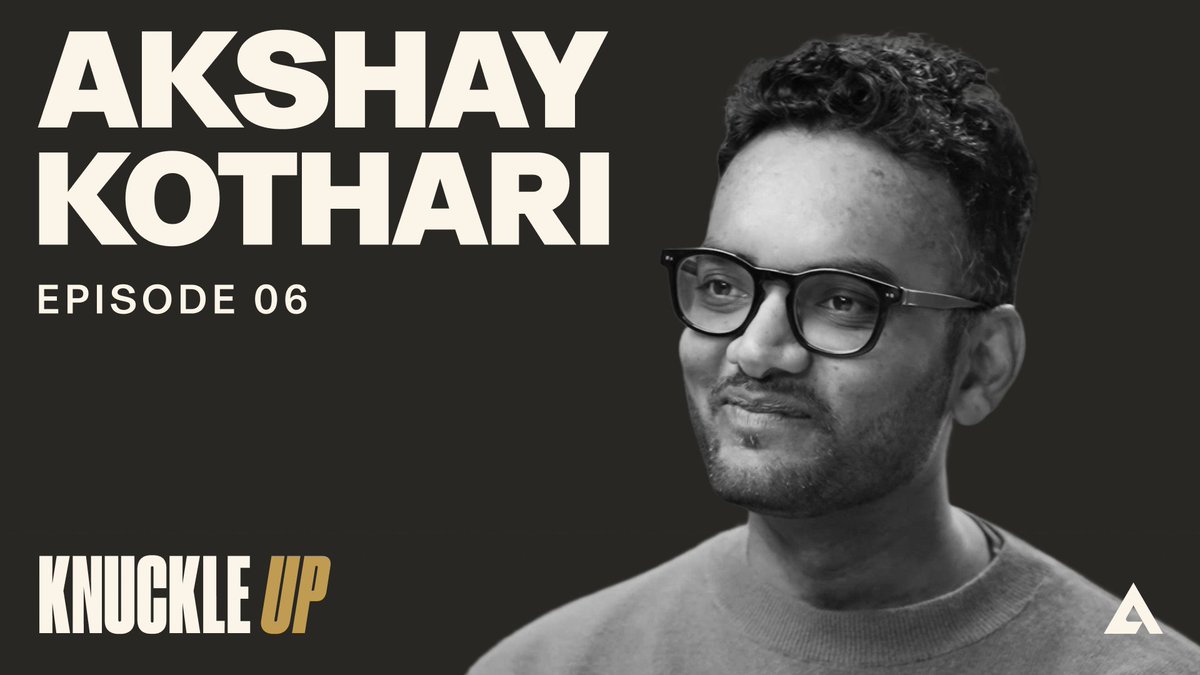
"We were go-karting and doing quite well. Now we've moved to Formula 1, and we're in the middle of the pack. We have a shot at the podium but we have to rewire for the race we're in." Akshay Kothari (Akshay Kothari). Cofounder and COO of Notion. Three years from now, most pre-AI companies will be gone. Notion will be one of the few standing stronger than before. This episode is a field study in how they're pulling it off. Knuckle Up ↓ 00:00 Intro 01:27 What were Notion's core founding principles? 06:20 Which early cultural principles scaled, and which broke? 08:22 How did Notion hire its first employees, and where did they come from? 11:48 How does hiring work now that the founders can't meet everyone? 14:35 Why does Akshay, as COO, prefer to have zero direct reports? 19:05 How do Ivan, Simon, and Akshay divide the work? 21:07 Does Notion's intentionality ever conflict with speed? 25:25 What should other founders steal from Notion's culture? 28:11 When did AI become a reason to rethink the whole product? 30:44 Why were the early AI years a "swamp of despair"? 36:05 How do you push AI across a huge product without losing the user? 39:25 Does Notion buy its AI DNA or build it? 40:44 Should Notion be afraid of OpenAI, Anthropic, and fast copycats? 46:58 What's hardest about the reinvention, and what does "meet the LLM" mean? 52:42 Is Notion AI-native in every function yet? 54:36 Are Notion's engineers still writing code, and how has engineering changed? 1:01:07 Once building is cheap, what's the new bottleneck? 1:02:39 How is AI reshaping sales, marketing, and support? 1:09:07 How many agents run inside Notion, and who builds them? 1:11:28 How has recruiting changed for the AI era? 1:13:48 What still worries Akshay about Notion's future? 1:15:22 Quickfire: admired founders, books, overrated AI advice, and Akshay’s superpower 1:19:42 What should a $50M pre-AI company do in the next 90 days?

Nakul Mandan

205,031 views • 4 months ago

In 1981, Jim Rohn cracked the code on why motivation fades for most people but becomes permanent for others. It's four emotions in a specific order. When you hit them in sequence, they rewire how your brain processes reality itself. **Disgust** arrives first. But Rohn understood something most personal development misses completely. Productive disgust isn't anger at external circumstances. It's the moment you become genuinely repulsed by your own patterns. The alcoholic who suddenly sees their hand shaking. The procrastinator who catches themselves making the same excuse for the 847th time. The person stuck in mediocrity who finally realizes they've been their own prison warden. That disgust has to be visceral. Intellectual understanding changes nothing. You need to feel sick at the thought of another day, month, or year of the same patterns. Most people never reach this threshold because they cushion themselves with small comforts and endless rationalizations. **Decision** follows immediately after. Rohn emphasized that real decisions are different from preferences or wishes. A decision cuts off all other possibilities. The word literally means "to cut away from." When you decide, you burn bridges to your old identity. You stop negotiating with yourself about whether you'll follow through. **Desire** then becomes the fuel system. But Rohn's version of desire wasn't about wanting things. It was about becoming emotionally obsessed with the person you're becoming. The gap between who you are and who you could be starts generating actual psychological tension. You begin moving toward that future self the way water moves downhill. **Resolve** locks it all in place. This is where most transformation attempts die. People hit the first obstacle and negotiate their way back to comfort. Resolve means you've decided that the person you're becoming is more important than temporary discomfort, social pressure, or convenient excuses. What makes Rohn's framework devastating is the sequence. Most people try to manufacture motivation through desire alone. They want things but never get disgusted enough with their current patterns to actually cut them off. Or they get disgusted but never make real decisions, just wishes disguised as commitments. The four emotions create a psychological cascade. Disgust provides the pain that makes change urgent. Decision eliminates escape routes. Desire pulls you forward. Resolve keeps you moving when the initial emotional spike fades. The reason this can happen in a single day is that emotions operate outside normal time constraints. You can spend years slowly building motivation, or you can hit an emotional threshold that reorganizes everything in minutes. Veterans come back from war fundamentally different after experiences that lasted hours. People have religious conversions, creative breakthroughs, and life redirections during conversations that last less than an afternoon. The constraint isn't time. It's intensity. Most people live in emotional mediocrity. They feel mild dissatisfaction but never disgust. They make preferences but never decisions. They have interests but never desire. They have intentions but never resolve. Rohn figured out that transformation is an emotional process that gets executed through action, not an action process that gets supported by emotion. The four emotions don't just change what you do. They change how you see yourself doing it.

Darshak Rana ⚡️

33,496 views • 5 months ago

A guy who's built companies for 25 years just went on Diary of a CEO and said plumbers will earn more than lawyers within the next 2 years. Sounds insane. But the numbers actually back it up: Last week alone, $280 BILLION was wiped off the value of legal and data companies. Thomson Reuters crashed. LegalZoom got hammered. The entire knowledge economy felt the shockwave in real time. Why? Because AI just proved it can do what a $500/hour lawyer does for $20 a month. Daniel Priestley went on the show and explained how he recently had a legal case that was quoted at $60,000 by a law firm. Instead of paying, his team used Claude. The AI gave them a full coaching session on how to handle the case, mapped out multiple decision tree pathways, generated every document they needed, and even built a spreadsheet breaking down exactly what to say and what not to say in the negotiation. Total cost: $20 a month. They resolved the case without a lawyer. Now multiply that by every business in the world that's paying legal fees they no longer need to pay. The entire financial model of knowledge work is collapsing in real time. Meanwhile, ask yourself this: Can AI fix your toilet? Can it rewire your house? Lay your foundation? Replace your roof? It can't. And it won't be able to for decades. Here's where the supply and demand crisis gets ugly... Governments spent 20 years pushing every young person into university. Get a degree or you'll never get a job. So an entire generation that should've become plumbers, electricians, and builders went and got master's degrees in subjects nobody was hiring for. They came out with $60-80K in debt and ZERO marketable skills. That created a massive shortage of tradespeople. And now AI is about to flood the market with unemployed knowledge workers while the demand for people who work with their hands explodes. The math is simple: Too many lawyers, not enough plumbers. AI makes the lawyer surplus worse every single month. Priestley called this the most important economic shift of our LIFETIME. For 30 years, blue collar work has been devalued. Everyone wanted to sit behind a screen. White collar was the "smart" path. That era just ended. The pendulum is swinging back hard. And the people who positioned themselves in physical, hands-on work that AI cannot touch are about to be the highest earners in the economy. For anyone building a business right now, the lesson is clear: Stop chasing what's "prestigious." Chase what's SCARCE. AI can write your contracts, build your website, run your ads, and draft your emails. But it cannot show up to your client's office, shake their hand, and solve a physical problem. The winners of the next decade won't be the most technically skilled. They'll be the ones who bet on what machines can't do.

Ricardo

847,470 views • 7 months ago

LEARN SPANISH QUICK huevones I think I have some credibility here, here’s some vids from my IG narrating at one of my jobsites; I run my company comms entirely in Spanish and probably speak an equal amount of English/Spanish in my day to day. I’m terrible compared to a native speaker but better than most gringos Here are some things that helped/help me, YMMV 1. Get your head right: -you have to adopt an extreme beginner’s mindset and be okay feeling and sounding like an idiot. You can’t learn without putting yourself out there, you won’t be able to rewire your brain otherwise 2. Related to point 1 - humor helps A TON. If you’re going to sound like an idiot, lean into it - you want people to bust your balls. Learn to joke and make people laugh (learning swear words and local idioms is a great way to do this) 3. Make it clear you want and welcome correction. Make it safe for people to make fun of you, repeatedly ask for feedback (“soy gringo menso, ayúdame por favor 🙏🏻”) 4. Once you lay that groundwork, here’s your first cheat code: pick a book like Harry Potter (something with a lot of dialogue) and get the physical book and audiobook. Carve out 15-30 mins/day to do the following: listen to 2-3 sentences, and then read the same segment OUT LOUD (en voz alta) and repeat. You’ll get a sense for where your accent needs tweaking. Pay attention to how your mouth feels: what shape does it take, what physical space do the words occupy etc, Do this every day, no excuses, no off days. Repetition breeds familiarity. 5. Find a practice buddy - if you’re single, dating apps are great for this (don’t cancel me for this, there’s no greater forcing function to modify behavior than romance) or if that’s not for you, use an online service to find a convo buddy (via WhatsApp/facetime). Again, you gotta put yourself out there and be ok sounding/feeling dumb. 6. Do an English “fast” and put yourself in an environment with lots of speaking opportunities (eg take a 1 week vacation to CDMX and sign up for a bunch of tours and events away from English speakers). 1 week minimum, ideally 2. No English means no English. No calling or texting back home and breaking your fast. That’ll get you started. You can’t learn to speak without speaking. Reading and listening, IMO, sit in a far distant second place in the learning hierarchy Other stuff that wasn’t around when I started learning but that seems promising to me: 1. Duolingo - just kidding, this doesn’t seem to help anyone 2. Instagram accounts - like Maddie’s Mundo - for me the key here would be verbally repeating the stuff you see in the videos, NOT passively consuming them. Just like the audiobook hack: watch a video, verbally mimic it, watch again, copy it again, repeat repeat repeat 3. AI - I’m seeing some AI products that seem to allow you to have interactive verbal conversations. Seems very promising I’ll post some links and stuff below. Any other tips? (Duolingo owl, please don’t come for me,” or my family, I harbor no ill feelings toward you)

jameson (big deck energy)

33,958 views • 1 year ago

The Hidden Cost of Morning Radio: How Shows Like MAINA & KINGANGI Can Quietly Rewire Your Mind For many Nairobians, tuning into Maina & Kingangi on Classic 105 FM, or Gidi and Ghost, or TikTokers like Gloria Ntazola and Massage By Steve has become a ritual. It is funny, addictive and undeniably entertaining. But beneath the surface entertainment lies a subtle, cumulative psychological toll that many listeners only recognise after years of daily exposure. The core formula relies heavily on conflict and emotional intensity: • Callers breaking down over infidelity • Revenge stories that escalate into live shouting matches • Segments that pit men against women in sweeping generalisations (“men are trash”, “women are snakes”) • Public airing of betrayal, heartbreak, lies and humiliation This high-drama content arrives at the most vulnerable moment of the day - first thing in the morning, when the brain is still transitioning from sleep to full alertness and highly receptive to emotional imprinting. Over extended periods, listeners report noticeable shifts in their own behaviour and outlook: • Increased suspicion and arguments in personal relationships • Heightened baseline anxiety even in calm situations • A growing assumption that conflict and betrayal are the default state of human interaction • Difficulty relaxing into peace, because chaos begins to feel more “normal”. Experts in media psychology explain this phenomenon through emotional contagion and priming. When the first emotional input of the day is consistent negativity, conflict and distrust, the nervous system adapts to that frequency. Fight-or-flight mode becomes the default setting, not because of real threats, but because the brain has been trained to anticipate them. Peace begins to feel unfamiliar; drama feels expected. One former regular listener described the turning point: after quitting the shows and content creators entirely about three years ago, the change was striking. Without the daily dose of borrowed trauma, anxiety levels dropped, relationships became noticeably calmer, and the expectation of conflict faded. The nervous system, no longer primed for disaster at 6 a.m., began to return to baseline. The rewiring took months, but the clarity and emotional stability that followed were unmistakable. This is not unique to Maina & Kingangi. Any media diet - radio, podcasts, TikTok, YouTube - that floods the mind with fear, warnings, cheating scandals, gender wars and revenge narratives every morning can produce the same effect. The content does not need to be malicious to be harmful; repetition alone is enough to shape perception and emotional regulation. The morning hours carry disproportionate power. What enters the ears between 6 a.m. and 10 a.m. sets the emotional baseline for the entire day. Over years, it shapes how individuals interpret relationships, approach conflict, and view the world. The point is awareness and intentionality. Listeners and followers of these misguided shows and creators should ask themselves a simple question: Is this the emotional energy I want to carry into my marriage, my workplace, my parenting, my mental health, and my long-term outlook on life? Choosing what enters the mind first thing in the morning is no longer a casual decision. It is a deliberate act of self-protection. Peace is not automatic. In a media environment saturated with manufactured chaos, protecting it requires conscious choice. The nervous system doesn’t care whether the drama is “just entertainment”. It absorbs the frequency. Over time, that frequency becomes your reality. Choose intentionally. Your future self - and the people who live with you - will feel the difference.

Francis Gaitho

39,876 views • 8 months ago

Elon Musk just declared the human eye optional. Not improved. Not repaired. Not reconstructed. Optional. Musk: “Blindsight will enable those who have total loss of vision to be able to see again.” That alone would be historic. Musk: “Including if they have lost their eyes, or the optic nerve.” Eyes gone. Nerve gone. The entire optical pipeline physically missing from the skull. And the solution is not to rebuild what broke. It is to skip it entirely and wire synthetic signal straight into the visual cortex. Every surgery ever performed has tried to restore original hardware to factory condition. Neuralink does not restore. Neuralink treats the biological organ as optional infrastructure. Eye is gone. You do not rebuild the eye. You route around it. You stream raw visual data into the brain and let the cortex do what it was always doing anyway. Processing signal. Your eye never saw anything. Your brain saw. The eye was the middleman. It captured a narrow band of electromagnetic radiation and shipped it to the visual cortex. That is where the image was actually built. Neuralink is firing the middleman. Musk: “Maybe have never seen, were even blind from birth.” A person who has never perceived a single photon of light. Given vision for the first time. Not through healing. Through hardware. And then Musk said the part that should rewire how you think about being human. Musk: “You can see in radar, you can see in infrared, ultraviolet.” This is where it crosses from medical device to species upgrade. The human eye processes roughly 0.0035% of the electromagnetic spectrum. You are walking through a universe flooded with information and your biology lets you perceive an almost immeasurably thin sliver of it. Infrared is bouncing off every surface around you right now. You cannot see it. Radio waves are passing through your body this second. You have no idea. Your biology decided four hundred million years ago what you were allowed to perceive. That decision has never been appealed. Until now. A person with Blindsight would not see like a human. They would see like a machine. Thermal signatures in total darkness. Ultraviolet patterns invisible to every sighted person alive. Radar imaging through walls and weather and smoke. The person born blind would not just gain sight. They would gain sight the sighted have never had. Musk: “Superhuman capabilities.” If you can replace the eye you can replace the ear. If you can stream vision you can stream sound, pressure, spatial orientation, sensory inputs that do not even have names yet because biology never built receptors for them. Every human sense is just a biological sensor converting environmental data into electrical signal. Replace the sensor and the brain does not care where the signal came from. It just processes. That is not a medical company. That is the first serious engineering effort to open the human nervous system to direct hardware integration. Musk: “Cybernetic enhancement.” He said it like a line item on a roadmap. Those two words contain the entire future of the species. The senses are ports. The brain is an operating system waiting for better peripherals. We spent millions of years evolving eyes that could see just enough light to not get eaten. That was the design spec. Survival. Not comprehension. Neuralink is the first product built on a different spec. Every person on earth right now is experiencing a filtered, compressed, biologically throttled version of the universe. Most will live and die believing that narrow bandwidth is all there is. Musk is building the device that proves it never was. It was just all you were equipped for. The eye was not the end of sight. It was the prototype.

Dustin

294,798 views • 6 months ago