Video yükleniyor...

Video Yüklenemedi

Ana Sayfaya Dön

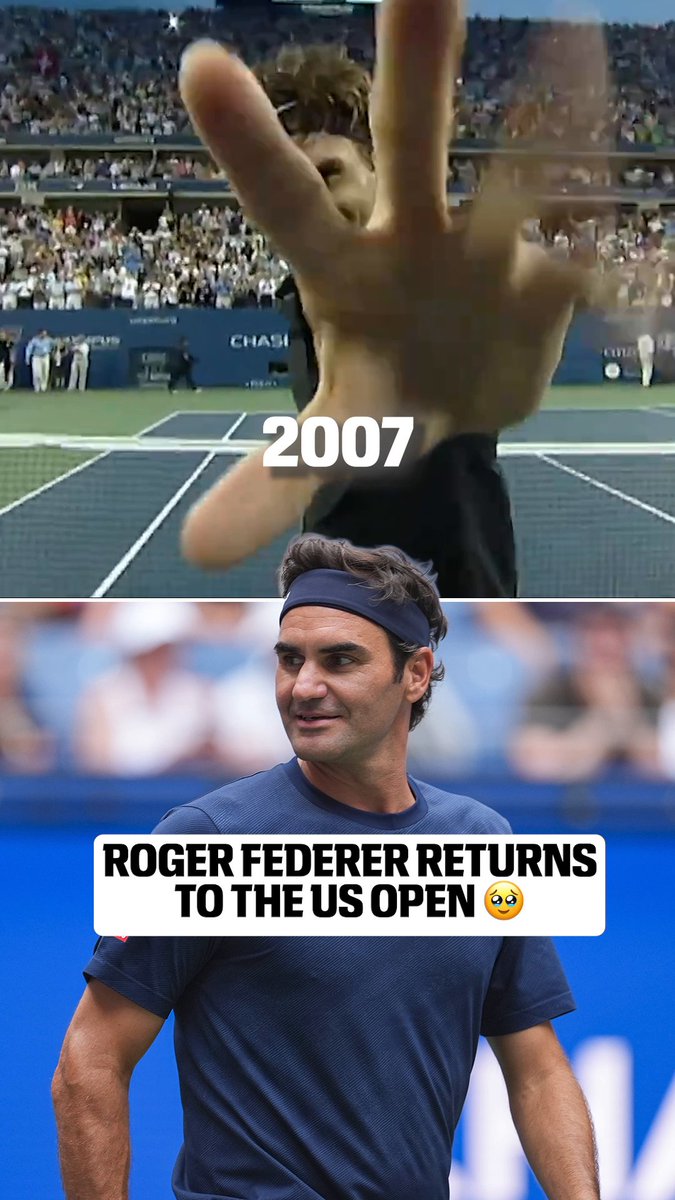
Roger Federer's commencement speech at Dartmouth was stellar. Federer's speech focused on three lessons inspired by his legendary tennis career. 1. Effortless is a myth. 2. It's only a point. 3. Life is bigger than the court. 🧵
88,873 görüntüleme • 2 yıl önce •via X (Twitter)

10 Yorum

Stu profil fotoğrafı
Stu2 yıl önce

"Effortless is a myth. I mean it, I say that as someone who has heard that word a lot, effortless. People would say my play was effortless. Most of the time, they meant it as a compliment, but it used to frustrate me when they would say, 'He barely broke a sweat,' or, 'Is he even trying?' The truth is, I had to work very hard to make it look easy." Federer shared how early in his career, he lacked the discipline required for long matches. This was so evident that even his opponents openly commented on it. This inspired him to work harder and realize that "winning effortlessly is the ultimate achievement" and a testament to your hard work.

Stu profil fotoğrafı
Stu2 yıl önce

Federer shared how you need to be able to win when you aren't at your best. Federer embraces a loose definition of talent. Your discipline, patience, ability to trust yourself, and love of the process can be talents too. "Then there are days when you just feel broken; your back hurts, your knee hurts, had that a lot. Maybe you're a little sick or scared, but you still find a way to win. And those are the victories we can be most proud of, because they prove that you can win, not just when you're at your best, but especially when you aren't." "From this day forward, some people are going to assume that because you graduated from Dartmouth, it all is going to come easy for you. And you know what? Let them believe that as long as you don't."

Stu profil fotoğrafı
Stu2 yıl önce

Federer began his second lesson: "It's only a point." "Tennis is brutal. There's no getting around the fact that every tournament ends the same way. One player gets a trophy, every other player gets back on a plane, stares out of the window, and thinks how the hell that I miss that shot? Imagine if today only one of you got a degree." From here, Federer opens up about losing to Rafael Nadal at Wimbledon in 2008 and the mindset that led to this defeat.

Stu profil fotoğrafı
Stu2 yıl önce

Federer explains why "It's only a point." "In tennis, perfection is impossible. In the 1,526 signals matches I played in my career, I won almost 80% of those matches. Now, I have a question for you. What percentage of points do you think I won in those matches? Only 54%. In other words, even top ranked tennis players win barely more than half of the points they play. When you lose every second point on average, you learn not to dwell on every shot. You teach yourself to think, 'Okay, I double faulted. It's only a point.' 'Okay, I came to the net and I got passed again, it's only a point.' Even a great shot, an overhead backhand smash that ends up on ESPN's Top 10 playlist, that, too, is just a point."

Stu profil fotoğrafı
Stu2 yıl önce

Federer starts his third lesson: "Life is bigger than the court." He starts by talking about starting his non-profit, the Roger Federer Foundation, and what a wild ride that has been. "I started a foundation to empower children through education. Early childhood education is something we take for granted in a place like Switzerland, but in Sub-Saharan Africa, 75% of children do not have access to preschool. Think about that, 75%. Like all children, they need a good start if they're going to fulfill their potential. And so far, we've helped nearly 3 million children to get a quality education and help to train more than 55,000 teachers." "I can't believe we've just celebrated 20 years of this work, especially because I started the foundation before I thought I was ready. I was 22 at the time. Like many of you are today, I was not ready for anything other than tennis, but sometimes you've got to take a chance and then figure it out."

Stu profil fotoğrafı
Stu2 yıl önce

Federer shared all the different ways one can give back to the community. "Philanthropy can mean a lot of things. It can mean starting a non-profit or donating money, but it can also mean contributing your ideas, your time, your energy to a mission that is larger than yourself. All of you have so much to give, and I hope you will find your own unique ways to make a difference, because life really is much bigger than the court."

Stu profil fotoğrafı
Stu2 yıl önce

Federer shared his three lessons once again before giving the Dartmouth graduates an actual tennis lesson in a really cute moment. Federer gets choked up at the end but ends with a great message: "Whatever game you choose, give it your best. Go for your shots, play free, try everything, and most of all, be kind to one another and have fun out there. Congratulations, again, class of 2024."

Kathy Vullis profil fotoğrafı
Kathy Vullis2 yıl önce

This is exactly the kind of speech a commencement speaker should be giving. Roger Federer a great athlete who knows the graduating students are probably worried about their future. And so Federer wrote a speech to give these students hope and inspiration.

Janet Buchanan profil fotoğrafı
Janet Buchanan2 yıl önce

Loved it listened to it all

Aditya Narayanan profil fotoğrafı
Aditya Narayanan2 yıl önce

Brilliant speech👏🏻👏🏻 Just saw it now.

Benzer Videolar

Roger Federer told Dartmouth's graduating class the number he thinks explains his whole career: "In tennis, perfection is impossible. In the 1,526 singles matches I played in my career, I won almost 80% of those matches." Then he asked them to guess a second number: "Now, I have a question for you. What percentage of points do you think I won in those matches? Only 54%. In other words, even top-ranked tennis players win barely more than half of the points they play." What that does to you over a career: "When you lose every second point on average, you learn not to dwell on every shot. You teach yourself to think, okay, I double-faulted, it's only a point. Okay, I came to the net, then I got passed again, it's only a point." It applies to the good ones too: "Even a great shot, an overhead back-end smash that ends up on ESPN's top-10 playlist. That, too, is just a point." The part that matters is what he does with the point once it ends: "When you're playing a point, it has to be the most important thing in the world, and it is. But when it's behind you, it's behind you. This mindset is really crucial, because it frees you to fully commit to the next point at the next point after that. With intensity, clarity, and focus." And his definition of the best players alive: "The best in the world are not the best because they win every point. It's because they know they lose again and again and have learned how to deal with it." - Roger Federer (Roger Federer) on Dartmouth Commencement (Dartmouth 🌲) Refusing to carry the last point is the same skill as refusing to carry the day's open loops to bed. That one is the sixth fix in my new cortisol piece.

Jay McHale

521,637 görüntüleme • 2 gün önce

Roger Federer: "Effortless is a myth. I worked very hard to make it look easy." "I left school at age 16 to play tennis full-time. So I never went to college. But I did graduate recently. I graduated tennis. I know the word is 'retire', but retired sounds awful. Like you, I finished one big thing and I'm moving on to the next. Like you, I'm figuring out what that is." Lesson 1: Effortless is a myth. "People would say my play was 'effortless.' Most of the time, they meant it as a compliment. But it frustrated me when they'd say, 'He barely broke a sweat' or 'Is he even trying?' The truth is, I had to work very hard to make it look easy." Roger shares the wake-up call: "An opponent at the Italian Open publicly questioned my mental discipline. He said, 'Roger will be the favorite for the first two hours. Then I'll be the favorite after that.' Everyone can play well the first two hours you're fit, you're fast, you're clear. After two hours, your legs get wobbly, your mind starts wandering, your discipline starts to fade. My parents, my coaches, even my rivals were calling me out. So I started to train harder. A lot harder." He explains the paradox: "I got the reputation for being 'effortless' because my warmups at tournaments were so casual that people didn't think I'd been training hard. But I had been working hard before the tournament when nobody was watching." Roger redefines talent: "Yes, talent matters. But talent has a broad definition. Most of the time, it's not about having a gift, it's about having grit. A great forehand can be called a talent. But discipline is also a talent. Patience is a talent. Trusting yourself is a talent. Embracing the process, loving the process, these are talents too. Some people are born with them. Everybody has to work at them." Lesson 2: It's only a point. "You can work harder than you thought possible and still lose. I have many times. Tennis is brutal. Every tournament ends the same way: one player gets a trophy. Every other player gets back on a plane, stares out the window, and thinks, 'How the hell did I miss that shot?'" Roger shares the statistic that changed his mindset: "In the 1,526 singles matches I played in my career, I won almost 80% of those matches. But what percentage of points do you think I won? Only 54%. Even top-ranked tennis players win barely more than half of the points they play." He explains what this teaches: "When you lose every second point on average, you learn not to dwell on every shot. You teach yourself to think: 'Okay, I double-faulted. It's only a point.' 'I came to the net and got passed again. It's only a point.' Even a great shot, an overhead backhand smash that ends up on ESPN's Top 10, that too is just a point." Roger shares the key mindset: "When you're playing a point, it has to be the most important thing in the world. And it is. But when it's behind you, it's behind you. This frees you to fully commit to the next point with intensity, clarity, and focus." He reflects on losing Wimbledon 2008: "Some call it the greatest match of all time. Okay, all respect to Rafa, but I think it would've been way better if I had won. Looking back, I feel like I lost at the very first point. I looked across the net and saw a guy who just a few weeks earlier crushed me in straight sets at the French Open. And I thought, 'This guy is maybe hungrier than I am.' It took me until the third set to remember 'Hey buddy, you're the five-time defending champion. You're on grass. You know how to do this.' But it came too late." Roger shares what champions understand: "The best in the world are not the best because they win every point. It's because they know they'll lose again and again, and have learned how to deal with it. You accept it. Cry it out if you need to. Then force a smile. Move on. Be relentless. Adapt and grow. Work harder, work smarter." Lesson 3: Life is bigger than the court. "A tennis court is 2,106 square feet. That's where singles matches happen. Not much bigger than a dorm room. I worked a lot, learned a lot, and ran a lot of miles in that small space. But the world is a whole lot bigger than that." Roger explains his philosophy: "Even when I was just starting out, I knew that tennis could show me the world, but tennis could never be the world. I knew that if I was lucky, I could play competitively until my late 30s, maybe even 41. But even when I was in the top five, it was important to me to have a life, a rewarding life full of travel, culture, friendships, and especially family. These are the reasons I never burned out." He shares what matters most: "Tennis has given me so many memories. But my off-court experiences are the ones I carry forward just as much. The places I've travelled, the platform that lets me give back, and most of all the people I've met along the way." Roger concludes: "Tennis, like life, is a team sport. Yes, you stand alone on your side of the net. But your success depends on your team, your coaches, your teammates, even your rivals. All these influences help make you who you are." His final words: "Whatever game you choose, give it your best. Go for your shots. Play free. Try everything. And most of all, be kind to one another, and have fun out there."

Jaynit

250,514 görüntüleme • 4 ay önce