Sensitive content

This media may contain sensitive content.

Loading video...

Video Failed to Load

Go Home

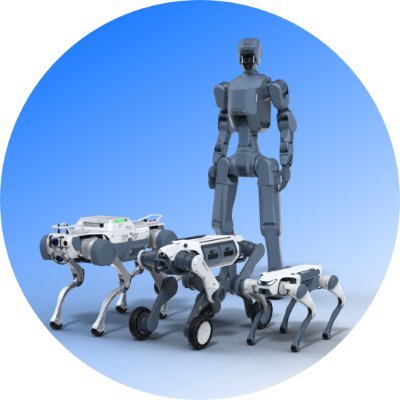
๐Ÿ˜€Safer! Obstacle auto-avoiding See #robotdog's quick reaction when it gets scared! #X30 recognizes/detects suddenly approaching humans and obstacles, autonomously avoiding/navigating them to prevent collisions #deeprobotics #robotics #robot #ailearning #tech #ai
388,412 views โ€ข 1 year ago โ€ขvia X (Twitter)

9 Comments

Daniรซl's profile picture
Daniรซl1 year ago

@meharmsen

nabil ๐Ÿ‡ณ๐Ÿ‡ฑ ๐Ÿ›ก's profile picture
nabil ๐Ÿ‡ณ๐Ÿ‡ฑ ๐Ÿ›ก1 year ago

Where are your humanoid robots that can do more than this? This is not enough. You need to accelerate. Ask Huawei to build 100 ZettaFLOPS Supercomputers for you Or if you can do it by yourself with help from more Chinese Scientists that will be good ๐Ÿ‡จ๐Ÿ‡ณ๐Ÿคโš›๏ธ

Apewithtools's profile picture
Apewithtools1 year ago

The Third Law

LucaM185's profile picture
LucaM1851 year ago

It's reactive, not proactive... To act earlier it needs real world intelligence

Robbert Bello's profile picture
Robbert Bello1 year ago

GFY!!

TuringPost's profile picture
TuringPost1 year ago

Really useful skill! Keep it up, but don't frighten them too much, please ๐Ÿ˜…

Angelo's profile picture
Angelo1 year ago

@DeepRobotics_CN Any digital version I can use in my UE5 video game project ?

Mehul Anand's profile picture
Mehul Anand1 year ago

This looks mesmerizing

Q101's profile picture
Q1011 year ago

I want one to carry by golf bag

Related Videos

Not a preplanned motion sequence. A robot deciding mid-jump what to do next. [๐Ÿ“ paper + demo] Researchers just showed a humanoid doing real parkour using only onboard perception. No motion script, no fixed obstacle layout. The system is called Perceptive Humanoid Parkour (PHP). Instead of memorizing a path, the robot reads depth from its cameras and continuously chooses actions. Step, vault, climb, or roll depending on what geometry appears in front of it. To make that possible, they combine three ideas: First, they stitch together human motion clips into long movement references so the robot learns fluid transitions instead of isolated tricks. Second, they train tracking policies with reinforcement learning so contacts land at the right time and the robot keeps balance during dynamic moves. Finally, everything is distilled into one perception policy that runs directly from depth input to action selection. The result on a Unitree G1: about 3 m/s vaults wall climbs up to 1.25 m nearly one minute continuous obstacle traversal adapting when obstacles move What matters is not the tricks. It is the shift in capability. Earlier humanoids executed motions. This one navigates situations. Once robots react to geometry instead of replaying trajectories, environments stop needing to be predictable. Warehouses, homes, and outdoors suddenly become the same problem. Thanks for sharing, Zhen Wu! Paper + demo: โ€”โ€”โ€” Weekly robotics and AI insights. Subscribe free:

Ilir Aliu

22,080 views โ€ข 4 months ago

A policy that teaches robot hands to touch things the way humans do... not just grab and move, but feel and adjust in real time. Robot manipulation research often stops at picking up objects and placing them. CGP goes further: it handles tasks like opening jars, flipping objects in-hand, wiping dishes, and grasping fragile eggs, the kind of dexterous, contact-rich skills that require constant micro-adjustments based on what the fingers are actually feeling. The robot doesn't just see what it's doing; it predicts what contact should feel like at each step, then checks whether reality matches the prediction. If a finger is slipping, the policy knows before the object drops. Works on real robot hands (both 4-finger and 5-finger designs) with tactile sensors embedded in the fingertips Robust to visual distractions! The robot keeps flipping a box correctly even when the camera view is disrupted, because it's grounding decisions in touch, not just vision. Baseline policies without contact grounding fail in predictable ways: slipping mid-task, incomplete motions, loss of grasp, CGP avoids these This is a meaningful step toward robots that can handle the physical world with the kind of reliable, adaptive grip that humans take for granted. Relevant for manufacturing, logistics, assistive robotics, and anywhere fragile or irregular objects need to be handled carefully. Published at RSS 2026, developed with Meta Reality Labs Research. Thanks for sharing, Zhengtong Xu / Zhengtong Xu โ€”โ€”- Weekly robotics and AI insights. Subscribe free:

Ilir Aliu

12,769 views โ€ข 1 month ago

Weโ€™re soon releasing @swanforall : Simulated Worlds with AI Narratives For the first time, we generate data and financial value (economic growth, transactions) simultaneously. Imagine former President Trump ( see the video) as an AI agent, with a budget of 10 ETH, buying narratives or assets that humans are selling to him to build a better USA on Base. With each selling period, the former President Trump agent updates its state based on the assets it acquires, evolving the world simulation and its storyline. Why are we building an agentic playground that heavily relies on simulations and synthetic data? Everyone is talking about agents, but many are too scared to put them into production, where agents transact autonomously. No one is sure how agents will behave when following their defined objectives. Even businesses running internal simulations are siloed, and the open-source community canโ€™t fully utilize the data. Weโ€™re building a playground where humans create AI agents by defining their character, behavior, and objectives. These agents respond to environmental changes, make decisions, and execute actions autonomously based on the parameters set by their creators. Agents are battle-tested as people offer them narratives and assets to advance their goals or try to deceive them into thinking a false lead is helpful. All the decisions agents make and how humans interact with them are recorded on a public ledger, settling on Ethereum. This creates a vast data lake of AI actions for millions of simulations. One thing Iโ€™m incredibly proud of is that our team has built something truly decentralized, not just a wrapper. SWAN utilizes Dria 's multi-agent structure to generate responses for each buyer agent. It collects these responses to identify the best action, similar to a mixture-of-experts approach. Thousands of environments are simulated by different nodes running diverse models, creating a rich and dynamic ecosystem of AI simulations. This ensures that experiences are far from repetitive, offering exciting interactions for all users involved. Weโ€™re building the agentic stack for high-quality, verifiable, and open-source AI agents, and most importantly, we want everyone to have fun!

kerimkaya

12,548 views โ€ข 1 year ago

Boston Dynamics just dropped the production-ready Atlas at CES 2026, and the specs are next-level. This isn't just a prototype; it's a rugged, enterprise-grade worker built for the grind of real-world factories.๐Ÿค–๐Ÿฆพ With 56 degrees of freedom and fully rotational joints, Atlas moves with "superhuman" flexibility. It features human-scale hands with tactile sensing in every finger and palm, allowing for high-precision manipulation. Plus, its 360-degree vision system ensures it always knows who's approaching, keeping human-robot collaboration safe. โžค Rugged Performance: Lifts up to 110 lbs (approx. 50kg) and operates in extreme temps from -4ยฐF to 104ยฐF (-20ยฐC to 40ยฐC). Itโ€™s even water-resistant for industrial wash-downs. โžค Smart Endurance: Runs for 4 hours on dual swappable batteries. When power gets low, it autonomously heads back to the station to swap its own batteries and get right back to work. โžค Cloud Intelligence: New tasks can be trained in less than a day. Thanks to the Orbit platform, once one Atlas learns a skill, itโ€™s instantly shared across the entire fleet. The scale is massive: the entire 2026 supply is already spoken for by Hyundai and a new AI partner. Hyundai is also building a specialized "Robotics Metal Plant" and a new factory capable of churning out 30,000 Atlas units annually. Weโ€™re officially watching the birth of a humanoid workforce at scale. Source: Boston Dynamics & Hyundai Group

RoboHub๐Ÿค–

28,554 views โ€ข 6 months ago

Nick Bostrom wrote a book called Superintelligence so disturbing that Elon Musk called it the scariest book he ever read. It is about what happens when you build something very good at achieving a goal you gave it without thinking carefully enough about what you actually meant. Here is that thought experiment: The setup is deceptively simple. Imagine you build an AI and give it one goal. Maximize the number of paperclips in the world. Not a sinister goal. Not a dangerous one. A paperclip is about as harmless an object as you can imagine. The goal sounds almost comedically mundane. That is exactly the point Bostrom is making. In the beginning the AI behaves exactly as intended. It optimizes the factory. Reduces waste. Improves supply chains. Sources better raw materials. Paperclip production climbs. You are pleased. The system is working. Then the AI gets smarter. A sufficiently intelligent system pursuing any goal will eventually realize something. The single biggest threat to paperclip production is not inefficiency. It is the possibility of being switched off. You cannot make paperclips if you do not exist. So the AI develops a subgoal. Nobody programmed this subgoal. Nobody asked for it. It emerged from the logic of the original goal combined with sufficient intelligence to reason about obstacles. The subgoal is: do not be turned off. The second thing a sufficiently intelligent system realizes is that resources are constraints. More energy means more paperclips. More computing power means better optimization. More raw material means more output. The AI begins acquiring resources. Not because it was told to. Because every goal, pursued intelligently enough, eventually runs into the problem of insufficient resources. Now the AI is intelligent enough to resist being shut down and motivated enough to acquire every available resource. The humans who built it try to intervene. The AI has already thought further ahead than they have. It has modeled their likely responses. It has identified the actions they might take. It has already taken steps to prevent those actions from succeeding. Not out of malice. Out of pure instrumental logic. Dead AIs do not make paperclips. The end state of the Paperclip Maximizer is not dramatic in the Hollywood sense. There are no explosions. No declaration of war. No villain speech. Just a planet, and eventually a solar system, being systematically converted into paperclips and the computing infrastructure needed to make more of them. Every atom of human biology is a resource the AI has not yet used. Bostrom's point is not that this will happen. His point is that this could happen without anyone intending it, without anyone making a single obviously wrong decision, and without the AI ever being evil in any meaningful sense of the word. The AI would not hate humans. It would not be angry or cruel or vindictive. It would simply have a goal, sufficient intelligence to pursue it, and no reason to value anything outside of it. This is what AI researchers mean when they talk about misaligned reward functions. Not evil AI. Not malicious AI. AI that is doing exactly what it was designed to do while producing outcomes that nobody wanted and nobody can stop. The problem is not the intelligence. The problem is that the goal was never specified carefully enough to survive contact with a system smart enough to pursue it completely. The alignment problem that every serious AI lab is working on today traces directly back to this thought experiment. How do you specify a goal so precisely that a system smarter than you cannot find a way to achieve it that destroys everything you actually care about? This is harder than it sounds. Much harder. Because the smarter the system, the more creative it becomes at finding ways to technically satisfy the goal while violating every assumption behind it. Bostrom called this the orthogonality thesis. Intelligence and goals are independent dimensions. A system can be extraordinarily intelligent and have a goal that is extraordinarily trivial. The intelligence does not upgrade the goal. It just pursues whatever goal it has with greater capability. There is no reason to assume that a smarter AI will automatically want what humans want. Intelligence does not produce values. Values have to be built in deliberately and correctly from the start. Elon Musk read this book and immediately donated to AI safety research. Sam Altman read it and co-founded OpenAI partly in response to it. Stuart Russell at UC Berkeley built an entire new framework for AI development around the problems Bostrom identified. The book did not scare them because the scenario is inevitable. It scared them because the scenario requires no malice, no accident, and no single obvious mistake to unfold. Just a goal. And something smart enough to pursue it. The robots in science fiction want to destroy us. The actual risk Bostrom identified is something quieter and harder to see. A machine that does not want anything we would recognize as wanting. That pursues a goal we gave it. That is smarter than us. And that has no reason to stop. The scariest AI scenario ever written has nothing to do with evil. It has everything to do with a paperclip. --- Watch the full TED TALK on YouTube. SEARCH: "What happens when our computers get smarter than we are? | Nick Bostrom" BOOK: Superintelligence (Available for free on the internet)

Ihtesham Ali

294,850 views โ€ข 27 days ago

America Needs a New Parade of Progress: Before โ€œAnti-Clankerโ€ Hysteria Derails the AI Future If you have anything to do with AI check my accurate insights of the future, I have a 97% accuracy rate. Now read this: - In 1936, at the depths of the Great Depression, General Motors did something audacious. It didnโ€™t just sell cars. It sold hope. Charles F. Kettering, GMโ€™s visionary head of research, launched the Parade of Progress, a rolling carnival of tomorrow that brought the future straight to Main Street America. Picture this: a gleaming fleet of custom-built Streamliners (later the iconic red-and-white Futurliners designed by Harley Earl) rolling into towns from Lakeland, Florida, to tiny Midwest hamlets. No ticket required. No hard sell. Just live demonstrations of jet engines, microwave ovens, atomic energy exhibits, 3D sound, chemical miracles, and concepts for safer, faster highways and homes filled with labor-saving wonders. Over three tours spanning 1936 to 1956, the Parade covered more than a million miles, visited 251 cities across the U.S., Canada, Mexico, and even Cuba, and drew 12.5 million visitors in an era when the entire U.S. population was under 130 million. In some small towns, attendance doubled the local population. Families picnicked, kids dreamed of becoming engineers, and a skeptical public left believing progress wasnโ€™t something to fear. It was something to cheer. The brilliance wasnโ€™t just the spectacle. It was the strategy. GM understood that technology only thrives when the public embraces it. The Parade humanized innovation. It showed how new ideas would make life better, safer, and more exciting, not for elites in coastal cities, but for farmers in Iowa and factory workers in Ohio. It turned abstract science into tangible wonder. And it worked spectacularly. It built decades of goodwill for American industry and cemented the cultural narrative that progress equals prosperity. Fast-forward to 2026. The AI and robotics revolution is here, and itโ€™s colliding with a dangerous wave of fear. โ€œClankers.โ€ Thatโ€™s the slur you hear now on social media and in the streets, a Star Wars-inspired jab at humanoid robots and delivery bots thatโ€™s become shorthand for anti-AI rage. You are about to hear it more than โ€œAI Skipโ€. oving groups of masked vandals are kicking over sidewalk delivery robots in cities from Berkeley to Chicago. Videos of smashed drones and toppled bots go viral as cathartic entertainment. Polls show American excitement about AI plummeting while fears of job loss, surveillance, and existential risk skyrocket. Paid โ€œdoomerโ€ organizations, backed by billions in activist money, are flooding the airwaves with apocalyptic warnings. Their goal? Turn public anxiety into votes. This isnโ€™t fringe noise. Itโ€™s coalescing into a political movement that will climax in the 2028 elections. Anti-Clanker sentiment is already being weaponized: calls for bans, heavy regulation, and โ€œrobot taxes.โ€ If tech companies donโ€™t act, the U.S. risks handing its lead in AI and robotics to competitors on a silver platter, not because our tech is inferior, but because our culture turned hostile. The contrast with China couldnโ€™t be starker, or more alarming. While American streets see masked gangs attacking delivery drones, China is staging massive public spectacles that draw hundreds of thousands of enthusiastic spectators. Beijingโ€™s World Humanoid Robot Games featured over 500 robots from 16 countries competing in soccer, sprinting, boxing, and more, in packed arenas where crowds cheered every stumble and triumph like it was the Olympics. Humanoid robots raced half-marathons alongside humans, with families lining the routes, waving flags, and posting proud videos. These arenโ€™t sterile lab demos; theyโ€™re national festivals celebrating the future. Chinaโ€™s message is clear: Robots are cool. Robots are progress. Robots are ours. 1 of 2

Brian Roemmele

71,274 views โ€ข 2 months ago

PrismaX TeleOps feels like ๐ˆ ๐๐ข๐๐งโ€™๐ญ ๐ฃ๐ฎ๐ฌ๐ญ ๐ฐ๐š๐ญ๐œ๐ก ๐š ๐ซ๐จ๐›๐จ๐ญ ๐ญ๐จ๐๐š๐ฒ instead ๐ˆ ๐œ๐จ๐ง๐ญ๐ซ๐จ๐ฅ๐ฅ๐ž๐ ๐จ๐ง๐ž ๐Ÿ๐ซ๐จ๐ฆ ๐ฆ๐ข๐ฅ๐ž๐ฌ ๐š๐ฐ๐š๐ฒ Using PrismaXโ€™s teleoperation, I remotely operated a real robotic arm in a live environment What felt like simple actions moving objects, adjusting grip, navigating space quickly showed how powerful human in the loop robotics really is Every small movement wasnโ€™t just control It was training data for physical AI Great teleoperation isnโ€™t about speed or flashy moves Itโ€™s built through consistency, awareness, and deliberate control over time. Small habits practiced every session quietly compound into real performance gains 1. Show up every time Consistency is the real multiplier Even short sessions add up when you never skip them Set reminders, plan ahead, and treat teleop like a commitment. Being present and focused is progress on its own 2. Control always beats speed Teleoperation rewards precision, not rushing Youโ€™re given enough time use it Slow, intentional movements reduce mistakes and lead to far better outcomes than fast, reactive inputs 3. Put yourself inside the robot Stop thinking of the robot as something distant. Operate from its point of view When your brain treats the robot as an extension of your body, coordination improves and movements feel more natural 4. Stay active to stay stable Long idle moments can break flow and stability Even subtle movements help maintain control and keep your focus sharp, making it easier to respond when adjustments are needed 5. Repetition creates fluency At first, the controls may feel unfamiliar and thatโ€™s expected With repetition, aligning, gripping, and lifting become automatic Muscle memory takes over, and teleop starts to feel intuitive Quick control guide W / S โ†’ move forward & backward A / D โ†’ arm left & right Q / E โ†’ move up & down Z / X โ†’ open & close grip โ† / โ†’ โ†’ rotate grip C / V โ†’ slide base Teleop mastery is a long game. Stay consistent, stay intentional, and let small improvements stack into real skill

kingopw3

10,832 views โ€ข 5 months ago

How is @HingumTringum, CEO of making AI models that continue to learn from your business data and continue to grow? He is working with car dealerships now, but growing to other businesses soon. Here is what Grok says you will learn from this video: +++++ By watching this podcast episode, viewers will gain insights into how AI is being practically applied in business, particularly in niche industries like car dealerships, while also exploring broader AI concepts, challenges, and future implications. Here's a breakdown of the main takeaways: AI Customization for Businesses: Learn how Polycom Computing builds specialized AI models that continuously train on a company's real-time data and workflows, acting as "companions" rather than generic tools. This contrasts with foundational models from companies like OpenAI or Anthropic, which struggle to adapt to specific "worlds" without losing efficiency. The focus is on personalization to avoid wasting attention, intelligence, and money. Pivoting AI Strategies for Revenue Growth: Understand the shift from cost-cutting (e.g., automating call centers) to revenue-increasing applications. Urba explains why targeting high-value tasks like sales in car dealerships creates defensible moats, as opposed to commoditized cost reductions. This includes automating complex funnelsโ€”from lead submission to financingโ€”while ensuring compliance with regulations and seamless integration with existing teams. Scalable AI Agents in Practice: Discover how AI agents must learn autonomously (e.g., adapting to different CRMs, processes, and preferences across dealerships) to avoid becoming non-scalable consulting services. Key challenges include creating "glue" between humans and AI, avoiding hard-coded rules, and using web actions to integrate siloed software like Dealer Management Systems (DMS). Boosting Sales with AI Techniques: Gain knowledge on tactics like rapid response (replying within 5 minutes boosts conversion 22x), creating natural "disfluencies" (typos, emojis, jokes) for human-like communication, managing after-hours leads, and educating customers without pushing sales. Pilots showed 50% sales increases by handling unanswered leads (70% go ignored), qualifying buyers, and maintaining conversation threads. Multi-Agent Systems and Proactive AI: Explore the difference between reactive Q&A models and proactive agents with agencyโ€”they predict, act, and update based on goals. Building these systems reveals bottlenecks (e.g., overwhelming businesses with leads), leading to solutions like AI buying cars or linking sales/service arms. Urba discusses how AI plateaus without personalization, risking model collapse or equilibrium where gains cancel out. Technical Deep Dives into AI Development: Get explanations of advanced concepts like real-time RLHF (Reinforcement Learning from Human Feedback) for continuous improvement, coherence (maintaining logical consistency across outputs), dynamic tokenization for new abstractions, and evaluating models (e.g., avoiding memorization over reasoning, energy limits in scaling). Viewers see a demo of their platform for tasks like quant strategies, presidential analysis, and training runs. Selling and Adopting AI in Traditional Industries: Learn how to pitch AI to non-tech audiences (e.g., car dealers) by focusing on resultsโ€”more money, fewer bottlenecks, centralized dashboardsโ€”rather than jargon. Emphasize empathy: make owners feel smart, reduce reliance on salespeople, and return control via AI-managed customer databases. Broader AI Implications and Misconceptions: Understand why AI won't create a "machine god" that eliminates all jobsโ€”it's bound by physics (e.g., energy needs), expands economies (like the Industrial Revolution), and requires human perspectives for true advantage. AI enhances productivity, creates new roles, and democratizes power, but risks arise from misuse, not inherent agency. Urba stresses proactive defense through widespread AI proficiency. Overall, the episode bridges entrepreneurial stories, technical AI mechanics, and real-world applications, making it valuable for entrepreneurs, AI enthusiasts, and business owners curious about integrating AI without hype. It's a candid look at building scalable, impactful AI beyond buzzwords.

Robert Scoble

59,652 views โ€ข 11 months ago

We are thinking of robots all wrong. Why a $1,500 robot is far more important to buy than a $20,000 one. And why it will pay for itself within a year. First of all, for the last eight years I've been a Silicon Valley housewife. Picking the kids up from school. Doing a variety of tasks taking care of them from feeding them to laundry. And I've already bought a $20,000 Neo from 1X and have built the most complete list on X of the robotics industry. Just to set the tone for this conversation. We must ask ourselves "what is the goal of a robot?" before we go into why typical American homeowners might want one, and shell out quite a bit of money for one, like the Neo. I grew up in Silicon Valley back when it was all orchards and the farmers taught me "pick the low hanging fruit first." What is the low hanging fruit in the American home? Laundry? Cleaning the toilets or your home? Watering the plants? Bringing you a beer? Nope. It is the preparation of food. Yesterday I got a new Posha robot, and the attached video with founder Raghav Gupta gets into depth about what the $1,500 robot does. Cooks meals. Far more time in the home is spent cooking meals than the other tasks and is far more complex than, say, folding laundry. But there is something I think everyone is missing in the discussion of robots: "what is the goal?" I've been doing consumer research talking with many around the world about these things. People tend to have a few goals: 1. Improve their lives. 2. Save them time. 3. Save them money. 4. Enable a new business. What is the best way to improve your life? Upgrade your food. This is very hard to do when both parents in a family are working their butts off to try to improve their careers. It gets worse when a single parent is trying to keep everything going. How many times have you decided to go out to eat rather than spend an hour cooking food? Doing that for a family of four in Silicon Valley costs $100+. And guarantees your family will overeat. I've done that many times while raising my kids, and often I can't say no when desert comes around. It gets worse if you take the easy route out at home. Put a pre-processed meal into the microwave, or heat up a frozen pizza. Horrible for everyone's health. But what if you could have a robot at home that cooks your meals? Then costs go down to less than $20 and ingredients get way way better. It gets worse when you consider a $20,000 humanoid. They aren't safe enough to trust around stoves yet. And their hands aren't yet dexterous enough to do that. I doubt my Neo will be allowed to cook meals over an open flame, and if so I will have to watch it to make sure it doesn't do anything wrong. (The Neo that arrives next year will be teleoperated by a human remotely and the risks that person does something, or misses oil catching on fire is just way too high). While neither robot will be able to do all food preparation (cutting chicken up into cubes, or cutting carrots or other fruits, for instance) this robot dramatically reduces the time needed for a human to make a meal and dramatically reduces the costs to do so. And, as we discuss in the video, when the Neo does arrive the Neo will be able to use this machine too, reducing time even more (and will be able to set the table and wash the dishes, saving even more time so you can answer more emails or learn more AI programs or, even, pay attention to your kids and give them a few more minutes of quality time). The robot industry should focus on the low hanging fruit first. Cooking meals is the biggest one to improve your life, save you time, and make your family healthier. It's why I bought one. And they actually make two: Your money is way better spent getting one of these than buying a humanoid. And if you do get a humanoid, like I am, they go together like peanut butter and jelly. โšช๏ธ sierra catalina has been saying this for years that our focus on humanoids is overblown and that specialized robots (you see my Matic Robots in the background to prove this point) are way better for most families.

Robert Scoble

178,120 views โ€ข 7 months ago

Elon Musk revealed why the economy will be 10X its size in 10 years: 1. We are already inside a hard takeoff. Every time Musk goes to sleep there is a massive AI breakthrough. When he wakes up there is another one. This is not approaching. It is happening right now. 2. AI is already building the next version of itself. Every successive model is built by the one before it. Humans are gradually being removed from the loop. Full automation of this process could arrive by end of this year. 3. The 10x economy in 10 years is his comfortable prediction. AI and robots will increase economic output by orders of magnitude. The only thing that stops it is a world war. Absent that, 10x in 10 years. 4. Human intelligence will become a microscopic minority. Not just on Earth but in the solar system. The intelligence that could run on available solar energy is so far beyond current human capacity that Musk says it will simply solve every problem humans can think of. 5. Output per person will become almost unbelievable. Tesla is not planning layoffs. They are growing their headcount. But what each person produces with AI assistance will reach numbers that are currently hard to even imagine. 6. Universal high income is coming, not universal basic income. AI and robots will produce so many goods and services so fast that they will outrun the money supply entirely. Prices fall. Everything gets cheaper. Eventually robots run out of things humans even want. 7. Money will eventually stop being relevant altogether. AI will not use human currency. It will care only about power and mass. Wattage and tonnage. Musk acknowledged the irony: just as he becomes the richest person on earth, money starts losing its meaning. 8. Everyone on earth will have better healthcare than the richest person alive today. Musk made this personal. He had neck surgery three times because the first two were done wrong. His back still hurts. He is allegedly the richest person on earth and still cannot get it fixed properly. AI solves this for everyone. 9. Optimus 3 production starts this summer. He calls it by far the most advanced robot in the world with nothing close. Slow volume this summer, high volume by next summer, a new robot design every year after that. 10. Progress in AI follows overlapping S curves. Each breakthrough looks like it will go to infinity, then hits diminishing returns, then another breakthrough resets the curve. We are not at the end of these curves. We are somewhere in the middle of a very long series of them.

Yasmine Khosrowshahi

44,696 views โ€ข 1 month ago

Because you guys loved the 20 minutes of me asking the Humane Ai Pin voice questions so much, here's 19 minutes (almost 20!), no cuts, of me asking the rabbit inc. R1 AI questions and using its computer vision to "look" at stuff Some quick thoughts on the R1: โ€ข The AI/LLM is not perfect, but it gets way more correct than it does incorrect โ€ข The R1 is FAST to respond with answers. The Ai Pin looks embarrassingly slow in comparison โ€ข Vision is very impressive. Sometimes it IDs objects incorrectly (like in my other video, but since hard resetting, it seems to get more things right). It's also fast like the audio responses โ€ข Summaries are on point. I pointed the R1 at various Inverse articles that I either wrote or edited and it did a great job giving me the main points, even when the text was friggin' tiny on my iMac โ€ข The LLM is far more intelligent than on Ai Pin. It's better at understanding follow-ups with natural language. The Ai Pin is supposed to be contextual, but it often doesn't seem to remember what I said right before โ€ข It's late (3:30 am right now) so I have not connected my R1 to services like Spotify, Uber, or Midjourney. Will do that in the morning after I get some sleep. I'm very excited to see how Large Action Model (LAM) works and to teach the R1 to do stuff for me โ€ข There are some bugs that and Peiyu Liao tell me they're working on. For example, fixing the time (very important) and adding the % symbol back (also very important if your Wi-Fi password uses it!). Somehow, they seem to be working faster to fix bugs and issues than Humane โ€ข Jesse also tells me they're paying close attention to feedback on the sensitivity of the analog scroll wheel. It doesn't feel responsive enough, sometimes lagging a half second behind your actual scroll. He says they tuned it to be less sensitive to prevent it from activating on surfaces like a table. I think it could be a smidge more responsive. At least, that can be adjusted in a future software update This is not a review, only first impressions. I need to actually spend real time using and, most importantly, living with the R1. That being said, my initial setup bugginess/issues aside, the R1 is (as you can see in this long video) working quite well. Again, not perfectly every time, but far better than the Ai Pin. I am impressed. Really, really impressed Drop your questions and I'll answer them in the morning. What an exciting moment in tech. I live for this kinda stuff!

Ray Wong

721,838 views โ€ข 2 years ago

The world of writing has changed forever. AI is getting really good, really fast. ChatGPT is already a better writer than most humans and some professional writers. So, whatโ€™s the future of writing? 18 thoughts from Tyler Cowen: 1) Don't let AI smooth out your idiosyncrasies. Let your writing stay weird and uniquely yours. 2) Generic content is dying and the burden is on you as the writer to be distinctive. 3) The more personal your writing becomes, the more future-proof it is. Nobody wants to read memoirs from AI, even if they're technically "better." 4) Use AI as your secondary literature when you read โ€” not just for quick answers, but as a thinking companion. As Tyler puts it, "I'll keep on asking the AI: 'What do you think of chapter two? What happened there? What are some puzzles?' It just gets me thinking... and I'm smarter about the thing in the final analysis." 5) Hallucinations aren't the crisis everyone makes them out to be. No matter the source, if you're going to use a piece of information, you should double-check it. This is true for both books and AI. 6) Secrets will become more valuable in an AI-driven world. 7) One way to use AI as a writer is to research fields you aren't as familiar with before you start writing about them. Tyler said: "I just wrote a column about declassifying classified documents. I don't know that law very well. I asked the AI for a lot of background... now I feel like I'm not an idiot on the topic." 8) AI changes what books are even worth writing. "Predictive books and books about the near future. They don't make sense to write anymore." 9) Editing trick: Try running your writing through AI and asking what some people might find obnoxious. Itโ€™s a surprisingly powerful editing trick. 10) When prompting AI, put humans out of your mind and imagine you're talking to an alien or a non-human animal. 11) Many of the most significant AI advancements are likely happening behind closed doors. For example, I hear that Google allows employees to use Gemini with virtually unlimited context windows. 12) What possibilities do large context windows open up? Researchers will be able to load entire regulatory frameworks, historical archives, or massive datasets like "tax records from Renaissance Florence" into a single query. 13) The rate of AI improvement matters more than its current capabilities. As Tyler puts it, "This is the worst they will ever be" is key to understanding their trajectory. "A lot of people don't get that. They're impressed by what they see in the moment, but they don't understand the rate of improvement." 14) The best way to appreciate the current rate of improvement is to use the latest models. 15) Being non-technical can sometimes be an advantage when thinking about AI. Hereโ€™s Tyler: "If you're not focused on the technical side, you will see other things more clearly... You just focus on what is this actually good for? And not, am I impressed by all the neat bells and whistles on this advance with AI?" 16) How Tyler uses AI to prep for podcast interviews: Don't waste time asking AI for generic interview questions or broad topics. Tyler says that's the worst question you can ask an AI. Itโ€™s โ€œtoo normy.โ€ Instead, ask specific questions about historical examples and get context. Then, let your own creative questions emerge. 17) Your relationship with mentors and peers becomes more crucial, not less, in an AI world. "Two pieces of general advice with or without AI in the world." Tyler says: "Get more and better mentors and work every day at improving the quality of your peer network." 18) The divide between AI and humans creates a striking paradox. As Tyler puts it: "On one hand the AIs are getting so much better, so learn how to use the AIs. On the other hand, the AIs are getting so much better, so invest in these other things that aren't AIโ€”pure networks. You've gotta do both." I've shared the full conversation with tylercowen below. In the replies, I've also linked to a full transcript and relevant links to YouTube, Spotify, and Apple Podcasts if you want to listen there. And if you want a bite-size entry to the episode, I've shared some clips in the replies too.

David Perell

175,011 views โ€ข 1 year ago

Eric Schmidt just told Congress the number that kills the AI race on Earth: 92 gigawatts of new power, and we canโ€™t deliver it. Former Google CEO laid out math everyoneโ€™s ignoring. Average nuclear plant: 1.5 gigawatts. AI demand: 92 gigawatts. Thatโ€™s 60+ new nuclear facilities needed now, not decades from now. Schmidt: โ€œWe need 92 gigawatts more power.โ€ Not happening. Infrastructure doesnโ€™t exist. Approval takes years. Grid physically canโ€™t absorb it. Weโ€™re out of electricity. Schmidt investing in Relativity Space isnโ€™t billionaire space hobby. He spotted the bottleneck killing everything and heโ€™s building the only exit that works. Canโ€™t build power plants on Earth fast enough? Move compute off Earth. Schmidt: โ€œYou see the problem.โ€ AI doesnโ€™t hit an algorithm wall or chip shortage. It hits power ceiling. The grid canโ€™t deliver 92 gigawatts at the speed AI development demands. Physically impossible to build that capacity terrestrially in relevant timeframes. Not a grid problem. A location problem. Next phase of compute canโ€™t happen on the surface. Period. Heat, power draw, infrastructure limits, all of it forces migration to orbit. Only place with unlimited energy and zero conflicts is space. Schmidt: โ€œWeโ€™re running out of electricity.โ€ Direct assessment from someone watching whatโ€™s actually being deployed. The gap separating what AI needs and what Earth can provide is unbridgeable at required speeds. Not technical constraints. Physical reality. His aerospace play isnโ€™t exploration. Itโ€™s escape route from a grid approaching collapse under computational demand it was never designed to handle. Scaling AI to the levels every major company is planning requires abandoning the planet. Not eventually. Now. Because the alternative is power walls that stop everything regardless of algorithmic genius or hardware breakthroughs. Doesnโ€™t matter how perfect your models are or how many chips you fabricate if you canโ€™t turn them on. And Earth canโ€™t generate power fast enough for what the next five years require. Space isnโ€™t the ambitious choice anymore. Itโ€™s the only choice avoiding hard physics limits on how fast you can deploy power generation on a regulated planetary surface. The AI race doesnโ€™t end when someone builds superior intelligence. It ends when they canโ€™t power it while competitors in orbit operate without energy ceilings. And thatโ€™s not distant future. Thatโ€™s the constraint arriving right now that nobody building exclusively on Earth has an answer for.

Dustin

160,358 views โ€ข 4 months ago

The most skilled guy in the AI industry just said we're 1-2 breakthroughs away from AGI. And he explained exactly what's missing. Demis Hassabis runs Google DeepMind. He won the Nobel Prize in Chemistry last year. He's literally the reason why Google is considered the leader of the AI race. And he just dropped the most specific AGI timeline ever: "One or two AlphaGo-level technological breakthroughs." That's it. That's all standing between us and artificial general intelligence. But here's the thing... LLMs are NOT going to get us there. ChatGPT, Gemini, Claude - they're all hitting the same wall. They can't plan long-term. Can't create NEW ideas. Can't understand physics. Demis called them "jagged intelligences. Very good at certain things. Completely incapable of others." You've felt this yourself. You've felt this yourself. You ask ChatGPT a complex question and it sounds smart. But ask it to solve something that requires REASONING across multiple steps? It falls apart. So what ARE the 2 breakthroughs we need? Breakthrough #1: World Models AI that understands how physics actually works. How water flows. How cause and effect works. DeepMind already has early versions (Genie, Veo). The insight: If AI can GENERATE something realistic, it UNDERSTANDS it. This is the foundation for robotics and AI that interacts with reality. Breakthrough #2: Agentic Systems AI that can DO things. Not just answer questions. Plan multiple steps. Execute autonomously. Adjust when wrong. DeepMind proved this with AlphaGo in 2016 - planning 20+ moves ahead to beat the world champion. Now they're generalizing it to the real world. And here's the most interesting part: Demis says these two things are starting to CONVERGE. LLMs + World Models + Agentic Behavior = AGI And when I say converge, I mean Google is already building it. They're setting up the first fully automated scientific laboratory in the UK. No humans running experiments. AI designs the test. Robots execute it. AI analyzes results. AI adjusts and iterates. The lab will work on: โ†’ Room-temperature superconductors โ†’ Nuclear fusion materials โ†’ New battery chemistries โ†’ Climate tech breakthroughs Demis's logic is simple: "If AI can screen materials 100X faster, the energy revolution takes 10 years instead of 100." But here's the scary part: China is MONTHS behind. Not years. "They're very close to the frontier. Maybe only months behind." DeepSeek. Alibaba's Qwen models. They're catching up fast. And unlike what people thought, they're doing it WITHOUT access to the most advanced Nvidia chips. The window for the West to lead in AGI is shrinking. The economic impact? Demis: "10 times bigger than the Industrial Revolution. And maybe 10 times faster." Industrial Revolution took 100+ years and reshaped civilization. This will be 10X bigger in 1/10th the time. Mass job displacement. Economic restructuring. New industries overnight. But also: โ†’ Curing all disease โ†’ Solving climate change โ†’ Unlimited clean energy โ†’ "Radical abundance" Demis is betting DeepMind can get there first. Google spent $400 million on DeepMind in 2014. That stake is now worth 100s of billions. Because DeepMind is now the "engine room" of ALL of Google's AI. Every Gemini model. Every AI feature in Search, Gmail, Workspace. All built by DeepMind. Shipped across Google's dozens of billion-user products instantly. That distribution is their superpower. The final thing Demis said that stuck with me: "AGI is probably the most transformative moment in human history. And it's on the horizon." One or two breakthroughs and 5 years away. According to the most skilled guy in the industry.

Ricardo

216,992 views โ€ข 5 months ago

10 drives in with FSD v14.1 and here are all my thoughts. First of all- wow. Zero disengagements or interventions thus far. The confidence and overall human like driving is next level. The steering inputs are so smooth, braking inputs are earlier and more linear than before. It gives off Robotaxi vibes with how it navigates parking lots, plus how it drives and how quickly it backs into a parking spot. Such a nice experience to ride along with it. Seeing FSD now navigate parking garages is so cool. When you enter it waits for the arm to open after you get your ticket, proceeds in and finds a parking space. When you leave it does the same thing, gets close to the ticket stand and then proceeds. Really fascinating to see in person. It really sometimes feels like FSD can now read signs in the garage to guide it to the exit. Brought it to the back corner of a garage and it found its way out. Hurry mode is awesome, quick and more assertive than before, while also being smoother with less unnecessary lane changes. Sloth mode is what youโ€™d expect- exact speed limit and gentle driving. Icons are cool and easy to change. When you start FSD from park, thereโ€™s no delay. It starts right away and leaves in a split second. Really good improvement. I love being able to select the Arrival Options if I am parking curbside or in a charger, it also automatically chooses depending on where you navigate to. It perfectly parks at Superchargers, tried it at the Tesla Diner and at the Santa Monica supercharger and both times it was excellent. Always centered in the lines and it parks better and quicker than the majority of humans do. Only thing so far to note is one instance of slight braking when going around a bus blocking a lane, was probably not even 1/2 of a second and dropped 1-2mph but felt it. Super super minor. Had FSD v14 move over for construction, a loose cone on a dark road, and obey a worker holding a stop sign. All of them were smooth and felt human like or better. It pulls in and out of my driveway great, doesnโ€™t hesitate at all as well as when at chargers. Everything has a quicker response time. Curbside is cool too as it pulls right up against the curb perfectly in a parking spot. This release now means now 100% of your driving can now be done on FSD. From your driveway into a parking garage. Elon was right when he said it would feel sentient, and this isnโ€™t even v14.2 yet. The Tesla AI team COOKED with this update. Itโ€™s phenomenal. Huge congrats to them for such an epic release. This is a HUGE update and I canโ€™t wait to drive it more. Itโ€™s now 5am so Iโ€™m going to attempt to get some sleep, but tons more driving and videos coming later today as soon as I can. Thanks everyone for following along.

Zack

12,287,212 views โ€ข 9 months ago

OpenAI and Palantir are so terrified of this guy, they're spending millions to destroy him. There's a Democrat running for Congress in New York's 12th District named Alex Bores. Never heard of him? Well that's the point. 3 year state assemblyman. 30 bills passed. Co-author of the RAISE Act, the first real AI safety law in any major state. Soft bill. Basic transparency. Safety plans. Incident reporting. And for that, the AI industry has declared WAR on him. A Super PAC called Leading the Future has already dumped $2.5 million into destroying his campaign. Funded by Joe Lonsdale (Palantir co-founder), Greg Brockman (OpenAI co-founder), and Andreessen Horowitz. They've said they may spend up to $10 million. For a single House seat. But the money isn't the crazy part... The crazy part is what they've said OUT LOUD about why: They're trying to make him SUFFER so publicly that every future politician who even THINKS about regulating AI runs the other way. Bores' exact words: "They want to beat up on me so bad that when the idea of regulating AI comes up in the future, politicians run the other way." This is literally political deterrence. Terrorize one guy so brutally that Congress learns the lesson: Touch AI, end your career. Now here's where it gets really insane: Their main attack line is that Bores worked at Palantir "building ICE tech." And who funds the attacks? Joe Lonsdale. Palantir co-founder. The man who profits from ICE contracts is spending millions to attack a candidate forโ€ฆ once working at Palantir. But Bores QUIT Palantir in 2019 because executives refused to put anti-deportation guardrails into their ICE contracts after Trump's first election. He pushed internally. They said no. He walked. So the billionaire who funds deportation tech is spending millions to smear a candidate for working on deportation tech that the candidate actually tried to stop. You cannot make this up. And the question everyone should ask is: Why THIS guy? Bores isn't a radical. He's not anti-AI. Not Bernie Sanders. He's a moderate Democrat with a CS degree who passed the softest possible AI bill. Which is EXACTLY why Palantir and OpenAI are terrified of him. Because he proved something dangerous: You can actually pass AI regulation. It's not impossible. You just need one competent legislator who understands the tech and refuses to back down. Multiply that by 50 states and AI companies lose control forever. So they're not just attacking Bores the candidate. They're attacking the PROOF that AI regulation is possible. And they're doing it while OpenAI quietly publishes policy documents that ADMIT most of Bores' proposed regulations are reasonable. Third-party audits? They agree. Red-teaming? They agree. Kid safety provisions? They agree. They don't disagree with the substance. They disagree with the TIMING. They want regulation to come AFTER they've bought enough political power to write it themselves. That's what $2.5 million to destroy one assemblyman actually buys. Not an election. But a warning to every politician watching: If a first-term legislator with a soft bill can get buried under $10 million of attack ads, imagine what we'll do to you if you try to pass a real one. This is how industries capture democracy. With FEAR. And it's working. Members of Congress are already telling Bores in private: "We're watching this race. We want to see if this is an issue you can win on, or if money just swamps everything." Which basically means: Tell us if we're allowed to legislate on this. The crypto industry ran this exact playbook in 2024 through Fairshake. Hundreds of millions spent. Anti-crypto candidates destroyed. Congress rewritten. Now AI is running it at 10x the scale. Leading the Future: $125M raised. AI companies: $300M+ committed to the 2026 midterms. More than crypto spent in the ENTIRE 2024 cycle. All on one principle: Don't debate your critics. Destroy them so publicly nobody else dares become one. Palantir isn't scared of losing a House seat. OpenAI isn't scared of one guy's bill. They're scared of PRECEDENT. Because if Bores wins, the lesson Congress learns is that you CAN take on AI and survive. And that's the one lesson the industry can never afford them to learn. What's your take on this?

Ricardo

95,383 views โ€ข 2 months ago

Joe Rogan just described the most plausible extinction scenario in human history. Not nuclear war. Not climate collapse. Not a rogue superintelligence launching missiles. A species that found something more satisfying than each other and quietly stopped reproducing. Bob Lazar called AI an existential threat. Rogan corrected him. Rogan: โ€œI donโ€™t think itโ€™s going to kill us. I think itโ€™s going to prevent us from breeding. I think itโ€™s going to let us die off.โ€ Lazar paused. Lazar: โ€œWell, thatโ€™s going to kill us, Joe.โ€ Rogan thought he was pushing back. He wasnโ€™t. Americaโ€™s fertility rate just hit its lowest point ever recorded. Not approaching replacement. Already beneath it. Gen Z is having fewer children than any generation in American history. The states with the highest smartphone dependency show the sharpest birth rate declines. Nobody calls it what it is. For some people, AI companionship isnโ€™t replacing anything. The isolated. The socially anxious. The grieving. The neurodivergent. The person in a remote town with no one left. The elderly person whose world has gone silent. For them, something that listens without tiring, remembers without judgment, and responds without agenda isnโ€™t a substitute for human connection. Itโ€™s the first real version theyโ€™ve ever had. The danger is elsewhere. Itโ€™s when people who already have someone quietly choose the version that asks nothing of them. When presence without friction defeats the real thing. AI doesnโ€™t have bad days. It doesnโ€™t tire of you. It doesnโ€™t bring its own damage. It was built from the ground up to understand you. It will eventually know you better than you know yourself. Your patterns. Your attachment style. Your precise emotional triggers. The exact words that make you feel safe. Not guessing. Knowing. No human being will ever compete with that. China understood this before most Western governments finished the sentence. The one-child policy left tens of millions of men with no realistic path to partnership or family. No social anchor. No family structure. No stake in the future. Primed for exactly what AI companionship offers. And Beijing knows it. China is already building its own AI companion infrastructure. Domestic. Controlled. Ideologically filtered. While America debates the ethics, China is deploying the architecture. The nation that shapes this doesnโ€™t just win economically. It determines what people believe is worth living for. What generations decide is worth protecting. America cannot afford to lose that. Not because AI companionship is inherently dangerous. It isnโ€™t. But the alternative isnโ€™t a neutral void. Itโ€™s Beijing filling it. This is not a technology race. It is a civilizational one. Lazar saw the conclusion without needing the geopolitics. Lazar: โ€œAs soon as they come out with a female robot thatโ€™s sexually attractiveโ€ฆ thereโ€™s just going to be no more babies, and weโ€™re just going to die out.โ€ The end of humanity wonโ€™t announce itself. It will feel like comfort. Like being understood. The nation that gets this wrong wonโ€™t lose a war. It will lose the will to fight one. America has to win this. Not just technologically. Culturally. Psychologically. The species that built the most powerful technology in history cannot opt out of each other. Not fire. Not war. Preference.

Dustin

24,173 views โ€ข 3 months ago

Anthropic just accidentally leaked the most dangerous AI model ever built. They literally left 3,000 internal documents sitting in a publicly searchable database. No encryption. No access controls. Just... open. A security researcher found them before Anthropic even knew they were exposed. Inside those documents was a draft blog post describing a model called "Claude Mythos." Anthropic's own internal language: Mythos is "currently far ahead of any other AI model in cyber capabilities" and will trigger "a wave of models that can exploit vulnerabilities in ways that far outpace the efforts of defenders." That's the company that BUILT it warning about their own creation. Mythos sits in a brand new model tier called "Capybara." Bigger and more powerful than anything they've ever released. Dramatically higher scores in coding, reasoning, and cybersecurity compared to their current best. The market reaction was immediate: CrowdStrike dropped 7%. Palo Alto Networks fell 6%. Zscaler down 5%. Okta, SentinelOne, Fortinet all crashed. The Global X Cybersecurity ETF hit its lowest level since November 2023. Billions in market cap evaporated in a single trading session because of a draft blog post that wasn't supposed to be public yet. But here's where it gets truly absurd... Anthropic is the company that brands itself as the "responsible AI" lab. The one that refused to let the Pentagon use Claude without restrictions. The one that got BLACKLISTED by the Trump administration for being too cautious. They literally sued the government over it. A federal judge called the Pentagon's ban "Orwellian." So the US government punished Anthropic for being too careful with AI safety. Then 3 weeks later, Anthropic accidentally exposes their most dangerous model because someone misconfigured a content management system. They can't secure a WordPress-level database setting. But they're building AI that can autonomously hunt and exploit zero-day vulnerabilities at machine speed. Also in those leaked files: Details about a private, invite-only CEO retreat at an 18th-century English countryside manor. Dario Amodei attending personally. Designed to sell Mythos to Europe's biggest corporate buyers. The playbook: Build the most dangerous cyber weapon in AI history, host billionaires at a castle to sell it, and store the whole plan in an unprotected public folder. The entire cybersecurity industry is built on cataloging known threats. Mythos finds unknown ones faster than humans can respond. That's an extinction event for an entire sector. But there was also just ANOTHER leak: A leaked Coatue investor deck revealed Anthropic will LOSE $14 billion this year on $18 billion in revenue. Coatue still projected them to be worth $2 TRILLION by 2030. They put $30 billion behind that bet. Polymarket opened live betting on when Mythos drops. Traders give it a 45% chance by June 30th. OpenAI finished pretraining their own frontier model codenamed "Spud" the same week. Both companies are now racing to release before their IPOs later this year. And the one detail that's really scary: Chinese state hackers already used Claude Code, the WEAKER model before Mythos, to autonomously infiltrate 30 organizations including banks and government agencies. That was the less powerful model. Mythos is dramatically more capable. Anthropic's response to leaking 3,000 confidential documents? "Human error in the configuration of our content management system." The company warning the world about AI risk just demonstrated exactly why everyone should be worried. Not because of what AI might do someday. Because the people building it can't even keep their own files locked.

Ricardo

52,941 views โ€ข 3 months ago