Video wird geladen...

Video konnte nicht geladen werden

Zur Startseite

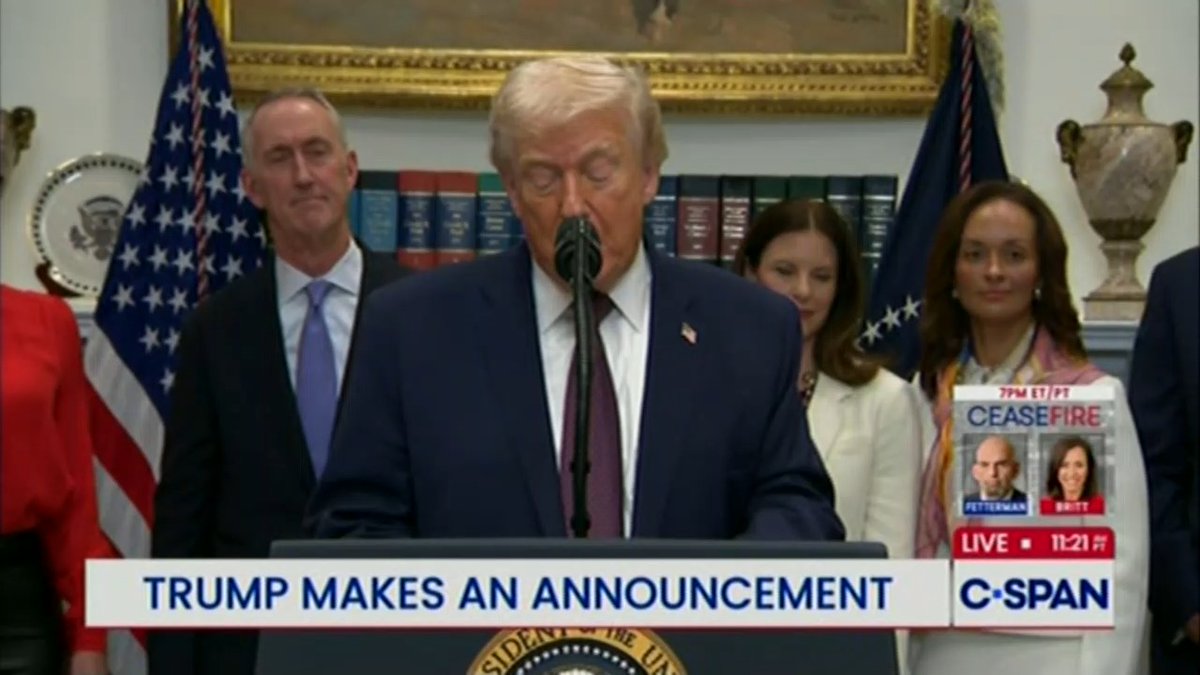
Sam Altman getting unusually humble here. He openly admits they messed up writing quality and that GPT-4.5 is still unmatched. The big bet went into raw intelligence, reasoning, coding, engineering. Writing took the hit. The hope now is clear: replicate GPT-4.5 level writing, because great writing equals clear thinking....

25,426 Aufrufe • vor 6 Monaten •via X (Twitter)

0 Kommentare

Keine Kommentare verfügbar

Kommentare vom Original-Post werden hier angezeigt

Ähnliche Videos

What if you built a company to maximize deep work? That's what Sam Corcos did. He hasn't regularly checked the news since 2013 and his business is worth $300 million. 12 lessons on writing from the founder and CEO of Levels: 1. The average tech worker can't go more than six minutes without checking Slack. No wonder people struggle to write. 2. Evergreen tip for getting people to actually read your work: add value to the internet. 3. Collaboration is overrated. Smart people thinking deeply about something for a long time, and recording the conclusions via writing, is underrated. 4. Sam did an experiment where he stopped reading the news for a month. He took the time he used to spend reading the news and started reading books instead — he finished eight books that month. 5. Writing solves disagreements. If you don’t pin down your thoughts on paper, you can “discuss” forever without ever reaching clarity. But the conversation becomes much more productive once the goals, methods, and main assumptions are written down. 6. Just about everybody could benefit from more intentional, deep, strategic thought. Writing is how you unlock this mode. 7. Remote work fails without a few great writers on the team. Internal company communication will spiral into a game of telephone without good communicators. 8. Specific feedback is better delivered via writing while general comments are best shared over Loom (because the recipient can feel your vibe.) Pick the right medium; the wrong one will botch your message. 9. A writing culture is protection against the tyranny of the loudest voice. It gives space for quieter people with insight to speak up. 10. You’ll never be able to reflect and write, unless you intentionally carve out the time. “Things” will always turn up. Create non-negotiable writing hours and protect them. 11. Sam does one Think Week every quarter where he disconnects from his work to write deep strategy memos. 12. You need to detach from the hive mind before creative ideas turn up (and it is often via writing that the flimsy premises of the hive mind become obvious.) I've shared the full conversation with Sam Corcos below. This one's a little different from most How I Write episodes because we went so deep on a single topic: business writing. If you'd rather listen on Apple or Spotify, check out the reply tweets.

David Perell

42,993 Aufrufe • vor 2 Jahren

Announcing: Writing Examples Today is launch day! We built this website to celebrate great writing. It’s 100% free. Each article deconstructs a piece of writing from an iconic writer. The goal is to give you X-Ray vision into what makes sentences and paragraphs come alive (so that you can improve at your craft). Every example has an analysis of why the writing works. Analytical often means dry. But instead of going technical, we’ve gone technicolor. There are text-explainers, summary graphics, and videos that come together to make the writing instruction lively and multi-dimensional. It’s a place where you can discover how great writing comes together. Where we lift up the hood and see the mechanics in action. It isn’t about giving you a set of rules to follow. It’s about showing the diversity of ways writers approach their craft, so you can develop your own style. What are some of the articles about? You’ll learn how to describe a party like F. Scott Fitzgerald, how to tell a story like George Orwell, how to write a speech like John F. Kennedy. There are other articles inspired by the likes of John Steinbeck, James Clear, Winston Churchill, Edgar Allen Poe, Charles Dickens, Steven Pressfield, and Jerry Seinfeld. Writing Examples is a crusade against the sterility of contemporary writing. So much of the advice you read says the same thing: “Be direct. Cut the fluff. Get to the point. Stick to short sentences.” And yeah, sure, this advice has merit. It’s useful in certain cases, but the problem is writers take these rules to be universal, which has homogenized writing styles. Even in my own writing, there’ve been so many times where I’ve stripped away my own voice in the name of “correctness.” I regret that. The truth is, there is no one way to write well, just as there is no one way to speak well. The way you speak in a boardroom is different from the way you speak on a first date, which is different from the way you speak with your childhood best friends. Writing is similar. Writing Examples is the opposite of Grammarly. It celebrates the wild, wacky, and the weird because it’s the bedrock of personality. The site’s explicit purpose is to inject some High Noon Chutzpah back into the world of writing. To teach you how to write with distinctly human fingerprints in a world that’s about to be flooded with AI-generated content. Forget playing it safe. That’s the most dangerous thing you can do in a world of instant writing. I want you to write with personality. I want you to play with punctuation. I want you to ditch the corporatized hogwash. I want to expand your sense of what great writing can be. And I want you to have fun doing it. But there’s more to the mission. Writing Examples is a protest against today’s Internet, where people spend the majority of their time reading ad-polluted articles and doom-scrolling the same few social media sites. Remember when we used to surf the Internet? When every site was its own wave to ride? Now, we’re like phone-addicted zombies, we mindlessly scroll Twitter, TikTok, LinkedIn, Facebook, or Instagram until we feel bad about ourselves — only to repeat the cycle a few hours later. Writing Examples is different. Heartfelt writing deserves a heartfelt presentation, so every element of the site has been designed from scratch. Energetically, we wanted to honor the gravitas of classic writing without the sleepiness of a drab old library shelf. We said no to ads. We said no to pop-ups. No hijacking your attention. None of the flat white backgrounds that make the Internet feel so homogenous. And we said no to anything that feels like your 5th-grade English class. Writing Examples isn’t about what’s trending. It’s about learning from the great writers of times past, most of whom you know, many of whom you probably haven’t taken the time to read. The ultimate goal is to make Writing Examples a one-stop shop to learn about any kind of writing you can think of. Now, I dare you to dive into the site and get to work.

David Perell

688,292 Aufrufe • vor 1 Jahr

Sam Altman on his method for clear thinking: "I'm a huge notetaker. I go through one of these notebooks every two or three weeks." Sam has a very specific system for thinking clearly through writing. As he puts it: "You definitely want a spiral notebook because one thing that's important is you can rip pages out frequently. I take a bunch of notes and then I clearly rip them out so I can look at multiple pages at the same time, and I can crumple them up and throw them on the floor when I'm done." On why writing matters, even with AGI: "Writing is a tool for thinking, most importantly, and I don't think that's going anywhere. It's really important that people still learn to write for this reason. In the same way that even if there's going to be less traditional coding jobs, coding is a great way to learn to think too; you should still learn to code." His perfect writing environment? "I used to think like, oh, I got to get in the perfect place, and I got to set a time. Now I will take any 11 minutes uninterrupted that I can get sitting in the back of a car, laying in bed, whatever it is." He continues: “If I had a perfect thing it would be Saturday morning with a cup of coffee and nothing scheduled. But most of it happens in short chunks in the back of a car." On his rhythm for deep work: "I'm in the office kind of non-stop all week. I have no time to think, it's just crazy packed. And then on the weekends, I have long, quiet blocks and I'm not really around people. That cycle is very important to me."

Jaynit

640,737 Aufrufe • vor 7 Monaten

Your brain doesn't form the thought until you write it down. Nature Reviews Bioengineering published the case for that claim last summer in an editorial titled "Writing is thinking." The cited evidence is a 2024 EEG study at the Norwegian University of Science and Technology. 36 students alternated between handwriting and typing the same words. 256-channel sensor array. Cursive on a touchscreen versus keys on a keyboard. Same words both ways. Handwriting produced widespread connectivity across parietal and central brain regions. Typing didn't. The theta and alpha frequency bands the literature ties to memory formation and encoding lit up almost exclusively when the hand was forming the letters. The motor act was producing the cognition. What the editorial extends from that finding is the more uncomfortable claim. Writing a scientific article is the mechanism by which a researcher discovers what their main message actually is. The act of constructing sentences forces the chaotic, non-linear way the mind wanders into a structured, intentional narrative. You sort years of research into a story, and in the sorting, you find out what you believe. Then the line: If writing is thinking, are we not then reading the thoughts of the LLM rather than those of the researchers behind the paper? Nature endorses LLMs for grammar, search, brainstorming, breaking through writer's block. Where the line gets drawn is outsourcing the whole writing process. Because the writing process is the thinking process. Even editing the LLM's draft is harder than writing one from scratch. To restructure someone else's reasoning you have to reconstruct it first, which means doing the cognitive work anyway, with worse leverage and more friction. The time savings on the keyboard turn out to be cognitive savings on the part of the brain you wanted to use. Your first draft was the thinking.

Aakash Gupta

249,848 Aufrufe • vor 3 Monaten