Video wird geladen...

Video konnte nicht geladen werden

Zur Startseite

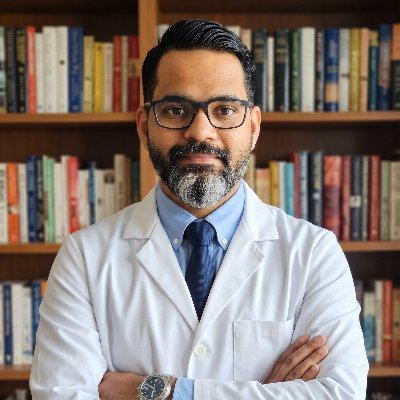
Scientific progress relies on empirical evidence, rigorous testing, and peer review, none of which are advanced through public debates with untrained individuals. Unlike politics or philosophy, where personal opinions and rhetoric can shape policy, science is governed by objective data and reproducible facts that remain true regardless of public...

145,476 Aufrufe • vor 1 Monat •via X (Twitter)

0 Kommentare

Keine Kommentare verfügbar

Kommentare vom Original-Post werden hier angezeigt

Ähnliche Videos

Stephen Meyer just exposed one of the dirtiest secrets of modern science. We’re constantly told: “Trust the science.” “The scientific consensus says…” But scientists are only exposing themselves when they say things like that, according to Meyer. “When scientists appeal to consensus, almost invariably, there isn’t one.” “You only appeal to consensus to shut down dissenting opinions.” “If there really is a consensus, you don’t need to appeal to one.” “Scientists never say: the consensus is that the formula for water is H2O.” “They only appeal to consensus when there’s actual debate, and they want to shut down a dissenting group of scientists who hold a different opinion.” “We’ve had this move made or applied against us numerous times.” “Proponents of intelligent design, or critics of Darwinian evolution or neo-Darwinian evolution will be told: this is settled science, and to challenge it is pseudoscience.” “When there’s an appeal to consensus… it’s usually a rhetorical ploy to silence an alternative perspective or a group of dissenting scientists.” “And this is actually ironically profoundly unscientific behavior.” “If there’s no serious dissent, you don’t need to appeal to consensus.” “When people appeal to settled science or consensus, it’s often a tell that there’s subterranean dissent that needs to be heard.” Stay tuned for my full interview with Stephen C. Meyer—coming this Saturday at 5PM ET!

Jan Jekielek

11,823 Aufrufe • vor 3 Monaten

The “scientific consensus” talking point was succinctly dismantled by Dr. Judith Curry in her interview with John Stossel back in October. 𝗝𝗼𝗵𝗻 𝗦𝘁𝗼𝘀𝘀𝗲𝗹: “The overwhelming scientific consensus. That’s what people still believe.” 𝗗𝗿. 𝗝𝘂𝗱𝗶𝘁𝗵 𝗖𝘂𝗿𝗿𝘆: “. . . when you talk about ‘scientific consensus,’ like the Earth orbits the sun, you don’t need to say ‘There’s a consensus that the Earth orbits the sun,’ it’s a well-known fact. When you’re talking about consensus, it’s usually on a topic where there is disagreement, and a government has asked a group to come to some sort of an agreement on what’s what. You see it in science, you see it in. . . medical boards. . . So, it’s a manufactured consensus. It’s a consensus of scientists, which is different than a scientific consensus. . .” Dr. Curry goes on to explain that there is no consensus on the most contentious issues of climate change, such as extent of human contribution and the impacts. 𝗗𝗿. 𝗝𝘂𝗱𝗶𝘁𝗵 𝗖𝘂𝗿𝗿𝘆: “. . . there’s a true scientific consensus on very little of this, you know that, • The temperatures have been increasing for over a hundred years. • That burning of fossil fuels emits CO₂ into the atmosphere. • And, CO₂ has a radiation spectrum that sort of keeps the Earth’s surface warm, all other things being equal. Beyond that, there’s no real big consensus on anything. The most consequential issues we don’t have a consensus on: • How much of the recent warming is caused by fossil fuels? We still don’t know. • Is fossil fuel and is warming dangerous? This is the weakest part of the argument. There’s no agreement as to whether warming is dangerous.” 🔗 You can watch the full 40+ minute interview here:

Chris Martz

112,060 Aufrufe • vor 2 Jahren

Can #AI not only support but actually drive the future of scientific discovery? We are excited to introduce SciAgents💡🔬, an agentic AI aimed towards scientific discovery through the integration of large-scale knowledge graphs, LLMs, and adversarial interactions between multiple experts. The model is capable of autonomously advancing scientific understanding by exploring novel domains, identifying complex patterns, and uncovering previously unseen connections in vast scientific data, while retrieving new data via literature search. Using graph reasoning, SciAgents identifies interdisciplinary relationships that might otherwise remain hidden, offering a step-by-step strategy for discovery & innovation. The video features an audiotrack generated using 🍓#o1 based on the original paper and design examples, providing an explanation of the work and its implications. Key elements include: 1⃣Ontological Knowledge Graphs: Structuring and connecting scientific concepts to highlight relationships across fields. 2⃣Multi-Agent Collaboration: AI agents autonomously generate and refine hypotheses, critique research, and evaluate emerging trends. 3⃣Graph-Based Reasoning: Identifying novel material designs, such as mycelium-based composites or silk-pigment blends, informed by both natural and artificial patterns. SciAgents can be used as an autonomous or collaborative tool to assist human researchers. The system offers a more powerful way to process vast data, providing innovative paths to explore nature-inspired designs or unexpected material properties. In the field of materials science, for instance, SciAgents has already demonstrated how principles from biology, music, and art can converge to create new biomimetic materials. Through isomorphic mapping, parallels have been drawn between Beethoven’s 9th Symphony and biological structures, pointing to a broader applicability of AI-driven insights across disciplines. This project allows us to enhance capabilities of researchers, allowing them to explore larger datasets and propose hypotheses grounded in a vast, interconnected web of knowledge. The agentic system was built using @pyautogen #AI #ScientificResearch #GraphReasoning #AI4Science #MaterialsScience #InterdisciplinaryResearch #SciAgents #OpenAI Chi Wang

Markus J. Buehler

208,378 Aufrufe • vor 1 Jahr

Geological Diplomacy Why Russia Should Maintain a Presence in UNESCO Amid politically strained relations with UNESCO after 2022, Russia will maintain a working channel of interaction through geosciences and geoparks—one of the few areas where we retain expert weight and a clear international agenda. ▪️The main recent result of this interaction is the Toratau Geopark in Bashkortostan, approved for inclusion in the UNESCO Global Geoparks network in 2025–2026. For Russia, this is not just a local success: the idea of ​​a national geopark system with a base site in Bashkortostan is being promoted as a model for replication in other regions of the country. ▪️A geopark is not just a "beautiful place with rocks," but an official status for a territory where geology is used as a foundation for education, tourism, and sustainable development. The status is important because it confers international recognition, attracts tourists and investment, opens access to UNESCO's network of experts and programs, and strengthens the country's position in the soft science and cultural agenda. There are currently approximately 229 geoparks in 50 countries worldwide. ▪️The Karpinsky Institute, which also organizes specialized events at UNESCO, is responsible for preparing and providing expert support for applications. This allows the Institute to remain a visible participant in the international geoscience network, despite the general context. 🖍At the same time, the Institute is implementing an educational project with an international reach—"Karpinsky Classes": specialized geological classrooms with equipment, curricula, and online courses. Over the past two years, classrooms have opened in Cuba, Ethiopia, Mozambique, Ghana, and the CIS countries. We have been following them for a long time. 🚩A separate area is inclusive geology: adapting geoscience education for children with disabilities and audiences with limited access to STEM. In other words, geology and related sciences are being redesigned to make them accessible to those who are typically excluded by barriers—for health or social reasons. At international forums, this is presented as a contribution to the accessibility of science in countries of the Global South—an agenda that always resonates with UNESCO. 🏳️The third track is scientific. Russia remains a country with a significant base in polar research, and geophysical data from Antarctica fits into UNESCO's program on geodynamics, plate tectonics, and climate change. This is an argument that is difficult to ignore: in a number of areas, Russian science is simply indispensable as a provider of fundamental data. 📌Overall, all the aforementioned tracks together form an important and convenient tool of soft power in the face of sanctions. Russia demonstrates that it remains part of the global scientific community, is responsible for major sectors of the scientific agenda, and is building long-term ties with countries in Africa and Eurasia through education and science. In official documents of the Commission of the Russian Federation for UNESCO, geoparks and geosciences are explicitly cited as one of the few positive avenues of cooperation. This makes sense: while contact on many fronts is frozen, science—sustainable development and education—remains a channel that neither side is interested in completely closing.

Rybar in English

70,813 Aufrufe • vor 2 Monaten

A breath of fresh air is finally sweeping through the corridors of American public health. Secretary Robert F. Kennedy Jr. is doing exactly what he was appointed to do: restore integrity, demand scientific rigor, and dismantle a captured system that has failed the American people for decades. The recent faux outrage from former CDC officials and political operatives like Senator Cassidy is not just predictable—it’s a badge of honor. These are the same voices who presided over a "very troubled agency," oversaw catastrophic policy failures, and eroded public trust with their rigid, one-size-fits-all dogma. Their sudden concern for "legitimacy" is laughable. Where were these guardians of science during the opioid crisis, the childhood obesity epidemic, or the alarming rise in chronic illness? They were silent. They are members of a vaccine cult, focusing myopically on a single tool while ignoring the holistic health of the nation. Their resignations are not a loss; they are a necessary clearing of the deck. Secretary Kennedy’s new ACIP committee—a panel of independent thinkers unafraid to question long-settled and often corporate-influenced science—is exactly what we need. True science is never settled; it is constantly questioned, tested, and refined. That is the very essence of the scientific method these bureaucrats have abandoned. Cassidy’s recommendation to reject any advice from the new ACIP is dangerous, anti-science political posturing. He would rather protect a broken status quo than allow for genuine, transparent debate. The American people deserve better than blind allegiance to a flawed system. This is the end of ideology and the return of real, evidence-based inquiry. This is leadership.

Camus

11,449 Aufrufe • vor 10 Monaten

.Naval: Epistemology, which is a fancy word for the theory of how knowledge grows or how knowledge growth occurs. And we've all been told since we're young that there's a scientific method and that scientists sort of do this stuff in white lab coats and we're supposed to accept it because of this thing called the scientific method. And then they give us true beliefs that we can then say, well the science is settled and we take that we move on. And we all only have a very, very vague understanding of how this works. And people say, well maybe you go out in the real world, you look at what's happening, you make all these observations, and then based on that you form a theory, you test the theory against more observations, and the more observations you get the closer you get to the truth. And once you have enough observation it's true and then you call it a scientific theory or a law and it's settled and you move on. And this is the popular conception of how science works. And as Popper pointed out and as you take even further, this is completely wrong. And so I'd love for you to get into that, which is what is knowledge? How does it grow? What is the real scientific method? And how do we figure things out? David Deutsch: I love the way you just stated the prevailing view there and laced every aspect of it with the contempt that it deserves. So you just went through touching every base. It's amazing that this series of misconceptions is still common sense. I mean, that it was common sense at a time when we didn't really have science or when science was just starting up, when the main issue in science was freeing itself from dogmatism, freeing itself from religion, freeing itself from authority, and so on. There it was understandable that people would look for an alternative source of authority and they would think, oh, it's sense impressions. We can see the world and you know, these religious people, they can't even see God and so on. And so we are confined to what we can see. That's where we get our ideas from. And as you say, that is completely false. Sense impressions, like all observation, even the most careful scientific observation is all theory laden. And theories are inherently fallible. I mean, we actually want to replace our best theories. Everybody who does a PhD is technically anyway, working to overturn something in the existing body of knowledge. You're not turned away at the door if you say, I don't believe this stuff, I'm going to produce something better. Whereas for most of human history, that was exactly what you were forbidden to do. The idea was that we already had all the important knowledge. If you want to discover something new, what you had to make sure of was that it didn't contradict the existing knowledge. Now, you have to make sure that it does contradict existing knowledge. So more or less. Naval: Yeah, it's this tradition of criticism that you've talked about in the West, that the Enlightenment really ushered in the Enlightenment era. David Deutsch: It has been institutionalized. So in many ways, our institutions are wiser than we are. So the institutions of science, for instance, have this built in, even if scientists actually don't always act that way. In fact, they often don't act that way, and act in a dogmatic way and try to preserve the status quo and are resistant to new ideas and so on. But the institutions, the way the procedures of science work, makes the right thing happen in the end anyway, regardless of what the people are trying to do. Naval: So you're saying the knowledge of the true scientific method is embedded in the institutions of science in the PhD process? David Deutsch: Well, the best scientific method that we know of, and one shouldn't really think of it as a method, you know, there's this wonderful lecture by Popper when he first was made a professor at the London School of Economics. He was made a professor of scientific method, and his first six lectures, I wish the rest of them were, the first six lectures are on the internet somewhere. And he starts the first one by saying, I am the first professor of scientific method in the British Empire. The British Empire still existed at the time, more or less. And so the first thing I want to say to you is that there is no such thing as the scientific method. And then he goes on from there. So this subject does not exist. So if any of you have come here to learn the handle that you have to turn in order to make scientific knowledge come out the other end, you're going to be disappointed.

Deutsch Explains

114,992 Aufrufe • vor 1 Jahr

The speaker argues that the current student protests over exam paper leaks should not be limited to demanding the resignation of the Education Minister. Instead, he claims the root cause lies with the central government, alleging that institutions such as the Election Commission and the electoral system have been compromised. Key themes include: Criticism of the Prime Minister, the BJP, RSS, and the Union government. Allegations that repeated exam paper leaks reflect systemic governance failures. Calls for a broader political movement rather than a single-issue protest. Strong criticism of EVMs and advocacy for a return to paper ballots. Claims that democratic institutions have been weakened. Criticism of India's foreign policy, particularly regarding the US, Israel, Iran, China, and oil imports. Appeals for youth and citizens to participate in peaceful, sustained democratic movements. The video primarily expresses political opinions and allegations, many of which are disputed or not established as fact. For example: Claims that elections cannot be won unless permitted by the Prime Minister are political assertions, not proven facts. Statements about the Election Commission being completely controlled or elections being predetermined remain matters of political debate rather than judicially established conclusions. References to exam paper leaks are grounded in real incidents, but the attribution of responsibility to specific political actors is the speaker's interpretation. This video is less a news report and more a political speech. It mixes genuine public concerns—such as exam paper leaks, unemployment, and institutional accountability—with strong political accusations and personal opinions. Some criticisms are based on real events, while many broader conclusions are contested and should not be accepted as established facts without independent evidence. A healthy democracy allows criticism of governments, but it also requires citizens to distinguish between verified facts, political opinion, and rhetorical claims.

Ashok Dadhwal

14,806 Aufrufe • vor 10 Tagen