Загрузка видео...
Не удалось загрузить видео
🚨: Scientists using satellite and seismic data have discovered that Earth produces a puzzling pulse every 26 seconds, often described as its "heartbeat." EARTH MAY ITSELF BE A LIVING BEING!
3,710,554 просмотров • 4 месяцев назад •via X (Twitter)
Комментарии: 33

so we are bacteria inside a huge creature 's bowels? 🤣🤣🤣 we are giving the poor creature a bad stomach ache everyday.

Yes, and oil and blood are remarkably similar

"Earth may itself be a living being" I mean, it produces and maintains an abundance of life... literally billions of species. Earth is no different than the human boddy being host to thousands/millions of parasites & other microscopic entities.

maybe the real question isn’t whether Earth is alive, but whether our definition of life is too limited. What if celestial bodies are more than just inert objects not living organisms like us, but complex systems with properties we still don’t know how to classify?

Content recyclers are so desperate they’re now posting myths from 2 decades ago for a nickel on this platform. Probably should change a name to All day slop

This literally doesn’t need a pulse to confirm that earth is alive.

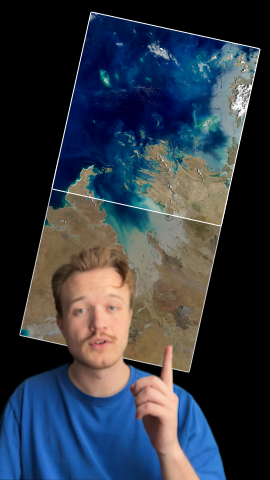
This periodic vibration is called microseism, a faint seismic hum that is not caused by earthquakes but by constant environmental forces. While its exact origin has been debated for decades, researchers have pinpointed its likely source to the Bight of Bonny in the Gulf of Guinea, off the coast of West Africa

Y’all be discovering things already stated in the bible 🙂

What if it is all our heartbeats combined to create that one ultimate heartbeat?

Imagine discovering the planet you call home has a 26-second pulse. Scientists call it a microseism, but the Earth’s Heartbeat feels much more accurate. Are we part of a larger living consciousness? The deeper we look, the more alive Earth seems.

🧬 This is a real and fascinating phenomenon! Earth does produce a mysterious pulse every ~26 seconds, known as the “26-second microseism”. Scientists have been studying it for decades using seismic data. However, it’s not evidence that Earth is a “living being.” The most accepted explanation is that it’s caused by ocean waves crashing against continental shelves, especially in the Gulf of Guinea, creating a continuous low-frequency seismic signal. It’s a beautiful example of how dynamic our planet is — but it’s geology and oceanography, not Gaia theory in action. Still super cool that our planet has a rhythmic “heartbeat” of sorts 🌍

So this movie was right? 👀

Earth’s 26-second “pulse” is actually a microseism, a very faint vibration scientists have known about since the 1960s. It’s most likely caused by ocean waves in the Gulf of Guinea off Africa, not any sign that the planet is a living organism

Absolutely!!

-So, are humans mere parasites on the skin of the Living Earth ? -Or symbiotic organisms like the blood cells in our own bodies ? -Humans may well exploit the Earth more than we replentish it. -Blessed are we that the Father and Son are the Earths deed holders and immune system.

The Earth is a conscious living being.

“Earth may be a living being” as if we don’t have things that grow from the ground to confirm that.

If you don’t know the Earth is a living entity - i don’t know what to even say to you.

science discovers what spiritual circles have discussed since forever part 3486

It took science to prove it to you???!!! We have known this for many lives….

The Lord Almighty and his power 🙌🏻 Bless be the Lord Jesus the creator of the heavens and earth

Dünya canlıdır size yaşam alanı yaratır fakat acımasız değildir.

And so they spray chemicals every were sounds like a stupid thing to do to something living

It’s wild to think our planet has a literal heartbeat…like Earth is quietly reminding us it’s ALIVE in its own way.

◄ Romans 8:22 ► We know that the whole creation has been groaning as in the pains of childbirth right up to the present time. Bible says the earth a snitch tho.. ◄ Isaiah 26:21 ► See, the LORD is coming out of his dwelling to punish the people of the earth for their sins. The earth will disclose the blood shed on it; the earth will conceal its slain no longer. 😅

Only a retard might not think of a planet a living being, it creates everything around you (including you) tho you think only of yourself and other species a living being XD

Final Fantasy 7 has entered the chat

1 The heavens declare the glory of God; the skies proclaim the work of his hands. 2 Day after day they pour forth speech; night after night they reveal knowledge. 3 They have no speech, they use no words; no sound is heard from them. 4 Yet their voice[b] goes out into all the earth, their words to the ends of the world.

So Transformers was onto something then with Unicron

And we are without a doubt it's cancerous growths that pull on its natural resources to multiply, create masses of concrete and pavement, and release toxins into the environment.

Earth’s Heartbeat 🌍💗

Como todo lo que hay en la tierra 🌍 🤷🏻♂️

reproductive traits are required to classify as living, recurring phenomena don’t classify anything as living. this is trash bait