Loading video...

Video Failed to Load

Go Home

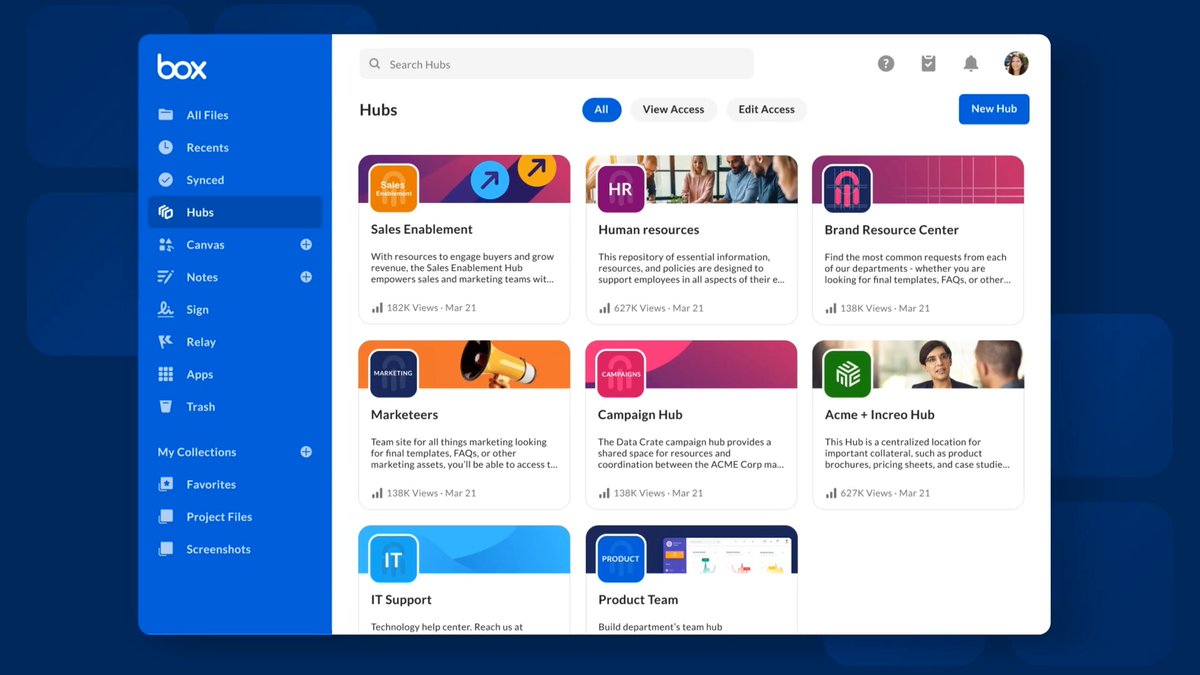
Search is now updated across Box. This foundational upgrade changes what enterprise search can actually do. 4 to 10x faster results. File indexing reduced from 15 minutes to seconds. And a stronger foundation for AI agents to perform deep-document search across your enterprise content. All at any scale, including...

116,897 views • 1 month ago •via X (Twitter)

0 Comments

No comments available

Comments from the original post will appear here

Related Videos

Big moment for Postgres! Search has always been Postgres' weak spot, and everyone just accepted it. If you needed a real relevance-ranked keyword search, the default answer was to spin up Elasticsearch or add Algolia and deal with the data sync headaches forever. The problem isn't that Postgres can't do text search. It can. But the built-in `ts_rank` function uses a basic term frequency algorithm that doesn't come close to what modern search engines deliver. So teams end up: - Running a separate Elasticsearch cluster just for search - Building sync pipelines that inevitably drift out of consistency - Paying for managed search services that charge per query - Accepting mediocre search relevance because "good enough" ships faster But this is actually a solvable problem. You can realistically bring industry-standard search ranking directly into Postgres, which eliminates the need for external infra entirely. This exact solution is now available with the newly open-sourced pg_textsearch by Tiger Data - Creators of TimescaleDB, a Postgres extension that brings true BM25 relevance ranking into the database. BM25 is the algorithm behind Elasticsearch, Lucene, and most modern search engines. Now it runs natively in Postgres. Here's what pg_textsearch enables: - True BM25 ranking with configurable parameters (the same algorithm powering production search systems) - Simple SQL syntax: `ORDER BY content 'search terms'` - Works with Postgres text search configurations for multiple languages - Pairs naturally with pgvector for hybrid keyword + semantic search That last point matters a lot for RAG apps. The video below shows this in action, and I worked with the team to put this together. You can now do hybrid retrieval (combining keyword matching with vector similarity) in a single database, without stitching together multiple systems. The syntax is clean enough that you can add relevance-ranked search to existing queries in minutes. pg_textsearch is fully open-source under the PostgreSQL license. You can find a link to their GitHub repo in the next tweet.

Akshay 🚀

215,344 views • 6 months ago

I'm proud to share that Glean has surpassed $300M ARR, just five months after crossing $200M and growing ~3x over the past 15 months. This is an exciting milestone for Glean, and it's a signal about where the enterprise AI market is heading. We’ve long believed the real challenge in enterprise AI is not access to models. It is grounding AI in how a company actually works: its people, knowledge, workflows, permissions, and systems. That’s even clearer now. The companies creating real value with AI are not just adopting better models. They are building systems that understand their business well enough to deliver reliable outcomes at scale. That is the real moat, and it is what we’ve been building at Glean: an unrivaled context layer for enterprise AI. That context has to work across the business, not just inside a single team or use case. We see that in how customers adopt Glean: more than 85% use it across five or more job functions. It also has to meet the security and governance demands of complex enterprises. We see that in who is choosing Glean: our Fortune 500 customer count nearly doubled year over year. And it has to make economic sense as usage grows. In our recent benchmark with Claude Cowork, Glean was preferred roughly 2.5x as often as off-the-shelf MCP tools and used 30% fewer tokens on average. Better context improves both quality and efficiency. I enjoyed talking with CNBC's Deirdre Bosa about this broader shift. In enterprise AI, the winners will not be defined by better models alone. They will be defined by who builds the strongest foundation for enterprise context. Thank you to our customers, partners, and team for helping us build the future of enterprise AI.

Arvind Jain

280,572 views • 2 months ago