Video wird geladen...
Video konnte nicht geladen werden
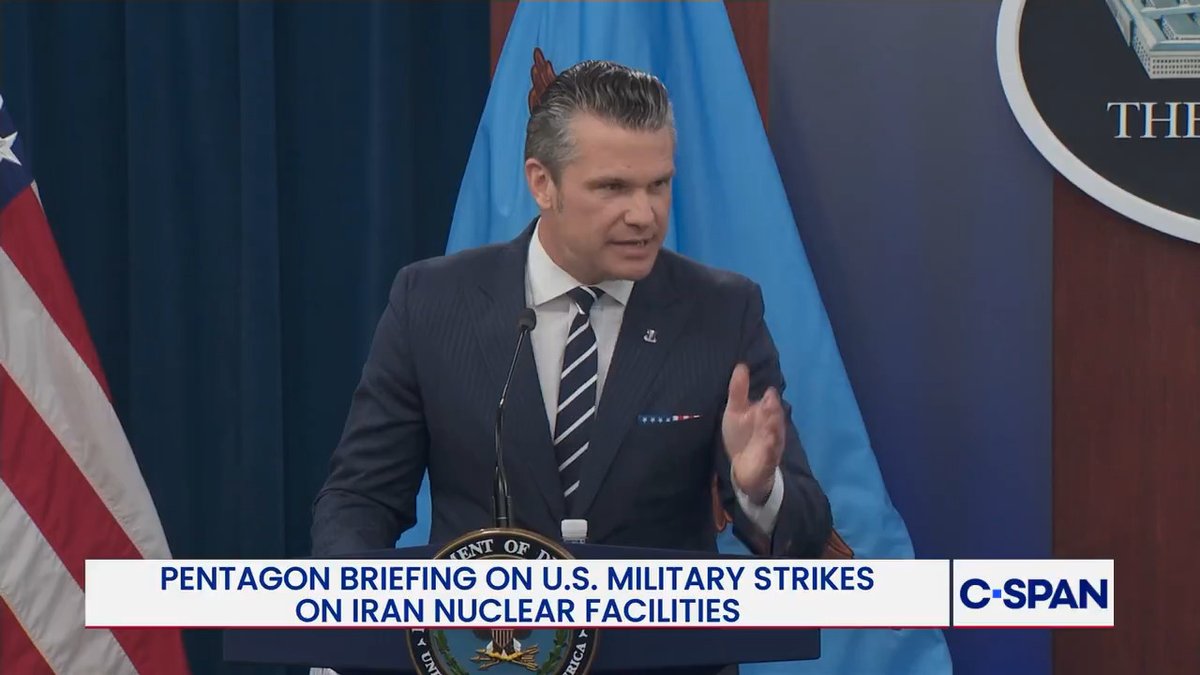
SecDef goes Nuclear on reporter questions....

20,980 Aufrufe • vor 1 Jahr •via X (Twitter)
11 Kommentare

Nothing looks more foolish than an angry puppet.

this is what happens when a nation to trained to fellate the security state, military, flag and the cops. ask any question and you are called troop hater

What's up with the music? Hegeseth and Trump don't serve us. They serve Israel.

Emotional blackmail. It's pathetic listening to this garbage D movie dialogue.

Clown show

He sounds like a mafia boss who just got out on bail.

That was embarrassing. Since it has become an intriguing subject. Let's look into the physics, geology, and engineering features of Fordow, a deep-hardened subterranean facility, to see what may have occurred. Furthermore, if Fordow and the other sites were entirely destroyed, significant radioactive radiation would have been released, impacting nearby people, air, land, and water, as well as neighboring nations. We have received no information from Iran or the United States indicating that such nuclear radiation is now taking place. No journalist has asked the question about nuclear radiation, after all these are NUCLEAR SITES! The following information is all public and accessible on the internet. 🔬 PHYSICS & GEOLOGY EXPLANATION 📍 1. Depth of the Fordow Facility -Fordow is buried 80–90 m (260–300 ft) beneath a hardened mountain near Qom, drilled into dense quartz-limestone bedrock, not loose soil -Such rock is 3× denser than typical earth, with high compressive strength (30,000 psi+), far more resistant to penetration -It is housed inside a mountain, not just underground in open soil making penetration a major challenge. 🪨 2. Geology of the Site -Fordow is built in a region with dense limestone and granite rock materials with high compressive strength and durability. -These rocks absorb and deflect explosive shockwaves, acting as natural armor. 💣 3. Bomb Type: GBU-57A/B MOP Weight: 30,000 lbs (13,600 kg) -Penetration: up to ~60 meters in reinforced concrete or less in solid rock. -The MOP built with high-density Eglin steel alloy, and dropped from ~50,000 ft, reaching > Mach 1, giving ~800–900 MJ of kinetic energy upon impact. -Designed to penetrate up to 60 m of earth or 18 m of reinforced concrete (5,000 psi), far short of reaching 80+ m below rock. -Embedded void-sensing fuses detonate upon stopping meaning if it can’t reach the cavern, it explodes early. -Designed to delay detonation until reaching depth, but loses energy with every meter of rock. 🏗️ 4.a Structural Defense by Design -Deep mountain facilities like Fordow include multi-layered concrete tunnels, steel framing, and diamond-arched structural supports engineered to absorb shock and deflect impact. -When a MOP penetrates tough rock, it decelerates, fractures the material, and often explodes prematurely leaving the core chamber intact. 🔄 4.b Diminishing Effect Under Rock Using Newtonian impact theory, a 19 g/cm³ tungsten-density core might penetrate roughly 2.5× its length (about 6 m) into rock nowhere near 80–90 m Even with 14 bombs dropped (6 on Fordow), each hit would lose momentum, energy, and casing integrity after passing through dense layers diminishing its effect on deeper chambers. 📏 5. Physics Limitations -Even 6 bombs detonated precisely around the facility would not guarantee structural collapse. -Shockwaves must focus and reinforce at a target point to break hardened structures. -The intervening rock disperses energy, drastically reducing blast effectiveness at such depth. ☢️6. Radiation Risk If Destroyed Had those facilities been active and holding enriched uranium, a successful strike could: -Release radiological contamination into air and water systems. -Affect neighboring countries downwind via radioactive wind and dust (fallout). -Cause underground contamination of aquifers and soil especially if uranium hexafluoride (UF₆) was present and breached. 💥 7. Why Destruction Was Unlikely 12 bunker-busting bombs split into two waves (6 per side) would not: -Fully penetrate 90 meters of mountain rock + internal concrete reinforcements. -Cause structural implosion unless directly breaching containment, which is engineered to resist such shock. 💥8. Likely Damage Profile -Surface crater on access tunnels or mountaintop. -Fractured rock section but safe distance from critical centrifuge halls. -Localized collapse of upper concrete layers—not a full cave-in. -No major pressure on core chambers, risking containment rather than destruction. Even if outer layers collapse, the inner chamber can remain intact or only partially damaged. 🧠 Summary Destroying Fordow with conventional weapons is physically improbable without massive redundancy, perfect intelligence, and a disregard for regional fallout. The mountain acts as a natural fortress, and even the most advanced bunker busters have depth and energy limitations that make total destruction unlikely. The facility was likely damaged on the surface or upper tunnels, but the main underground enrichment chambers remain intact.

Scan any documents, convert images into text, PDF files, etc. 👍

Why are you celebrating the most unqualified SecDef in U.S. history?

OMG, it’s worse than a circus, Judge. I’m at a loss for words. 🎪🤡

Pathetic are those reporters with half true yelling to the world