Loading video...

Video Failed to Load

Go Home

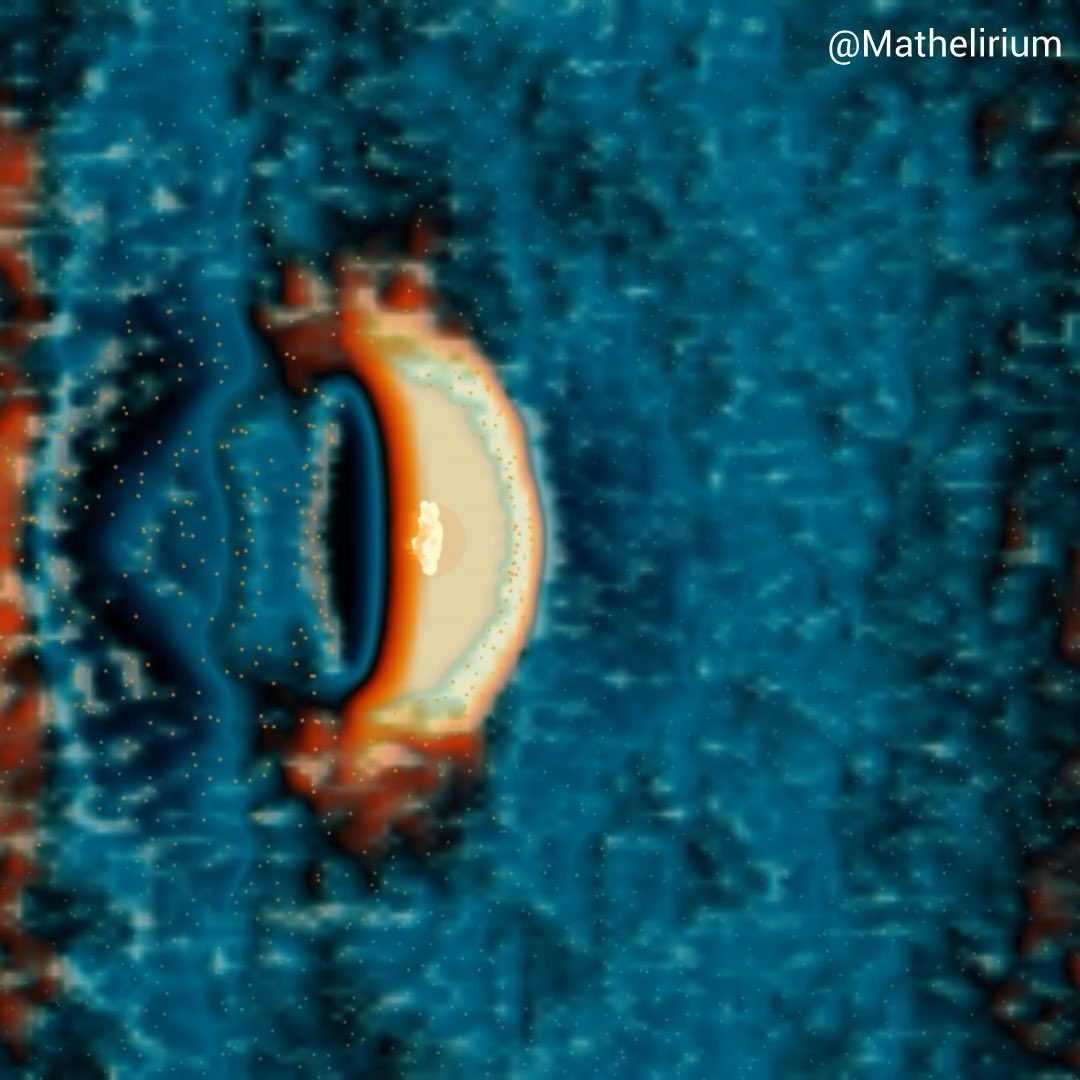
Self-Refining Video Sampling: inference-time method using a video generator as its own refiner to correct physics and motion. no retraining needed; scores >70% human preference; is validated on Wan2.2 & Cosmos.

32,133 views • 5 months ago •via X (Twitter)

0 Comments

No comments available

Comments from the original post will appear here

Related Videos

Physics-based Motion Retargeting from Sparse Inputs paper page: Avatars are important to create interactive and immersive experiences in virtual worlds. One challenge in animating these characters to mimic a user's motion is that commercial AR/VR products consist only of a headset and controllers, providing very limited sensor data of the user's pose. Another challenge is that an avatar might have a different skeleton structure than a human and the mapping between them is unclear. In this work we address both of these challenges. We introduce a method to retarget motions in real-time from sparse human sensor data to characters of various morphologies. Our method uses reinforcement learning to train a policy to control characters in a physics simulator. We only require human motion capture data for training, without relying on artist-generated animations for each avatar. This allows us to use large motion capture datasets to train general policies that can track unseen users from real and sparse data in real-time. We demonstrate the feasibility of our approach on three characters with different skeleton structure: a dinosaur, a mouse-like creature and a human. We show that the avatar poses often match the user surprisingly well, despite having no sensor information of the lower body available. We discuss and ablate the important components in our framework, specifically the kinematic retargeting step, the imitation, contact and action reward as well as our asymmetric actor-critic observations. We further explore the robustness of our method in a variety of settings including unbalancing, dancing and sports motions.

AK

106,527 views • 3 years ago

Multi-Track Timeline Control for Text-Driven 3D Human Motion Generation paper page: Recent advances in generative modeling have led to promising progress on synthesizing 3D human motion from text, with methods that can generate character animations from short prompts and specified durations. However, using a single text prompt as input lacks the fine-grained control needed by animators, such as composing multiple actions and defining precise durations for parts of the motion. To address this, we introduce the new problem of timeline control for text-driven motion synthesis, which provides an intuitive, yet fine-grained, input interface for users. Instead of a single prompt, users can specify a multi-track timeline of multiple prompts organized in temporal intervals that may overlap. This enables specifying the exact timings of each action and composing multiple actions in sequence or at overlapping intervals. To generate composite animations from a multi-track timeline, we propose a new test-time denoising method. This method can be integrated with any pre-trained motion diffusion model to synthesize realistic motions that accurately reflect the timeline. At every step of denoising, our method processes each timeline interval (text prompt) individually, subsequently aggregating the predictions with consideration for the specific body parts engaged in each action. Experimental comparisons and ablations validate that our method produces realistic motions that respect the semantics and timing of given text prompts.

AK

126,585 views • 2 years ago