Loading video...

Video Failed to Load

Go Home

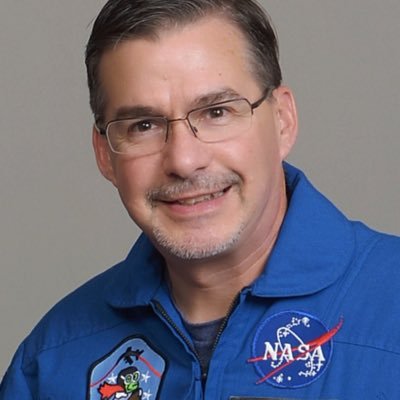
#SERASpace Highlights from The Inspired 24 /CHaSE Spaceflight Training Class #1 with the University of Arizona in Tucson. - Pressure suit familiarization from July 2023. ๐Ÿ‘จโ€๐Ÿš€๐Ÿ‘ฉโ€๐Ÿš€๐Ÿง‘โ€๐Ÿš€ --------------------- I am ready to be part of the 6 person team flying aboard New Shepard for SERA: Space Exploration and Research Agency....

11,274 views โ€ข 10 months ago โ€ขvia X (Twitter)

0 Comments

No comments available

Comments from the original post will appear here

Related Videos

The Space and Upper Atmosphere Research Commission (SUPARCO) announces a landmark advancement in Pakistanโ€™s Manned Space Mission Program as two Astronaut Candidates, Khurram Daud and Muhammad Zeeshan Ali are set to depart for the Peopleโ€™s Republic of China to begin advanced astronaut training at the Astronaut Centre of China (ACC). This is a significant step forward in Pakistanโ€™s space exploration journey that positions the country in the community of a select group of nations actively engaged in human spaceflight programs. Under this collaboration, Pakistan is preparing for its first-ever participation in a mission to the China Space Station (CSS). The mission is currently planned for launch in late 2026, where a Pakistani astronaut will serve as a Payload Expert aboard the Shenzhen mission. During mission aboard the โ€˜China Space Station (CSS)โ€™, the Pakistani astronaut will conduct several scientific experiments in microgravity. These experiments span critical areas including material science, fluid physics, life/ bio science, and biotechnology, with potential applications for climate resilience, food security, and industrial innovation. On the historical occasion, Honourable Prime Minister of Pakistan Mr. Muhammad Shehbaz Sharif commended the efforts of SUPARCO; a harbinger of deep space exploration. He also appreciated ironclad China-Pakistan brotherhood, yet another testimony of which is choosing Pakistan to be the first country for participation in Manned Space Mission.

Ministry of Information & Broadcasting

34,169 views โ€ข 3 months ago

China unveiled on Wednesday the names of its moon-landing spacesuit and the crewed lunar rover. According to a news release from the China Manned Space Agency, the new spacesuit, which will be worn by astronauts as they walk on the lunar surface, is named ๆœ›ๆœˆ (Wangyu), or Stargazing, while the manned rover's name is ๆŽข็ดข (Tansuo), or Exploration. The names were reviewed and chosen by a group of experts from more than 9,000 proposals, which were solicited from members of the public. The agency explained that the word "Wangyu" symbolizes a new chapter in China's space endeavor that features manned missions to the moon and deep-space expeditions and also demonstrates the country's determination to uphold the peaceful use of outer space and pursue a shared future of mankind. Currently, prototypes of the spacesuit and rover are being designed and the research work has been progressing smoothly. China has announced its plan of conducting its first manned mission to the moon around 2030. Chinaโ€™s manned spacecraft was named Mengzhou in 2024, meaning dream vessel, which reflects the fact that the manned lunar exploration carries the Chinese people's space dream and opens a new journey of space adventure. The countryโ€™s lunar lander was named Lanyue in 2024, meaning embracing the moon, a term that appeared in a poem written by the late Chairman Mao Zedong. The word symbolizes the Chinese people's confidence in exploring the universe.

Eivor

14,791 views โ€ข 1 year ago

Against all odds - ๐Ÿ‡จ๐Ÿ‡ณChina's Space Exploration program 1994 - 2024๐Ÿš€๐Ÿ›ฐ๏ธ 1994 - China applied to join the International Space Station, but was denied and declared "untrustworthy" by the U.S. 1993 - The United States shut down their GPS targeting the Chinese container ship Yinhe, leaving the ship stranded at sea and unable to navigate for 33 days - after being falsely accused by the US of carrying chemical weapons precursors to Iran 1996 - The United States turned off its GPS in the South China Sea, forcing China's missile tracking to fail 2003 - China applied to join the EU's Galileo global satellite navigation system, paid โ‚ฌ230 million but was eventually forced out by the EU 2011 - The United States passed the Wolf Amendment Law, which prohibits NASA from cooperating with China in space Despite being stigmatized and isolated, Chinese scientists and taikonauts remained determined and worked hard to become self-sufficient 1999.11.20 - Shenzhou 1 - China's first spacecraft - where the dream began! 2000 - The first experimental BeiDou Navigation Satellite was launched 2003 - Shenzhou 5 - China's dream of flying into Space came true! Taikonaut Yang Liwei (ๆจๅˆฉไผŸ) was blasted successfully into space as part of China's Shenzhou 5 mission. China became the third country to launch a person into space independently, after the Soviet Union and the United States 2005 - Shenzhou 6 - Fรจi Jรนnlรณng (่ดนไฟŠ้พ™) and Niรจ HวŽishรจng (่‚ๆตท่ƒœ) launched into space aboard the Long March 2F carrier rocket. It marked the official second launch of China's manned spaceflight program and the start of crewed scientific research in space 2007 - The first lunar exploration probe Chang'e 1, part of the first phase of the Chinese Lunar Exploration Program, was launched and successfully orbited the moon, marking the third milestone in China's space program 2007 - The BeiDou-1 navigation system was completed and began operation in China. The fourth positioning system, next to the American GPS, Russian GLONASS, and European Galileo 2008 - Shenzhou 7 - Taikonauts Zhai Zhigang (็ฟŸๅฟ—ๅˆš) and Liu Boming (ๅˆ˜ไผฏๆ˜Ž) completed China's first "Spacewalk" extra-vehicular activity (EVA) 2011 - The Tiangong-1 prototype space station was launched, marking the start of construction on China's first space station 2016 - marks the launch of Tiangong-2, China's first space laboratory. Tiangong-2 was not constructed or planned to be permanent, but rather as a test-bed for critical technologies utilized for the final Tiangong Space station 2020 - Chang'e 5 marks China's first lunar landing retrieving lunar soil. For the first time in 44 years, humans have brought back rock and soil samples from the moon 2020 - China's BeiDou-3 navigation system provides complete full global coverage 2020: Mars - here we come! China launched Tianwen-1, China's first Mars probe 2022: China completed construction of its permanently crewed Tiangong space station 2024 - Chang'e 6 mission: China became the first nation to land and return lunar soil samples from the far side of the moon It took China 28 years and the sacrifice of countless heroes risking their lives working day and night to overcome China's Western-imposed isolation and construct its own space station and global navigation system, and to become a leader in space exploration ๐Ÿ‡จ๐Ÿ‡ณ๐Ÿซก

StarBoySAR ๐Ÿ‡ญ๐Ÿ‡ฐ ๐Ÿ‡จ๐Ÿ‡ณ ๐Ÿฅญ

114,521 views โ€ข 2 years ago