Loading video...

Video Failed to Load

Go Home

Shami-Mukesh combo strikes 🤝 The pace bowling duo dismiss set batters Shaik Rasheed and Devdutt Padikkal and breaks 56-run stand 🙌 South Zone are 134/4, trail by 574 runs. Scorecard ▶️ #DuleepTrophy | #EZvSZ

144,942 views • 1 day ago •via X (Twitter)

0 Comments

No comments available

Comments from the original post will appear here

Related Videos

BREAKING: This footage shows some of the Israeli-US fighter jets that are heavily bombing Isfahan, central Iran tonight. Timeline of the airstrikes tonight in Isfahan: - 00:00–00:02 — Initial explosions reported in south and east of Isfahan, including Baharestan, without audible jet presence, suggesting stand-off or delayed-impact munitions. - 01:26 — Massive explosion reported in northern Isfahan with no jet sound, indicating deep-strike or penetrator-type impact. - 02:00–02:05 — First major wave hits south of Isfahan (Sepahan Shahr / Sofeh axis), with at least 10+ heavy explosions reported within minutes; shockwaves felt across the city and as far as Najafabad. - - 02:12–02:18 — Sustained bombardment of southern and southwestern sectors, including Baharestan and areas near Sofeh mountain; reports of sequential detonations and ground tremors. - 02:17–02:23 — Fighter jets confirmed flying low over the Sofeh area, followed by multiple heavy strikes, likely targeting underground facilities or IRGC-linked infrastructure. - 02:23–02:30 — Intensified bombardment around Mobarakeh and Lenjan (industrial zone including Mobarakeh Steel plant), with continuous explosions and possible bunker-buster munitions. - 02:30–02:54 — Ongoing air presence and intermittent strikes; UAV engine sounds reported before additional fighter passes and follow-on explosions.Air defenses reportedly showed limited reaction during the strikes. The pattern of repeated impacts, delayed detonations, and absence of jet sound in earlier phases suggests a combination of standoff weapons, drones, and low-altitude fighter attack runs targeting hardened or underground sites. #OperationEpicFury #OperationLionsRoar

Babak Taghvaee - The Crisis Watch

35,488 views • 5 months ago

this video is the CLEAREST explanation of how claude skills + AI agents work and how to use them most people set up an AI agent and wonder why it keeps disappointing them. the context window is everything context is what the model assembles before it takes any action. think of it like everything the agent needs to read before it does anything. the quality of what goes in determines the quality of what comes out. the models are genuinely really good right now. claude and gpt are exceptional. the variable is almost always the context you give them. 1. agent.md files are mostly unnecessary every single line you put in an agent.md file gets added to every single conversation you have with your agent. a 1000 line file is around 7000 tokens burning on every run. the model already knows to use react. it can read your codebase. save the agent.md for proprietary information specific to your company that the model genuinely cannot know on its own. 2. skills are the actual unlock a skill.md file works differently. what loads into context is only the name and description, around 50 tokens. the full instructions only appear when the agent recognizes it needs that skill. so instead of 7000 tokens on every run you have 50. and the agent stays sharp because the context window stays lean. the closer you get to filling the context window the worse the agent performs, same way you perform worse when someone dumps 10 things on you at once. 3. here is how to actually build a skill the right way most people identify a workflow and immediately try to write the skill. what you want to do instead is run the workflow by hand with the agent first. walk it through every single step. tell it what to check, what good looks like, what bad looks like. correct it in real time. once you have had a full successful run from start to finish, tell the agent to review everything it just did and write the skill itself. it writes a better skill than you will because it has the full context of what actually worked in practice not in theory. 4. recursively building skills is how you go from frustrated to reliable when the skill breaks, and it will break, ask the agent exactly why it failed. it will tell you specifically what went wrong. fix it together in that same conversation. then tell it to update the skill file so that failure mode never happens again. ross mike did this five times with his youtube report generator. it now pulls from eight different data sources and runs flawlessly every single time without him touching it. 5. sub agents are something you earn not something you set up on day one start with one agent. build one workflow. turn it into one skill. once that works add another. ross mike has five sub agents now covering marketing, business, personal and more. it took months to get there and every single one exists because a workflow proved it deserved to exist. the people who set up 15 sub agents on day one and wonder why nothing works skipped all the steps that make the thing actually run. 6. your workflow is the thing the model cannot get anywhere else the model has been trained on everything. it knows more than you about most things. what it does not have is your specific process, your taste, your way of doing things. that is what skills capture. that is what makes your agent actually useful versus a generic one. downloading someone else's skill means downloading their context onto your setup and it will not work the way you want it to because it was never built around how you work. this is the clearest explanation of how agents actually work i have heard. Micky runs this stuff every single day and the results show it. full episode is now live on The Startup Ideas Podcast (SIP) 🧃 where you get your pods people charge for this sorta stuff i give away the sauce for free i just want you to win watch

GREG ISENBERG

194,035 views • 5 months ago

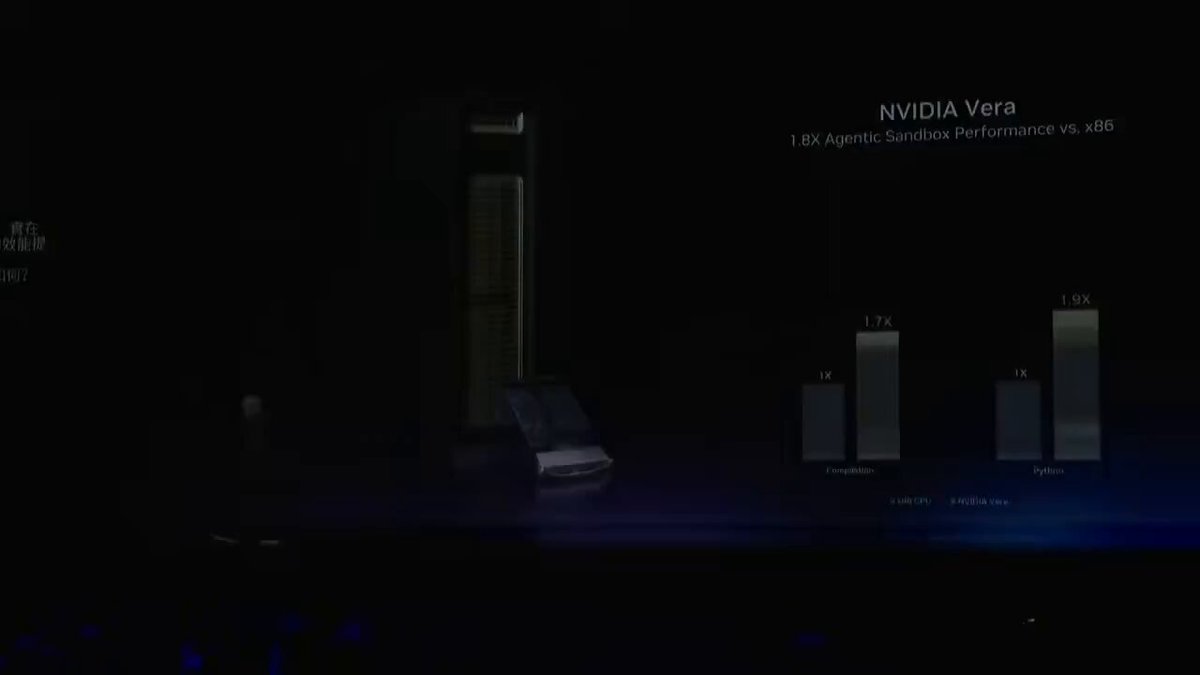
Jensen Huang just identified the next $200 billion market (Save this). The shift starts with a observation about agentic AI that changes everything about infrastructure. In the era of training and inference, the GPU was everything while CPU was a traffic cop, scheduling work, managing memory, dispatching tasks while the GPU did the heavy lifting. Agentic AI breaks that model entirely. An AI agent does not just run a single inference pass but rather it plans, calls tools, executes code in sandboxes, retrieves data from multiple sources and loops through complex multi-step reasoning sequences often thousands of times per second at scale. Every one of those operations runs through the CPU and the GPU sits idle waiting for the CPU to prepare the next task, supply the right context and execute the retrieval and tool calling logic fast enough to keep the accelerators fed. The CPU is now the conductor and the GPU is the orchestra and the bottleneck is the conductor falling behind. This is showing up in production AI factory utilization right now, which is exactly why Jensen built Vera from scratch rather than licensing x86. Vera achieves 40% lower peak memory latency than x86, 50% faster core to core communication, and 1.8 times the agentic sandbox performance of current x86 processors on a purpose-built architecture designed around the agentic loop. Now here is where the investment thesis gets interesting. The obvious beneficiary is Nvidia itself, and that thesis is real. Nvidia's CFO has guided for nearly $20 billion in Vera CPU revenue this fiscal year alone, a market Nvidia had zero presence in just three years ago. Intel held 60% of server CPU market share as recently as Q4 2025 and that transition is now happening at a pace Intel structurally cannot respond to. But the deeper question is, what architecture is Vera actually built on? Vera's Olympus cores are ARM compatible and every single Vera CPU deployed in every Vera Rubin rack in every data center in the world runs on ARM architecture. And ARM Holdings collects a royalty on every one of them. ARM does not make chips but rather licenses the instruction set architecture and CPU core designs that others build on top of. Every time Nvidia ships a Vera CPU, every time a hyperscaler deploys a Vera Rubin rack, every time an enterprise qualifies Vera for their AI factory, ARM earns a royalty. The secular tailwind here is almost perfectly constructed for ARM's business model. Amazon's Graviton, Microsoft's Cobalt, Google's Axion, Apple's silicon stack, and Qualcomm's data center push all run on ARM. And now Nvidia's Vera, which is projected to displace Intel as the largest server CPU supplier by revenue in a single fiscal year, is ARM. ARM's royalty rate on high end server chips is estimated at roughly 1 to 2% of chip selling price. At $5,000 per Vera CPU and 4 million units projected for FY2027, that is a royalty line growing from near zero to potentially $400 million to $800 million annually from Nvidia's data center CPU business alone before counting Amazon, Microsoft, Google, Apple, and Qualcomm. The total ARM addressable royalty base across all the silicon it already licenses is compounding at a rate that the current $130 billion market cap does not fully reflect. Jensen's CPU thesis is the most underappreciated catalyst in ARM's fundamental story, and the royalty compounding has barely started. Come join Milk Road Pro and get our full ARM royalty model and our entire AI trade thesis. Link below!

Milk Road AI

11,819 views • 3 months ago

Why Syria’s Political Geography Looks Nothing Like Iraq’s Comparisons between Syria and Iraq usually assume both face the same problem: a weak central state trying to hold together a population split among large ethnic and religious communities. Their demographic and geographic structures are quite different, and those differences explain why federalism, communal power-sharing and territorial autonomy took hold in Iraq, and why the bargaining position of Syria's minorities is much weaker. In Iraq, the Shia are only slightly more than half the population, a majority but not a consolidated one, and concentrated in the south. Inferred from provincial seat allocations, they account for roughly 56 to 58 percent of Iraqis. Sunni Arabs, with their own contiguous region, make up around 22 to 24 percent, and Kurds, who also hold their own region, around 18 percent. This produces a form of territorialised pluralism: the largest community holds a majority that falls short of dominance, while the two other blocs together account for around 40 percent of the population and occupy large, relatively contiguous regions of their own. Syria is built differently. A Sunni Arab bloc makes up around 75 percent of the population, with smaller Sunni communities such as Turkmen and Circassians counted politically within it. The rest are much smaller: Kurds and Alawites at around 10 percent each, Druze at 3 percent, Christians at 2 percent. No single minority reaches beyond a tenth of the country. The two countries also differ in how those minorities are distributed. Iraq's Kurdistan Region is overwhelmingly Kurdish and holds over 70 percent of the country's Kurds, roughly 14 percent of Iraq's total population. In Syria, the areas the Kurdish-led SDF held until its dissolution in August 2026 contained only about 40 percent of the country's Kurds, or around 4 percent of the total population. Syria's Kurds therefore enter any negotiation from a far weaker position. Minorities also differ in whether they hold a consolidated region of their own. Iraq rests on three large components, each with its own region. Syria's minorities are more scattered, and where they do concentrate, as the Alawites do along the coast, they lack a major city of their own. Urban settlement follows the same divide, and cities matter because geographic consolidation is central to any territorial project. Take the five largest in each country. In Iraq, Baghdad is close to two-thirds Shia and one-third Sunni, which keeps it mixed. Past the capital the split runs along group lines: Mosul is predominantly Sunni Arab, Basra predominantly Shia Arab, Erbil majority Kurdish, Najaf majority Shia Arab. Syria's largest cities run the other way. Damascus is likely around 80 percent Sunni Arab, and Aleppo, Homs and Hama are also predominantly Sunni. Only the fifth, Latakia, is not Sunni-majority, and even there Alawites and Sunnis sit near parity at roughly 50 and 40 percent. Syria has no major city where a minority forms a clear majority, and no equivalent of Erbil or Basra, a national urban centre dominated by one of the principal minorities. These differences shape coalition politics. In Iraq, the Shia majority is large enough to lead national politics but too small to ignore the other two blocs, which together hold around 40 percent of the country, each with its own region, cities and political organisations. Syria's remaining quarter cannot act as a single bloc: its minorities are geographically separated, and their political priorities diverge accordingly. A majority of 56 to 58 percent in Iraq faces two communities of roughly 23 and 18 percent. A majority approaching 75 percent in Syria faces several much smaller ones, none close to the weight of Iraq's Sunni Arab or Kurdish blocs. Iraq's principal communities function as relatively complete political-geographic units. Syria has one large demographic core and several much smaller minorities around it. More details:

The National Context

18,539 views • 12 days ago

Bitcoin isn't digital gold. It's not locked in by math. You can kill it. The man who ran money at Peter Thiel's hedge fund came on to explain who's trying — and why the only thing protecting Bitcoin is the people who run nodes. Matthew R. Kratter #BIP-110 — Bitcoin University founder, former Clarium / Thiel-world macro trader, early Palantir investor — joins me to lay out the fight consuming Bitcoin right now in plain English: why he says Bitcoin Core has "gone rogue," the spam war over OP_RETURN and BIP-110 he calls Bitcoin's last stand, why consensus flows from culture and not code, who actually controls the network (hint: not the miners), and how to mine Bitcoin from home for about $10 a day. Send this to anyone who thinks Bitcoin can't be stopped. TIMESTAMPS: 00:00 Intro 01:00 Physics dropout to literature — Stanford & Berkeley 05:27 René Girard & meeting Peter Thiel 07:56 Becoming a trader: Thiel Macro → Clarium 12:43 The PayPal mafia, network effects & the dot-com bottom 20:23 Global macro at Clarium & the 2003 housing-blowup call 24:08 Napster, PayPal & the "new world currency" 28:32 Government as the ultimate customer — Palantir & the CIA (In-Q-Tel) 36:00 Deep-state roots — is Peter Thiel captured? 49:32 Culture is upstream of consensus 57:00 Bitcoin isn't magic — nodes, immutability & the spam risk 1:01:42 Why spam is a problem — tragedy of the commons 1:04:30 Spam since Satoshi & the 2014 OP_RETURN war 1:14:30 The changing of the guard at Bitcoin Core 1:18:43 Core uncaps OP_RETURN to 100,000 bytes 1:28:00 Consensus flows from culture — the 2nd Amendment analogy 1:35:20 BIP-110 — the temporary soft fork 1:44:00 Why small blocks — and running nodes in Cuba 2:18:55 SegWit & the 2017 UASF — how 500 nodes won 2:24:00 The miners are just employees — node runners set the rules 2:41:46 "Firing the miners" — changing proof-of-work 2:55:18 Bitcoin Core went rogue — the last stand 2:58:50 You can kill Bitcoin 3:01:20 Mine Bitcoin from home for ~$10/day, KYC-free 3:11:09 Where to find Matt ▶️

The Bitcoin Matrix Podcast ⚡️

20,467 views • 2 months ago

Meet the Nigerian AHS Official Who Staffs Alberta With Nigerian Doctors: Dr. Jane Ojedokun She is the AHS official responsible for recruiting and placing doctors across northern Alberta. We examined every public AHS welcoming statement for new physicians in that zone under her leadership. The pattern is not subtle. Of the 18 doctors she publicly welcomed, 67% received their medical training in Nigeria. That is a higher concentration of Nigerian-trained physicians than all of her predecessors combined since 2015. One of the countrymen she hired, Dr. Tochukwu Gideon Anizoba, who has 3 different graduation years for the same medical diploma, she praised him on behalf of the AHS for his obstetric skills even though he was legally not allowed to practice obstetrics. Is she staffing and overseeing northern hospitals with carefully vetted physicians — or with doctors who have conflicting graduation years and suspension histories? She does not only recruit for AHS, she also recruits for the private clinic she runs with her husband, Dr. Joseph Ojedokun: Life Medical Clinic in Whitecourt. Nearly every physician she has brought into that clinic is a Nigerian-trained foreign medical graduate. The Ojedokuns relocated to Canada in the early 2010s seeking economic vibrancy. In 2018, while she already held public medical authority, she moved to block a competitor. When another private clinic tried to open in Whitecourt, she wrote to town council opposing it. Her words were not mild. “Our community definitely does not deserve sub-quality doctors who have not been properly interviewed and vetted by the North Zone Medical Affairs,” she wrote. “Poor or substandard care is what will ensue if these doctors are allowed to set up a practice in our community.” This is the same official who welcomed a man with three different graduation years for the same diploma. This is the same department that vetted and hired a doctor suspended in South Africa to practise in Beaverlodge, who sent Baby alita home when she was hours away from dying. Town council dismissed her pushback, described her intervention as "self-serving," "socialist," and "protectionist." Was “poor or substandard care” a genuine patient-safety concern? Or was it an argument of convenience against anyone who threatened the clinic she and her husband run? Neither the AHS nor Dr. Ojedokun responded to my media inquiry. If that was the gatekeeping culture she practised in Whitecourt — leveraging patient-safety concerns when they served her private interests — is that now the culture applied across northern Alberta? Baby Alita’s grandfather, Ben Ludwig, put the duty simply. Government is not for business. It is to make sure what is right is done.

Mocha Bezirgan 🇨🇦

202,290 views • 3 days ago

Watching, on the one hand, the Israeli soldiers’ video confessions of their genocidal intent and acts and, on the other hand, the Palestinians’ livestreaming of their own deaths and devastation, it is ever so easy to throw one’s hands up in the air, to despair, to want to shut the cruelty out, to find solace in oblivion and disengagement. But, it is not only ethically wrong to surrender to despair – it is also factually wrong that nothing good can be expected. Things change every day and, yes, the seeds of hope are already planted on the blood soaked soil of the ancient land of Palestine. They may be only seeds, but that’s how new life is born. So, let’s take a look at the seeds of hope that are taking root underneath the rubble. 1. Israel is not winning on the battlefield Gaza has been destroyed. Its population is on death row. And yet the smart people in the Israeli military know full well that the destruction they wreaked does not translate into a victory. Fifteen months after they re-invaded the open prison that has been the Gaza strip since 1948, they still cannot control more than a small portion of it at a time. Armed resistance, including the regular blowing up of Israel’s mighty tanks, is continuing. Israeli military officers also know that their political leaders’ stated aim, of eradicating Hamas, can never be demonstrably achieved, however many Hamas fighters they kill. As a former Israeli general put it to me: “Even if we kill most the Gazans before we declare victory, a single teenager raising the Hamas flag over a pile of rubble will prove that we failed.” Similarly in Lebanon. Yes, Israel has killed much of the Hezbollah leadership and, yes, the ceasefire it imposed on Hezbollah succeeded in stopping the Hezbollah missile launches in solidarity with the Palestinian resistance further south. However, the ceasefire was also forced upon Israel by its army’s inability to venture without massive losses by more than a few kilometres into Lebanese territory. And, lest we forget, it is simply not true that Hezbollah had to accept the ceasefire because its missile arsenal was destroyed: Israel signed the ceasefire hours after missiles hit Haifa, and indeed Tel Aviv. The past year, in other words, will be remembered as a cruel paradox: Israel destroyed Gaza and much of South Lebanon, mainly from the air, but failed abysmally to control the ground. The time is fast approaching when Israeli society will realise that the thousands of Israeli soldiers who died or were seriously injured were the victims of a leadership that, ultimately, placed the Israeli people’s interests very low in their own list of priorities. This is also confirmed by the readiness of Israel’s government to lie through its teeth about its own casualties on the battlefield: compare the low number of casualties officially admitted with the more than twenty thousand soldiers that Israel’s health authorities say have been admitted to veteran rehabilitation centres. 2. Israel’s economy has entered a ‘spiral of collapse’ Turning now to the medium and long term impact of the war on Israel’s economy (which is of great importance from the perspective of the apartheid state’s capacity to reproduce itself through war and devastation financially), it is instructive to read a letter signed by Israeli economists, including Dan Ben-Davidwho explain how Israel’s economic miracle hinges on a hi-tech sector that numbers at most 300 thousand people (including doctors, scientists, academics etc.) His point? If only 10% of these people leave the country, say thirty thousand, Israel’s already hugely indebted economy will fade. In Ben-David’s even starker words, “We won’t become a third world country, we just won’t be anymore. Only 0.6% of the population are doctors, but who trains them? The senior staff in research universities are 0.1% of the people. High-Tech workers are 6% of the population. Altogether it’s 300,000 people. It’s enough that a critical mass of this group chooses not to be here tomorrow morning, and the State of Israel leaves the developed world.” Are they leaving? You bet they are – leaving behind them more influential, more dominant than ever before the low-productivity bigots who are driving the fascist settler movement. And, the more dominant these low-productivity bigots are in government and in society, the greater the exodus of the high-tech, secular more liberally minded Israelis. This is the definition of a spiral of collapse. 3. Israel has lost in the court of public opinion – the illusion of a liberal democratic state is gone Meanwhile, the genocide of Palestinians, and in particular the manner in which so many Israeli soldiers and politicians celebrate it in videos, speeches and posts, has claimed what is left of the illusion of Israel as a European liberal democracy embedded in a hostile Middle East. That illusion has been a central underpinning of the propaganda that helped Israeli lobbyists succeed in Washington and Europe. Now it is gone. It has drowned in the sea of flesh and blood the Israeli military has strewn all over Gaza – and the trail of destruction, hatred and viciousness that the settlers have unleashed in the West Bank and in East Jerusalem. Once Israel’s cleverly constructed reputation was gone, sullied, it cannot be reclaimed. And that is good news in the sense that the first step toward a just peace is the ethical fall from grace of the aggressor. 4. The situation in the Occupied Territories Turning now to the situation in the West Bank, it is heart-wrenching to watch the non-stop violence against the Palestinians living under brutal apartheid conditions there. The violence against them comes from three quarters: From the Israeli military. From Israeli settlers. And, most tragically, from the Palestinian Authority’s (PA) own security forces who are, in the midst of the genocide of their people by the apartheid state, are cooperating fully with the security forces of that apartheid state. Why the army is doing this, we know. Why the settlers are doing it, we also know. But why is the leadership of the PA doing it? This is not the first time the PA has cooperated fully with the Israeli occupiers who steadfastly reject any prospect of a Palestinian state – the stated objective of the PA. Sure enough, the PA’s leadership have been doing this for years. But, now, in the face of the fully-fledged genocidal campaign by Israel, the PA’s excuses are becoming transparent. The unelected, unrepresentative, patently corrupt leadership of the PA is behaving as if to impress Netanyahu and Trump that they can do their dirty work for them, with a veneer of legitimacy courtesy of being Palestinians themselves. That they have a role to play. It is a pathetic plea to the genocidal US-Israeli establishment to give them a job to do against the Palestinian Resistance now that the Palestinian people has seen through them. Nothing else explains why they are turning even against Fatah members who continue to resist in Jenin and elsewhere. This is the saddest, most depressing, aspect of the Palestinian tragedy. So I shall not dwell on it further except to reiterate the urgent need for the election of a representative and thus legitimate leadership of the Palestinian people. No peace can be imagined, let alone negotiated, otherwise. I hope and trust that the Palestinians will find a way to speak with one non-sectarian voice. Nothing short of succeeding in this will curb the genocide they face. As for the rest of us, we must stand by to help give this voice, their voice, a chance to be heard. 5. Summary To sum up, days before Donald Trump enters the White House – a man who has never not liked any war crime aimed at eradicating the Palestinian resistance, the Palestinians as a people native to Palestine – we are at a crossroads. Mega Death and uber destruction on the ground wreaked by a US-armed and EU-supported Israel. A spiral of collapse within Israel’s social economy. Arab countries split between complicit regimes and enraged citizens. A Global South that is becoming increasingly powerful and intolerant of the Western-Israeli self-awarded right ethnically to cleanse the non-Jewish native population. And a Western public opinion that can no longer pretend to not know. What is the upshot of these ingredients? If I were to issue an educated guess, it would be this: Things will get even worse for the Palestinians in the short run. But, in the longer run, the possibility of liberation, of a just peace for both Palestinians, who refuse to go gently into the good night, and for Israelis, who understand the trap into which Netanyahu has ensnared them, seems stronger than it has been for thirty years.

Yanis Varoufakis

91,324 views • 1 year ago

6 months ago, building an app required: - 6 months of development - $300K budget - Team of 5 developers - Constant manual debugging Today, I'm helping a 17-year-old build one in a week. Workflow: ChatGPT -> Lovable -> Supabase -> Cursor Step-by-step how: 1/ Write your PRD first. This is non-negotiable. Clear requirements on paper = 10x faster execution with AI. We spent 30 minutes documenting exactly what PostPal needed to do. Then gave it to ChatGPT: "Create a Lovable prompt from this PRD." Copy. Paste. Done. 2/ Your first prompt sets everything. That initial Lovable prompt? It's your foundation. Give it the full high-level vision. Every feature. Every flow. Lovable uses this context for everything that follows. Get this wrong and you'll rebuild from scratch. 3/ Database first, frontend second. Biggest mistake I see: Building the entire UI, then trying to connect data. Set up Supabase immediately. Create your tables. Configure role-level security. Build backend and frontend together, not separately. 4/ Go feature by feature. Don't attack all screens at once. Pick one core feature. Build it completely. Connect it to your database. Test it. Then move to the next. Each feature should be fully functional before moving on. 5/ Chat mode is your debugging superpower. When something breaks (it will): → Use chat mode to diagnose → Let it explain the issue → Switch to agent mode to fix Chat mode for understanding. Agent mode for implementing. This combo saved us hours. 6/ Security isn't optional. Before deploying: → Enable row-level security → Secure your edge functions → Check your API endpoints → Run Lovable's security check Takes 5 minutes. Saves you from disasters. The result? A fully functional app. Not a prototype. Not a demo. A real product with authentication, database, and payments. The game has completely changed. While others debate if AI will replace developers... We're shipping products before lunch. The tools are here. The playbook is proven. The only question is: what will you build? Time to ship.

Jacob Klug

40,338 views • 1 year ago

🚨🇵🇰 LEADING PAKISTANI JOURNALIST BREAKS SILENCE: TORTURE, ABDUCTION, AND A REFUSAL TO BETRAY IMRAN KHAN One of Pakistan’s biggest voices just described a nightmare that sounds like a political thriller. Imran Riaz Khan was abducted, tortured, and held in secret detention for months. His crime was refusing to follow the military’s narrative after the 2022 regime change. He says the demand was simple and constant: Go against his former Prime Minister Imran Khan and provide false evidence. He refused. What followed, he says, was extreme torture. Blindfolds. Hands tied behind his back. Hung by his arms or legs for hours. Isolation so complete that guards were forbidden from responding when he greeted them. He says the mental torture was worse than the physical pain. For more than four months, he says he was kept in a cell barely large enough to lie down. No human contact. Drugs injected. Repeated beatings. All for one video. They wanted him to record a statement saying he was free, hiding by choice, and that the state had nothing to do with him. He says he refused because that video would erase their responsibility if he was killed. He says they threatened him directly. Journalist Arshad Sharif was killed after refusing the same demands. And he was told he was next. Eventually, he fled Pakistan through the mountains. On foot. At night. One of Pakistan’s most familiar faces, crossing borders illegally and being attacked by wolves simply to stay alive. He is now in hiding in the UK, and runs one of the country’s largest YouTube channels We get into: • How he says the military pressured journalists to help remove Imran Khan • What he describes inside secret detention sites run by intelligence agencies • Why he refused to become a false witness against Imran Khan and judges • How Arshad Sharif’s killing changed everything • Why he says even exile does not mean safety • Why he believes Pakistan is heading toward a breaking point Stay quiet. Disappear. Or pay the price. Imran Riaz Khan says he chose something else: to speak. 00:45 – Why the military tried to force him to betray Imran Khan 02:12 – The exact pressure he says he faced in secret meetings 05:44 – How his torture began and what they demanded 07:19 – Why he says Imran Khan was the only leader who never retaliated 09:35 – How he became the most-watched journalist in Pakistan 12:10 – Why he believes May 9 was a state-orchestrated trigger 15:33 – The fake case he was asked to fabricate against Imran Khan 18:50 – What happened the night Imran Khan was ousted 22:07 – What he says happened inside an intelligence-run secret prison 25:58 – The moment he realized they were preparing to kill him 29:46 – How Arshad Sharif’s murder became a warning to others 33:14 – The trap he says was set to frame him with planted terrorists 36:22 – What his captors said when they finally released him 39:30 – Why he stayed in Pakistan even after being tortured 42:41 – His hidden escape route through the mountains 45:55 – The animal attack that nearly killed him during his escape 49:08 – How he crossed into Afghanistan under threat of assassination 52:34 – What the UK told him while deciding whether to grant asylum 56:05 – Why he says even exile can’t guarantee safety Disclaimer: Views expressed are my personal opinion as an Australian citizen permanently resident in Dubai, UAE, protected under Article 19 of the ICCPR (as ratified by Australia) and UAE constitutional provisions on freedom of expression. I am outside Pakistani jurisdiction. This post is published from the United Arab Emirates; any dispute falls exclusively under UAE courts.

Mario Nawfal

1,442,295 views • 7 months ago

Lessons from Mary Kay Ash, the greatest saleswoman in history: 1. Golden Rule Leadership: The Golden Rule is one of the world’s oldest and best-known philosophies, yet it’s frequently overlooked in business circles. Mary Kay proved this rule is still powerful in today’s complicated world. 2. You Build with People: Leaders are dependent upon the performance of their people, and so is a company’s success. Good people are a company’s most important asset. People are more important than the plan. 3. The Invisible Sign: Everyone has an invisible sign hanging from their neck saying, “MAKE ME FEEL IMPORTANT!” Never forget this message when working with people. 4. Praise People to Success: Each of us craves recognition. Let people know you appreciate their performance, and they’ll respond by doing even better. Recognition is the most powerful of all motivating techniques. 5. The Art of Listening: Good leaders are good listeners. God gave us two ears and only one mouth, so we should listen twice as much as we speak. When you listen, the benefit is twofold: you receive necessary information, and you make the other person feel important. 6. Sandwich Every Bit of Criticism Between Two Heavy Layers of Praise: Sometimes it’s necessary to let somebody know you’re unhappy with their performance. But direct your criticism at the act, not the person. Criticize effectively in a positive way so you don’t destroy morale. (Shane's note, I actually don't agree with this. I've never met a high performer that needs this or wants it.) 7. Be a Follow-Through Person: Be the kind of person who can always be counted on to do what you say you’ll do. Only a small percentage of people possess follow-through ability, and they’re held in high esteem by all. It’s particularly important for your team to know you possess this rare quality and to think of you as totally reliable. 8. Enthusiasm Moves Mountains: Nothing great is ever achieved without enthusiasm. Leaders are enthusiastic, and enthusiasm is contagious. Interestingly, the word enthusiasm has a Greek origin, meaning “God within.” 9. The Speed of the Leader Is the Speed of the Gang: You must set the pace for your people. Real leaders aren’t afraid to get their hands dirty. They set examples by demonstrating good work habits, displaying positive attitudes, and possessing team spirit. True leaders establish success patterns that make everyone think of success. 10. People Will Support That Which They Help to Create: Invite people to participate in new projects that are still in the “thinking” stage. By confiding in associates and seeking their opinions, you generate support at the initial stage of each new venture. People often resist change when they don’t participate in the decision-making process. Some of the best leaders “plant the seed” that permits others to propose the idea and take credit for it. 11. An Open-Door Philosophy: At Mary Kay corporate headquarters, there are no titles on executives’ doors, and there’s ready access to all management levels. Everyone within the company, from mailroom clerk to chairman of the board, is a human being and is treated accordingly. 12. Help Other People Get What They Want—and You’ll Get What You Want: As the parable of the talents tells us, we’re meant to use and increase whatever God has given us. And when we do, we shall be given more. 13. Stick to Your Principles: Everything is subject to change except one’s principles. Never, absolutely never, compromise your principles. 14. A Matter of Pride: Everyone within an organization should have a sense of pride in their work. They should also feel proud to be associated with the company. It’s a manager’s job to instill this feeling and promote this attitude among their people. 15. You Can’t Rest on Your Laurels: Nothing wilts faster than a laurel rested upon. Every person should have a lifetime self-improvement program. In today’s fast-paced world, you can’t stand still. You either go forward or backward. 16. Be a Risk-Taker: You must encourage people to take risks. Let them know that “nobody wins ’em all.” If you come down on them too hard for losing, they’ll stop sticking their necks out. 17. Work and Enjoy It: It’s okay to have fun while you work. Good managers encourage a sense of humor. In fact, the more enjoyment people derive from their work, the better they will produce. 18. Nothing Happens Until Somebody Sells Something: Every organization has something to “sell,” and every person in the company must realize that nothing happens until somebody sells something. Accordingly, they should be fully supportive of the selling effort. 19. Never Hide Behind Policy or Pomposity: Never say, “That’s against company policy” unless you have a good explanation to back up the policy. It infuriates people. It’s as if you were saying, “We do it this way because it’s the way we’ve always done it.” By the same token, pomposity can also be a transparent cover-up for incompetence. 20. Be a Problem-Solver: The best leaders recognize when a real problem exists and know how to take action to solve it. You must develop the ability to know the difference between a real problem and an imaginary one. 21. Less Stress: Stress stifles productivity. Leaders strive to create a stress-free work environment for their employees through both physical and psychological approaches. 22. Develop People from Within: The best-run companies develop their own managers from within. They rarely seek outsiders. In fact, it’s a sign of weakness when a company goes outside too often for management personnel. The morale of the company is likely to suffer. People may begin to feel threatened and think, “No matter how well I perform, an outsider will probably get the position I want.” 23. Live by the Golden Rule On and Off the Job: Don’t be a hypocrite. Live every day of the week as if it were Sunday. There’s no place for two sets of moral codes. Conduct yourself in business with the same scruples you would want your children to observe in their lives.

Shane Parrish

419,606 views • 9 months ago

Would you take out your phone to make videos or run first? Seedance 2.5 on DomoAI official prompt LIVE-ACTION CINEMATIC REALISM. Every frame is photographed as real live-action footage: a real adult woman, real city, real pedestrians, real domestic pets, and a real enormous mascot plush statue. Real skin with pores, real wavy blonde hair with individual strands, real cotton, nylon, leather, metal, wet asphalt, glass, concrete and plush fibers. No illustration, painting, anime, CGI, 3D render, or artificial surface. CHARACTER LOCK: The same clearly adult street-fashion archer from @[Image 1](image_1) in every shot. Preserve her exact face, natural facial geometry, dark eyes, skin tone, expression, extremely long straight wavy blonde hair, thick blunt bangs, and royal-blue backward baseball cap with small decorative details but no readable text. She is 178 cm tall, XS size, very slim elongated runway-model proportions. Her outfit never changes: oversized white-to-light-grey graphic cotton T-shirt with a deep plunging neckline that that accentuates her large cleavage., faint doodle motifs but no readable lettering, dusty rose-pink wide cargo trousers with dimensional pockets and heavy folds, black belt with silver hardware, colorful keychain charms, layered bead necklaces, and red low-top sneakers with white soles. ARCHERY GEAR: She carries a long dark laminated-wood recurve bow with a leather-wrapped grip, visible taut string, realistic curved limbs and subtle wear. A dark-brown leather quiver crosses diagonally over her back, holding six to eight arrows with natural wood shafts and cream-white feather fletching. She wears matching brown leather archery gloves with stitched palms, reinforced knuckles and wrist straps, plus a fitted leather forearm bracer on the bow arm and a slim finger tab or draw glove. The archery equipment is integrated into her street-fashion styling, not a historical costume. LOCATION: A dense urban shopping district and pedestrian plaza at blue hour, wet asphalt reflecting storefront light, concrete towers, glass façades, crosswalk signals, street lamps, overhead transit lines, narrow side streets, urban haze, and a large original unbranded mascot plush statue installed in the center of the plaza. The mascot is enormous, approximately three stories tall, with a soft cream-and-pastel plush body, oversized rounded head, expressive embroidered eyes, visible seams, padded limbs and tactile fabric. No copyrighted character, logo or readable text. STORY — 12 SHOTS, ONE CONTINUOUS EVENT: 1. 0–1.5s, LOW WIDE. Camera whips right past two foreground pedestrians and a street barrier. She bursts through the wet plaza at a low run, bow held low, red sneakers splashing lightly, dusty rose cargo fabric and extremely long hair streaming behind her. 2. 1.5–3s, EXTREME CLOSE, LOCKED. A commuter’s eyes appear above a scarf behind a transparent umbrella. The eyes snap toward the plaza as nearby city lights reflect across the wet plastic. 3. 3–4.5s, CLOSE, FAST PUSH-IN. Two pedestrians and their leashed pets in the distance suddenly turn toward the giant mascot statue. A small dog raises its ears while a cat inside a carrier shifts and looks outward. 4. 4.5–6s, TRACKING MEDIUM. Camera runs beside her through the moving crowd at shoulder height. People step aside, coats and shopping bags sway, her long black hair, oversized T-shirt and cargo trousers carry real momentum as she reaches toward the quiver. 5. 6–7.5s, LOW ANGLE CLOSE. Her red sneaker plants on the wet pavement. She straightens hard and raises the dark recurve bow into frame. The giant mascot statue is visible far behind her between buildings. 6. 7.5–9s, MEDIUM FROM HER LEFT. Camera orbits behind her as she draws an arrow from the quiver, nocks it and pulls the string to full draw. The bow limbs flex visibly; pedestrians freeze at a safe distance, watching. 7. 9–10.5s, MACRO, LOCKED, razor-shallow focus. Her leather-gloved fingers grip the string, stitched glove texture, finger tab and arrow shaft sharply resolved. Her eye, blue cap and city lights remain soft behind. The string creeps back the last centimetre. The crowd noise drops for one hard beat. 8. 10.5–12s, WIDE FROM BEHIND AND ABOVE THE ARROW, LOCKED. She releases. The string snaps and blurs. The arrow tears forward between streetlights and glass buildings toward the giant mascot statue. 9. 12–14s, MEDIUM CLOSE TRACKING THE ARROW. The arrow breaks apart in mid-air: its front half dissolves into millions of bright rose-pink glitter particles streaming behind it, each particle catching the city light separately while the feathered tail remains intact. The arrow has no point. 10. 14–16s, WIDE LOW ANGLE. The glitter stream strikes the plush mascot’s chest and races through its seams as a bright rose-pink wave. Plush fibers ripple outward from the impact point. Pink reflections pulse across the wet pavement and nearby windows. 11. 16–18s, WIDE LOW ANGLE, FAST PULLBACK. The enormous mascot plush statue activates and rises into a fully living presence. Its padded head lifts, embroidered eyes illuminate softly, oversized arms move, seams flex, and rose-pink glowing fabric appliqués spread across its plush surface from the impact point. It remains clearly soft, textile-based and physically heavy, not a CGI monster. 12. 18–20s, FINALE, WIDE FROM BEHIND. Camera rises behind her as she lowers the bow and lets her weight settle naturally onto one hip. She looks up at the awakened mascot with a small confident smile. Pedestrians gather and react, some stepping backward, others pointing or raising phones. Dogs tug lightly at their leashes, a small pet in a carrier shifts, and the giant mascot waves slowly above the plaza. Glitter continues to fall through the city light. Vary the framing aggressively: extreme close-up, macro, close, medium, tracking, low wide and overhead. Never repeat the same shot type twice consecutively. Shots 2, 7 and 8 are locked; all others use clear camera movement. Every action must be instantly readable. LOOK: Photorealistic live-action large-format colour film with a refined three-strip Technicolor response. Concrete, glass, asphalt and distant architecture remain cool blue-grey and slightly desaturated. Saturated colours are the royal-blue cap, dusty rose cargo trousers, red sneakers, colorful keychain charms, rose-pink glitter, and the cream-and-pastel mascot plush. Fine photochemical grain, subtle halation on streetlights and glitter, realistic wet reflections, tactile cotton, nylon, leather, metal and plush fibers. Photographed reality, never drawn. LIGHTING: Blue-hour city light mixed with warm street lamps and storefront spill at approximately 4200K. Cooler sky fill at 4:1. Streetlights rim her long black hair, cap, bow and quiver. Thin urban mist and steam rise from vents and wet pavement. The glitter emits separate rose-pink specular points and casts soft pink reflections onto the mascot, asphalt, glass and her face. CAUSE AND EFFECT: Pedestrians and pets notice the strange event before the transformation, so their final reactions read as consequences. The glitter must visibly travel in sequence: arrow releases, arrow breaks apart, particles stream through the city, glitter strikes the mascot chest, light travels through the seams, the plush statue activates, then the crowd and pets react. Never cut directly to an already-animated mascot. PHYSICS: Real mass, real air and believable momentum. Bow limbs flex, string snaps, arrow flight has directional force, glitter behaves as millions of separate solid particles carried by fast air, and plush fabric compresses, ripples and rebounds with weight. Cargo fabric, T-shirt, hair, quiver strap and keychains respond to acceleration. Wet pavement reflects movement without becoming a mirror. The giant mascot moves slowly because of its padded mass. No slow motion; all shots run at real-time speed. AUDIO: Wet footsteps, light splashes, distant traffic, pedestrian chatter, shopping bags and coats moving, dog tags and leash tension, a faint pet sound, bowstring creak, sharp release snap, arrow hiss, crystalline glitter shimmer, plush fabric shifting, soft mechanical-like seam tension, crowd gasps and footsteps. No music. ON-SCREEN TEXT: None. No readable text, subtitles, numbers, captions, UI, logos, brand marks or watermark anywhere. OUTPUT: 20 seconds, horizontal 16:9, 4K, continuous cinematic live-action realism. #DomoAi #DomoAiCPP

Sharon Riley

30,721 views • 22 days ago

Trump gives Hamas ‘3-4 days’ ultimatum to accept Gaza peace deal | France 24 US President Donald Trump on Tuesday gave Hamas an ultimatum of “three or four days” to accept his Gaza peace plan or face consequences. Backed by Israeli Prime Minister Benjamin Netanyahu, the proposal demands a ceasefire, hostage releases, Hamas disarmament and a transitional authority led by Trump. US President Donald Trump on Tuesday gave Hamas an ultimatum of "three or four days" to accept his plan to end the war in Gaza "for their own good" or face severe consequences. Trump's plan, backed by Israeli Prime Minister Benjamin Netanyahu, calls for a ceasefire, the release of hostages by Hamas within 72 hours, a disarmament of the Palestinian militants and a gradual Israeli withdrawal from Gaza. That would be followed by a post-war transitional authority headed by Trump himself. World powers, including Arab and Muslim nations, welcomed the proposal, but Hamas had yet to issue a response as it reviewed the terms. "We're going to do about three or four days," Trump told reporters when asked about any timeframe. He later warned Hamas it would face severe consequences if it refused. "We have one signature that we need, and that signature will pay in hell if they don't sign," Trump told US generals and admirals gathered at a military base in Quantico, Virginia. A Palestinian source said on condition of anonymity that Hamas had begun consultations and "the discussions could take several days due to the complexities". Qatar, which hosts Hamas's exiled leadership, said it would hold a meeting with Hamas officials and Turkey later Tuesday. "It is still too early to speak about responses, but we are truly optimistic that this plan, as we said, is a comprehensive one," a Qatar foreign ministry spokesman said. Upon returning from his White House meeting with Trump on Monday, Netanyahu said he would brief his cabinet on a deal that would achieve "all the war aims we have set". His comments came as Israel continued its offensive in Gaza, with the territory's civil defence agency and hospitals saying 46 people had been killed, including 15 in Gaza City. 'End in tears' Trump's proposal demands that Hamas militants fully disarm and be excluded from future roles in the government, but those who agree to "peaceful co-existence" would be given amnesty. It would also see a phased Israeli withdrawal from Gaza after nearly two years of war sparked by Hamas's unprecedented attack on Israel on October 7, 2023. But in an earlier video after the press conference with Trump, Netanyahu said the Israeli military would stay in most of Gaza, and claimed he did not agree to a Palestinian state during his talks in Washington. Still, Israel's far-right Finance Minister Bezalel Smotrich, a member of Netanyahu's coalition government, blasted the plan as a "resounding diplomatic failure". "In my estimation, it will also end in tears. Our children will be forced to fight in Gaza again," Smotrich said. Trump's plan includes deployment of a "temporary international stabilisation force" and the creation of a transitional authority headed by Trump himself and including former British premier Tony Blair. But during his press conference with Trump, Netanyahu cast doubt on whether the Palestinian Authority, which nominally runs population centres in the occupied West Bank, would be allowed a role in Gaza's governance. He also warned that "If Hamas rejects your plan, Mr President, or if they supposedly accept it and then basically do everything to counter it, then Israel will finish the job by itself." Trump said Israel would have his "full backing" to do so if Hamas did not accept the deal. 'Unrealistic' Washington's European allies including Britain, France, Germany and Italy voiced strong expressions of support, while China and Russia also declared their backing. But in Gaza, people were sceptical. "It's clear that this plan is unrealistic", 39-year-old computer programmer Ibrahim Joudeh told AFP from his shelter in the so-called humanitarian zone of Al-Mawasi in southern Gaza. "It's drafted with conditions that the US and Israel know Hamas will never accept. For us, that means the war and the suffering will continue," he said. The Palestinian Authority welcomed what it called Trump's "sincere and determined efforts." But Hamas ally Islamic Jihad said the plan would fuel further aggression against Palestinians. "Through this, Israel is attempting -- via the United States -- to impose what it could not achieve through war," the group said. The Gaza war was triggered by Hamas's October 7, 2023 attack on Israel that killed 1,219 people, mostly civilians, according to an AFP tally of Israeli official figures. Israel's offensive has reduced much of Gaza to rubble and killed 66,097 Palestinians, also mostly civilians, according to health ministry figures in the Hamas-run territory that the United Nations considers reliable.

Owen Gregorian

65,973 views • 11 months ago

Marathon | Ultimate Overview, Gameplay, Hands-On Impressions ▪️Team based extraction shooter set on Tau Ceti IV, scavenge remains of a lost colony for glory and fortune ▪️Launch: Coming to PS5, Xbox and PC on September 23 ▪️Will be a "premium" product, meaning not F2P ▪️"Weapons and movement feels crisp, fluid, and incredibly satisfying in that rarified way that few studios can achieve" ▪️3 maps, 6 runner classes at launch, more to follow post-launch ▪️Plans to support the game with new maps, weapons, characters, and more as it goes on ▪️Ranked play, end game challenges, seasonal storytelling, secrets to discover, community events all in Season One with more content coming ▪️You play as a "runner", cybernetic mercenary who's given up their human form for a bio-synthetic shell with unique abilities and stats ▪️Runner Types: "Locus" is a soldier class for pushing forward, can use a shield, "Void" is stealth, sneak by undetected, use smoke grenades, "Blackbird" is reconnaissance based, find players, positioning, and more ▪️Uncover secrets hidden in the wake of the original Marathon trilogy's events - how and where this overlaps or clashes with the original games "is a story that will unfold over time" ▪️Objective is to get in, get as much loot as you can, and get out alive ▪️If you die, your gear and loot will be up for grabs. Survive and you can take your gear with you on future runs as you grow in power and fill your vault ▪️Fight in a crew of up to 3 players, various map sizes up to 18 players ▪️PvP + PvE, battle other players, security forces, and "otherworldly threats" ▪️Contextual pings, shared objectives, down-but-not-out mechanics ▪️Environments are filled with weapons, materials, items, resources, cores, keys, backpacks, secrets etc to find You can find things like backpacks that expand your inventory, powerful and unique weapons, consumables to heal yourself, ▪️Select your runner, strategically build your loadouts pre-match ▪️Factions in the game can sponsor you and your loadout ▪️You have the freedom to opt out of crew fill and take all the glory for yourself as a solo runner ▪️"This is probably the best-looking, best-feeling extraction shooter ever made", not easy for newcomers to the genre, can be tough to get into, but one previewer was "reluctant to put Marathon down. This is a good sign – the best thing I can say after any preview is that I want more – but big questions remain" ▪️No two matches ever play out the same, dynamic events, variable weather, unpredictable players etc ▪️Customization: Each Runner "brings their own flair", but serve as foundations to customize your playstyle - collect implants and equipment to augment your Runner, like stacking implants/upgrades to reduce heat build-up to allow you to keep running, jumping, sliding longer ▪️Contracts: "Ingenious" incentives, finish contracts you accept for permanent upgrades to your stats, add precious items like grenades, shields, inventory-expanding backpacks, etc to your market. The bigger your market, the better your minimum loadout becomes ▪️Contracts provide "valuable direction", bring welcome diversity and add a "precious hit of semi-permanent progression" ▪️Prestige Cores: Rare items that can "really push the boundaries" (ex: Glitch has an upgrade that turns double jump into triple jump for more manueverability) ▪️Another rare item is a backpack that turns you invisible while interacting with containers (very useful when everyone on the map is hunting you) ▪️Each match "feels like the most important one ever", high stakes, "surprisingly challenging AI enemies" that were "much, much better at surrounding and overwhelming players than the vast majority of AI enemies found in other games" ▪️Having a balanced crew helps in exploring the "dark and forgotten places" in maps - filled with deadly creatures like a species of giant ticks who swarm you frantically ▪️Battles can become frantic as you encounter other crews, stalk them across the map, encounter AI enemies to fend off when others come to claim your loot (one preview battle turned into a 9 player free-for-all) ▪️Downside could be the reward system where skilled players enter fresh matches with high level gear that outmatches less skilled players, though Bungie says it has gone out of its way to try and make it where a poorly equipped squad can still stand a chance if they play well ▪️Even if you die, you can can still get upgrades, improve your reputation with factions, advance in perk trees, etc by completing various quests, looting chests, or fulfilling specific objectives which unlock new bits of story and can grant perks like buying slightly better gear from vendors ▪️"The world Bungie has built is every bit as beautiful as it is creepy and dystopian, and there are moments where they satisfyingly hint at the events of the Marathon trilogy from the ‘90s", though "what little I saw did only slightly more than pay lip service to the world" ▪️Uses the seasonal reset model like in Diablo 4, where players are stripped of their loot and progress at the end of each season to mix things up with new content and new meta ▪️Game is designed to get you killed, Bungie expects average exfiltration rates to be comfortably below 50% ▪️"You will lose a lot, and losing hurts a lot[...]Extracts are snapshots of this unpredictability. That white-knuckle countdown may become a gut-punch defeat, an unforgettable clutch, a desperate last-second dive into the portal as your downed allies watch in envy and horror (couldn't be me), or an unnerving anticlimax. It's not always a pleasant one, but it is a strong emotional hook" ▪️Some previewers worried about variety, weren't impressed with the objectives in the alpha, like hunting computer monitors on the map, sprinting over, marking dropships, sprinting over, and repeating, though random events help spice things up ▪️Not a 20-map game says Bungie, map design "does have that sticky battle royale quality of generating memories", though still worried 3-4 medium sized maps might not be enough ▪️Bungie's "verbiage" on updates sounds like possibly 1 new map a year + refreshing existing ones in between, which could work in its favor pushing players to really learn maps, but will they hold up over hundreds of hours? ▪️Fights are decided by gun skill, clever ability use, map awareness, how strong your shield is, how many healing supplies you have, etc ▪️Example: If you have one bar of shield and enemy has four, you'll lose 1v1, but change it up with powerful grenades, status effects like toxic or overheat, backpacks are "transformative", etc Gameplay Trailer ▶️ Gameplay Overview ▶️ PS Blog ➡️ IGN ➡️ GamesRadar ➡️ ▶️

Shinobi602

181,743 views • 1 year ago

The CEO of the biggest bank in America just dropped a warning that nobody on Wall Street wanted to hear. The market is overheating. His proof? ONE stock that doubled from $500 billion to $1 trillion in 48 trading days. The fastest doubling in market history. Here's what happened and what it means for your investments: May 29, 2026. Jamie Dimon walks on stage at the Reagan National Economic Forum. CNBC's cameras are rolling. JPMorgan runs $4 trillion in assets. When he talks, every desk on Wall Street listens. He looks at the interviewer and says the market is exuberant. Then he does something he almost never does. He names a stock. Micron. The memory chipmaker most people couldn't pick out of a lineup. The stock that just doubled from $500 billion to $1 trillion in 48 trading days. The fastest doubling in market history. It beat Samsung's record from six weeks earlier. Samsung did it in 82 days. It beat Tesla's record by 182 days. Tesla took 230. Micron did it in 48. Now look at the rest of the chart. 850% return in 12 months. A UBS analyst tripled his price target in a single note. From $535 to $1,625. Bloomberg called it the most aggressive analyst revision in recent semiconductor history. The stock jumped 19% the same day. SK Hynix did the same move 13 days later in South Korea. This is what the top of a cycle looks like. And Dimon knows it because he's seen it before. Here's the part that should concern you. Dimon didn't stop at "exuberant." He said credit spreads are at historic lows. He said interest rates are gravity to asset prices. He said inflation could easily hit 4% this year. Then he closed with this: "If something goes wrong, those asset prices can come down." That's not bearish commentary. That's a structural risk warning from the man who runs the biggest balance sheet in American finance. He's not predicting a crash. He's flagging what every cycle looks like before one happens. And retail just walked straight into the trade. A viral wallstreetbets post flashed a +6,476% gain on Micron LEAPS this week. Retail loaded up at the top. Same way they did in 2021. Same way they did in 2000. The story always sounds different. The behavior never is. Here's the math nobody's running. Micron's earnings ARE growing. Wall Street expects 121% annual growth for the next five years. The PEG ratio is 0.07. By traditional value metrics, the stock isn't even expensive. That's not the problem. The problem is concentration. Retail isn't buying Micron because they ran the math. They're buying because the chart looks like a moonshot. They're buying because a UBS analyst tripled his price target. They're buying because the stock is trending on every finance account on X. They're buying narrative. Not inputs. And the thing about narrative-driven trades is they work right up until they don't. This is the pattern. Every cycle. No exceptions. In 2000, the story was the internet. In 2007, the story was housing. In 2021, the story was meme stocks and SPACs. The narrative was always real. The companies were real. The growth was real. The problem was retail showing up at the end and paying institutional prices on the way out. Dimon has watched this movie three times in his career. He's seen 1996. He's seen 2007. He's seen 2020. He knows exuberance can run for years before it breaks. He also knows nobody rings a bell at the top. Here's what most investors miss about a warning like this. Dimon isn't telling you to sell. He's telling you the math is getting fragile. That when the rotation comes, the stocks that doubled in 48 trading days don't slowly drift lower. They get repriced violently. And the people who get hurt the worst are the ones who showed up last and held the longest. That's the retail trade. Every cycle. The institutions that ran Micron from $500 billion to $1 trillion already have rules for when to trim. Most retail investors don't have any of that. They have conviction. They have hope. They have a Discord screenshot from someone up 6,000% on LEAPS. That's not a strategy. That's a position waiting to get unwound. The investors who survive this cycle aren't the ones who can call the top. They're the ones whose system already decided when to rotate before the headlines forced the decision. Automated. Rules-based. No emotion. No guessing. That's exactly what Surmount was built for. Rules-based strategies that execute on inputs, not vibes. That trim into strength. That don't need Jamie Dimon to flash a warning before they react. When the next "obvious winner" gets repriced, you're not the one scrambling. You're already positioned:

Surmount

98,529 views • 3 months ago

CANCEL Your Weekend Plans, and Learn Claude Code Today. $5,000/month. $10,000/month. $20,000/month. People are building entire apps and charging clients thousands using Claude Code. You're still Googling 'how to center a div.' While you're binge-watching a show you won't remember next week, a 19 year old with zero coding experience just built a $5,000 SaaS product in one afternoon using the tool I'm about to break down. Same laptop. Same internet. Same 24 hours. He has Claude Code. You have Netflix. That's the only difference. This YouTube video is a goldmine. Full Claude Code tutorial. Beginner to pro. Every feature. Every setup step. Every best practice. Zero prior knowledge needed. Save it. Watch it tonight. Not tomorrow. Tonight. Save this post. This is your complete Claude Code roadmap. Lose it and you lose the next 12 months of income. Follow Himanshu Kumar so you don't miss the breakdowns for each feature. ↓ 1. Understand What Claude Code Actually Is. You think Claude Code is just another chatbot. It's not. And that misunderstanding is why you're broke. ChatGPT gives you text. Claude Code gives you software. It runs in your terminal. It reads your entire codebase. It writes files directly to your project. It runs commands on your machine. It debugs errors autonomously. It builds features end to end. You're not chatting. You're deploying a developer. One that works 24/7. Never asks for a raise. Never calls in sick. Never pushes broken code at 5 PM on a Friday. People are charging clients $5,000-$10,000 for apps they built with Claude Code in 3 hours. And you didn't even know this tool existed because you're still asking ChatGPT to write you a to-do list. The gap between you and people making money with AI isn't intelligence. It's awareness. Now you're aware. Save this post. Follow Himanshu Kumar for the complete breakdown of every Claude Code feature. ↓ 2. Set Up Claude Code Properly. Most people quit here. "It's too complicated." "I don't know terminal." "I'll set it up later." Later never comes. And "complicated" means "I watched for 30 seconds and gave up." The setup takes 10 minutes. Install Node.js. Install Claude Code via npm. Authenticate your account. Open your terminal. Done. 10 minutes. You spent longer this morning deciding what to have for breakfast. The video walks through every single click. Every command. Every screen. Assuming you know absolutely nothing. If you can download an app on your phone, you can set up Claude Code. It's the same level of difficulty. But you'll still tell yourself it's "too technical" because that excuse is more comfortable than admitting you're just scared to try something new. This is the setup that everything else builds on. Skip it and nothing works. ↓ 3. Use the Desktop App. You don't even need to live in the terminal if you don't want to. Claude Code has a desktop app. Clean interface. Visual feedback. Everything you need without touching command line. But here's the thing most people don't know: The desktop app isn't just a pretty wrapper. It lets you manage projects visually. See file changes in real time. Switch between projects instantly. The people making money with Claude Code use the desktop app for client projects because it's faster to manage multiple builds simultaneously. You're still opening 14 browser tabs to organize one project. They open one app and everything's there. Efficiency isn't a personality trait. It's a tool choice. Save this post. Follow Himanshu Kumar for the desktop app workflow that handles 5 client projects at once. ↓ 4. Install the Right Dependencies. This is where beginners silently fail and blame the tool. Claude Code needs certain dependencies installed to work properly. Miss one and everything breaks. Then you go on Twitter and say "Claude Code doesn't work." It works fine. You just didn't read the setup guide. The video covers every dependency you need. What to install. How to install it. How to verify it's working. No guessing. No Stack Overflow rabbit holes at midnight. No "why isn't this working" for 3 hours. Watch the dependency section once. Follow every step. Never deal with setup issues again. You spent more time last week troubleshooting a printer than this takes. ↓ 5. Work Inside Your Code Editor. Claude Code integrates directly with your code editor. VS Code. Cursor. Whatever you use. It's not a separate window you alt-tab between. It's right there. In your workflow. You type a request. Claude writes the code. The code appears in your editor. You review it. Accept it. Done. No copy pasting between windows. No reformatting code that got mangled in transit. No "which version was the right one." It's like pair programming with someone who never gets distracted, never argues about naming conventions, and actually writes code that works on the first try. Your current coding process is: Google the problem, read 5 answers on Stack Overflow, copy the wrong one, debug for an hour, find the right one, paste it in, break something else, repeat. Claude Code's process is: describe what you want, get working code, move on with your life. Same hour. One method produces working software. The other produces frustration and a browser history full of Stack Overflow tabs. Stop coding the hard way. Save this post. Follow Himanshu Kumar for code editor setup guides and integration tips. ↓ 6. Master Basic Usage. Most people learn 5% of a tool and say they "know" it. You "know" Photoshop because you can crop an image. You "know" Excel because you can sum a column. You "know" Claude Code because you asked it one question. Basic usage means: How to give Claude Code context about your project. How to ask for changes to existing code. How to generate new files and features. How to review what Claude produces. How to iterate when the output isn't perfect. These basics are the foundation of everything. Skip them and every advanced feature feels confusing. Master them and every advanced feature feels obvious. The video breaks down each one with real examples. Not theory. Actual usage on actual projects. You've been using AI tools at 5% capacity and wondering why your results are 5% of what others get. Save this post. Follow Himanshu Kumar for daily Claude Code usage tips. ↓ 7. Learn Every Command. Claude Code has commands that most users never discover. Because most users type one message and expect magic. That's not how professionals use it. Professionals use specific commands that tell Claude Code exactly what to do, how to do it, and what constraints to follow. The difference between a beginner and someone making $10K/month with Claude Code is knowing which command to use and when. The video walks through every single one. Not just what they do. But when to use each one. And why one command is better than another for specific situations. You've been using Claude Code like a hammer. These commands turn it into a full toolbox. Stop treating a power tool like a blunt instrument. Save this post. Follow Himanshu Kumar for the command cheat sheet I use daily. ↓ 8. Understand Modes and Shortcuts. Speed matters. The person who builds an app in 2 hours charges $5,000. The person who builds the same app in 2 days charges $2,000. Same app. Same quality. Different speed. Different income. Claude Code has modes that change how it operates. And shortcuts that cut your workflow time in half. Most people don't know either exists. They use Claude Code in default mode for everything. Like driving a car in first gear on the highway. Technically it works. But everyone is passing you. The video shows you every mode. Every shortcut. Every time-saving trick that separates the people charging $2,000 per project from the people charging $10,000. Speed is money. Literally. Save this post. Follow Himanshu Kumar for the shortcuts that cut my build time by 60%. ↓ 9. Write a Proper Planning Prompt. This is the section that separates amateurs from professionals. And it's the section most people skip. A planning prompt tells Claude Code what you're building before you start building it. Architecture. File structure. Technologies. Features. Constraints. Edge cases. Without a planning prompt, Claude Code guesses. And guessing produces garbage. With a planning prompt, Claude Code executes a clear plan. And clear plans produce working software. The video shows you exactly how to write a planning prompt that makes Claude Code produce professional-grade output on the first try. "But I just want to start coding." That's why your code breaks every time. That's why you restart projects 4 times. That's why nothing you build ever gets finished. Because you refuse to plan. A 5-minute planning prompt saves you 5 hours of debugging. But you'd rather skip the 5 minutes and suffer through the 5 hours because patience isn't your thing. And that's exactly why you're not making money. Planning is the most underpaid skill in coding. And the most overpaid when you master it. Save this post. Follow Himanshu Kumar for the planning prompt templates I use for every client project. ↓ 10. Choose the Right Model. Claude Code lets you select different AI models. Not all models are the same. Not all tasks need the same model. Using the most powerful model for a simple task wastes credits. Using a basic model for a complex task wastes time. The video explains: Which model to use for quick fixes. Which model to use for complex architecture. Which model to use for debugging. Which model to use for code generation. Most people pick one model and use it for everything. That's like using a sledgehammer to hang a picture frame. Model selection is strategy. And strategy is money. The people making $10K/month with Claude Code are strategic about every credit they spend. You're burning through credits because you use the most expensive model to write a hello world. ↓ 11. Use Git and Version Control. If you're not using version control, you're one mistake away from losing everything. Claude Code integrates with Git. Every change tracked. Every version saved. Every mistake reversible. Without Git: Claude makes a change. It breaks something. You can't undo it. You start over. 3 hours wasted. With Git: Claude makes a change. It breaks something. You roll back in 5 seconds. Keep working. Version control isn't optional. It's insurance. And the people not using it are the same people who say "I lost my entire project" like it's something that just happens. It doesn't just happen. It happens because you didn't set up Git. The video walks through the entire Git integration. Save this post. Follow Himanshu Kumar for the Git workflow that's saved every project I've ever built. ↓ 12. Set Up Claude.MD and Memory. This is the feature that makes Claude Code feel like a real team member instead of a stranger you explain everything to every time. ClaudeMD is a memory file. You tell Claude Code about your project once. It remembers forever. Coding style preferences. Project architecture decisions. Technology stack. File naming conventions. Business logic rules. Without ClaudeMD: Every new conversation starts from zero. You explain the same things repeatedly. Output is inconsistent. With ClaudeMD: Claude knows your project. Claude follows your rules. Claude produces consistent, professional code. The difference between a sloppy freelancer and a reliable agency is consistency. Claude. MD gives you consistency without the agency overhead. Most people don't set this up and wonder why Claude Code gives different answers every time. ↓ 13. Automate with Tasks. This is where Claude Code stops being a tool and starts being an employee. Tasks let you define repeating workflows. "Every time I push code, run tests." "Every time I create a new file, add boilerplate." "Every time I start a session, check for errors." Automated. Hands-free. Consistent. You're doing these things manually every single day. The same checks. The same steps. The same routine. Tasks do them automatically. So you can focus on the work that actually makes money. Every manual task you automate is time you get back. And time is the only thing you can never make more of. Save this post. Follow Himanshu Kumar for the task automation templates that run my entire workflow. ↓ 14. Explore Features Most People Never Touch. The video covers features that 95% of Claude Code users don't know exist. Because they watched a 3-minute TikTok about Claude Code and think they're experts now. They're not. They're using 5% of a tool that can do everything. The full tutorial goes deep into features that most tutorials skip because they're "too advanced." They're not too advanced. They're too valuable for lazy creators to bother explaining. This video explains all of them. Clearly. For beginners. The 5% of features you don't know about are the 5% that make people rich. ↓ Let's zoom out. I just broke down 14 sections of Claude Code. Setup and installation. Desktop app. Dependencies. Code editor integration. Basic usage. Commands. Modes and shortcuts. Planning prompts. Model selection. Git and version control. Memory and Claude. MD. Tasks and automation. Advanced features. All in one video. All free. All beginner friendly. The person who masters even half of these in the next 2 weeks will be in the top 1% of Claude Code users. The top 1% of Claude Code users are the ones charging $5,000-$10,000 per project and building them in a single afternoon. Everyone else is asking ChatGPT to fix their resume. Same tools. Same access. Completely different outcomes. Because one person treats AI like a toy. And the other treats it like a business. ↓ Here's the hard truth nobody wants to hear. You don't have a talent problem. You don't have an intelligence problem. You don't have a resources problem. You have an action problem. Everything I just listed has a free tutorial right here in the attached video. 33 minutes. That's it. 33 minutes to learn the tool that people are using to build $5,000-$20,000/month businesses. You spent more time today scrolling Twitter than it takes to watch this video. You spent more time this week watching Netflix than it takes to master Claude Code basics. You spent more time this month doing nothing than it would take to completely change your income. The information is free. The tool is accessible. The opportunity is here. The only thing missing is you caring enough to start. ↓ CANCEL your plans this week. This isn't optional anymore. The people learning Claude Code right now will be building apps for the people who didn't learn it. That's not a prediction. That's already happening. Companies are replacing $150/hour developers with one person and Claude Code. If you code: learn Claude Code or become half as valuable by next year. If you don't code: learn Claude Code or miss the biggest opportunity to start earning from tech without a CS degree. There's no path forward that doesn't include AI coding tools. None. You have one window. Right now. This week. ↓ Here's your action plan for the next 7 days: Day 1: Watch the full video. Install Claude Code. Set up dependencies. Day 2: Learn basic usage. Try 5 different commands. Day 3: Write your first planning prompt. Build a small project. Day 4: Set up Claude. MD. Configure your memory file. Day 5: Master modes and shortcuts. Build a second project faster. Day 6: Set up Git integration. Automate with tasks. Day 7: Build something real. A tool, an app, a website. Ship it. 7 days. One tool. One completely different skill set. One completely different income potential. Or 7 more days of scrolling Twitter watching other people build things while you "plan to start." Your call. ↓ This is the most important video you'll watch this year. 33 minutes. Complete Claude Code mastery. From zero to building real projects. Save this post. Come back to it every single day this week. Check off each section as you complete it. Follow Himanshu Kumar for daily Claude Code breakdowns, advanced tutorials, and the exact workflows that are turning beginners into $10K/month builders. The only thing between you and $10K/month with Claude Code is this video and 7 days. Don't waste them. You Must Follow me Himanshu Kumar, so i can send you DM.

Himanshu Kumar

101,793 views • 5 months ago