Video wird geladen...

Video konnte nicht geladen werden

Zur Startseite

Situational awareness can mean the difference between mission success and mission failure, especially before boots ever hit the ground. During airborne operations, connectivity doesn’t start on the objective. It starts in the air. Inside crowded aircraft, through dense airframes, and across rapidly changing distances, warfighters need a network that...

25,439 Aufrufe • vor 6 Monaten •via X (Twitter)

0 Kommentare

Keine Kommentare verfügbar

Kommentare vom Original-Post werden hier angezeigt

Ähnliche Videos

Today we’re announcing a new product for warfighters and first responders: Astranis Vanguard. A fully air-gapped, rapidly deployable network using a dedicated satellite. In partnership with Persistent Systems, Kymeta, and Satcube. And we’ve demonstrated this capability using an operational, on-orbit satellite asset. Astranis Vanguard offers both defense and commercial customers the ability to quickly and easily spin up a resilient, self‑forming network capable of voice, video, and broadband data. For defense missions, Vanguard allows operators to sustain command‑and‑control and situational awareness in austere or contested environments. Dismounted or mounted teams can deploy mobile terminals to extend connectivity beyond line-of-sight, all without reliance on a central hub or existing infrastructure. For commercial and public safety users, Vanguard offers a method to rapidly restore or extend coverage. First responders can stand up connectivity within minutes after severe weather or wildfires, enabling push‑to‑talk, live drone feeds, and data sharing for incident command. And industrial operators in the energy, mining, rail, and maritime industries can use the system to link remote crews and equipment where cellular access is sparse or unavailable. The live demonstration proved out this capability with: ‣ an operational Astranis satellite in geostationary orbit (GEO), with connectivity managed using the satellite’s onboard software-defined radio ‣ a Mobile Ad-Hoc Network (MANET) with Persistent Systems MPU5 broadband radios, using that network to share video feeds, comms, and IP traffic ‣ Flat-panel user terminals by Satcube (for communications on the pause) and Kymeta (for communications on-the-move), connecting directly to the Astranis satellite to provide backhaul and extend the network beyond line of sight This is real equipment that is already deployed all over the world with warfighters, first responders, and a wide array of enterprise customers. In industries that care about mobility and security like oil & gas. Astranis Vanguard is a big deal. It’s a capability that customers have long asked us for. It was only made possible due to our collaboration with Kymeta, Persistent Systems, and Satcube, and we’re excited to roll it out to our existing and future customers.

John Gedmark

74,510 Aufrufe • vor 9 Monaten

🇺🇸🇷🇺 The American military demonstrated to Russia how a real combined arms operation should be conducted through the use of air-assault maneuvers, which has caused Russian military bloggers to react with visible outrage. It is worth recalling that on 24 February 2022, Russia’s Airborne Forces launched an airmobile operation from Belarus toward Kyiv, supported by missile strikes and air cover, using attack and transport helicopters. The objective of this blitzkrieg-style maneuver was to seize Antonov Airport in Hostomel, north of Kyiv, establish a bridgehead there, create a secure air corridor for additional airborne troops, and then rapidly advance into the Ukrainian capital with combined forces. Fortunately, Ukrainian forces succeeded in destroying the main elements of the first wave of Russian airmobile groups and significantly damaging Hostomel Airport. As a result, Russian forces failed to achieve operational effectiveness through rapid maneuver, lost critical time, and allowed Ukraine to organize effective resistance, which ultimately led to the expulsion of Russian troops from Kyiv Oblast. By contrast, today U.S. forces first neutralized Caracas’s air defense systems through high-precision missile and air strikes, thereby ensuring a secure air corridor. This was followed by the helicopter insertion of U.S. special operations airmobile groups and the successful on-site operation to detain Nicolás Maduro. See the latest updates with us: Visioner

Visioner

958,545 Aufrufe • vor 7 Monaten

🇸🇪 SWEDEN’S GLOBAL EYE IS QUIETLY CHANGING THE RULES OF AIRBORNE WARFARE Sweden, a country long associated with precision engineering and understated military design, is now drawing global attention for an aircraft that is rewriting what modern airborne surveillance looks like. At the center of this shift is the Saab GlobalEye, developed by Saab. On the surface, it appears to be just another sleek business jet. In reality, it is one of the most capable multi domain intelligence platforms currently in service. Unlike traditional AWACS aircraft, which rely on size, heavy radar signatures, and constant support, GlobalEye takes a different approach. It blends range, endurance, and precision into a far more efficient and survivable system. Its Erieye ER radar can detect aerial threats at ranges exceeding 450 kilometers, including low flying targets and difficult to track profiles. Beyond the air domain, it extends its reach across sea and land, tracking vessels, monitoring coastlines, and even identifying ground movements in real time. This multi layered awareness allows it to act not just as an early warning system, but as a central node in modern network centric warfare. Endurance is another key advantage. With missions lasting over 11 hours, GlobalEye can maintain persistent surveillance over vast areas without the logistical footprint typically required by larger AWACS fleets. What Sweden has achieved here is not just another surveillance aircraft. It is a smarter concept of control, one that prioritizes efficiency, flexibility, and precision over brute force. In an era where detection and decision speed define the battlefield, GlobalEye reflects a clear philosophy. You do not need to be the biggest to dominate the sky.

Defence Index

64,815 Aufrufe • vor 3 Monaten

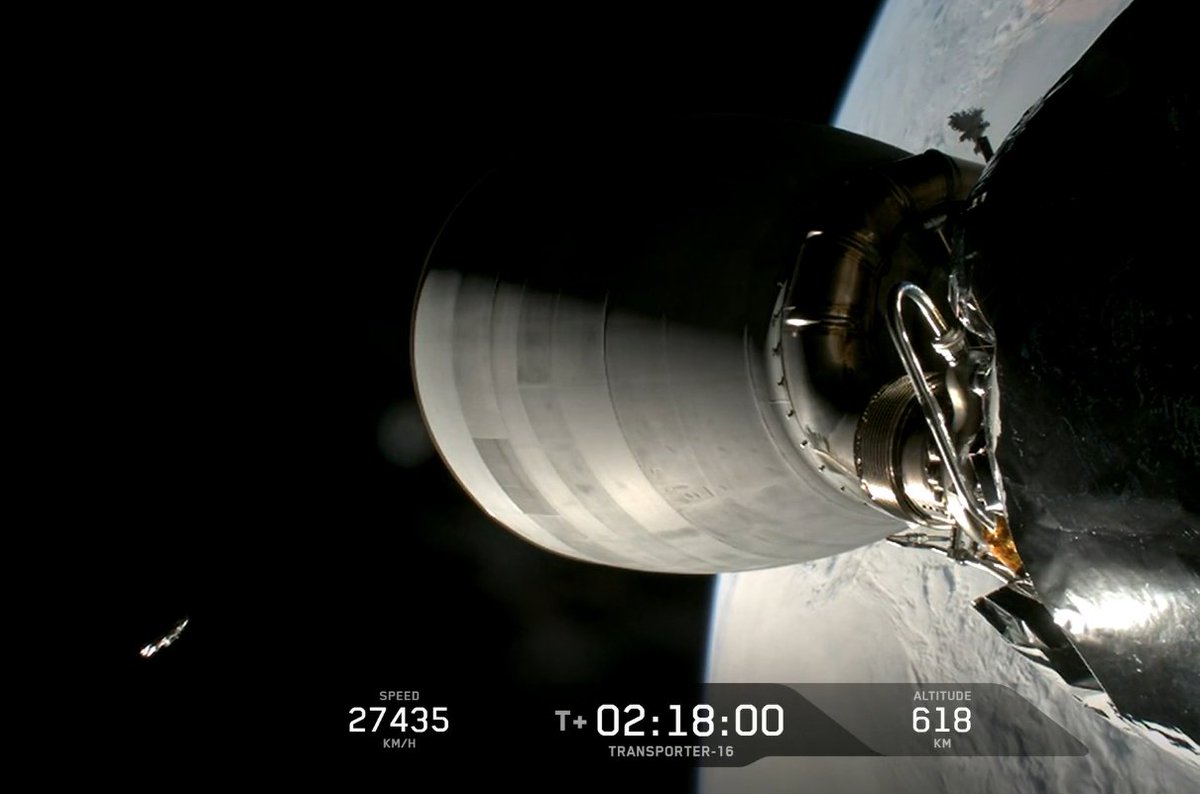
I'm excited to announce we have achieved our Tier 1 mission success criteria and have begun gathering a tremendous amount of data on how this brand new spacecraft performs. On March 30th, 13:17:08Z, the Gravitas spacecraft separated from the SpaceX Transporter-16 stack to begin its mission as one of the highest power free-flying satellites ever launched. Immediately after separation, the spacecraft autonomously: - Executed detumbling maneuvers - Established two-way communications with the ground (on our very first ground station pass) - Deployed its 20kW solar arrays - Slewed to a safe and stable attitude to await further ground commands These actions alone are a testament to the incredible work of our in-house engineering, software, and GNC teams to build a robust spacecraft. Since then, our operations team completed all initial system activations and checkouts, confirming the vehicle is in a power positive and thermally stable state with no major anomalies observed at this time. We completed this phase of the mission ahead of schedule. Next up we will be powering up and downlinking data for all payloads aboard the Gravitas spacecraft in support of our customers and partners while continuing to put the spacecraft through its paces. As we noted ahead of launch: The goal of this mission is to experiment and push our systems to the limit to inform future missions. I look forward to sharing more on our successes and challenges as the mission proceeds. Video of our satellite below; link to full T-16 webcast:

Neel Kunjur

89,923 Aufrufe • vor 4 Monaten

Airstrikes Destroy ISWAP Stronghold, Logistics Hub in Borno By Zagazola Makama The Air Component of Operation HADIN KAI has sustained its relentless air campaign against terrorist elements in the North-East, destroying a key terrorist enclave and logistics hub during a precision air interdiction mission in Borno State. Intelligence sources told Zagazola Makama that the operation was carried out at about 2:40 p.m. on Friday, July 10. The sources disclosed that the target was located at Yaganari, a notorious terrorist enclave within the Gezuwa general area, where insurgents had reportedly been regrouping and consolidating logistics for planned operations. According to the sources, the strike followed credible intelligence indicating increased terrorist activities and the massing of fighters at the location. “Persistent ISR missions were conducted to verify the intelligence before any engagement. The surveillance platform positively identified multiple terrorist structures, logistics hubs and visible movement of insurgents within the objective area,” one of the sources said. Following confirmation of the hostile activity, the aircraft acquired the designated targets and executed a series of precision attacks in successive passes, delivering onboard munitions with high accuracy. The coordinated strikes destroyed the identified terrorist structures, obliterated logistics facilities and neutralized several terrorists operating within the enclave. Military sources described the mission as another significant setback to terrorist operations in the North-East, noting that the destruction of logistics infrastructure would further degrade the insurgents’ ability to sustain attacks and coordinate movements. The latest operation emphasis on intelligence-driven precision strikes aimed at dismantling terrorist command centres, safe havens and supply networks while supporting ongoing ground operations by troops of Operation HADIN KAI. Security sources said battle damage assessment is ongoing to determine the full extent of the damage inflicted on the terrorist network, while air surveillance over the area has been intensified to exploit the success of the operation and prevent any attempt by surviving fighters to regroup. DEFENCE HQ NIGERIA Nigerian Army Nigerian Air Force

Zagazola

25,269 Aufrufe • vor 1 Monat

General "Raizin" Caine, details the precision extraction mission in Venezuela: "Over the course of the night, aircraft began launching from 20 different bases on land and sea across the Western Hemisphere. In total, more than 150 aircraft, bombers, fighters, intelligence, reconnaissance, surveillance, rotary wing, were in the air last night. "Our youngest crew member was 20 and our oldest crew member was 49. And there's simply no match for American military might. As the night began, the helicopters took off with the extraction force, which included law enforcement officers, and began their flight into Venezuela at 100 feet above the water. As they approached Venezuelan shores, the United States began layering different effects provided by SPACECOM, CYBERCOM, and other members of the inter-agency to create a pathway. "Overhead, those forces were protected from aircraft- were protected by aircraft from the United States Marines, the United States Navy, the United States Air Force, and the Air National Guard. The force included F-22s, F-35s, F-18s, EA-18s, E-2s, B-1 bombers, and other support aircraft, as well as numerous remotely piloted drones. As the force began to approach Caracas, the joint air component began dismantling and disabling the air defense systems in Venezuela, employing weapons to ensure the safe passage of the helicopters into the target area. "The goal of our air component is, was, and always will be to protect the helicopters and the ground force, and get them to the target, and get them home. As the force crossed the last point of high terrain where they'd been hiding in the clutter, we assessed that we had maintained totally the element of surprise. As the helicopter force ingressed towards the objective at low level, we arrived at Maduro's compound at 1:01 AM Eastern Standard Time, or 2:01 AM Caracas local time, and the apprehension force descended into Maduro's compound and moved with speed, precision, and discipline towards their objective, and isolated the area to ensure the safety and security of the ground force while apprehending the indicted persons. "On arrival into the target area, the helicopters came under fire and they replied with that fire with overwhelming force in self-defense. One of our aircraft was hit, but remained flyable, and as the President said earlier today, all of our aircraft came home. And that aircraft remained flyable during the rest of the mission. As the operation unfolded at the compound, our air and ground intelligence teams provided real-time updates to the ground force, ensuring those forces could safely navigate the complex environment without unnecessary risk. "The force remained protected by overhead tactical aviation. Maduro and his wife, both indicted, gave up and were taken into custody by the Department of Justice, assisted by our incredible US military with professionalism and precision, with, with no loss of US life. After securing the indicted persons, the force began to prep for departure."

Andrew Kolvet

76,491 Aufrufe • vor 7 Monaten

🇺🇸 Chairman of the Joint Chiefs of Staff of the United States Armed Forces, General Dan Caine: 📌 “This operation was so precise that it involved more than 150 aircraft launched across the Western Hemisphere (F-22 Raptors, F-35s, F/A-18 Super Hornets), operating in close coordination. They converged simultaneously, at the right time and place, for a single objective: to insert investigative and capture forces into the center of Caracas, while preserving the element of tactical surprise.” 📌 “Even a minor delay in any component of this well-synchronized machine could have placed the entire mission at risk, and failure is never an option for the United States joint force. Those who were in the skies over Caracas last night were prepared to sacrifice their lives for those operating on the ground and aboard the helicopters.” 📌 “At 22:46 Eastern Time, the President issued the order for the advance of United States military forces. He told us, ‘Good luck, and God be with you,’ and those words were transmitted to the entire joint force. Throughout the night, aircraft launched from 20 different land and sea bases across the Western Hemisphere.” 📌 “In total, more than 150 aircraft were airborne last night — including bombers, fighter jets, intelligence and surveillance platforms, and helicopters (rotary-wing aircraft, including the V-22 Osprey).” ▪️ The operation was named “Absolute Resolve.” It involved 150 aircraft. U.S. forces were already in position and had been preparing since early December. ▪️ “This operation, known as Operation ‘Absolute Resolve,’ was covert, precise, and executed during the darkest hours of January 2. It was the culmination of months of planning and rehearsals — an operation that, quite frankly, only the armed forces of the United States could conduct.” ▪️ “Our interagency work began months ago and was built on decades of experience integrating complex air, land, space, and maritime operations. Over the past two decades, our special operations forces have refined these capabilities to near perfection. This mission required synchronized cooperation across every element of our joint force — soldiers, sailors, aviators, Marines, and Space Force personnel — working alongside our intelligence community and law-enforcement partners in this unprecedented operation.” See the latest updates with us: Visioner

Visioner

19,227 Aufrufe • vor 7 Monaten

🇸🇪🇺🇦 Ukraine’s Lesson: Why the F 35 Is the Wrong Tool for a Real War Modern air power debates often obsess over the most advanced aircraft. Ukraine has learned something far more important: war is not about the most impressive jet. It is about which aircraft can keep flying when everything around it is under attack. That is why Ukraine is looking toward a future built around the Gripen E. Ukraine could have continued with F 16s and Mirage 2000s. They already have experience, infrastructure, and trained personnel. Instead, they are prioritizing a fighter designed from the ground up for survival in a hostile, missile saturated environment. That choice tells you everything you need to know. Gripen E represents a different logic. It is not built to depend on large, permanent air bases. It is built to disappear. A useful way to understand the problem with the F 35 is to imagine a luxury hospital operating room. It is filled with world class equipment and brilliant specialists. But it only works inside a clean, stable building with uninterrupted power, supply chains, and security. Move that same equipment into the middle of a disaster zone, and it quickly becomes fragile. The F 35 works best inside a controlled ecosystem: long runways, heavy maintenance, predictable logistics, and time on the ground between missions. In a real war, those conditions are exactly what the enemy targets first. Gripen E is closer to a battlefield field hospital. It is designed to operate with minimal support, from short and improvised runways, with fast turnaround and a small, mobile crew. It can land, refuel, rearm, and take off again before the enemy has time to react. And it does not need to return to the same place twice. That difference is decisive. When air bases are under constant surveillance and missile threat, survivability comes from dispersion and tempo. Gripen E can take off from unexpected locations, strike, land somewhere else entirely, and be ready again quickly. That makes it hard to track, hard to target, and hard to neutralize. This is not about generation labels. The F 35 is a fifth generation fighter. Gripen E is often described as generation 4.5, but it integrates key technologies normally associated with newer generations. More importantly, it is cheap enough to fly often and simple enough to keep in the air. Ukraine understands this because it has no choice. It has learned that air power is not about having the most advanced aircraft. It is about having aircraft that survive the first strike, the second strike, and the hundredth strike. That is why the lesson from Ukraine is uncomfortable but clear: the F 35 may be impressive, but in a real war, it is the wrong tool to rely on alone. Stay connected, Follow Gandalv Gandalv

Gandalv

201,322 Aufrufe • vor 6 Monaten

🚨🇷🇺 UKRAINE'S NIGHTMARE: RUSSIA BUILDS YAK-130M LIGHT FIGHTER TO HUNT UKRAINIAN AIR AND SEA DRONES Russia is turning the Yak-130M into a light fighter for two of the most urgent battlefield missions: hunting heavy UAVs and unmanned attack boats. During Vladimir Putin’s visit to the Irkutsk Aviation Plant, the prototype was shown with a new radar, modern avionics and guided air-to-air and air-to-surface weapons. 🔸 The BRLS-130R active electronically scanned array radar can reportedly detect aerial targets at up to 100 km, giving the aircraft its own search and targeting capability. 🔸 With a top speed of 960 km/h and good handling at low speeds, the Yak-130M can close on slow drones without the extreme speed mismatch faced by heavier fighters. Its two-seat cockpit allows one crew member to fly while the other manages sensors and weapons. 🔸 The aircraft is intended to destroy heavy UAVs in any weather, day or night. Putin also singled out unmanned surface vessels as a priority target, giving the jet a role in protecting naval bases, ports and coastal infrastructure. 🔸 Using a light fighter for these missions preserves the flight hours of Su-30SMs and other high-end aircraft. The Yak-130M does not need their range, speed or payload to intercept a slow drone, making it a more economical platform for routine patrols. 🔸 The aircraft can operate inside a wider air-defense network alongside ground radars, Pantsir and Tor systems, electronic warfare units and attack helicopters. 🔸 The first Yak-130M prototype flew in June 2026. Three aircraft are now undergoing trials, with deliveries planned after testing is completed in late 2028. Russia does not need a top-tier fighter to chase every slow target. A smaller jet with radar, missiles and a second crew member can handle the routine hunt while heavier aircraft remain available for harder missions. What should Russia prioritize: more Yak-130Ms, more helicopters or more ground-based air defenses?

NewRulesGeopolitics

24,477 Aufrufe • vor 15 Tagen

NATO has never encountered modern air defenses. Although the Russians cannot win a conventional war against NATO, the alliance would face significant difficulties in establishing air superiority over Ukraine. There is a reason why both sides have lost more than 100 aircraft over Ukrainian skies, with any flight above 300 feet resulting in a short lifespan of days or weeks before being shot down. From the widespread use of drones to anti-radiation missiles, these efforts have not been able to change this scenario, mainly due to the high number of SAMs on Ukrainian territory. EU aviation attempts to change this dynamic would result in catastrophic and unprecedented losses. NATO in Europe currently has around 1,500-1,700 fourth-generation or higher aircraft, while the Russians have slightly less than half that number, though with much lower production rates. However, Russia still possesses hundreds of air defense systems and a large production of interceptor missiles—capabilities that Europe lacks. In a scenario like Ukraine, stealth aircraft would be largely ineffective. The maturity level of the air defenses is such that they can detect and lock onto drones with signatures much smaller than any stealth aircraft. Another important factor is the significant advancement of radar technology in recent years. As of October last year, Israeli F-35 jets had been locked by Iranian ADs, and the same occurred in Yemen with an American F-35. There is no easy life for aircraft facing today's radar systems. Israel has employed tactics such as destroying radars and air defenses on the ground because they knew conducting operations against modern defense systems would be impossible. I often mention the Iraq case: Saddam had hundreds of radars and batteries but was completely disorganized. The French, British, and Russians all contributed to some degree of integration. The Iraqi radars were poorly positioned, with most of the SAMs being short-range. Iraq had few systems with range around 40 km and nothing beyond that operationally. This should have made coalition operations easier. However, it didn’t turn out that way. In the first Gulf War, 52 aircraft and 23 helicopters were lost. In the second Gulf War, even with decayed and fewer systems, the coalition lost another 24 aircraft and 129 helicopters. Many of these losses were recorded as accidents, but I categorize them all as losses within a war theater. Interestingly, during the second Iraq War, the Iraqi Air Force was not even used. It was likely destroyed in the desert through American intelligence operations involving bribed Iraqi officers. The fact is, more than 150 coalition aircraft were lost without Iraq having an active air force. Another point is that Iraqi-HARM missiles had a success rate below 30%, causing some damage or destruction to Iraqi radars and batteries. In Ukraine, although exact figures are not released, this success rate is believed to be much lower due to new tactics by air defense operators and mobile coverage systems capable of intercepting these missiles, capabilities that did not exist in Iraq. It’s worth noting that the American military staff was highly trained and still faced difficulties due to the complexity of large-scale operations. The European staff has far less experience than the Americans, which would result in even greater challenges in establishing air superiority over Ukraine. It is always important to remember that Russia is not Iraq, and NATO has never faced modern air defense systems within its doctrinal framework. If NATO commanders in Europe consider taking such a risky step, there are no signs that the Americans will support it. Any attempt to establish a No-Fly Zone over Ukraine would be an extremely difficult mission, likely provoking Russian attacks on radars and bases in European countries, thereby escalating the conflict into something much larger support 👉🏻 PayPal: [email protected] pix: [email protected]

Patricia Marins

131,547 Aufrufe • vor 9 Monaten

Elon Musk just spent seventeen billion dollars to make every cell tower on Earth a relic. Musk: “It will allow SpaceX to deliver high bandwidth connectivity directly from the satellites to the phones.” Not through towers. Not through cables. Not through any infrastructure on the ground. Directly from orbit to the phone in your pocket. For over a century, connectivity followed the same blueprint. Build a tower. Run a cable. Expand the network one piece of ground at a time. Coverage went where the money was. Where the population density justified the investment. Everywhere else got silence. Four billion people still don’t have reliable internet. Not because the technology doesn’t exist. Because no one could justify building a tower where they live. Connectivity was never a technology problem. It was a geography problem disguised as one. Musk: “The phones that are able to use the spectrum that was acquired probably start shipping in around two years.” Two years. Then the phone in your hand connects straight to space. No tower required. No carrier infrastructure between you and the signal. The entire telecom industry was built on one assumption. That connectivity requires ground infrastructure. Every carrier. Every contract. Every coverage map. All products of that assumption. Starlink just bypassed it from orbit. From orbit, every point on Earth is equidistant. The word “remote” only exists because connectivity was built from the ground up. From space, there is no remote. There is no coverage gap. There is no place on Earth harder to reach than any other. The ground decides who gets connected based on where they are. The sky doesn’t know the difference. Human potential was always distributed evenly across the planet. Access to information never was. The gap between those two facts is the greatest waste in human history. We spent a century deciding who deserved access to information based on where they happened to be born. Musk just made that question obsolete from 550 kilometers above the answer.

Dustin

642,312 Aufrufe • vor 23 Tagen

🚨Air accident in California: #B_52 bomber crashes minutes after takeoff Edwards Air Force Base in #California announced on Monday that a U.S. B-52 Stratofortress bomber crashed shortly after takeoff, in an incident whose causes and circumstances are still under investigation. The base said in a statement posted on its Facebook page that the US Air Force plane crashed after taking off from Edwards Airport at 11:20 a.m. local time, adding that emergency teams rushed immediately to the scene to deal with the situation. The statement added that investigations are still underway to determine the causes of the accident, without disclosing further details regarding the circumstances that led to the plane crash. The fate of the crew remains unknown. So far, US authorities have not announced whether the incident resulted in any injuries or casualties, while local media are seeking additional information from the military base command. Edwards Air Force Base is located in the Mojave Desert in California, about 160 kilometers north of Los Angeles, and is one of the most important military air testing centers in the United States. Edwards Air Force Base is used by the U.S. Air Force and NASA to conduct experiments and tests on new aircraft and prototypes under development, making it a strategic hub for advanced aerospace programs. What is a B-52 Stratofortress bomber? The B-52 Stratofortress bomber is one of the most famous military aircraft in the world. It first entered service during the 1950s and remains a key component of the US Air Force to this day. The aircraft was designed by Boeing and is capable of performing long-range missions and carrying conventional and nuclear weapons over long distances. She also participated in many of the military operations and conflicts fought by the United States over the decades, from the Vietnam War to the war on Iran. The bomber typically carries a crew of five and is known for its ability to remain in service for extended periods, thanks to the continuous upgrades it has undergone over the years.

⚡️🌎 World News 🌐⚡️

26,226 Aufrufe • vor 1 Monat