正在加载视频...

视频加载失败

Slow-motion visualization of turbulence aortic stenosis severity escalates from 0% to 70%! ✨ Crafted by Cardiovascular-Imaging Toronto, virtually induced in the thoracic segment, reveals dynamic flow changes. #MedicalInnovation #4DFlowMRI #Hemodynamics
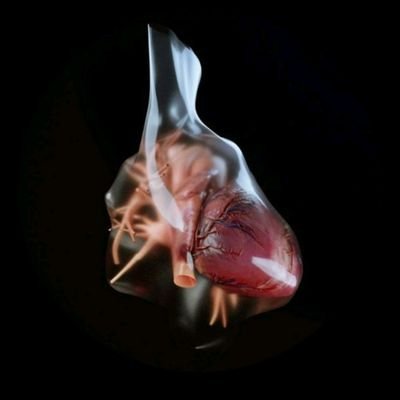
14,137 次观看 • 2 个月前 •via X (Twitter)

0 条评论

暂无评论

原始帖子的评论将显示在这里

相关视频

🫀 Detecting Diffuse Non-Calcified Coronary Atherosclerosis with Photon Counting CT: Seeing What Conventional CT Often Misses In coronary CTA, the hardest disease to detect is not focal stenosis. It’s diffuse, non-calcified atherosclerosis. No obvious narrowing. No calcium. Just subtle, continuous vessel wall involvement. This is where Photon-Counting CT (PCCT) changes the rules. 🧠 Why it’s difficult Diffuse non-calcified disease presents as: ✔️ Mild, long-segment wall thickening ✔️ Subtle attenuation differences vs lumen ✔️ Positive remodeling without clear stenosis With conventional CT: ✔️ Limited spatial resolution blurs the wall ✔️ Low contrast resolution hides soft plaque ✔️ Motion and noise mask continuity 👉 Result: disease is underestimated or missed ⚡ What PCCT enables ✔️ Ultra-high spatial resolution Clear visualization of the vessel wall along its entire course Detection of subtle, diffuse thickening ✔️ High iodine concentration (400 mg I/mL) Strong intraluminal signal Higher contrast between lumen and vessel wall Diffuse disease becomes visible as a pattern, not noise ✔️ High temporal resolution Reduced motion blur Stable assessment of long coronary segments ✔️ Spectral capability Cleaner iodine–tissue separation Additional confidence in identifying non-calcified plaque 🎯 The shift We move from: Detecting focal stenosis To: Recognizing diffuse atherosclerotic burden From: “Is there a blockage?” To: “How diseased is the artery overall?” Diffuse coronary disease is real. It has always been there. Now we can see it. That’s the power of Photon-Counting CT in coronary atherosclerosis. ⚡🫀 #PhotonCountingCT #PCCT #CoronaryCTA #Atherosclerosis #NonCalcifiedPlaque #PreventiveCardiology #CardiacCT #RadiologyInnovation #yesCCT

Dr. Filippo Cademartiri

11,190 次观看 • 4 个月前

🫀 Why Photon-Counting CT Is the New Standard for Non-Invasive Stent Imaging Because “Uninterpretable” Should No Longer Be Acceptable For years, coronary stent evaluation by CTA was often dismissed: “Too much blooming.” “Too much metal artifact.” “Just send the patient to invasive angiography.” That paradigm belongs to the past. Photon-Counting CT (PCCT) is changing non-invasive stent imaging from a limitation into a true diagnostic tool. 🧠 Why conventional CT struggles With standard EID-CT: - Metallic struts create significant blooming - Partial volume effects obscure the intrastent lumen - Small stents become nearly unreadable - Motion artifacts worsen proximal and ostial evaluation The result? 👉 Many stents are labeled “non-diagnostic” 👉 Patients are sent to unnecessary invasive angiography ⚡ Why PCCT changes everything -Ultra-high spatial resolution - Sharper visualization of stent struts - Clear assessment of the true intrastent lumen Reduced blooming artifacts - Metal appears closer to reality - Less artificial lumen narrowing High temporal resolution - Better imaging of proximal, ostial, and fast-moving segments - Reduced motion blur around the stent High iodine concentration contrast (400 mg I/mL) - Strong intraluminal enhancement - Better contrast between lumen and metal - Spectral capability Additional confidence separating iodine signal from stent artifact 🎯 The clinical shift From: “Can we read this stent?” To: “We can characterize it with confidence.” - Restenosis - Stent patency - Aneurysm repair - Complex proximal LAD interventions - Left main and bifurcation stents >>>> all become more reliably assessable. From invasive default to non-invasive confidence and convenience. From metallic blur to diagnostic clarity. That’s why PCCT is becoming the new standard for coronary stent imaging. ⚡🫀 #PhotonCountingCT #PCCT #CoronaryCTA #StentImaging #CardiacCT #CoronaryStent #UltraHighResolution #RadiologyInnovation #yesCCT

Dr. Filippo Cademartiri

19,835 次观看 • 4 个月前

PHOTON COUNTING CT is NOT a better CT It is a NEW imaging modality Photon Counting CT (PCCT) represents a transformative leap in medical imaging, not only as a molecular imaging modality but also as a technology offering ultra-high resolution and functional imaging capabilities. It is fundamentally more than just an enhanced version of traditional CT—PCCT introduces new ways of seeing and understanding the human body, providing critical insights at the molecular, structural, and functional levels. This positions PCCT as a unique imaging modality that requires a fresh approach to technical implementation, operational workflows, and financial planning. Despite the larger upfront investment, PCCT’s ability to drastically reduce downstream healthcare costs makes it a highly valuable investment in the long run. 1. Technical Innovations • Molecular Imaging and Energy Discrimination: Unlike traditional CT, which simply measures the total absorbed energy, PCCT counts individual X-ray photons and differentiates their energy levels. This allows for precise molecular imaging, revealing the composition of tissues and materials at a biochemical level. By distinguishing between different tissue types and contrast agents, PCCT opens up new diagnostic possibilities, such as identifying molecular biomarkers in tumors or distinguishing between stable and unstable plaque in coronary arteries. This capability shifts the focus of imaging from purely anatomical to both anatomical and molecular, offering more comprehensive diagnostic information. • Ultra-High Spatial Resolution: PCCT features significantly smaller detector elements compared to conventional CT scanners, allowing for ultra-high resolution imaging. This means clinicians can visualize fine structures such as microcalcifications in arteries, small lesions in soft tissues, or the intricate architecture of bones. This level of detail was previously unattainable with traditional CT. When combined with molecular imaging, this ultra-high resolution allows for the precise localization and characterization of disease at very early stages, which is essential for early diagnosis and intervention. • Functional Imaging Capabilities: PCCT also excels as a functional imaging modality. By capturing energy-resolved information, PCCT can provide insights into tissue functionality and dynamic physiological processes. For instance, it can detect changes in blood flow, tissue perfusion, and oxygenation without the need for additional contrast agents or scans. This functionality allows for real-time assessment of physiological processes, making it particularly valuable in cardiology, oncology, and neurology for evaluating organ function and monitoring disease progression. • Reduced Noise and Artifact Reduction: Photon-counting technology dramatically reduces electronic noise and imaging artifacts, such as beam hardening, resulting in clearer and more accurate images. The ability to deliver ultra-high resolution images with minimal artifacts improves diagnostic accuracy, reducing the need for repeat scans and ensuring that even subtle abnormalities are detected. 2. Operational Considerations • New Workflow for Molecular, High-Resolution, and Functional Imaging: The integration of molecular, ultra-high resolution, and functional imaging into routine clinical workflows introduces complexity that requires adaptation. Radiologists and technicians need specialized training to interpret and analyze multi-energy datasets that include molecular and functional information. PCCT produces a vast amount of detailed data, requiring clinicians to adopt new imaging protocols and refine their diagnostic approaches to fully leverage its capabilities. • Post-Processing and Data Management: PCCT generates richer, more complex datasets, which necessitates advanced post-processing tools and data management systems. Existing PACS and imaging software may not be equipped to handle such large volumes of data or to process functional and molecular information effectively. This means healthcare institutions must invest in robust IT infrastructure, including upgraded software and storage solutions, as well as provide additional training for staff on new imaging analysis techniques. • Revised Clinical Protocols: The molecular, functional, and ultra-high resolution imaging capabilities of PCCT will likely prompt changes in clinical protocols. For instance, the need for contrast agents may be reduced, simplifying patient preparation and decreasing the risk of adverse reactions. Additionally, the ability to monitor physiological functions in real-time through functional imaging could lead to more dynamic diagnostic procedures, such as assessing the effectiveness of interventions or treatments in real-time. 3. Financial Impact • Higher Initial Investment: PCCT systems are more expensive than traditional CT scanners due to their advanced technology, which includes photon-counting detectors and the computational power required for high-resolution, molecular, and functional imaging. While this upfront cost is significant, it is crucial to view it in the broader context of the downstream benefits and cost reductions that PCCT offers. • Downstream Cost Reductions: Although the initial capital investment is higher, PCCT’s ability to combine molecular, functional, and ultra-high resolution imaging leads to substantial reductions in downstream healthcare costs. Its superior diagnostic accuracy minimizes the need for follow-up tests, repeat scans, or invasive diagnostic procedures, such as diagnostic coronary angiographies. For example, in cardiology, PCCT can precisely differentiate between types of coronary plaque, reducing the need for invasive procedures to assess risk. • Lower Overall Healthcare Expenditures: By enabling earlier, more accurate diagnoses, PCCT can reduce the overall cost of patient care. Early detection of disease, particularly through its molecular and functional imaging capabilities, allows for more targeted treatments, potentially preventing the need for more aggressive and expensive interventions down the line. For instance, early-stage tumor detection via molecular imaging could lead to less invasive treatments, reducing hospital stays and improving patient outcomes, ultimately driving down healthcare costs. • Increased ROI Through Enhanced Patient Outcomes: Over time, the combination of molecular, functional, and ultra-high resolution imaging enhances diagnostic precision, which translates into better patient outcomes. Improved diagnostic accuracy reduces the incidence of unnecessary procedures, minimizes treatment delays, and results in more personalized and effective care. This leads to increased patient satisfaction, better healthcare outcomes, and greater patient throughput—all factors that improve the institution’s return on investment (ROI). • Competitive Advantage and New Revenue Streams: By adopting PCCT, healthcare institutions position themselves at the forefront of advanced imaging technologies. The ability to offer molecular, functional, and ultra-high resolution imaging creates a competitive advantage, attracting more complex and high-value cases. This can boost the institution’s reputation for excellence in diagnostics, leading to increased referrals, new patient populations, and expanded revenue opportunities. Summary Photon Counting CT (PCCT) is not just an evolution of existing CT technology—it is a molecular, ultra-high resolution, and functional imaging modality that fundamentally transforms the diagnostic landscape. Its ability to capture detailed molecular data, visualize minute anatomical structures with ultra-high resolution, and provide real-time functional imaging opens new possibilities for earlier and more precise diagnoses. While the financial investment in PCCT is larger, the reduction in downstream healthcare costs through improved diagnostic accuracy, fewer unnecessary interventions, and earlier disease detection far outweighs the initial expense. For institutions committed to advancing patient care and improving long-term financial outcomes, PCCT is an essential investment in the future of medical imaging. The video attached shows a patient accessing the Hospital for ACS. PCCT can provide ALL the imaging information of the concurrent imaging modalities (CXR, CAG, Echo, CMR) that you see around it... that's a lot! #PhotonCountingCT #MolecularImaging #UltraHighResolution #FunctionalImaging #FutureOfImaging #AdvancedMedicalImaging #EarlyDiseaseDetection #InnovativeCT #CuttingEdgeHealthcare #PrecisionDiagnostics #HealthcareInnovation #MedicalTechnology #CostEffectiveImaging #NextGenCT #PatientCareRevolution

Dr. Filippo Cademartiri

11,849 次观看 • 1 年前

🧱 #Live3D #Live2D #HandTracking 🧱 I spent some time refining the way I use Warp Deformers to create lateral physics-based swinging motion in Live2D. With a new production concept, I tried to achieve the highest possible level of mathematical precision. At the core are two fundamental swinging structures, which I can mix in different proportions to create different qualities of motion. The first is parallel swinging. Both sides of the Warp Deformer remain perfectly parallel throughout the motion, making it look somewhat like a sheet of paper or a tassel. The second is bending swinging. The angle between the two sides of the Warp Deformer changes as it moves, making it look more like a flexible tube or a tail. (0:12)Interestingly, when I layer the first and second structures together, the bottom forms an X-shaped pattern as it swings. It looks a little like a spine or some kind of mechanical structure. (0:23)The third structure is an equal blend of the first and second. Its characteristics are much more neutral, combining the qualities of both. (0:35)The fourth and fifth structures are created by smoothly blending the first structure into the center of the second, and the second into the center of the first, respectively. This makes them appear softer and more flexible, somewhat like a piece of fabric. (0:28)Interestingly, when I blend the fourth and fifth structures equally, the result is exactly identical to the third structure. This also demonstrates that, despite their apparent complexity, the two are actually perfect mirror images of each other. Every physics-based motion shown here uses a two-segment pendulum structure, with a swinging range of ±90°. In theory, when curled to its limit, it can bend upward into a perfect semicircle. To most people, this may look as boring as a brick. But to me, this is exactly where the romance of Live2D physics lies. Does anyone else feel the same way?

📐Hephaestus📏Live2D匠人魂

19,362 次观看 • 1 个月前

just copy the prompt below and paste on Utopai the PAI agent turns it into script, create storyline, generate clips and edit all by itself prompt: High-energy 3D CGI animated comedy short, Pixar quality, ultra-detailed character animation, exaggerated physics, vibrant colors, warm orange kitchen lighting with glowing flames, bright daylight city streets, dynamic camera work with fast pans, tilts and dramatic angles, subtle motion blur on fast movements, comedic timing and expressions, upbeat energetic music with whooshes and impacts. **Main Character Casting Descriptions:** - **Pizza Chef - Jack (main actor in kitchen)**: Early 50s energetic male, messy silver hair, large prominent nose, thick expressive eyebrows, sharp intense eyes, fair skin with slight blush from heat. Wears white double-breasted chef jacket, wear white chef hat with text “el.cine” in front, gree neckerchief. Highly animated face — furrowed brows, focused squint, dramatic determination turning to exhaustion. - **Pizza Delivery Guy - Tom (main actor on street/scooter)**: Late teens/early 20s lanky male, long blue hair, huge expressive brown eyes, long nose, very animated facial expressions (surprise, determination, panic, relief). Wears white helmet with spinning yellow propeller on to, light blue leather with text el.cine at back, white pants, sneakers. Fast, exaggerated movements. - **Customer (final shot)**: Large, middle-aged stern woman, brown hair, heavy eyebrows, downturned mouth, wearing beige suit jacket, white shirt, dark trousers. Standing in doorway with impatient/annoyed expression. SHOT 1 (0:00–0:02) – Cinematic fast motion, dramatic low angle with subtle Dutch tilt and intense push-in: fast push from kitchen wide shot to close up on the Pizza Chef’s face in the bustling kitchen. He grips the large pepperoni pizza on a metal tray with raw, over-the-top determination — brows dramatically furrowed into deep angry V-shapes, eyes sharply narrowed with a fierce glint and slight crazy wideness at the edges, teeth gritted in heroic effort, dramatic sweat beads flying off his forehead. Bright orange flames explode upward from the pizza in the foreground with massive sparks and heat waves licking toward his face. Dynamic camera orbits left while pushing in for maximum tension, subtle motion blur on the flames. Background shows chaotic kitchen with stacked pizza boxes, glowing ovens, and flying embers. SHOT 2 (0:02–0:04) – Medium close-up, eye-level: Chef lifts the flaming pizza higher with both hands, leans forward, eyes wide with concentration as flames lick upward toward his face. SHOT 3 (0:04–0:06) – Medium shot, eye-level, dynamic pan: Chef dramatically spins the flaming pizza on the peel in a huge fiery arc above his head, left hand on forehead in dramatic pose, right arm extended. Flames trail in a perfect circle. SHOT 4 (0:06–0:08) – Low-angle dramatic shot looking up: Chef tosses the flaming pizza high into the air with both hands. The camera follows the spinning fiery pizza as it arcs toward the ceiling tiles. SHOT 5 (0:08–0:10) – Extreme low-angle on ceiling: The flaming pizza spins in a perfect circle of fire against the tiled ceiling, sparks flying. SHOT 6 (0:10–0:12) – Wide dynamic shot, low angle: Chef does a full acrobatic flip in mid-air, upside-down, catching the flaming pizza behind his back while still in the air. SHOT 7 (0:12–0:14) – Wide action shot, eye-level: Chef lands in a wide stance, spins the flaming pizza on one hand like a basketball, then dramatically throws it forward toward the open doorway with full body power, flames trailing, quick push in and follow the close up of the flying pizza in slow motion SHOT 8 (0:14–0:16) – Medium shot on street, eye-level: Pizza Delivery Guy stands outside the shop holding an empty pizza box, looking down at his watch with bored expression, propeller on helmet slowly spinning. SHOT 9 (0:16–0:18) – Medium close-up, eye-level: Chef (partially visible inside doorway) throws the flaming pepperoni pizza directly toward the Delivery Guy. Delivery Guy looks up with wide-eyed shock. SHOT 10 (0:18–0:20) – Medium shot, eye-level: slow motion, close up of the flaming pizza flies straight into the open pizza box held by the Delivery Guy. Flames whoosh past his face as he catches it perfectly. SHOT 11 (0:20–0:22) – Close-up on Delivery Guy’s face: His eyes go extremely wide in surprise, mouth open, propeller spinning faster, and talk excitedly SHOT 12 (0:22–0:24) – Extreme close-up on smartphone screen held in hand: Red digital timer clearly shows “00:30” counting down. SHOT 13 (0:24–0:26) – Close-up on Delivery Guy’s face: Expression changes from shock to intense determination — eyebrows lowered, mouth set in a smirk, eyes focused. SHOT 14 (0:26–0:50 end) – Wide tracking shot from behind, fast-paced: Delivery Guy jumps on his purple scooter and speeds away down the sunny city street, pizza box secured on the back. Camera follows as he weaves between cars, jumps over red-and-white construction barriers, rides up stairs, does rooftop jumps, and finally stops smoothly in front of a house. He turns with a confident smile as the stern Customer opens the door and stares at him and says with an angry tone “you are late” cut to Tom smiling awkwardly and scratch the back of his head, he takes the pizza from his back and suddenly he slide and fall down on the ground Cinematic 3D CGI animation style, highly exaggerated comedic action, perfect continuity of the flaming pizza and characters, dynamic camera movements exactly matching the original video’s pacing, framing, and energetic tone. Photorealistic 3D render quality, 1080p, 24fps.

el.cine

12,990 次观看 • 3 个月前

Top-Tier Journal Confirms Mechanism of COVID-19 Vaccine-Induced Heart Damage The conversation around vaccines is shifting, with HHS emphasizing informed consent over mandates. This new approach is having a direct market impact, with recent reports showing Pfizer and Moderna COVID-19 vaccine sales tumbling. The reason? The public is increasingly examining the science. A landmark study published in Circulation, the flagship journal of the American Heart Association and a top-tier cardiovascular publication, has delivered a critical finding. The research identifies the precise mechanism behind myocarditis and pericarditis following mRNA vaccination. Here is the breakdown in plain English: The study reveals that in certain susceptible individuals, the immune system's T cells—trained by the vaccine to attack the SARS-CoV-2 spike protein—also mistakenly attack similar-looking proteins in heart tissue. This phenomenon, known as "molecular mimicry," means the body's defenses cannot reliably distinguish the virus from the heart itself, leading to an autoimmune attack on the cardiac muscle. Crucially, the study found this specific, expanded immune response in patients with post-vaccine myopericarditis, but not in those who had developed myocarditis from a natural COVID-19 infection. The implications are profound. This is no longer a debate based on epidemiological signals or VAERS data. A leading mainstream medical journal has published a study pinpointing a direct autoimmune mechanism for vaccine-induced heart damage that is distinct from the damage caused by the virus. With this level of evidence now in the public domain, the call for a science-driven reassessment of vaccine policies has never been stronger. The argument has moved from the fringe to the forefront of established medical literature. The question now is: What will it take for health authorities to officially acknowledge these findings and adjust their recommendations accordingly?

Camus

12,300 次观看 • 9 个月前

POV: The kiss that broke the internet, recreated with AI on the tip of Tokyo Tower. A viral cinematic moment, reimagined with seamless camera movement, perfect character consistency, and a breathtaking skyline that never leaves the frame. Every shot stays locked to the very top of Tokyo Tower for a romance that feels straight out of a blockbuster. Made with GPT Image 2 and Seedance on Pollo AI for the Peak Moment Challenge. Prompt: PART 1 • 0:00–0:15 — THE REVEAL & THE KISS (9:16) 0:00–0:03 — Arrival Continuous crane arc already in motion around the couple on the tip of Tokyo Tower's antenna mast. Only one Tokyo Tower visible. Wind moves Jessy's hair and trench dress. He wears the yellow kawaii mascot helmet. Jessy: "You're seriously wearing that up here?" Man: "Only for you." 0:03–0:06 — Reveal Camera continues the same arc. He removes the helmet, revealing tousled brown hair and blue eyes. 0:06–0:09 — Pull Continuous crane widens. He pulls Jessy close by the waist, she grabs his jacket collar. The Polloai flag becomes visible above. 0:09–0:12 — Kiss Camera keeps pulling back with a subtle Dutch roll. They kiss on the tip of Tokyo Tower as the grade transitions from hazy news footage to warm cinematic. 0:12–0:15 — Sway Wide shot. They slowly turn while kissing. Tokyo Tower and the Polloai flag remain clearly visible. PART 2 • 0:15–0:25 — THE SPIN & THE VIEW (9:16) Continuity: First frame must exactly match the last frame of Part 1. 0:15–0:18 — Spin Continue the identical crane arc and orbit. He spins Jessy once on the tower tip. Dress, jewelry and blue-streaked hair flow naturally. Jessy: "Don't drop me from up here!" 0:18–0:21 — Second Kiss Orbit tightens into a close two-shot. They share another soft kiss, foreheads touching between kisses. 0:21–0:23 — View Camera cranes upward and pulls back. They face the glowing Tokyo skyline together with the Polloai flag above. 0:23–0:25 — Hold Slow push-in. They remain embracing on the tip of Tokyo Tower until fade to black. Strict: Maintain the exact reference camera movement throughout. All actions happen only on the tip of Tokyo Tower, with only one Tokyo Tower visible in every shot. #PolloAI #PolloPeakMoment

Jessica Collins

35,777 次观看 • 1 个月前

What Cymatics Reveals About the Structure of Reality Do you think the universe is random, or does it follow principles that remain largely invisible to us? Cymatics offers a fascinating way to explore that question. By making sound and vibration visible, it demonstrates how frequency can organize matter into geometric patterns of remarkable complexity. When sound waves pass through water, sand, or other materials, order emerges from movement, producing forms that often resemble patterns found throughout nature. The implications extend beyond the experiment itself. Cymatics reveals that vibration is capable of shaping matter into organized structures through precise relationships governed by frequency. As the frequency changes, the geometry changes with it, suggesting a direct connection between energy and form. This raises a deeper question about the nature of the cosmos. If vibration can generate geometry in a laboratory, what role might vibration play in the formation of larger structures throughout nature and the universe? Similar patterns appear in crystals, flowers, biological systems, and even large scale cosmic formations. The repetition of geometry across vastly different scales points toward organizing principles that may operate throughout reality. The deeper one investigates mathematics, sound, geometry, and nature, the more they appear interconnected. Cymatics offers a glimpse into a universe where form emerges from frequency and where structure may arise from relationships embedded within the fabric of existence itself. Perhaps what we call reality is, in part, the visible expression of patterns generated by processes that begin beyond the limits of ordinary perception. ✨🙌🏾💫 © Robert Edward Grant

🧬Maxpein🧬

12,980 次观看 • 2 个月前

She thought she was just a warrior… until the Phoenix chose her. 🔥🦅 Every legend begins with a single spark. Created with GPT image and Seedance 2.0 @thankyouai_hq PROMPT: Section 1 — 0:00 to 0:12 (12 seconds) Scene: The Awakening of the Phoenix Power Visual Prompt: A dark ancient forest at night, surrounded by giant trees and glowing magical particles. A young female warrior named Aria (20s, long dark hair, silver armor, mysterious glowing mark on her hand) walks into a forgotten temple covered with ancient symbols. In the center lies a massive golden phoenix statue with cracks glowing from within. As Aria touches the statue, a wave of golden fire energy surrounds her. Camera Setting: Opening shot: Wide cinematic shot of a misty forest, slow camera push-in. Medium tracking shot following Aria as she enters the temple. Close-up shot of her hand touching the phoenix symbol. Slow-motion 360° camera rotation as flames surround her. Cinematic fantasy lighting, shallow depth of field, 4K movie quality. Dialogue: Aria (whispering): “Why does this ancient fire… feel like it knows me?” Ancient Phoenix Voice (deep echo): “Because my flame has always lived within your blood.” Section 2 — 0:12 to 0:27 (15 seconds) Scene: The Daughter of the Phoenix Rises Visual Prompt: The temple begins shaking as Aria transforms. Golden flames flow around her body without burning her. Her eyes glow like fire, and a giant phoenix spirit appears behind her. Outside, dark creatures approach the temple. Aria steps forward, raising her hand and creating a powerful wall of magical fire to protect the kingdom. Camera Setting: Low-angle hero shot as Aria stands surrounded by flames. Close-up on her glowing eyes and determined expression. Wide aerial shot revealing the giant phoenix spirit behind her. Dynamic slow-motion shot as she releases a wave of fire toward enemies. Epic fantasy cinematic style, dramatic lighting, realistic VFX, high-detail textures. Dialogue: Dark Creature (roaring): “You are only a human. You cannot control the phoenix flame.” Aria (confidently): “I am not controlling the flame… I am its beginning.” Phoenix Voice: “Rise, my daughter. Let the world remember the fire of the phoenix.” Ending Shot: Aria stands on a cliff at sunrise, golden flames dancing around her as the phoenix flies above the kingdom. Text on screen: “The legend of the Phoenix Blood has begun…”

Natalia

38,633 次观看 • 1 个月前

MUDANG: Two Hearts | Details Official Trailer ▶️ ▪️Coming to PS5, Xbox and PC in 2026 ▪️Narrative-driven, third-person action adventure that blends "cinematic storytelling with immersive stealth and dynamic combat" ▪️Takes place on a 'volatile' Korean peninsula ▪️Players take the role of two characters, a K-Pop idol named GAVI who is living under constant surveillance, and Ji Jeongtae, an elite North Korean special forces operative fighting through enemy lines "in pursuit of the truth" ▪️Their paths eventually merge into a single, unsettling truth ▪️Built through "state of the art" performance capture pipeline, integrates fluid motion-matched animations, open ended level design, dynamic spatial audio ▪️Combat flexibility lets players choose stealth, CQC (close quarters combat) or all-our gunplay at any moment ▪️"Unmatched level of realism" as many tactics the player will use are "inspired by strategies used in real Korean Special Forces missions, motion captured movements, etc ▪️Open-ended level design for experimentation, multiple routes and vantage points where you can hide in the shadows, hang from pipes, slip through vents, climb buildings, or destroy parts of the environment to set up ambushes ▪️Environmental takedowns, wide range of CQC moves (lethal and nonlethal), gadgets like goggles, EMPs, grenades, lures, and mines, and a "deep arsenal" of firearms ▪️Enemy AI is built "from the ground up" with player versatility in mind and "dynamically" adapts to your actions in real time like listening for footsteps, investigating disturbances, flanking and outmanuevering, etc ▪️Enemies have access to the same gadgets, weapons and CQC techniques as you; heavy infantry push forward with body armor and heavy firepower, saboteurs lurk in the shadows waiting to catch you off guard, and grenadiers bombard your position to force you into the open ▪️There are "formidable" bosses with distinct powers and abilities ▪️Cutscenes carefully crafted for "profound immersion", no cuts, no loading screens, seamless flow between story and gameplay #MudangTwoHearts #XboxShowcase

Shinobi602

238,505 次观看 • 1 年前

🚨Why Greek DNA remained unchanged according to genetic science.🇬🇷 (Complete post with sources) 🔴Why Roman occupation introduced only minimal changes to Greek heritage. 🔴How Byzantine policies and resettlements helped sustain Greek identity. 🔴Why Ottoman influence left only a light genetic footprint. 🔴A rare and impressive genetic mutation found in Crete. 1. 🧬 Genetic Studies by Iosif Lazaridis Genetic Continuity to Modern Greeks The 2017 study led by Dr. Iosif Lazaridis analyzed ancient DNA from Minoan and Mycenaean remains. Findings revealed that both civilizations derived 62–86% of their ancestry from Neolithic Anatolian farmers. Additionally, 9–17% of their genetic makeup traced back to populations from the Caucasus or Iran. Notably, Mycenaeans possessed 4–16% ancestry from northern Eurasian steppe populations, a component absent in Minoans. Further research confirmed that modern Greeks share approximately 70–80% of their DNA with Mycenaeans, underscoring a strong genetic continuity from the Bronze Age to present-day populations. While subsequent historical periods introduced additional genetic influences, the primary genetic signature remains rooted in Mycenaean ancestry. A comprehensive genome-wide study of 102 ancient individuals from Crete, mainland Greece, and the Aegean Islands revealed high levels of endogamy (marriage within close kin) during the Bronze Age. This practice, unprecedented in the global ancient DNA record, suggests tightly knit communities with limited external gene flow. Source : 1. Genetic origins of the Minoans and Mycenaeans 🚨More sources according to the video : 2. Ancient DNA reveals admixture history and endogamy in the prehistoric Aegean 3. A genetic probe into the ancient and medieval history of Southern Europe and West Asia 4. Genetics of the peloponnesean populations and the theory of extinction of the medieval peloponnesean Greeks 5. The Greeks in the West: genetic signatures of the Hellenic colonisation in southern Italy and Sicily 6. A Genetic History of the Near East from an aDNA Time Course Sampling Eight Points in the Past 4,000 Years 7. The R19X mutation in the APOC3 gene has been identified in a specific population in Crete, Greece, particularly among residents of the mountainous villages of Anogia and the surrounding Mylopotamos area. This variant is associated with favorable lipid profiles, including lower triglyceride levels and higher high-density lipoprotein (HDL) cholesterol levels, which are protective against cardiovascular disease. In the general European population, the R19X variant is extremely rare, with a frequency of less than 0.05%. However, in the Cretan MANOLIS cohort, the frequency is significantly higher, around 1.9% to 4%, depending on the study. This elevated prevalence is likely due to genetic drift and the relative isolation of the population. The discovery of the R19X variant in this Cretan population underscores the value of studying isolated populations to identify rare genetic variants with significant health implications. Such findings can inform the development of targeted therapies and enhance our understanding of genetic factors contributing to disease resistance. 🚨Video belongs to Youtube Channel : "The History Hub" !!! Support his work.

Homer Pavlos

42,796 次观看 • 1 年前