Загрузка видео...

Не удалось загрузить видео

На главную

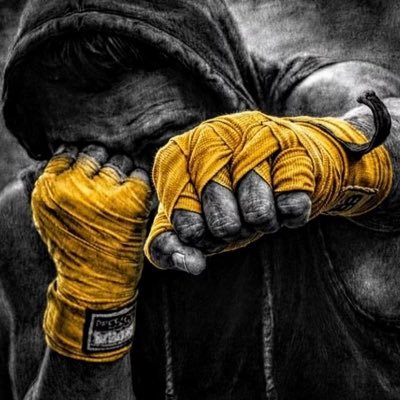
🤯Some fights are over before the bell even rings. September 1996. 🥊 Bruce Seldon walked in as the WBA champion, but Iron Mike brought pure psychological terror to the MGM Grand. Two knockdowns in 109 seconds. Was it a "phantom punch," or did Seldon’s body just freeze under Tyson's...

20,132 просмотров • 19 дней назад •via X (Twitter)

Комментарии: 0

Нет доступных комментариев

Здесь появятся комментарии из оригинального поста

Похожие видео

The iron chair, a torture device that has several different variations depending on its origin and use throughout history. It is also known as the Chinese torture chair or the torture chair. The concept of 'Torture' iron chair originated from Europe's Middle Ages, though it was used around the world in different variations as well. This torture device that was added to dungeons in the Middle Ages. It experienced its prime in popularity in Europe. During Middle Ages, the iron chair was used as punishment. Crimes that are punishable by iron chair include adultery, witchcraft, murder, etc. The instrument was used until the late 1800s in Europe. In all cases, victim was seated on several strips or plates of brass and placed over an open flame and slowly roasted alive. In other variations, the victim was tied to an iron armchair and then slowly pushed nearer and nearer to a blazing fire." The iron chair has many different variations depending on its location but they consisted of 500-1500 spikes covering the whole chair with a hole on the seat for fire and coal to be placed under. Another variation of the iron chair was called Chinese torture chair because it was a very common torture technique in China. Though Chinese torture chair is slightly different it was used in the same psychological way as Europe's version. Chinese torture chair was used in from 1701 to 1900s in China and was "...made from wood with 12 steel blades in the arm, back and foot rests and seat." According to scholars, this device was used on convicted people or suspects because it instilled fear in a person. It was used to extract confessions from people by watching another get tortured. If that failed, the person them self had to suffer from it as well. The iron chair "...lies primarily in the psychological fear caused on the victim" (Medievality). The iron chair was especially unique because it relied on the psychological effects rather than physical, unlike many other torture instruments. Physically, this instrument punctures the skin while the person is tied down tightly onto the chair. If they do not cooperate, the person gets tied down tighter, digging the spikes deeper into their flesh. The large hole at the bottom of the seat was made to put coal and fire under to burn the victims lower body parts and slowly roast them alive. This torture technique did not necessarily cause death itself, it was usually followed with an infection after the person was released. Death was far from instant with the iron chair. Science Museum, London 🎥 : Credit to the Owner #archaeohistories

Archaeo - Histories

35,504 просмотров • 1 год назад

In September 1996, Tupac Shakur gave what would become one of his final interviews. Hours before he was shot on the Las Vegas Strip after the Mike Tyson vs. Bruce Seldon fight, Tupac stood in a hallway at the MGM Grand with Suge Knight and spoke to a reporter about Death Row's next chapter. What he said that night reveals something most people miss about who Tupac actually was. He was a businessman with a manifesto. When the reporter asked about Death Row East, Suge opened with a challenge: "You believe in God? Believe in Death Row East. Believe in that for real." Then Tupac laid out the vision in full: "We plan to take the same strategy we use with Death Row West, which is mind over matter. Taking all our weaknesses and make it into our strengths." This was not hype. Tupac understood exactly what Death Row represented to people who had been written off by the industry. He framed it as a numbers argument: "Ain't no other record company out there that sold as many records as we did. We outsold Bad Boy, LaFace, every black record label out there. We outsold them in one year. And I'm a convict and my homeboy just got off a murder case. So that tell you that it's pure talent. No hype." He then named the real enemy, and it was not Biggie. It was not the East Coast. It was the narrative being used to distract: "All these people talking about the East Coast, West Coast war, they like the Judas was to Jesus. They only here to cause confusion. We here to bring money and to bring change." That line is historically significant. At the peak of what media was selling as a coast-to-coast rap war, Tupac publicly called it manufactured division. He saw the so-called beef not as a cultural clash but as a distraction from economic power. Weak rappers, he said, were using geography as a crutch. Death Row was using it as an opportunity. The closing statement of the interview was as bold as anything he ever recorded: "We coming to the East Coast to prove there is no fear. There is no problem. There ain't nothing but opportunity. And the opportunity is overthrow the government y'all got right now, which is Bad Boy and Nas and all that... And we will bring a new government here that will feed every person in New York." He was shot that same night. He died six days later on September 13, 1996.

History Nerd

11,184 просмотров • 2 месяцев назад