Loading video...

Video Failed to Load

Go Home

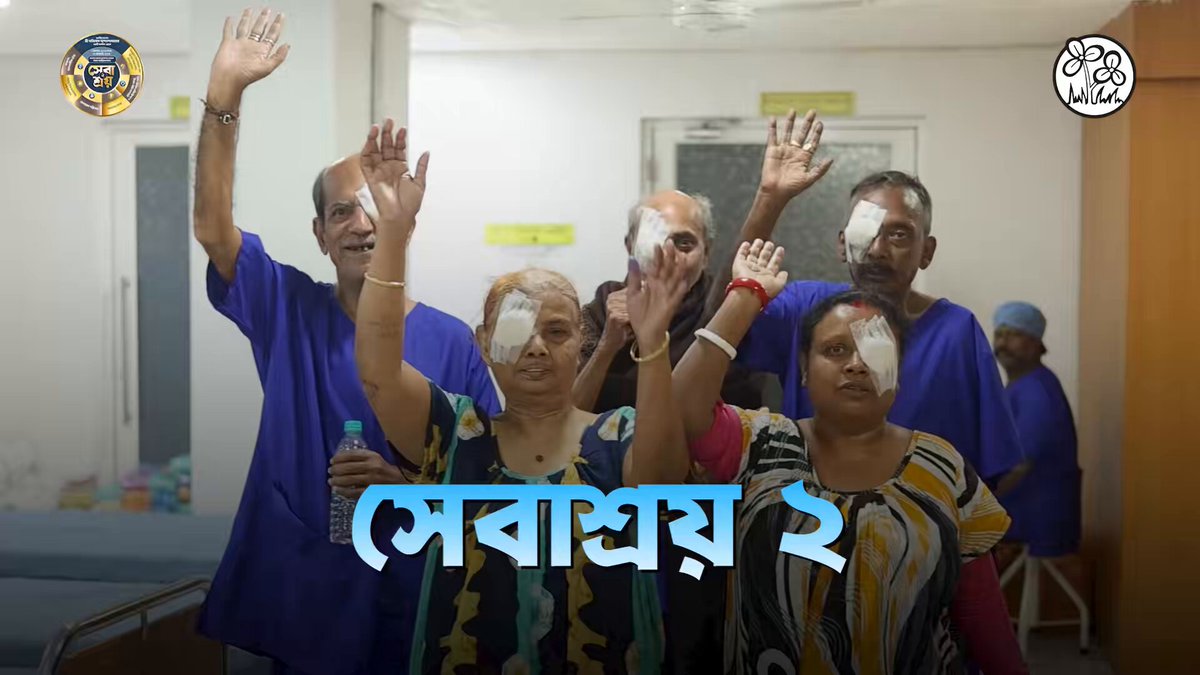
Some people change lives with words. Others change them with action. Khan Sir has already transformed the future of thousands of students with his teaching. Now, he is transforming healthcare, making it accessible, affordable, and humane. Blood tests at ₹7. ECGs at ₹25. X-rays at ₹35. A full body...

46,193 views • 7 months ago •via X (Twitter)

0 Comments

No comments available

Comments from the original post will appear here

Related Videos

Mo Gawdat believes up to 30% of jobs in certain sectors could disappear by 2028. That stopped me in my tracks. Mo was one of the first people to come on this podcast and warn me about AI, long before most of the world was talking about it. At the time, it felt early. Now, it feels like the world is catching up to what he was seeing. I’m still trying to understand what AI actually means for our lives. Not just whether it can write emails, create images or make us more productive. I mean what it does to jobs. What it does to power. What it does to education. What it does to human connection… That’s why I wanted to have this discussion with Mo again. What makes Mo worth listening to is that he saw these systems inside Google years before most of us had even heard the term AI. His book *Scary Smart* now feels like it was written for this exact moment. Let me explain why this discussion matters. Mo believes we’re not just entering an AI revolution. We’re entering a period where AI, robotics, economics, surveillance, digital currencies and global instability are all colliding at the same time. That’s a lot for any of us to process. We spoke about: - The jobs Mo believes are most at risk from AI. - Why he believes that AI is actually underhyped! - The mistake almost everyone is making with ChatGPT. - The prediction that changed even his own view of the future. The part that stayed with me was this idea that human connection may become the real currency. Because if AI can produce the information, write the report, analyse the data, then what is left? I don’t think this conversation gives neat answers. That’s probably why it’s worth watching. It helped me think more honestly about what’s coming.

Steven Bartlett

27,882 views • 2 months ago

Spotlight on Champions of Change ! Presenting Team Purnea ! Purnea, Bihar, is leading the way in transforming education and has been awarded ₹3 crore under the Aspirational Districts Programme for its outstanding efforts and remarkable improvements in the sector. By leveraging technology-driven solutions, the district is making learning more accessible, engaging and effective for students, ensuring equitable education for all. One of the most significant initiatives is the introduction of Smart Classes, which are converting traditional classrooms into interactive learning spaces. These digital tools are enhancing student engagement, making lessons more dynamic and effective. Additionally, Live Classes have been implemented to provide real-time lessons from expert educators, ensuring that students in even the most remote areas have access to quality education. To further strengthen learning outcomes, technology-enabled solutions are being deployed to bridge learning gaps, improve teacher-student interaction and build a future-ready education system. These efforts are equipping students with cutting-edge digital resources, ensuring that every child, regardless of their location, has access to high-quality education. Purnea’s success is a testament to the power of innovation and strategic interventions in transforming education. This achievement highlights how Aspirational Districts can leverage technology-driven solutions to drive meaningful impact. Let’s celebrate this milestone and continue striving for a stronger, smarter and more inclusive learning ecosystem across India ! #PMOIndia #NITIAayog #AspirationalDistricts #EducationForAll #AccessToEducation #BuildingTheFuture #InfrastructureMatters #TransformingIndia #BharatKeBadhteKadam #DistrictsAsLaboratoriesOfDevelopment

NITI Aayog

23,882 views • 1 year ago

#WATCH | On US President Trump signing an Executive Order to raise the fee that companies pay to sponsor H-1B applicants to $100,000, former diplomat Anil Trigunayat says, "I think it is in keeping with his various statements that he has been making ever since, especially to please his MAGA constituency...This is a regressive step in my view, because India is the only country today which would provide talent to the world until 2050. If you want to cut off your nose to spite your face, so be it." "I think it is in keeping with his various statements that he has been making ever since, especially to please his MAGA constituency. He has also been creating more difficulties with regard to his prescription on the H-1B visa, not from now but from quite some time now. Even the ordinary visas also have become not that easy. What he is trying to do basically, he is trying to extract as much money as he can from the industry even if it is at the expense of The US eventually. And also to make it difficult by giving them Gold Card at 'Gold Card' visa at $2 million to corporate and then asking them to pay 100,000 dollars for each H-1B visa that they want. India is the largest user of that visa, so it will directly impact us. It might even enable various companies to eventually, instead of getting people to The US, work online which has also been going on significantly. This is a regressive step in my view, because India is the only country today which would provide talent to the world until 2050. If you want to cut off your nose to spite your face, so be it."

ANI

46,726 views • 11 months ago

WHO delivers health supplies to Al-Shifa Hospital, appeals for continued access to address urgent needs in north #Gaza WHO staff participated in a joint UN mission to Al-Shifa Hospital in north Gaza on 16 December to deliver health supplies and assess the situation in the facility. Partners on today’s mission included OCHA, UNDSS, and UNMAS. The team delivered medicines and surgical supplies, orthopedic surgery equipment, and anesthesia materials and drugs to the hospital. Al-Shifa Hospital, currently minimally functional, needs to urgently resume at least basic operations to continue serving the thousands in need of lifesaving health care.Once the most important and largest referral hospital in Gaza, Al-Shifa now houses only a handful of doctors and a few nurses, together with 70 volunteers, working under what WHO staff described as “unbelievably challenging circumstances" and calling it a “hospital in need of resuscitation.” The operating theatres and other major services remain nonfunctional due to a lack of fuel, oxygen, specialized medical staff, and supplies. The hospital is only able to provide basic trauma stabilization, has no blood for transfusion, and hardly any staff to care for the constant flow of patients. Dialysis is being provided to approximately 30 patients a day, with the dialysis machines operating 24 hours a day, seven days a week, using a small generator.The team described the emergency department as a “bloodbath”, with hundreds of injured patients inside and new patients arriving every minute. Patients with trauma injuries were being sutured on the floor, and limited to no pain management is available at the hospital. WHO staff said that the emergency department is so full that care must be exercised to not step on patients on the floor. Critical patients are being transferred to Al-Ahli Arab Hospital for surgeries. Tens of thousands of displaced people are using the hospital building and grounds for shelter. A multi-pronged humanitarian response is needed to provide them with food, water and shelter. Many of them asked our team to tell the world what is happening in the hope that their suffering might soon be eased. Al-Shifa Hospital continues to experience a severe shortage of food and safe water for health workers, patients, and displaced people. This reflects grave and growing concerns around persistent hunger across the Gaza Strip, and the consequences of malnutrition on people’s health and susceptibility to infectious diseases. WHO is committed to strengthening Al-Shifa Hospital in the coming weeks, so that it can resume at least basic functionality and continue to provide the lifesaving services that are needed at this critical time. Up to 20 operating theatres in the hospital, as well as post-operative care services, can be activated if provided with regular supplies of fuel, oxygen, medicines, food, and water. Substantial additional specialized medical, nursing and support staff, including emergency medical teams, are also urgently needed.Currently, Al-Ahli Arab Hospital remains the only partially functional hospital in north Gaza, along with three minimally functional hospitals—Al-Shifa, Al Awda and Al Sahaba Medical Complex—down from 24 before the conflict. WHO is also gravely concerned about the unfolding situation at Kamal Adwan Hospital and is gathering information urgently. As hostilities continue and health needs across the Gaza Strip increase, Al-Shifa Hospital, a cornerstone of Gaza’s health system, must be urgently restored so that it can serve besieged people trapped in a cycle of death, destruction, hunger, and disease.

World Health Organization (WHO)

128,115 views • 2 years ago

This woman is a Board Certified Emergency Medicine Physician in America She says she’s seeing more and more doctors leave practicing medicine because what US Health Insurance companies are doing to healthcare She explains why, this is important information: “I believe what we are seeing with healthcare professionals is not just burnout, it's something far more insidious and painful. This is moral injury. — Moral injury. The pain of knowing what the right thing is for the patient, but being unable to do that because of systemic barriers. And over time, this wears you down. I have seen so many people leave the profession because it has eroded their sense of purpose, their love for the job. And we take a Hippocratic oath to do no harm. But in a system that doesn't place human health at the center, that becomes harder and harder to uphold. And that disconnect from what we are trained to do, from what we can actually do, creates a very painful wound. And when the healers themselves are wounded, when their hands are tied, when their clinical judgment is overruled, they don't just feel that defeat themselves, they that trickles down to the patient. — So when we see our providers juggling insurance company protocols, productivity metrics, hospital bureaucracy, the relentless pull of the electronic medical record, all of these things take the doctor away, the patient. If we really want to understand why the United States spends more on health care than any other nation, while delivering some of the worst outcomes, we need to start being honest. The system just isn't inefficient. It is deeply misaligned with care and having it be patient first” US Health Insurance companies are absolutely destroying American Healthcare and we all must keep sharing these important stories because something has to change

Wall Street Apes

223,295 views • 1 year ago