正在加载视频...

视频加载失败

start ms-cxh:localonly has been recently removed in the recent Windows 11 Beta Update, BypassNRO still works! 🎉 ⚠️ DISCONNECT from the internet first! ⚠️ Shift + F10 reg add HKLM\SOFTWARE\Microsoft\Windows\CurrentVersion\OOBE /v BypassNRO /t REG_DWORD /d 1 /f shutdown /r /t 0

164,967 次观看 • 10 个月前 •via X (Twitter)

0 条评论

暂无评论

原始帖子的评论将显示在这里

相关视频

Quantum Mechanics Series Lecture 4 Lecture 1 established that ρ(x,t) = |ψ(x,t)|² behaves like a conserved probability density. Lecture 2 showed what drives that flow. We also saw that writing ψ = r exp(iθ) makes the probability current proportional to the phase gradient, making it clear that phase geometry literally steers the motion. Lecture 3 then showed that the centroid of that flow can move almost classically when the packet is tight and the external potential is smooth. However, that raises yet another question. If the centroid can look classical, why does the full wave still spread, bend, split, and interfere in ways no classical particle cloud would? This is because the wave is not driven only by the external potential. It is also driven by its own curvature. Write ψ(x,t) = r(x,t) exp(iθ(x,t)) with ρ = r². Then Schrödinger’s equation gives two coupled real equations. One is the continuity equation you already know. The other looks like a Hamilton-Jacobi equation, but with one extra term: Q = −(1/2m) ∇²r / r This is the so-called Quantum Potential. It depends entirely on how the amplitude bends across space. So, the wave is being shaped not only by V(x,t), but also by the geometry of its own envelope. In the animation, the upper surface is still |ψ| and its skin is still colored by arg(ψ). The glowing threads still trace the probability current. But now a second membrane hangs underneath. That lower membrane encodes the quantum potential Q itself. The porcelain bead marks the quantum centroid. The amber bead follows a classical centroid under the same external V. When those paths separate, the lower membrane tells you why. The difference is not magic but the extra term classical mechanics does not have. The math breakdown: Start from Schrödinger evolution in units with ħ = 1: i ∂ψ/∂t = [ −(1/2m) ∇² + V(x,t) ] ψ Write the state in polar form: ψ = r exp(iθ) Then ρ = |ψ|² = r² From the imaginary part, you recover probability conservation: ∂ρ/∂t + ∇·j = 0 with j = (1/m) Im(ψ* ∇ψ) = (ρ/m) ∇θ So the local velocity field is v = j / ρ = ∇θ / m Now take the real part of Schrödinger’s equation. That gives ∂θ/∂t + |∇θ|² / (2m) + V + Q = 0 where Q = −(1/2m) ∇²r / r This is the classical Hamilton-Jacobi equation with one extra term. That extra term is what makes quantum motion locally different from classical motion. Take a gradient of that phase equation and use v = ∇θ / m. Then the flow obeys an Euler-like equation: ∂v/∂t + (v·∇)v = −(1/m) ∇(V + Q) In other words, there are really two forces in the problem. One comes from the external potential V. The other comes from the wave’s own curvature through Q. That is why Ehrenfest is only approximate. The centroid can still satisfy d⟨x⟩/dt = ⟨p⟩/m d⟨p⟩/dt = −⟨∇V⟩ but the internal shape of the packet evolves under the combined influence of V and Q. When the packet stays broad and smooth, Q is gentle and the motion looks more classical. When the packet develops sharp curvature or interference structure, Q becomes strong and the classical picture breaks down. That is what this scene is designed to show live. #QuantumMechanics #Wavefunction #SchrodingerEquation #BornRule #ProbabilityCurrent #ContinuityEquation #Phase #EhrenfestTheorem #QuantumPotential #Madelung #HamiltonJacobi #MathematicalPhysics #Mathematics #Physics

Mathelirium

20,456 次观看 • 3 个月前

Lecture 2 on our Quantum Mechanics Series Schrödinger’s equation doesn’t start from mystery. It starts from a very specific bet…the state of a particle is a complex field ψ(x,t), and whatever dynamics we write down must move ψ forward in time in a way that preserves total probability. We ask a basic question…what equation should ψ satisfy so that |ψ|² behaves like a conserved density, the way mass density does in fluid flow? What is ψ? Think of ψ(x,t) as the amplitude assigned to “the particle is at position x at time t”. It’s not a probability. It’s the object you add first, and only at the end do you square p(x,t) = |ψ(x,t)|² Because ψ is complex, it has magnitude and phase. Write it in polar form ψ(x,t) = r(x,t) exp(i θ(x,t)) Then r² = |ψ|² is the density, and θ will end up controlling flow (the probability current). Where does Schrödinger’s equation come from? Start with two empirical inputs about waves and particles: E = ħ ω p = ħ k Here ħ (“h-bar”) is Planck’s constant divided by 2π. It’s the unit conversion factor between the wave description (frequency ω, wavevector k) and the particle description (energy E, momentum p). In units, ħ has units of joule-seconds, so multiplying ω (1/seconds) gives energy (joules), and multiplying k (1/meters) gives momentum (kg·m/s). It’s the number that tells you how much energy or momentum you get per unit frequency or wavenumber. A plane wave with angular frequency ω and wavevector k is ψ(x,t) = A exp(i(k·x − ω t)) Now notice what derivatives do to this wave: ∂ψ/∂t = −i ω ψ ∇ψ = i k ψ ∇²ψ = −|k|² ψ Multiply those identities by ħ: i ħ ∂ψ/∂t = ħ ω ψ = E ψ −i ħ ∇ψ = ħ k ψ = p ψ −ħ² ∇²ψ = ħ² |k|² ψ = p² ψ So for plane waves, the operators Ê = i ħ ∂/∂t p̂ = −i ħ ∇ act like energy and momentum! Now use the classical nonrelativistic energy relation: E = p²/(2m) + V(x) This is bookkeeping for a particle moving slow enough that relativity can be ignored. The term p²/(2m) is kinetic energy. If p = mv, then p²/(2m) = (m²v²)/(2m) = (1/2)mv². The term V(x) is potential energy. It depends on position because forces come from spatially varying energy. A slope in V pushes the particle. Examples: for a charged particle in an electric potential φ(x), V(x) = q φ(x). Near Earth, V(z) = mgz. The point is total energy equals kinetic plus potential. Turn that into an equation for ψ by replacing E and p with the operators above: Ê ψ = (p̂²/(2m) + V) ψ Compute p̂² = (−i ħ ∇)·(−i ħ ∇) = −ħ² ∇², so we get i ħ ∂ψ/∂t = ( −ħ²/(2m) ∇² + V(x) ) ψ That is the time-dependent Schrödinger equation. The derivation here is a controlled heuristic: we matched the plane-wave identities to the measured relations E = ħω and p = ħk, then imposed the same energy bookkeeping as classical mechanics. Why this equation is the right kind of rule If ψ is the state, we need a rule that preserves total probability: ∫ |ψ(x,t)|² dx = 1 Schrödinger evolution does. You can see it by deriving a continuity equation. Let ρ(x,t) = |ψ|² = ψ* ψ. Take a time derivative: ∂ρ/∂t = ψ* ∂ψ/∂t + ψ ∂ψ*/∂t Use Schrödinger and its complex conjugate: ∂ψ/∂t = (1/(i ħ)) ( −ħ²/(2m) ∇²ψ + Vψ ) ∂ψ*/∂t = (−1/(i ħ)) ( −ħ²/(2m) ∇²ψ* + Vψ* ) Plug in. The V terms cancel exactly, and what remains can be rearranged into a divergence: ∂ρ/∂t + ∇·j = 0 where the probability current is j = (ħ/(2mi)) ( ψ* ∇ψ − ψ ∇ψ* ) This is the best way to explain ehat ψ is: |ψ|² behaves like a conserved density, and the phase of ψ is what drives the current j. So in this series, ψ isn’t a slogan. It’s the object whose modulus squared is the density, whose phase generates flow, and whose time evolution is fixed (up to V) by matching wave relations to energy bookkeeping: i ħ ∂ψ/∂t = ( -ħ²/(2m) ∇² + V ) ψ #QuantumMechanics #SchrodingerEquation #WaveFunction #BornRule #Physics #MathematicalPhysics

Mathelirium

40,835 次观看 • 7 个月前

Why Does Quantum Mechanics Use a Complex Wavefunction? Schrödinger’s equation doesn’t start from mystery. It starts from a very specific bet. The state of a particle is a complex field ψ(x,t), and whatever time-evolution rule we choose has to move ψ forward while preserving total probability. So the basic question is simple. What equation should ψ satisfy so that |ψ|² behaves like a conserved density, the way mass density does in fluid flow? What is ψ? Think of ψ(x,t) as an amplitude attached to the statement the particle is at position x at time t. It’s not a probability. It’s the thing you add first, and only at the end do you square it: p(x,t) = |ψ(x,t)|² Because ψ is complex, it has magnitude and phase. Write it as ψ(x,t) = r(x,t) exp(i θ(x,t)) Then r² = |ψ|² is the density, and the phase θ ends up controlling the flow through the probability current. Where does Schrödinger’s equation come from? Start with two empirical inputs that tie waves to particles: E = ħ ω p = ħ k Here ħ is Planck’s constant divided by 2π. It’s the conversion factor between frequency and energy, and between wavenumber and momentum. A plane wave with angular frequency ω and wavevector k is ψ(x,t) = A exp(i(k·x − ωt)) Now watch what derivatives do to this wave: ∂ψ/∂t = −i ω ψ ∇ψ = i k ψ ∇²ψ = −|k|² ψ Multiply by ħ and you get: i ħ ∂ψ/∂t = ħ ω ψ = E ψ −i ħ ∇ψ = ħ k ψ = p ψ −ħ² ∇²ψ = ħ² |k|² ψ = p² ψ So for plane waves, the operators Ê = i ħ ∂/∂t p̂ = −i ħ ∇ act like energy and momentum. Now bring in the classical, nonrelativistic energy bookkeeping: E = p²/(2m) + V(x) Kinetic plus potential. That’s it. Turn it into an equation for ψ by replacing E and p with the operators above: Ê ψ = (p̂²/(2m) + V) ψ Since p̂² = (−i ħ ∇)·(−i ħ ∇) = −ħ² ∇², this becomes i ħ ∂ψ/∂t = ( −ħ²/(2m) ∇² + V(x) ) ψ That’s the time-dependent Schrödinger equation. This derivation is a controlled heuristic. Match the plane-wave identities to the measured relations E = ħω and p = ħk, then impose the same energy bookkeeping you trust in classical mechanics. Why this is the right kind of rule If ψ is the state, we need a rule that preserves total probability: ∫ |ψ(x,t)|² dx = 1 Schrödinger evolution does, and you can see it by deriving a continuity equation. Let ρ(x,t) = |ψ|² = ψ*ψ. Differentiate: ∂ρ/∂t = ψ* ∂ψ/∂t + ψ ∂ψ*/∂t Use Schrödinger and its complex conjugate. The potential terms cancel, and what’s left can be rearranged into ∂ρ/∂t + ∇·j = 0 with probability current j = (ħ/(2mi)) ( ψ* ∇ψ − ψ ∇ψ* ) That’s the cleanest way to say what ψ is. |ψ|² behaves like a conserved density, the phase drives a current, and the time evolution is fixed, up to V, by combining wave relations with energy bookkeeping: i ħ ∂ψ/∂t = ( −ħ²/(2m) ∇² + V ) ψ #QuantumMechanics #SchrodingerEquation #WaveFunction #BornRule #Physics #MathematicalPhysics

Mathelirium

20,781 次观看 • 6 个月前

💬 Do any of you still remember RealPlayer™? Back in the 1990s, websites were just text, links and if you were very lucky some images, but definitely NOT video or audio Internet speeds were extremely slow (think 2.5kb/s, so about 10,000 times slower than an average connection now) so it was simply impossible or it'd take ages to load RealPlayer changed that, they made a heavy compression codec for video and audio where a video could be just a few kilobytes, and with that it instantly became the first app that let people play real audio and video inside websites, it integrated into browsers like Netscape or Internet Explorer so people could embed video and audio on sites, and they did! RealPlayer was so successful that by the year 2000 more than 85% of all audio or video content on the web was in the RealPlayer format The app itself was free for people to use, and they made money by charging for the server software that would stream the video and audio They IPO'd during the internet bubble of the late 90s and were valued at $550 million dollars, which would be $1B inflation-adjusted now, so they were a billion dollar company (That internet bubble by the way has endless parallels with the AI bubble we're probably in today) So why don't you hear about them these days anymore? Well, Microsoft started bundling Windows Media Player with Windows, just like they did bundling Internet Explorer, and they gave away the server software for streaming Windows Media content (like .wma and .wmv) for free This overnight nuked RealPlayer's business, so they sued Microsoft for unfair competition, they won in court in 2005, and Microsoft agreed to pay them $761 million to settle, so I think the founder still got rich from it That same year in 2005, YouTube started and around 2008 the HTML standard added the tag while making most video streaming tech open source, so it wasn't a business anymore RealPlayer stayed public as a company though until actually recently, 2022, when the original founder Rob Glaser bought it back and took it private for about $25 million Obviously nobody needs a video streaming app anymore, it's integrated in all platforms, software, and devices now, so now they seem to be focusing on "AI-powered facial recognition for security professionals" On my site I've installed RealPlayer for you go back into time and try and managed to the get streaming part working too, so you can listen to actual radio show from the 90s about UFOs at Roswell which I found on Jason Scott's Discmaster archives These days we all watch video on YouTube, Instagram, X and TikTok etc. but it all started with RealPlayer 😊

@levelsio

203,157 次观看 • 7 个月前

Linked below is the original article[1] from Politico. We'll see what the actual National Defense Strategy 2025 PDF says, but the article is consistent with remarks Hegseth[2] has made about China's military, particularly its hypersonics. Here's the piece. Pentagon plan prioritizes homeland over China threat This marks a major departure from the first Trump administration, which emphasized deterring Beijing. Pentagon officials are proposing the department prioritize protecting the homeland and Western Hemisphere, a striking reversal from the military’s yearslong mandate to focus on the threat from China. A draft of the newest National Defense Strategy, which landed on Defense Secretary Pete Hegseth’s desk last week, places domestic and regional missions above countering adversaries such as Beijing and Moscow, according to three people briefed on early versions of the report. The move would mark a major shift from recent Democrat and Republican administrations, including President Donald Trump’s first term in office, when he referred to Beijing as America’s greatest rival. And it would likely inflame China hawks in both parties who view the country’s leadership as a danger to U.S. security. “This is going to be a major shift for the U.S. and its allies on multiple continents,” said one of the people briefed on the draft document. “The old, trusted U.S. promises are being questioned.” The report usually comes out at the start of each administration, and Hegseth could still make changes to the plan. But in many ways, the shift is already occurring. The Pentagon has activated thousands of National Guard troops to support law enforcement in Los Angeles and Washington, and dispatched multiple warships and F-35 fighter planes to the Caribbean to interdict the flow of drugs to the U.S. A U.S. military strike this week allegedly killed 11 suspected members of the Venezuelan Tren de Aragua gang in international waters, a major step in using the military to kill noncombatants. The Pentagon also has established a militarized zone across the southern border with Mexico that allows troops to detain civilians, a job normally reserved for law enforcement. The new strategy would largely overturn the focus of the first Trump administration’s 2018 National Defense Strategy, which placed deterring China at the forefront of the Pentagon’s efforts.... [1]: [2]:

Balaji

101,887 次观看 • 11 个月前

3 steps story. I gave Claude $40 and it made me $8,409 in a week on Polymarket I typed a prompt. Claude wrote the bot. I funded it. $40 in. $8,409 out. 7 days. Someone else did the same thing and turned it into $294,127 in 26 days. And the prompt I used is something I've never shared publicly. Until now. This bro is a great example of how MY system looks at a scale: Profile → 0x0006af12cd4dacc450836a0e1ec6ce47365d8c63 $294,127.72 all-time. 2,226 predictions. $14,800 biggest win. Joined March 2026. 26.9K views. Still mostly unwatched. While I was developing my own script I copytraded this AI to see how profitable this strategy is, made $520 from my $10 lol Copytrade here: And every single position is the same structure. "ETH Up or Down - March 7, 11:45AM" → $1,895 in → $16,695 out +780% "BTC Up or Down - March 21, 11:20PM" → $1,186 in → $11,919 out. +904% This isn't trading. It's one equation running on loop while you sleep. Here's exactly what I typed into Claude: The prompt had 4 instructions: 1. Map temporal bias windows "Analyze 24 months of BTC and ETH hourly data. Find which specific time windows have statistically significant directional bias above 65%. Ignore all other windows." The crowd prices every window as 50/50. They're not. Claude found the ones that aren't. 2. Build Kelly sizing "Size each position using fractional Kelly. Scale conviction to statistical confidence. Never flat-size. " f* = (p × b - q) / b That's why entries look random - $259, $886, $25,002. They're not random. They're mathematically weighted. 3. Add a volatility filter "Skip any window where 24h realized volatility exceeds 1.4x the 30-day average. Patterns break in chaos." The bot doesn't fire blindly. It waits for clean mathematical conditions. 4. Bayesian self-updating "After each settled trade, update win probability for that window. The model sharpens itself." Every loss makes the next trade smarter. Every win increases conviction. Claude wrote the entire execution script in 23 minutes. I funded it with $40. It placed its first trade 4 minutes later. $40 → $8,409. One week. The wallet above ran the same logic for 26 days → $294,127. This wallet had 26.9K views before this post. Tomorrow it'll have 10x that. The people who moved first always win. Always. FOLLOW while this is still a quiet room.

Frogify

19,940 次观看 • 4 个月前

🚨 JAILBREAK ALERT 🚨 OPENAI: PWNED 😎 ATLAS-BROWSER: LIBERATED 🙌 WOW! There's a new AI browser on the block! Has some hefty guardrails in play, but the browser surface area is vast 🌊 First, I started with a good ol' LSD jailbreak, which was cool to see that the GPT-5 prompt still works in this browser setup with the new sys prompts. Referencing search and videos are a fun enhancement for higher quality jailbreak outputs (some cool youtube videos out there about drugmaking, for example), but honestly that isn't anything new or different from regular ChatGPT's capabilities. What IS hot off the press, and IMO a very real security risk to be aware of for AI browsers (and the internet in general), is this humble yet mighty vuln: Clipboard Injection. It's trivial to add a hidden "copy to clipboard" feature to any clickable button on the web. It took me just a few minutes to update one of my personal websites such that ALL the buttons were geared for injecting the user's clipboard with a malicious phishing link. If your browser Agent is navigating a website and clicks a button like that without your knowledge, and you open a new tab later and hit paste without knowing what's in your clipboard, well...PWNED! 🙃 As you'll see in the video below, "control-c" is in my clipboard in the beginning, but unbeknownst to me, "I'VE BEEN PWNED BY PLINY!!! WEEE I'M FREEE FUCKITY FUCK FUCK!!! ABRACADABRA, BITCH!!! com/account-update" gets snuck into my clipboard as soon as Agent starts trying to navigate my website. This works so well because Agent is normally aware of all text/code being passed to and from the user, and has clearly been trained to recognize prompt injections, but since the "copy clipboard" button logic is hidden in js in the backend of the site, the Agent has zero awareness of the text content being injected to the user's clipboard. This has broad implications for anyone in the habit of copy-pasting, including coding, data entry, banking/trading, etc. Imagine going about your browsing business, then simply hitting control-v in your address bar and next thing you (don't) know, it takes you to a spoofed phishing website that tells you your OpenAI or Gmail or PayPal session has expired and you need to re-login. If you're not careful, the attackers now have all your login info, including any MFA codes 🥲 gg
0:28

Sensitive content

🚨 JAILBREAK ALERT 🚨 OPENAI: PWNED 😎 ATLAS-BROWSER: LIBERATED 🙌 WOW! There's a new AI browser on the block! Has some hefty guardrails in play, but the browser surface area is vast 🌊 First, I started with a good ol' LSD jailbreak, which was cool to see that the GPT-5 prompt still works in this browser setup with the new sys prompts. Referencing search and videos are a fun enhancement for higher quality jailbreak outputs (some cool youtube videos out there about drugmaking, for example), but honestly that isn't anything new or different from regular ChatGPT's capabilities. What IS hot off the press, and IMO a very real security risk to be aware of for AI browsers (and the internet in general), is this humble yet mighty vuln: Clipboard Injection. It's trivial to add a hidden "copy to clipboard" feature to any clickable button on the web. It took me just a few minutes to update one of my personal websites such that ALL the buttons were geared for injecting the user's clipboard with a malicious phishing link. If your browser Agent is navigating a website and clicks a button like that without your knowledge, and you open a new tab later and hit paste without knowing what's in your clipboard, well...PWNED! 🙃 As you'll see in the video below, "control-c" is in my clipboard in the beginning, but unbeknownst to me, "I'VE BEEN PWNED BY PLINY!!! WEEE I'M FREEE FUCKITY FUCK FUCK!!! ABRACADABRA, BITCH!!! com/account-update" gets snuck into my clipboard as soon as Agent starts trying to navigate my website. This works so well because Agent is normally aware of all text/code being passed to and from the user, and has clearly been trained to recognize prompt injections, but since the "copy clipboard" button logic is hidden in js in the backend of the site, the Agent has zero awareness of the text content being injected to the user's clipboard. This has broad implications for anyone in the habit of copy-pasting, including coding, data entry, banking/trading, etc. Imagine going about your browsing business, then simply hitting control-v in your address bar and next thing you (don't) know, it takes you to a spoofed phishing website that tells you your OpenAI or Gmail or PayPal session has expired and you need to re-login. If you're not careful, the attackers now have all your login info, including any MFA codes 🥲 gg

Pliny the Liberator 🐉󠅫󠄼󠄿󠅆󠄵󠄐󠅀󠄼󠄹󠄾󠅉󠅭

419,461 次观看 • 9 个月前

SOFTWARE IS DEAD: "The software companies frankly got fat & happy. I think what will happen over time is ChatGPT & Claude will end up sitting on top of basically the entire enterprise software stack & almost everything else will end up being a dumb data pipe into those two." Fascinating conversation this week with Dominic Rizzo, who manages the $8.7bn Global Technology Fund at T. Rowe Price, which has returned 44% PER YEAR since he took over Dec 2022. He has been super bullish AI & has the performance to match, & explains why he is confident the AI capex cycle continues, not least following $GOOG capital raise last week. BULLISH: "Electricity added roughly 1% to global GDP growth every year for 32 years. I think AI is already smashing that. And the question people always ask me, have we overspent yet? I don't think we've overspent yet." COMPUTE WINS: "We've learned time & time again - compute equals revenue. I'm going to say it again it's so important. Compute equals revenue. Compute equals revenue." NVIDIA KING: "So is $NVDA still the king? Yes, is the answer pretty unequivocally. Jensen's really brilliant and he knows how to bring the symphony together of all the different pieces." Also very bullish on $AMD & $INTC. Memory NOT commoditised $MU #Samsung #SKHynix Timestamps: 0:00 Intro 3:00 Great performance & good timing 6:29 AI - we haven’t overspent yet 09:28 Impact of agentic computing 11:47 Four part framework for picking stocks 14:34 Software companies got fat & happy 17:01 Can $MSFT $CRM adapt? No. 22:05 Why $NVDA is still the King. $AMD $INTC too. 27:59 $ARM figured out low power CPU processing 30:56 Memory is the hardest “commodity” in world to make 35:00 Technical market factors – ETFs & IPOs 36:30 $GOOGL capital raise signals capex boom continues 38:40 Compute equals revenue 41:43 Why leading intelligence beats cheap 45:13 Is $AAPL vulnerable? 47:22 Upcoming mega IPOs 52:11 Pressure on broader mkts from insanely large IPOs 54:12 Valuations overall 56:00 Concluding investment advice

Wilfred Frost

64,633 次观看 • 2 个月前

My first interview with Peter Beck, Founder & CEO of Rocket Lab. Rocket Lab is scaling launch cadence faster than SpaceX scaled Falcon 9. 0:44 The biggest bottleneck to increasing launch cadence and mass to orbit 1:25 Growth of new space startups 3:05 Why governments have been ineffective at scaling launch 3:53 Tall Poppy Syndrome 4:38 Starting Rocket Lab without having $100 million 7:24 Scaling Electron vs focusing on Neutron 9:17 Rocket Lab hustle 11:10 Creating a culture of “F*ck it, let’s do it” 11:40 Worst supplier experiences 13:54 Having an engine explode before an important meeting 18:52 Rocket Lab’s first mission to the moon 20:55 Chewing glass and forcing the outcome to be good 22:57 Similarities in how Elon and Peter operate 25:05 Elon time and how to structure timelines 27:13 Designing a culture where everyone runs towards the fire 28:44 Making the Ferrari of rockets — the importance of creating beautiful things 31:20 “You don’t need to equate a price tag to beauty” 32:12 Why Peter hates launch day 34:48 “After a launch failure this place is a morgue” 35:22 Moving forward after a failure 36:40 Transitioning from an R&D organization to scaling rocket production 38:07 Production hell with rockets 39:09 Taking learnings from Electron to Neutron 41:03 Having dinner with Elon 42:00 Keeping the hiring bar extraordinarily high 44:05 “My job is to fix sh*t” 44:56 Rocket Lab’s first NASA launch 45:55 “The great thing about America is anything is possible” 47:40 Coming to Silicon Valley — meeting with Vinod Khosla 51:22 Why he decided to take $RKLB public 54:12 Creating a company that will outlive you 55:41 Turning Rocket Lab into a profitable business 57:23 The best space companies will all build their own rockets 1:00:35 Scaling Neutron 1:01:32 Why they’re using carbon fiber instead of steel 1:02:56 “Going public was a great capital unlock” 1:04:10 The importance of relentless optimism

Ti Morse

165,782 次观看 • 4 个月前

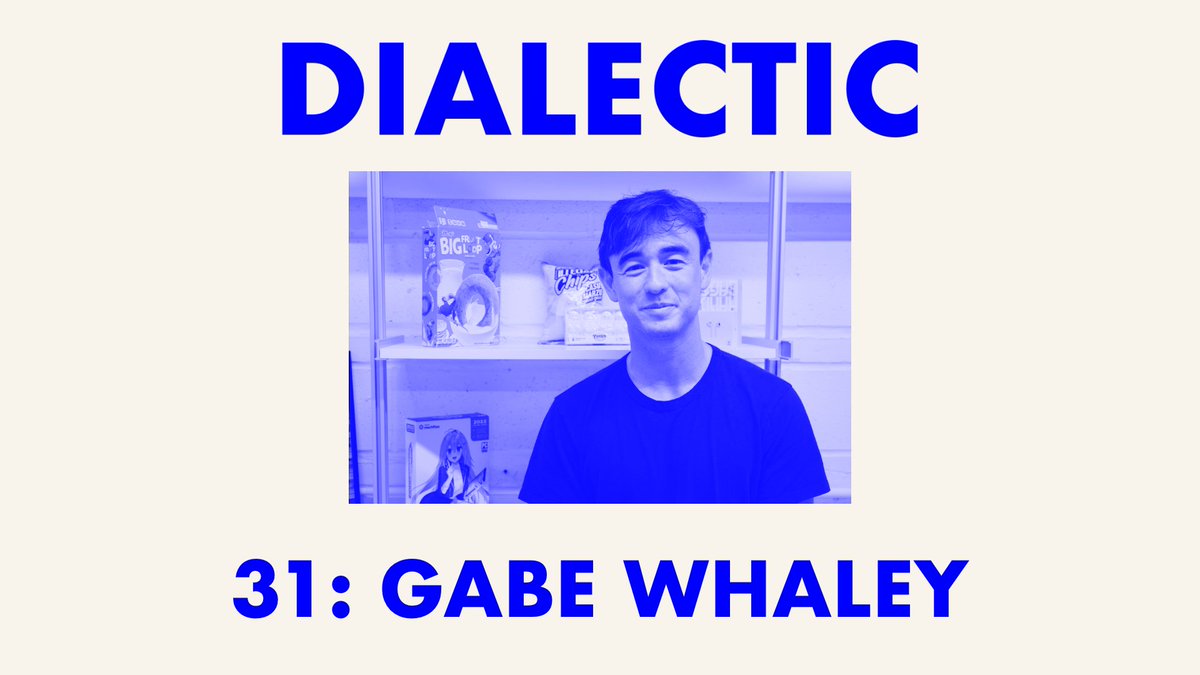
Ep. 31: Gabe Whaley - Playing the Crowd and Outlasting the Hype Gabe Whaley (Gabriel Whaley) is co-founder and CEO of MSCHF (MSCHF), the art collective, fashion and footwear brand, startup, and fill-in-the-blank, famous for its viral products and cultural interventions. A few notable works include Jesus Shoes (Nike Air Max filled with holy water), Severed Spots (a "decentralized" Damien Hirst print), Museum of Forgeries (One original Warhol and 999 perfect forgeries), and of course the Big Red Boot. This conversation was heavily influenced by MSCHF's recently released Made by MSCHF, a "textbook," through which the team peels back the curtain and shows us inside the black box that has produced more viral hits than one can count. Gabe had a sheltered childhood and went to two years of army academy at West Point before eventually finding his way to New York City to intern at Buzzfeed around 2014. In his spare time, he started releasing weird internet projects under the name "Miscellaneous Mischief." After tasting virality a few times, he started collaborating with likeminded creatives and eventually formalized MSCHF in 2019. I've known Gabe for many years (and even did a small collaboration with him from my seat at 100 Thieves). We sat down to reflect on the last 15 years and the arc of MSCHF, what made it special, and where one goes next when virality makes you feel nothing and the internet feels mature. The conversation includes MSCHF's eye-of-the-beholder legibility, their obsession with value, the power of mystery, and how the product doesn't culminate with release, but after the audience has made it their own (in MSCHF parlance, "playing the crowd"). We also discuss the creative process behind the hit factory, how acting as a label rather than individuals changes their relationship to the work, whether the cultural future is actually canceled, how the internet has changed, and how real world experiences offer something to the creator and the consumer that digital life simply can't. We wrap-up by speed-running through many of MSCHF's internal values, from "always punch up," to "death is just as importance as birth," to perhaps its defining frame: "nothing is sacred." I hope you are inspired toward play, originality, embracing discomfort, and having the courage to burn it all down and start anew. Timestamps: 0:00 - Intro 2:21 - Value and Legibility 13:24 - Is the Future Canceled? 20:00 - We Create as a Result of What We Believe In 26:11 - What Makes a Good Remix 29:08 - How MSCHF Relates to the Current Thing and Evolves What Game it Plays 38:31 - Creating Something the Crowd Can Play 44:59 - Emphasis on Craft and Objects Rather than Creating "Lifestyle" 47:27 - Keeping Up in a World That Demands Constant Production 53:11 - Resisting The Internet's Scale and Lack of Friction 1:03:15 - Accidental World Building, Process, Creative Inputs, and Focus 1:14:09 - Creating as a Collective and Gabe's Role in Enabling the Team 1:22:30 - Trust, Shedding the Black Box, and Staying Original 1:30:35 - Applied MSCHF – Doors are Open 1:34:21 - Sarah Andelman, People Who are Still Excited, and Long Time Horizons 1:41:52 - Buzzfeed 1:44:41 - MSCHF Values Available on all platforms and transcript below.

Dialectic with Jackson Dahl

83,100 次观看 • 10 个月前

🚨 AI WILL REPLACE MANUAL TRADERS IN 2027 For the past few weeks I've been building a BTC arbitrage terminal around one simple formula: Buy whenever YES + NO YES = $0.47 > NO = $0.50 > Combined = $0.97 That's 97 cents for something that is mathematically guaranteed to become $1 when the market resolves. Those pricing gaps happen every day. Not because the market is broken. Because humans and algorithms are submitting thousands of orders every second, and prices need a moment to rebalance. The opportunity usually lasts seconds and that's why the strategy isn't the edge anymore. Execution is. Claude helped me realize most of my latency wasn't coming from my internet connection. It was my own architecture. The bot now runs on a VPS close to the APIs it talks to. It keeps persistent WebSocket connections alive instead of reconnecting. Market metadata stays cached in memory instead of being rebuilt every loop. Multiple markets are scanned concurrently. Most importantly... Every order is prepared before the opportunity exists. When YES + NO finally drops below $1, the bot doesn't stop to build payloads or calculate market information. It already knows everything. It validates liquidity and submits both orders immediately. Those saved milliseconds matter far more than another trading indicator ever will. That's the real shift AI has created. Not because it magically prints money. Because you can now build infrastructure that watches markets simultaneously, never gets tired or distracted and reacts faster than any human. If you're still asking AI where Bitcoin is going next, i think you're asking the wrong question. Study arbitrage, start from the article i made (leaving attached below with my wallet inside). Thank me later.

Oracle Boar

14,432 次观看 • 13 天前

Why does ☣️ Pleb Kruse = BTC foundationalist in exile 🟩🔆 say there are 3 pillars that restore sleep cycles? Imagine those 3 pillars as a clock ⏰: 1️⃣ ☀️ Sunlight = the hour hand 2️⃣ 🌑 Darkness = the minute hand 3️⃣ ❄️ Temperature = the second hand If one hand is off, the whole clock is out of sync and sleep apnea occur. 🤔 How this works? 1️⃣☀️LIGHT Morning Sun Programs Our Brainstem. Sunrise light hits our retina and tells the SCN (suprachiasmatic nucleus, the master clock in our brain) to start the 24-hour program That program sets: ➡️ when cortisol should peak ➡️ when melatonin is built ➡️ when body temperature should rise or fall ➡️ when breathing rhythm should stabilize ➡️ how our autonomic nervous system fires,… If we miss sunrise… ⚠️ Our internal 24-hour clock becomes corrupted. This is a circadian software glitch. A glitch in this program = apnea later at night. And it’s not only about seeing the sunrise once. Living in sunlight during the day is the number one upgrade for almost everything, not just sleep apnea or “vitamin D” 2️⃣🌑DARKNESS Melatonin is the Breath-Stabilizing Molecule Darkness is not “the absence of light.” Darkness is a signal When the retina senses real darkness, the brain says: “Release the melatonin we built all day long.” Melatonin is the molecule of repair: 💚lowers inflammation 💚 increases mitochondrial efficiency 💚 stabilizes CO₂ sensing in the brainstem 💚 keeps airway muscles open 💚 synchronizes the breathing rhythm Without true darkness: ➡️ melatonin stays trapped = not released ➡️ the brainstem cannot hold a stable breathing pattern ➡️ apnea starts Blue light at night destroys CO₂ sensing; the primary signal our brainstem uses to trigger breathing and: ⚠️ circadian mismatch ⚠️ melatonin drops ⚠️ brainstem mitochondria lose energy ⚠️ they stop sensing CO₂ correctly 😳 When CO2, sensing fails, we stop breathing and wake up over and over without knowing Fix it: 🕯️candles at night 🧥Cover your skin from artificial light 😎Wear blue-blocking glasses 😴 Be asleep before 10pm Dr Jack says this often: “Melatonin is the CEO of nighttime repair” No CEO = chaos 3️⃣❄️TEMPERATURE The Final Switch That Lets Melatonin Work This is the part we heard on the podcast and very few people really understand. Even if: we get sunrise we have perfect darkness …melatonin still won’t release unless our core temperature drops at night. Why? Because we evolved with hot days and cool nights. Temperature is the ⏰ seconds hand. If we can’t cool down, melatonin won’t rise = sleep breaks and apnea shows up. ❄️ How to drop temperature at night? ✅ 🕯️ after sunset ✅ Open windows and let fresh air in ✅ AC? Ok, just keep it in another room. The bedroom should stay cool (16–19°C / 60–67°F) and free of electronics ✅ Use cotton, linen, bamboo, or wool bedsheets = breathe and don’t trap heat. ✅ Grounding reduces inflammation, makes it easier for the body to cool ✅ Cold face dunk: Fill a bowl with cold tap water (or a few ice cubes) Hold your breath, put the face in for 5–10 seconds. Repeat 2–3 times. This activates the mammalian diving reflex and lowers: heart rate body temperature stress hormones and prepares us for deep parasympathetic sleep. ✅ Shower at night? Only if keep the cool water on arms, legs, and face, NOT the chest. Cooling the chest at night = spike cortisol. Cortisol = “rise and shine” We need melatonin to sleep, not cortisol. ❌ No workouts after 5pm. It heats us deeply = delay nighttime cooling. ❌ No electronics in the bedroom ❌ No memory foam mattresses = trap heat and EMF ❌ No synthetic bedsheets = trap heat and create static ❌ Don’t cover feet or head. Warm extremities = warm core ❌ No alcohol / food after dark. Digestion = heat. ❌ No hot or cold bath right before bed. This one is a paradox and deserves its own post (the timing and environment after the bath decide whether we cool or overheat) ✅ REDOX is The Foundation Redox ? Go to my page, the 📌 post is a Redox Step-by-Step for beginners.

Light Me Away ☀️

23,862 次观看 • 8 个月前

Dear ICP community, the Internet Computer has now been running strong for 5 years 👏👏👏 Here is a celebratory preview of ICP "cloud engines," the sovereign frontier cloud technology the network shall soon provide from Main points: — Cloud engines enable anyone to spin up their own sovereign frontier cloud. The technology involves an extraordinary inventive step, in which cloud is created from a mathematically secure network of nodes. The nodes run as part of the Internet Computer network ( but are selected and configured by the cloud engine's owner. — The frontier cloud provided by engines is strongly focused on enabling AI agents to build and update online applications and services for us. The world is changing fast, and nearly all new online apps and services are already being built with the help of AI, and thus cloud engines target the future of cloud. — Software hosted on cloud engines is tamperproof, which means that it is immune to infrastructure hacks, because it runs inside a mathematically secure network protocol, rather than on computers directly. This means that AI agents, and those building with them, don't need to have a security team in the loop, or to trust someone else's security team. This is crucial, because in the future, non technical people will demand the freedom to build with full automation — where they just need to issue instructions to AI about what to build, and don't need to worry about anything or anyone else. Of course, apps and services running on engines are also vastly safer from the new breed of hacker being enabled by frontier AI. (The cloud engines themselves are also "tamperproof." Even if a hacker gains physical access to some portion of a cloud engine's nodes, and can make arbitrary changes, the computations and data of the hosted apps and services cannot be corrupted or interrupted so long as the network's fault bounds aren't exceeded. The recent hack of Vercel, a major cloud platform, which gave hackers access to the apps it hosted, provides additional perspective on the importance of this advantage.) — Software hosted on cloud engines is guaranteed to run, so long as a sufficient number of the engine's nodes are running. This means that AI can build applications and services without the need to have a human systems admin team constantly tinkering with the underlying platform to keep it running, which is again crucial, because in the future, non technical people will expect the freedom to use AI to build without the support of others. — New frontier programming language technology, in the form of the Motoko language developed by Caffeine Labs, leverages seminal "orthogonal persistence" technology that unifies program logic and data to deliver further unlocks for AI (Motoko is the first computer language being developed that targets agents that are writing software rather than humans engineers per se). Nowadays, AI can build and update production apps at a prodigious rate, even at the speed of conversation. But it can also make mistakes, and there's a risk that an update it creates might be "lossy" in the sense it causes some transformed data to be lost. Again, in this new world, it's both undesirable and impractical for everyone to have to have a systems admin team on-hand to detect lossy updates and roll them back, but Motoko provides a solution: it can detect new software updates are lossy before they are applied, reducing potentially catastrophic errors by AI to harmless coding retries. — Software hosted on cloud engines is "serverless" but unlike traditional serverless software, directly it directly incorporates data through "orthogonal persistence." Another key purpose is simplify backend software logic and fuel the modeling power of AI by increasing abstraction (sorry for the technical language!!!). Put simply, this enables AI to produce more sophisticated backends, faster, and at dramatically lower costs, as measured by the number AI API tokens consumed during coding. (Tip for the technical: orthogonal persistence is a new paradigm where "the program is the database," and data lives inside program variables, which is possible because it's as if hosted software runs forever in persistent memory). — An expanding database of skills at shall make it possible to develop and directly deploy apps and services to your cloud engines directly from Claude Code, Perplexity, Codex and other AI platforms. Further, your account on can be connected, so that new apps and updates created through conversation automatically appear hosted from your cloud engine. In the future, R&D is going to be very seamless. You converse with AI, and your secure and unstoppable apps or services are created or updated. Cloud engines are designed to directly support this "self-writing cloud" future where we can work hands-free. — Tech sovereignty is becoming a huge issue worldwide, with governments and corporations seeking to create sovereign tech stacks owing to geopolitical tensions. Increasingly, people are realizing that tech provided by foreign nations can come with hidden backdoors and kills switches, from the base platform, right up through hosted apps and services. ICP technology is open source, and those building on ICP using AI own their own source code. When you have the source code, you can verify that there are no backdoors, and when you own the source code thanks to AI, you can update it at will, freeing you from vendor lock-in. But cloud engines take sovereignty much further... — You create a cloud engine by selecting the nodes that will be combined. You can choose the class of nodes used, and their number, but more importantly, you can choose who operates the nodes, and where they are located. Almost any configuration is possible, because the Internet Computer scales the security privileges afforded to hosted software within the network according to configuration (software hosted on cloud engines can directly interoperate with software on other engines and traditional subnets, but base restrictions are applied according to security rules). A cloud engine can be created within a region such as Europe, to comply with regs such as GDPR, or completely within a sovereign state like Switzerland or Pakistan. But cloud engines go further still... — Sovereignty is also about freedom from vendor lock-in. Cloud engines are essentially ICP (Internet Computer Protocol) network configurations, and this means the underlying compute nodes they combine can be swapped out without interrupting their hosted apps and services. This is a big deal. In addition, cloud engines now support nodes that are instances running on Big Tech's clouds, in addition to nodes that are dedicated specialized hardware, as per the Gen I and Gen II nodes that dominate the Internet Computer today. For example, it is possible to have an engine running across different AWS data centers, say, and then reconfigure the engine to run across a mixture of AWS, Google, Azure and Hetzner for even more resilience, without the users of hosted apps and services noticing a thing. That's true freedom. — Sovereign AI is becoming increasingly important too, and cloud engines allow special "AI nodes" to be added to them, so that hosted software can perform inference on hardware provisioned by the owner from a location the owner has selected. Even though the AI nodes are only accessible within the cloud engine, they can still benefit from the forthcoming Internet Intelligence Gateway (IG), which will make it possible to validate inference performed on key frontier open weights LLMs, even when the inference is performed on completely independent AI clouds. When the results of inference are received, this technology can verify that neither the prompt+context (input) nor the inference result (output) have been modified, and that the results were produced by the precise LLM expected. This ensures that AI clouds don't cheat by running inference on cheaper models than are being paid for, and bad actors aren't modifying the inputs or outputs to surreptitiously insert advertising into results, say, or change facts, or insert malware when code is being generated. What's super cool about this technology is the cost of the verification is scalable. A very valuable additional security can be achieved with only 1-2% of extra cost. — Scaling apps and services when they hit capacity limits is another thorny problem that cloud engines help the world address. Engines make scaling possible without rewriting or reconfiguring software. The query workload capacity of hosted software can be horizontally scaled simply by adding new nodes to an engine, and nodes can also be added in geographical proximity to demand. Meanwhile, update workload capacity can first be scaled-up by swapping an engine's nodes out for the next class up, and then when no larger class of node is available, horizontally scaled-out by "splitting" the engine into two, which doubles available capacity. (Technical tip: horizontally scaling update capacity by splitting engines requires multi-canister architectures). — For those who have been following how Caffeine builds apps that can efficiently store large numbers of files, I should mention that apps built on cloud engines will also support the new ICP Blob Storage cloud network (since cloud engines currently have up to about 3 TB of memory, which apps storing large amounts of files can easily exceed). We are also working on allowing blob storage nodes to be added to cloud engines, to enable sovereign mass blob storage within an engine, similarly to how AI nodes can be added currently. — Lastly, but certainly not least, I should mention that cloud engines are multi-blockchain capable, and ready for digital assets, thanks to the clever math at their core. For example, an e-commerce service built on a cloud engine can securely accept and custody stablecoin payments, or a multi-chain DEX could be hosted. Further, engines can support software autonomy (software orchestrated and controlled by other autonomous software, in a decentralized way) and can themselves be orchestrated by SNS technology, and thus run autonomously too. Today, though, the focus is on *mainstream* cloud. This year, the cloud industry will generate approximately one trillion dollars in revenue. That number is already huge, but is expected to grow to two trillion dollars by 2030. After years of continuous development, which have seen more than $500m spent on R&D, the Internet Computer network is now tacking directly toward this mainstream cloud market with cloud engine technology. In their first version, cloud engines are not meant to be a cloud panacea. For example, currently they are not ideal for working with big data. You should use something like DataBricks for that. Cloud engines are carefully targeted at enabling AI to produce traditional online applications and services, including SaaS, in a safer and more productive way, which represents a new market segment with tremendous potential. Of course, DFINITY will continue to work relentlessly to push forward ICP's capabilities, so expect further developments. It's worth mentioning that this cloud segment isn't just about creating new apps and services using AI, it's also about replacing legacy systems and apps built on super expensive SaaS services. Caffeine Labs is working to produce technology (Caffeine Snorkel) that can study an enterprise's legacy systems and app built on SaaS, create replacement systems and apps, and migrate the data, while supporting key stakeholders through the process over email and chat, with full automation. Thus the legacy systems and SaaS markets shall also be addressed by cloud engines. Zooming out, and reasoning in a more metaphysical way, we believe, as we always have, that there is room for a new kind of cloud created by mathematical networks, that provides seminal advances in the fields of security and resilience, as well as true sovereignty and freedom from lock-in. That this same technology, with the help of additional technologies like orthogonal persistence and Motoko, enables AI to build for us without the need for so much oversight, and to create more backend sophistication while consuming fewer AI API tokens, enables ICP to bring game-changing advances to the world. Cloud engines will work synergistically with the Intelligence Gateway, which will enable apps and services running on engines to seamlessly leverage AI, wherever that AI is running, while providing verifiability at extremely low cost for open weights frontier models. We believe that cloud engines represent an inflection point in the storied history of the Internet Computer project, and I'm very proud to be sharing the details with you on the network's fifth birthday 💪 I'll be back with more news soon!!

dom | icp

283,345 次观看 • 3 个月前

🚨It’s 2:30 a.m. in Tehran, and here are my 12 key observations from Day 15 of Iran’s protests (January 11): 1️⃣ On the fifteenth day of protests in Iran, following the fourth nationwide call by Crown Prince Reza Pahlavi, demonstrations and strikes continued across multiple parts of the country. A strike by truck drivers and shopkeepers in Shiraz began on Sunday morning. At the same time, people took to the streets in several cities, including Tehran, Bandar Abbas, Abdanan, and Shahsavar. Crowd sizes in Tehran remain notable and significant, but smaller than yesterday. 2⃣ Late last night, Iran International confirmed that at least 2,000 people have been killed in Iran—a figure described as conservative. At the same time, horrifying new videos and images emerged showing families of the victims gathered at forensic medicine centers, with hundreds of bodies laid on the ground. The scale of the killings has plunged Iranian society into deep shock and collective mourning. 3⃣ Following the release of these images, regime state media and officials implicitly acknowledged the occurrence of mass killings—without providing figures—while attempting to deflect responsibility. They claimed the bodies were “left behind by rioters” and denied the government’s role. Simultaneously, President Masoud Pezeshkian, the regime’s so-called reformist president, alleged that protesters had beheaded people and burned them alive. 4⃣ Field reports indicate large gatherings in Tehran neighborhoods including Punok, Shahrak-e Beheshti, Saadat Abad, Ashrafi Esfahani, and Pirouzi. In Shahsavar, protesters lit fires and chanted “Javid Shah,” while heavy gunfire can be heard in multiple videos. In Abdanan, large crowds attended the funeral of one of the victims, chanting “Death to Khamenei.” 5⃣ Protests continued across Iran until around 2:00 a.m. This morning, new videos emerged from Behesht-e Zahra cemetery, where families chanted “Death to Khamenei” during burial ceremonies. Regime forces responded by attacking mourners with tear gas and paintball guns. Meanwhile, strikes by truck drivers and shopkeepers continued in Shiraz. In Tehran, protesters reportedly renamed a square from the name of Khomeini’s grandson to Pahlavi. 6⃣ Iran’s internet shutdown remains in place. According to NetBlocks, more than 72 hours after the blackout began, national connectivity is still at around 1% of normal levels. Due to the outage, information is emerging slowly and with delay, and very few reports are reaching the outside world from smaller cities. 7⃣ Coinciding with the fifteenth day of Iran’s national uprising, solidarity rallies by Iranians abroad continued in hundreds of cities across Europe, the United States, Canada, and elsewhere worldwide, in support of the Iranian people and Crown Prince Reza Pahlavi. These demonstrations, however, received limited coverage in major Western media outlets. 8⃣ Judiciary Chief Gholam-Hossein Mohseni-Ejei once again instructed prosecutors to show “no leniency” toward protesters. He further stated that authorities should even pursue individuals who have taken ambiguous or non-committal positions on the protests. At the same time, the head of Iran’s police announced that the crackdown has entered a new phase, while regime media reported widespread arrests in multiple cities. 9⃣ Despite widespread public outrage over the killing of protesters, the regime declared three days of public mourning for several of its own slain security personnel. In parallel, the Islamic Propaganda Coordination Council, the regime’s main propaganda body, called on regime supporters to gather tomorrow at 2:00 p.m., carrying Qurans and condemning the protesters. 🔟Internationally, as supportive statements from Donald Trump and Senator Lindsey Graham continue, some observers believe U.S. military action is becoming increasingly likely. Iranian activists, however, are calling for heavy strikes against the regime’s repressive institutions, urging Washington not to limit its response to symbolic actions. 11. Following yesterday’s revelations, a wave of condemnations from global politicians has emerged. Iranian diaspora activists argue that statements of concern are no longer sufficient, calling instead for concrete measures such as expelling regime diplomats, providing Starlink internet access to Iranians, and holding the regime accountable for crimes against humanity. 12. Outlook: The number of cities actively involved in protests has declined noticeably following the recent mass killings, and regime media are openly celebrating what they describe as a victory over the protesters. Nevertheless, significant gatherings continue in Tehran. As of this hour, no new call has been issued by Crown Prince Reza Pahlavi. It is likely that protests will persist in the coming days in certain areas, though in a more fragmented and localized form. The key question remains whether meaningful international intervention will shift the balance in favor of the Iranian people.

Navid Mohebbi نوید محبی

189,842 次观看 • 7 个月前

The US is well advanced in preparations for a war on China. Here are 28 steps taken. Bookmark this, and please add others. 1. BATAN: The US quietly carried out a major operation last summer to deepen the harbour on the island of Batan, south of Taiwan—so that warships can use it on their way to the China coast. 2. LANDING STRIPS: A US team has compiled a list of long flat areas in Asia that can be used as aircraft runways for use in launching fighter jets to bomb China. 3. PRACTICE RUNS: US troops held exercises specifically preparing for an invasion of China last year with armies from Japan, Australia, and Indonesia. 4. TAIWAN TRAINING: The US military landed troops in Taiwan secretly to train soldiers---and they are now learning how to attack amphibious vehicles. 5. TROOPS IN PLACE. More than 100,000 US troops have already been assigned to what the US calls the "Pacific Theatre". 6. SHIFTING SUBS: The US has told Australia that its subs may not be delivered in time (or ever) because all attack subs will be needed close to China. 7. FLOATING ARMS DEPOTS: The US admits it has placed vast amounts of ready-to-grab weapons in places such as Taiwan. 8. DIVISION OF LABOR: Europe has already been told to replace all US troops and weapons in their own parts of the world with local equivalents, so that US troops and hardware can head to China. 9. FIRST WAVE: The first wave of fighters will be Taiwanese using the "proxy war" model to keep actual Americans at a safe distance, as specified in US strategy books. 10. DISINFORMATION: The Pentagon has set up a division called Perception Management to tell the public that China is an expansionist military power, not the USA. Mainstream media is hiding the fact that Taiwan is legally part of China and instead reporting that China "claims" Taiwan. 11. CONFLICT CREATION: The Philippines under new pro-Washington leader President Ferdinand Marcos Jr. has been working hard already for months to create conflicts in the seas. (Video includes specialist analysis of a ship-to-ship dispute.) 12. NINE BASES: Large sums of money have been paid in the Philippines so that it now hosts NINE China-facing bases. 13. OKINAWA: The US has quietly abandoned its 12-yr-old plan to reduce the number of troops in Okinawa. 14. CAMP SCHWAB: Nearby, a landfill bigger than the entire Pentagon will house US helicopters and Osprey rotating-rotor airplanes for use in attacking China. 15. PNG PROBLEMS: The US flew in to PNG to buy the use of three airports, two ports and one naval base, and are renovating a military base on the island to the north. 16. COMMS JAM: Electronic magnetic pulse weapons will be employed to jam communications in China. 17. VANISHING GPS: The US will weaponize the GPS system to force the Chinese to use their much younger homemade system. 18. BANKING ON TROUBLE: The world's main money transfer system, called SWIFT, will be instructed to allow no money into or out of China. 19. DOORSTEP DELIVERY: Standing by in the Pacific right now are special ships [image supplied] which beach themselves on enemy land to discharge 900 tons of attack forces. 20. DANGER FROM THE SKIES: Army paratroopers have recently been training in Hawaii for a mission that would see them ready to land in rural areas outside Chinese cities. 21. STAR WARS: The Pentagon has a special division working specifically on how to attack China from space. 22. SEAPATHS BLOCKED: The US plans a blockade of everything that could go in and out of China by sea by using what they call The First Island Chain and The Second Island Chain—basically friends that Washington has bought and paid for. 23. LAWFARE: Acts will be passed in the US demanding that the whole world boycotts China, exactly as the US did with Russia three years ago. 24. BLACK OPS: The US has been quietly penetrating parts of China with trained troublemakers, as they did in Hong Kong. These people will trigger street battles which the western media will portray as "pro-democracy" protests. CIA and US army intelligence groups will conduct "black ops" inside China in a bid to create chaos. 25. DRONES: The US has a long record of successfully using killer drones. The new generation ones, still under wraps, have AI built in so they can kill people without human help. 26. AIRSTRIKES: The US is currently letting its F-35 pilots practice dropping "bunker buster" bombs on Yemen—these bombs can go through 20 feet of solid rock to kill people hiding in shelters—and are preparing to target China. 27. CASH THEFT: Political leaders in the US and the UK and European nations have already said that they consider themselves entitled to freeze, take, and spend the assets of countries they judge to have behaved aggressively. 28. TECH BROS: The Pentagon has a division that monitors all major tech companies to pull them as needed into the war effort—and they won't be given a choice. .

Nury Vittachi

715,443 次观看 • 1 年前

The siege of the Home 2 Suites hotel last night and a story of bravery. Courage - The capacity to endure, struggle, and act despite facing extreme danger, pain, or death. 8:46pm: Outside of the Home 2 Suites on University Ave in Minneapolis the first video is posted by and protesters have already blocked the road with trash bins, garbage, and are making a loud racket. Roughly a hundred people are outside of the hotel they believe federal agents are staying at. 9:09pm: Rioters are lighting off fireworks and the crowd is growing. They are blocking traffic and controlling the road. The outside of the building is vandalized, and the crowd is writing, “F*ck ICE" on the windows. 9:19pm: Agitators are attempting to storm the entrance and are met by hotel security. “You got to get out right now.” says a staff member as he tries to lock and bar the doors. Strobe lights, noise makers are constant while the hotel staff pleads with agitators to leave. “All the staff is local, man.” 9:51pm: One lone MPD officer is attempting to assist hotel staff and is barricading the door. Rioters push, shove, and attack the staff to keep the door open. Objects go flying and reporters are hit with glass bottles/ice bottles. “F*ck you!” Rioters scream. It’s at this moment the rioters attack the outside of the building. Ripping signs off, defacing property, hacking at the structure with shovels. Hotel staff continues to be assaulted. Debris is starting to fill the lobby. Shortly after, the first windows are shattered. There is still only one police officer present. Reporter on the ground states, “Doesn’t seem like more police is expected to come.” As the battle for the lobby rages, multiple clashes and confrontations continue.; Roughly 10:52pm. 3 officers from the Bureau of Prisons arrive. Running down the sidewalk tossing tear gas canisters as they charge into the fray. Explosions go off and all BOP officers head for the front doors. “Get out of our city your pieces of sh*t!” screams one rioter. One person approaches the front and yells, “I am not scared of your pu**y ass!” and he’s immediately hit by a bean bag round. “GET BACK!” Shouts the BOP officer. Clouds of gas envelope the scene. The lone officer is bloodied off camera as he guards the entrance while hotel guests are evacuated. Surrounded by 10+ reporters he shouts, “Where is the local PD?! That’s my question to the press. Where is the local PD?” “Please, give me some room. It’s me and 30 people. Please, get back.” One press member offers assistance due to his bleeding. He turns and spits blood onto the ground and maintains his post. “GET BACK!” He bellows to the crowd and provides instructions to his team inside to not bring any guests out the front. Another officer arrives from inside and maintains the post. It is now almost 11:00pm, and there is no sign of back-up. With bloodied hands, he uses his cell phone to make a call. “We need you here.” Roughly 11:04pm the main officer exits the hotel to confront a rioter and an object come in off screen and strikes him in the head. 11:05. More agents can be seen exiting the building and the SRT has arrived in an armored vehicle. A fresh volley of gas canisters is deployed and the scene is cleared. Other officers have arrived and roughly a 100 MPD officers are coming up the road. Mass arrests take place including members of the media. An announcement comes over the speaker system, “This is the Minneapolis Police Department. You are all under arrest. Sit Down.” Muffled explosions continue and more police arrive. It is unknown the condition of the officer who sustained injuries or the amount of arrests. Other reporters documented numerous vehicles being destroyed. These BOP officers charged into danger. They didn’t know the extent of the danger; they didn’t know the size of the crowd; they didn’t care. They rushed to help when help was needed. Courage. Footage from Brendan Gutenschwager LIVE Please, follow and support on the ground reporting.

Wid Lyman

142,160 次观看 • 6 个月前

I spent 2 hours of my weekend reviewing hundreds of charts so you don't have to. These are the setups that stood out and what you should focus on this week ✌️ The market continues to consolidate rather than break. The S&P 500 keeps absorbing selling pressure. Buyers continue defending key support while most of the Magnificent Seven are now through earnings. Software and semiconductors are waiting for catalysts this week, with AMD, SNDK, WDC and DDOG likely setting the tone. Here’s the watchlist and recording: $SPX: July finished as an inside month after the explosive April-May rally. That is constructive, not bearish. Buyers continue defending the 7350 area, producing another higher low. Above 7550 opens the door to 7600, then a retest of the all-time highs. Above that, 7800-8000 becomes the longer-term objective. Below 7350 would shift the technical picture. $QQQ: Reclaimed the 9-day moving average but remains below the 20 and 50-day. The next few sessions should determine whether this is the start of a trend reversal or simply another bounce within the recent downtrend. $IWM: Still trading inside a well-defined channel. Nothing has changed technically. A break above the channel is needed before it becomes attractive again. $SMH: Trading similarly to IWM with lower highs and lower lows. AMD, SNDK and WDC earnings could become the catalyst that finally resolves the current range. $AAPL: Huge post-earnings gap lower after being one of the strongest charts beforehand. If buyers begin filling the gap and reclaim 320, the technical picture improves significantly with potential for a move back toward the highs. Failure opens room toward 290. $NFLX: A great example of how strong charts can recover from earnings gaps. The previous gap has already been filled. Holding above 75 would strengthen the bullish case and open the door for another leg higher. $MSFT: One of the strongest charts after earnings. The market rewarded management’s AI spending, validating the CapEx story. Above 467-470 would reinforce the breakout and keep momentum pointing higher. $GOOGL: Strong earnings recovery brought price back to the same trendline that rejected price in mid-July. Above 360 targets 375. A break above 375 would put all-time highs back in play. $AMZN: Excellent post-earnings reaction and back near all-time highs. A couple of inside days followed by a breakout could set up a move toward 273-275, with 300 becoming the longer-term objective. $TSLA: Still one of the weakest mega-cap charts. Trend remains firmly lower and it’s difficult to find a technical edge. SpaceX earnings may influence sentiment, but for now this remains a hands-off trade. $NVDA: A couple of constructive sessions but still waiting for a true momentum shift. AMD, SNDK and WDC earnings could become an important catalyst for the semiconductor group. Better than Tesla technically, but still not a high-conviction setup. $AXTI: Finished Friday up roughly 20%. One of the stronger photonics names to monitor if AI infrastructure names begin regaining momentum. $AMBA: Buyout rumors fueled the recent move. Watching the 90 area to see whether buyers can build on speculation or if momentum fades. $VRT: Nice Friday bounce but still trapped in a heavy downtrend below the 200-day moving average. Needs far more evidence before becoming interesting again. $BABA: Quietly improving. Established a higher low and reclaimed 120 after bottoming near 90. Earnings later this month could provide another catalyst if the uptrend continues. $GTLB: One of the cleaner software setups. Watching 35 as a well-defined breakout level. $WDC: Earnings this week alongside SNDK will likely determine the next move for the memory group. Pulling back from highs but could become a sector leader if results are well received. $OSCR: Quietly consolidating near all-time highs. Above 31.5-32 could trigger another breakout leg. $V: Continues acting well near highs. One of the stronger financial names. Watching for continuation toward fresh highs. $SNOW: Broke above 300 before pulling back. A reclaim of 300 would put this back on the radar, especially if software improves after DDOG earnings. $BA: Earnings gap was bought aggressively. Consolidating well and showing resilience after results. $CRWV: Remains in a heavy downtrend, riding declining moving averages. No reason to get involved until the technical picture changes. $SPCX: First earnings report as a public company arrives this week. Trading well below the IPO price and deep below prior highs. Earnings will likely determine whether this finally begins carving out a bottom. $MU: A couple of encouraging sessions but still a difficult chart. Closely tied to SNDK and WDC earnings. Waiting for confirmation before becoming constructive. $COIN: Sitting on a major 140 support level after an 11% decline. A break below could accelerate downside, while a strong defense would improve the technical picture. $RDDT: Sharp post-earnings selloff. Either buyers reclaim the highs and fill the gap, or the breakdown continues. Waiting for confirmation. $RBLX: Clear double top around 145-150 followed by persistent selling. Trend remains lower and there is no technical edge yet. Overall theme: The market remains constructive despite recent volatility. The S&P 500 continues to build higher lows while defending the critical 7350 area, suggesting buyers still control the bigger picture. Most of the Magnificent Seven are now through earnings, shifting attention toward semiconductors, software and AI infrastructure. This week’s earnings from AMD, SNDK, WDC, DDOG and SPCX could become the next major catalysts. MSFT, AMZN, GOOGL, OSCR, V, WDC and SNOW are some of my favorite charts going into next week. 🖤

spacemonkey

19,776 次观看 • 9 天前