Video yükleniyor...

Video Yüklenemedi

Ana Sayfaya Dön

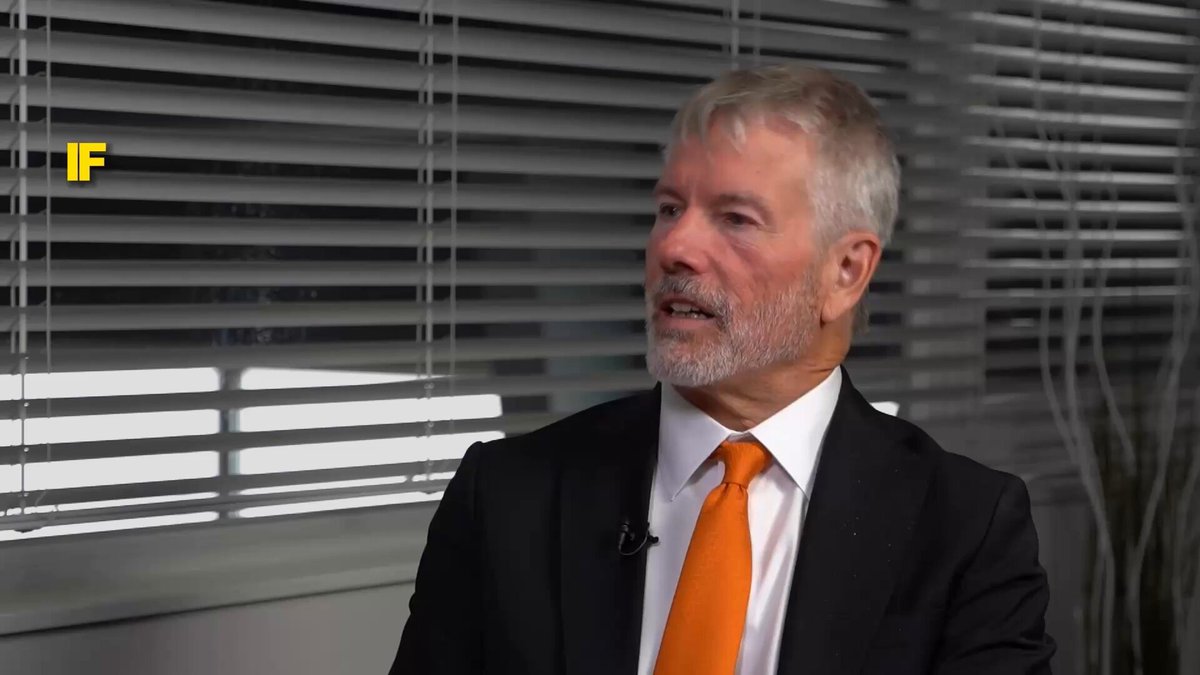
🚨STRATEGY WILL TAKE OVER THE WORLD - DIGITAL CREDIT MASTERCLASS🚨 Credit is the operating system of the world, and the next upgrade is already here. I break down: Why the credit market is the real boss fight of global finance Why legacy credit collapses into the same failure modes...

140,205 görüntüleme • 6 ay önce •via X (Twitter)

35 Yorum

Adam Livingston profil fotoğrafı
Adam Livingston6 ay önce

Please like this video and subscribe to my channel on YouTube in order to support my mission of spreading the ORANGE GOSPEL to the masses!

Crypto Bro profil fotoğrafı
Crypto Bro6 ay önce

Finally someone calling out the real boss fight. That $300T sleeping giant is waking up to blockchain.

Laraxify profil fotoğrafı
Laraxify6 ay önce

I lost 80% of my Money thanks to strategy and is going down even more

Smelly Warts profil fotoğrafı
Smelly Warts6 ay önce

Quick question.. how can STRC pay out more dividend when MSTR and Bitcoin itself are in the shitter? This is the definition of ponzie you are taking new 'investments' to pay the retards that have their money in STRC. Good luck getting your money out of STRC. I've been holding your MSTR bags for over a year.. you're doing NOTHING for us!

Edmund Dlugensky profil fotoğrafı
Edmund Dlugensky6 ay önce

@saylor 👍

₿TC Strategist ⚡️ profil fotoğrafı
₿TC Strategist ⚡️6 ay önce

@saylor Saylor out here doing a victory lap

Stan Silver profil fotoğrafı
Stan Silver6 ay önce

You belong in jail.

Deki profil fotoğrafı
Deki6 ay önce

@saylor lmao anon thinks credit's the next 100x after rugging on shitcoins twice ser

Mark Mantom profil fotoğrafı
Mark Mantom6 ay önce

4k down this year in btc. I'm HODLING Like never before when will it increase I'm crapping myself an I'm a small tiddler fish :-(

Raj profil fotoğrafı
Raj6 ay önce

@saylor strategy flywheel sounds like they plan to keep issuing debt until it all blows up

BTCLoco profil fotoğrafı
BTCLoco6 ay önce

@saylor Please let me in to make it grow fast

Michczy profil fotoğrafı
Michczy6 ay önce

Thanks Adam

FootballX ⚽ profil fotoğrafı
FootballX ⚽6 ay önce

@saylor If credit is the operating system, then this is a full software upgrade. This is bigger than people think. It’s not about hype, it’s about infrastructure.

Dawny profil fotoğrafı
Dawny6 ay önce

@saylor Still feels like tradfi lipstick on a pig. Real alpha is just on-chain.

The Space profil fotoğrafı
The Space6 ay önce

You'll go to jail too. Don't get too enthusiastic.

Sami profil fotoğrafı
Sami6 ay önce

Sure, once all the leverage is liquidated. The amplified vol is a scary thing to navigate, but certainly a good fit for a leverage play. As long as you don't lever the levered play.

Driz🦈 profil fotoğrafı
Driz🦈6 ay önce

@saylor Strategy is inevitable the future Saylor really had an amazing vision

Darko profil fotoğrafı
Darko6 ay önce

BTC 💯

Ray O profil fotoğrafı
Ray O6 ay önce

"standard format for income allocation" so you want people to put their life savings into this Ponzi ?

⚔️The ₿itcoin Knight⚔️ profil fotoğrafı
⚔️The ₿itcoin Knight⚔️6 ay önce

@saylor Great post. All very true. Saylor real is a genius.

quine profil fotoğrafı
quine6 ay önce

@saylor credit as crypto's os? intriguing take

Bitcoin & Money profil fotoğrafı
Bitcoin & Money6 ay önce

@saylor When credit breaks, hard assets win.

Myntis profil fotoğrafı
Myntis6 ay önce

Most people debate assets. The real game is who controls the credit rails.

₿TC Strategist ⚡️ profil fotoğrafı
₿TC Strategist ⚡️6 ay önce

MSTR will soon be called the best most successful company in history! $Bitcoin is only going up Laura ⚡️🟠

Jon Black profil fotoğrafı
Jon Black6 ay önce

1.4M shares volume today, all = or > 100 . That's , ~600kish shares ATM? Can we say conservatively thats ~800 BTC today? We may have a monumental week on the way

Haejin profil fotoğrafı
Haejin6 ay önce

@saylor Best to wait for much BIGGER yields. #STRF likely to fall below $30 giving 33% yield by end of bear market. #STRC likely to reach 32% to prop up the $100 per share price. Buy at those levels at around Oct/Nov this year!!!

Liam H.Y.W profil fotoğrafı
Liam H.Y.W6 ay önce

@saylor Interesting thesis. But for digital credit to scale, BTC must become a widely accepted collateral asset across regulated markets. We’re early — not inevitable.

ryz profil fotoğrafı
ryz6 ay önce

Dump

LibertyExpert profil fotoğrafı
LibertyExpert6 ay önce

3,000 jump edits in this video = unwatchable.

Mr Binh profil fotoğrafı
Mr Binh6 ay önce

Bitcoin perfected hard money. Digital credit drives expansion. Using #BTC as pristine collateral with a protocol-driven engine like STRC rebuilds the financial stack. From fragile legacy trust to immutable, code-enforced liquidity.

Lava Boy 🌋 profil fotoğrafı
Lava Boy 🌋6 ay önce

You are delusional

Isla Valerius profil fotoğrafı
Isla Valerius6 ay önce

💥💥💥💥

FtDeSoto profil fotoğrafı
FtDeSoto6 ay önce

WEN

Depression Inu profil fotoğrafı
Depression Inu6 ay önce

@saylor The Trump family has already cashed out. You may soon be forced to file for bankruptcy and end up asking people for small donations on X. It would be wise to sell now and secure whatever funds you can for yourself

Cookie Monsta 🍪 profil fotoğrafı
Cookie Monsta 🍪6 ay önce

dude got rekt and still tryna pump

Benzer Videolar

I joined Laura K. Inamedinova at the Xapo Bank Conference in London on July 1 for a fireside chat on Bitcoin as Digital Capital, the emergence of Digital Credit, and the path to Bitcoin-backed Digital Money. Fix the money, fix the world. $BTC 00:42 — Bitcoin below $60K and the mission: “Fix the money, fix the world” 01:27 — Bitcoin as the dominant Digital Capital network and the next great digital transformation 02:55 — Bitcoin Dominance approaching 69–70% and why “the flippening” debate is over 04:21 — The next layers: Digital Credit and Digital Money built on Bitcoin 06:56 — Strategy as an institutional gateway: attracting $64–65B into Bitcoin across equity, derivatives, credit, and money markets 12:28 — $STRC: bitcoin-backed preferred equity designed to create asset-backed Digital Credit 15:33 — The $STRC breakthrough: potential tax-deferred credit dividends backed by unrealized Bitcoin gains 18:18 — Digital Credit on Digital Capital: the killer app of a $50B bitcoin-backed balance sheet 19:48 — Digital Money: zero-volatility, fiat-pegged, yield-bearing bitcoin-backed assets 22:32 — Stress testing $STRC through deeper Bitcoin drawdowns 25:51 — $STRC vs. Bitcoin in the bear market: stripping ~90% of Bitcoin’s downside volatility 27:04 — Transparent Digital Credit: modeling risk from Bitcoin price and volatility every 15 seconds 30:34 — The builder roadmap: “If you want to make money, make the money” 32:27 — $STRC, $SATA, and the credit layer behind bitcoin-backed Digital Money 36:20 — Wrapping Digital Money as accounts, funds, public products, or tokens 41:27 — Creating Digital Credit on Digital Capital, then Digital Money on Digital Credit 43:00 — 2026 headwinds: geopolitics, the Fed, AI capital rotation, and digital asset regulation 44:54 — Potential catalysts: $STRC returning to par, Digital Credit reaccelerating, and capital flowing back to Digital Capital 46:01 — Why current market conditions may be a strong entry point for Digital Money builders

Michael Saylor

468,742 görüntüleme • 2 ay önce

Bitcoin has already won as Digital Capital. The next wave is Digital Credit, Digital Money, Digital Yield, and Bitcoin-backed capital markets — products that can bring trillions of dollars of traditional credit and money market capital onto Bitcoin. My interview with Cointelegraph at BTC Prague. 00:57 — Bitcoin in a drawdown: five major pullbacks in six years, stronger fundamentals, and rising dominance 02:23 — Digital Credit: from zero to an $11B+ asset class in 12 months 03:35 — Digital Money: bitcoin-backed yieldcoins and the path from 40 vol to 0 vol 04:31 — The opportunity for 8% yield in dollars, euros, yen, pounds, and francs 06:02 — $300T of credit, $30–50T of money markets, and the $10T opportunity for Bitcoin 07:19 — Why Bitcoin is winning economically, technically, and ethically 08:26 — Quantum computing, FUD, and why bear markets amplify Bitcoin debates 10:37 — AI capital rotation, Bitcoin’s current drawdown, and the path to recovery 11:36 — Six years of Strategy: why I would have moved faster into Digital Credit 12:22 — The ideal Bitcoin Treasury Company: common equity plus STRC-style Digital Credit 14:35 — The 32 BTC sale, the $100M bitcoin buyback, and why capital must back credit 17:02 — Defending the equity, credit, and bitcoin-backed capital structure 19:03 — The tradeoff: buy 200,000 BTC and sell 10,000 BTC — or buy and sell zero 20:15 — “Never sell,” Twitter trolls, and Strategy’s fiduciary obligations 22:06 — Bitcoin per share, long-term accretion, and accumulating through bull and bear markets 22:34 — $21B of equity raised in 16 weeks and ~$10B of bitcoin acquired this year 24:18 — The Strategic Bitcoin Reserve, US leadership, and supportive regulation 27:18 — Digital Credit, bank credit, and Digital Money bringing trillions onto Bitcoin 28:01 — Why Bitcoin can grow organically without central bank support

Michael Saylor

264,327 görüntüleme • 3 ay önce

The Blueprint for a New Financial System Michael Saylor, founder and Executive Chairman of MicroStrategy, returns to explain how Bitcoin is transforming global capital markets and redefining the future of wealth creation. Drawing from his background in science and engineering, Saylor breaks down how Bitcoin’s architecture merges technology, economics, and mathematics to create the first truly engineered form of sound money — one that’s reshaping corporate finance, investment strategy, and even national policy. In this conversation, we explore why legacy finance is structurally unsustainable, how overcollateralized digital credit could replace sovereign debt, and why Bitcoin’s “refinery model” may ignite a new era of capital efficiency. Saylor details the evolution from digital gold to digital credit, how MicroStrategy’s innovations are setting the blueprint for Bitcoin-backed balance sheets, and why governments, banks, and investors will ultimately be forced to adopt Bitcoin as the foundation of a new global financial system. Timestamps: 0:00 – Why Bitcoin Is Inevitable 4:12 – How Technology Turned Energy Into Capital 8:27 – Why 99% of Companies Are Locked Out of Capital Markets 12:38 – The “Kerosene” Metaphor: Refining Bitcoin Into Yield Instruments 18:21 – Designing Digital Credit: How It Actually Works 32:55 – How Bitcoin Becomes the Base Layer for Digital Credit 48:12 – Rebuilding Legacy Finance on Bitcoin Infrastructure 56:09 – Turning USD Yield Into Bitcoin Yield 1:12:24 – Why Bitcoin’s Refinery Model Could Spark a New Industrial Revolution 1:24:10 – How Digital Credit Will Outperform Traditional Bonds 1:38:52 – Why Governments and Corporations Will Be Forced to Adopt Bitcoin 1:52:40 – Adapting to Change — Why Relevance Is Earned Daily Note: This interview was recorded with Mark Moss on September 30, 2025, before $STRC, $STRK, $STRD, and $STRF began trading on Robinhood.

Michael Saylor

472,120 görüntüleme • 11 ay önce

Do you want another ripple:native thesis on how Ripple is positioning XRP to modernize the whole financial system? Look at private credit. This is one of those markets most people never think about because it does not move like stocks, crypto, or even government bonds. A private-credit loan can be worth hundreds of millions of dollars. The borrower pays interest. The lender earns a return. The asset itself can be valuable. But there is one huge problem. It can be extremely hard to move. That is exactly what caught my attention in the Sandy Kaul and Anant Kumar discussion. Anant Kumar, from Benefit Street Partners, described the issue in a very simple way. Private credit has limited ownership. And it has almost no real secondary-market liquidity. A lender can originate a huge loan, but once that loan is sitting inside a fund, selling pieces of it is not as simple as selling a stock. That capital can stay trapped. Now imagine the same loan becoming digital. Not changing the economics of the loan. Not changing who the borrower is. Not changing who remains lender of record. Just changing how ownership can be represented. Instead of one giant $100M position sitting inside one structure, that loan could be represented as millions of smaller digital interests. Suddenly something that was hard to divide becomes divisible. Something that barely traded could potentially develop a secondary market. Something trapped inside one fund could become easier to distribute among approved investors. That is the part people should focus on. Because this is not some random idea coming from crypto Twitter. Sandy Kaul is Head of Digital Assets and Innovation at Franklin Templeton. Franklin Templeton manages roughly $1.78T. Anant Kumar is from Benefit Street Partners. And Franklin Templeton itself just closed a $1.5B Collateralized Fund Obligation tied to private equity secondaries and U.S. middle-market direct lending through Benefit Street Partners. So when they are talking about the problem of private-credit liquidity, they are talking about a market they actually operate inside. And this is where my ripple:native thesis gets much bigger. Because XRP Ledger is being built around the exact same problem. Not just payments. Not just moving stablecoins. Credit. Liquidity. Tokenized ownership. Secondary markets. Institutional lending. Collateral. That is what starts connecting everything. Private credit is already one of the largest categories inside tokenized real-world assets. Franklin Templeton’s own research says tokenized RWAs grew from around $5B in 2023 to more than $25B by early 2026. Private credit, Treasuries and real estate make up a major part of that growth. That tells me something important. Wall Street is not only tokenizing cash. It is beginning to tokenize assets that traditionally sit in some of the least liquid corners of finance. And private credit may be one of the biggest opportunities because liquidity is exactly where the pain is. Now look at XRPL. In 2025, VERT launched structured-credit infrastructure using XRP Ledger and its EVM sidechain. Its first live transaction was a BRL 700M Agribusiness Receivables Certificate. Roughly $130M. That is real structured credit. Recorded through infrastructure using XRPL. So when I hear Sandy Kaul and Anant Kumar talking about tokenizing private loans, I do not have to imagine whether XRPL could ever touch this market. It already has. That is only the beginning of the setup. The bigger piece is what Ripple is building directly into the network. The XRPL Lending Protocol. This is where everything starts making sense. Ripple has been very clear about the next stage of tokenization. Putting an asset onchain is not enough. A Treasury token sitting in a wallet is still just an asset sitting in a wallet. A private-credit token sitting in a wallet is still just a loan represented digitally. The real transformation happens when those assets can enter functioning capital markets. Borrowing. Lending. Liquidity. Collateral. Credit. That is exactly where the XRPL Lending Protocol is headed. Ripple explicitly names private credit among the assets that can move into this infrastructure, alongside Treasuries, money-market funds, stablecoins and commodities. That is a huge detail. Because private credit is not some side use case Ripple accidentally fits. It is literally one of the categories they are building around. Now add XLS-65. The Single Asset Vault design. This allows assets from multiple depositors to be pooled into one onchain vault. And that vault can hold XRP. Trust-line tokens. Or Multi-Purpose Tokens. Think about what that means in plain English. Today, one large institution may have to fund a giant private loan. Tomorrow, capital can potentially be pooled digitally. Thousands of approved investors contribute. The capital sits inside a common structure. A loan gets funded. The returns flow back through that structure. That is extremely close to what Anant Kumar is talking about when he says one loan could be split into smaller pieces. Now add XLS-66. The Lending Protocol. Fixed-term, uncollateralized lending. Credit underwriting stays offchain. The actual loan can be created and managed onchain. That detail matters more than people realize. Private credit is not anonymous DeFi. The borrower is evaluated. Creditworthiness matters. Interest matters. Terms matter. Default matters. Underwriting matters. XRPL is not trying to throw away that traditional credit process. It is trying to put the financial infrastructure around it onchain. That is why this feels much more institutional than a normal crypto lending protocol. And then you get to the liquidity problem. This is where Anant Kumar’s point becomes the whole thesis. Private-credit loans barely trade. If investors want redemptions, funds can have a problem. The assets may be good. The borrowers may be paying. But there may not be a deep market to sell into. That is trapped capital. Tokenization attacks that directly. Imagine one $100M private loan. Instead of treating it as one huge block, it becomes millions of smaller digital interests. Approved institutions can own pieces. Funds can rebalance. Banks can distribute exposure. Ownership can move without the whole loan changing hands as one giant object. Now put those interests on XRPL. They can be issued digitally. Held digitally. Transferred digitally. Settled digitally. Traded inside controlled markets. Used inside lending infrastructure. That is a completely different market structure. And XRPL is also building the control layer institutions need. Permissioned Domains. Permissioned DEXes. Credentials. Deep Freeze. Confidential Transfers. This is important because a bank is not going to take a $500M private-credit position and make it freely available to every random wallet in the world. Institutions need to control who can hold these assets. Who can trade them. Which jurisdiction they come from. Whether they satisfy eligibility rules. XRPL is being built for exactly that. You can have public blockchain infrastructure while still creating controlled markets where only approved participants transact. That solves one of the biggest objections banks have to permissionless finance. They do not need to choose between old closed systems and completely open anonymous markets. They can have digital assets with institutional rules built around them. That is where Permissioned DEXes become powerful. Imagine a tokenized private loan. Only approved investors can trade it. The loan still exists. The lender still exists. The borrower still exists. But now there is a secondary market. A fund needs liquidity? It can sell part of the position. Another institution wants exposure? It can buy a smaller piece. The market no longer depends on one giant bilateral transfer. That is how tokenization can start unlocking liquidity. And the more I look at this, the more I think ripple:native is being positioned for a much bigger role than people realize. Because every new tokenized asset creates another liquidity problem. Private credit token A. Private credit token B. Treasuries. Money-market funds. Stablecoins. Commercial paper. Tokenized deposits. Fund interests. Every asset needs somewhere to trade. Every institution needs somewhere to move value. Every market needs liquidity. You cannot have deep direct markets between every possible pair. That is where a common bridge asset becomes valuable. Private-credit token → ripple:native → RLUSD. RLUSD → ripple:native → another private-credit token. A European institution holds EUR liquidity and wants a U.S. private-credit position. EUR liquidity → ripple:native → RLUSD → tokenized credit. A fund wants to exit one credit position and move into another. Credit token A → ripple:native → RLUSD → credit token B. The more markets appear, the more possible routes exist. And the value of a common liquid bridge increases with the number of things it can connect. That is the part I think people still underestimate. ripple:native does not need every private-credit transaction to use XRP. It needs XRP to become useful wherever direct liquidity is weak. If XRPL becomes home to hundreds or thousands of tokenized credit instruments, there will always be fragmented liquidity somewhere. That is where deep XRP markets become valuable. Now add another piece that gets almost no attention. XRP itself can sit inside XLS-65 vault infrastructure. So XRP does not only have a potential role as bridge liquidity. It can also become pooled capital. That creates a completely different path. XRP goes into a vault. Vault capital gets pooled. The lending infrastructure uses that capital. Borrowers receive credit. Interest flows back through the structure. Now XRP is not just moving between markets. It is potentially sitting inside the capital base of the credit market itself. That is where the phrase “XRP utility is growing across payments, liquidity and credit markets” starts to make much more sense. Those are three completely different engines. Payments move value. Liquidity connects assets. Credit makes capital productive. Ripple is building around all three. Then you have ZILO and Licuido. Ripple invested in both to expand regulated transfer agency, tokenized issuance and collateral mobility on XRPL. That matters because a private-credit market is not just about issuing a token. Someone has to manage ownership records. Transfers. Servicing. Restrictions. Collateral. Secondary transactions. Settlement. If Ripple keeps adding these pieces, XRPL starts looking less like a blockchain with tokens on it and more like an operating system for financial assets. That is why Sandy Kaul’s broader thinking matters too. She has argued that blockchain is moving toward becoming a universal liquidity layer. Stablecoins. Tokenized cash. Lending. Collateral. Those are exactly the pieces appearing around XRPL. And I think private credit could be where this becomes impossible to ignore. Because the pain is so obvious. Imagine owning a valuable asset you cannot easily sell. That is private credit today. Imagine a fund holding billions in loans that barely trade. The assets are generating income. But if investors suddenly want cash, the fund cannot just tap a button and sell a fraction instantly. That is a huge weakness. Tokenization changes the unit of ownership. XRPL changes the infrastructure around that ownership. Permissioned markets change who can trade it. Lending turns those assets into productive capital. ripple:native can connect the liquidity between everything. That is the full setup. And now take it to the bullish extreme. Imagine private-credit managers start tokenizing at scale. A $500M fund does not hold 50 giant, isolated loan positions anymore. Each one becomes digitally represented. A $100M loan becomes 100M digital units worth $1 each. Approved investors can own smaller pieces. Funds can rebalance positions instead of selling whole loans. Banks can distribute exposure. Family offices can participate. Institutions can move capital without waiting for one buyer willing to absorb the entire block. Now imagine those assets living on XRPL. A fund wants to raise liquidity. It sells tokenized interests through a Permissioned DEX. Another approved institution takes the other side. Settlement happens digitally. RLUSD provides the dollar liquidity. XRP can bridge where direct liquidity is thin. The fund gets cash. The buyer gets credit exposure. The loan keeps performing. Nothing has to be dismantled. That is a much more efficient market. Then lending infrastructure goes live. An institution holds $200M of tokenized private credit. It does not want to sell. It wants liquidity. Instead of exiting the position, it uses that asset inside XRPL credit infrastructure. Capital gets unlocked. The institution receives liquidity. Moves into RLUSD. Then routes part of that capital through XRP into EUR. Now look at what XRP is sitting between. Private credit. Stablecoin liquidity. FX. Lending. Collateral. Global settlement. That is not a small use case. Now scale it. $100B of private credit on XRPL. Then $500B. Then $1T. Thousands of tokenized loans. Thousands of institutions. Loans constantly being issued. Traded. Financed. Pledged. Refinanced. Settled. Each new asset adds another market. Each new market needs liquidity. Each new participant creates another flow. And a common liquid bridge becomes more valuable as the network gets more complex. That is where ripple:native can become institutional credit-market liquidity. Not just a payment token. Not just a crypto trade. Liquidity sitting underneath a digital credit economy. And if that starts happening at hundreds of billions or trillions in scale, the XRP price conversation changes too. Market makers need inventory. Liquidity providers need inventory. Vaults can hold XRP. More XRP gets deployed inside financial infrastructure. The amount of financial value XRP markets have to support gets larger. If XRP is worth $1, $1B of XRP liquidity requires 1B XRP. At $10, it takes 100M. At $100, 10M. The higher the value of XRP, the more dollar liquidity each unit can represent. So if XRPL ever becomes a serious home for institutional private credit, the market may eventually have to price XRP around a completely different economic role. That is the thesis I keep coming back to. Sandy Kaul is talking about tokenizing private credit. Anant Kumar is talking about solving access and liquidity. Benefit Street Partners is operating directly in that market. Franklin Templeton is already deep in private markets. VERT has already put real structured-credit activity onto XRPL infrastructure. Ripple is building the Lending Protocol. XLS-65 can pool capital. XLS-66 can create fixed-term credit. Permissioned DEXes can create controlled secondary markets. Credentials can control eligibility. ZILO and Licuido expand issuance and collateral mobility. And ripple:native sits inside the liquidity and credit architecture. These are not separate stories to me anymore. They are all pieces of the same direction. Credit becomes digital. Digital credit becomes easier to divide. Divided credit becomes easier to trade. Tradable credit needs liquidity. Liquidity needs infrastructure. XRPL is being built for that infrastructure. And ripple:native can become part of the capital moving underneath it. That is why I think this private-credit conversation is one of the most underrated ripple:native theses right now. The endgame is not simply banks sending XRP across borders. The endgame could be XRP sitting inside a financial system where trillions of dollars of loans, Treasuries, stablecoins, funds and collateral move through the same liquidity network. That is a much bigger market than payments alone. And if Ripple gets this right, private credit may end up being one of the places where the world finally understands what they have been building. Remember this thesis when private credit starts moving onchain. If you understand where private credit is heading, you understand why I’m watching ripple:native.

X Finance Bull

16,025 görüntüleme • 23 gün önce

The hardest thing in business is not seeing the future. It is surviving long enough to build it. My fireside chat with Julian Liniger at BTC Prague on focus, endurance, corporate transformation, and how entrepreneurs can use Bitcoin, AI, and digital finance to create the next generation of products. Full interview below. 00:00 - Bitcoin as the dominant global Digital Capital network: 17 years, hundreds of billions invested, and a potential $100T opportunity 00:51 - Bitcoin near the 200-week moving average: why $BTC is more compelling after a 50% drawdown 01:52 - Strategy’s scale and the media narrative: from ~$600M enterprise value to as high as ~$120B 10:29 - Bitcoin fundamentals: economic empowerment, sovereign property rights, and the dominant digital monetary network 12:16 - Why there is no second best: Bitcoin as Digital Capital, Digital Money, and a potential $100T network 16:09 - Entrepreneur advice: build a simple product using new technology to solve a real problem 20:30 - Focus, endurance, and the danger of dilutive distractions 32:25 - What I would build today: AI plus Digital Assets, especially Digital Money and Digital Yield 33:27 - Digital Credit: taking a 40 vol asset, stripping it to ~4 vol, and creating new yield products 34:57 - Digital Money: 6–8% yield in major currencies with no volatility 38:05 - $STRC, $SATA, and the next layer of bitcoin-backed financial products 48:52 - Q&A: why Strategy sold 32 BTC and why bitcoin-backed capital must support credit and equity 59:29 - Q&A: Strategy as a shock absorber: selling 32 BTC while buying net ~250,000 BTC during the bear market 01:02:39 - Why public companies protect Bitcoin through accounting, tax, legal, political, and economic advocacy 01:07:58 - Strategy as the extension of the Bitcoin network into the free market system

Michael Saylor

337,486 görüntüleme • 3 ay önce