Loading video...
Video Failed to Load
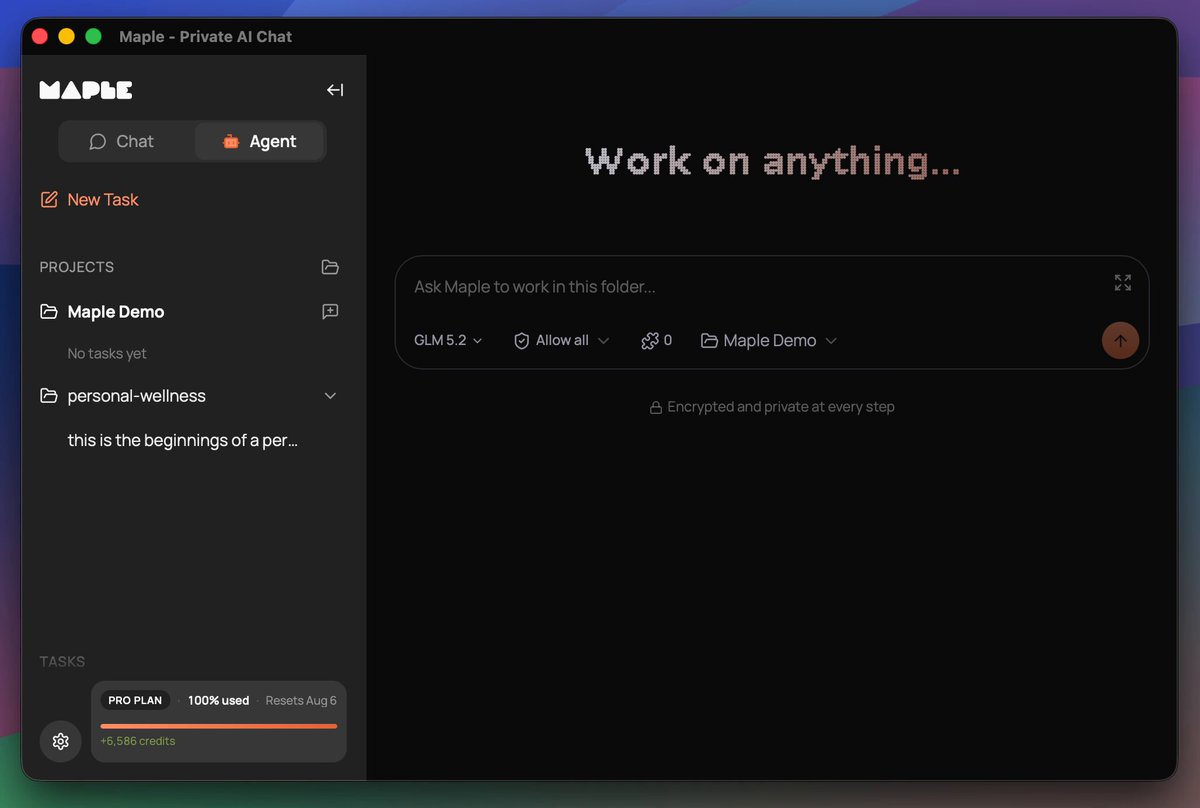
Stress-tested Perplexity Perplexity Finance Computer on a real equity research workflow: Map a representative AI infrastructure supply chain across 70+ companies across multiple tiers with sourced financials, bottleneck analysis, and company classifications. The kind of deliverable that might take a junior analyst days to weeks. It produced ~2,000 lines... show more
42,176 views • 4 months ago •via X (Twitter)
0 Comments
No comments available
Comments from the original post will appear here


!["I'm not sure that we need the dog whistle at this point. And maybe there are ways to re-create it." ~Nolan "There might be a day when Skywatcher doesn't need to exist." ~Nolan "If I had been running the whole show, nobody would even know what Skywatcher is right now." ~Nolan ~My comments in ( )~ Garry P. Nolan: "We've got a lot of data from multiple alleged sightings, both radar and other kinds of data. First it was about getting the raw-data files all put in one place because some of the data was collected by James (Fowler) before there was, officially, kind of a Skywatcher. "And so, getting that data, getting the instrument names that he used for those, then getting the technical manuals of what the settings might be and how much of that information is collected in the metadata when you're collecting the thing... All of this is just the organization that you need to do before you do anything else. "And then, getting from the companies how it is that they parse their raw data. Because some of these data files are put into...I wouldn't call them encrypted, but they're stacked into a certain kind of file structure - and I've seen the file structure - which is, you can think of it as a giant spreadsheet with headings and numbers for each of the columns and time on the row axis. "And so, you know, we've started looking at some of the data and put it into, let's say, 3D tracking. And it's clear that there are some things about the data that we needed to go back to the vendor who makes the instrument and say, 'Why is this and this and this happening, you know, every few dozen milliseconds?'" (I wonder if some of what they saw in their data, and labelled as anomalous, has maybe turned out to be a sensor artifact?) Nolan: "And so, you know, just getting an answer from these companies, often, when you don't even own the instrument, they're like, 'Well, why should we give you the information about how our data is constructed? How do we know that you're not a competitor?' Right? I mean, and so these are the kinds of things that we then contact somebody who has a behind-the-scenes access to this so that we can, again, it's all of these little steps. "And I'm sure there's somebody who's gonna tweet, 'Well, why don't you just put all the raw data out on the internet?' For exactly the same reason you don't put the raw data from ancient DNA sequencing. Because people will make mistakes about it. And so, if I'm going to be involved, I'm not gonna make any mistakes like that. So I'm sorry if people want stuff early. "I think you know, perhaps, if... Well, if I had been running the whole show, nobody would even know what Skywatcher is right now. We'd just be collecting the data in a fully-stealthed mode. And...but, you know, it's...there's reasons, good reasons, why they wanted some publicity. And, you know, but I don't always get my way." Vinnie - 𝐕𝐢𝐧𝐧𝐢𝐞 𝐀𝐝𝐚𝐦𝐬 𝕏: "Would you say that the data is exciting?" Nolan: "Oh, there's some interesting stuff in there. I mean, frankly, perhaps some of the better data that we have is just a couple of pictures from the ground of the helicopter with something about, you know, 200 feet in front of it. It's a clear blue sky and there's an object right in front of the helicopter. And the people in the helicopter said at the time that they couldn't see anything, even though we could see it from the ground. "But meanwhile, all of their instruments are going haywire. So, there was an effect. So why couldn't they see it? Maybe it was just out of view? Who knows? So it wasn't a lens flare, and it certainly wasn't a seagull. Mick (both laugh)." Vinnie: "Not in the desert anyway." Nolan: "I can't help myself." Vinnie: "I'm all for it. I'm sure Mick would, too. Hopefully. You know, James Fowler, we know he's left and moved on working with a new company. You know, all the best to him. Am I right in saying some of the technology being utilized by Skywatcher was proprietary to him, specifically? Maybe the dog whistle even? Is that still going to be able to be used by Skywatcher? How's that going to look going forward?" Nolan: "Umm, I'm not sure that we need the dog whistle at this point. And maybe there are ways to recreate it. I'm not party to the discussions around that. And so, we'll see where that goes." (That sounds like Fowler is NOT going to allow Skywatcher to use the dog whistle. That's a big disappointment. I mean, if this is really NHI and the dog whistle works 100% of the time, as claimed, then the whole world deserves to know about it.) Nolan: "I mean, James is not like, gone and forgotten. I mean, I could Signal chat him right now. And so he's there to help us. But, you know, my take on things is, you know, James has a life to live and a family to feed, and maybe his focus isn't entirely on UAP. He certainly has an interest in it. And maybe he has, you know, a company to build, and an opportunity that, actually, we all see now in terms of detecting drones. And, you know, if he wants to run a company like that then running around with a bunch of UAPologists might not be to that benefit. "And there might be a day when Skywatcher doesn't need to exist. The whole idea of Skywatcher is to show that something like this can be done, and it can be done in a serious way." (jakebarber claimed that they could BRING DOWN a craft. If that's true, it would change the world. What happened with that? Barber also said, "Who is operating [UAP]? How are they being operated? Where are they coming from? We should be able to answer those questions, probably entirely, in the next 12 months." Time is running out. Does he still stand behind that? Full Barber post with video clip: ) ~ Nolan: "I mean, I would...I, frankly, hope that if UAPDA - Disclosure Act is passed, because then the information that can be allowed to be out can be let out, and the stuff that needs to be kept secret stays secret. Again, I'm not, I would never advocate for a data dump." (I would 100% advocate for a data dump, minus details on anything that can be used as a weapon. Nobody, including the USG or private contractors owns this information. If it's gonna be a slow drip, for decades, then I fully support an Edward Snowden-type of leaker.) Nolan: "And so, you know, call it controlled disclosure, what have you. It needs to be done the proper way. And, you know, if any of the claims are true, there are reasons why you want to be methodical about it." (Who gets to decide what "the proper way" looks like? It seems like we're having more gatekeeping on top of the original gatekeeping. Not good.)](https://image.24vids.com/tw-1959807609269342649/amplify_video_thumb/1959793613472493568/img/7KcE6RlaiWrJogSA.jpg)