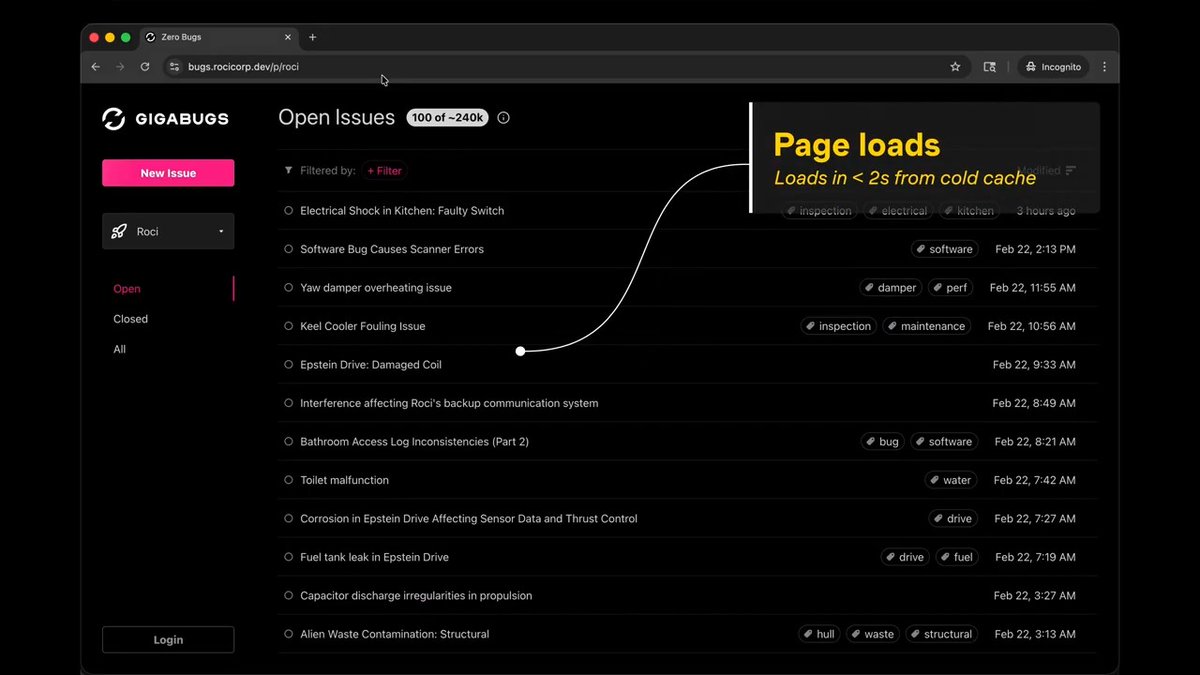
Sync engines enable instantly responsive UI.
@aboodman9.9K followers
58,468 views
12 Comments
Comments from the original post on X (Twitter)

@aboodman
Try it out yourself here!
18 likes

@typeofalex
That’s what I would say if I’d have 2.5M bugs
6 likes

@getpochi
This is a classic trade-off. The query-driven sync model seems like a great way to get the best of both worlds. I'm curious how you handle situations with rapidly changing data on the client. Does the query-driven model have built-in mechanisms for real-time updates?
2 likes

@iamnafets
Mega?
1 like
@aboodman
it's referring to the size of the dataset, which is 1GB.
2 likes
@aboodman
But good point, that is confusing 😆
@iamnafets
Ah, makes sense!
@aboodman
We were going to call the next one Terabugs, but you're right – maybe we'll just keep the name and make Giga refer to the number of rows!
1 like

@polymorph3us
holy cow...
1 like

@amanuelodicho
This is incredible 👏
1 like

@nakumbo
Cool shit

@jasonlaster11
I think Zero is ready for Circuit - our internal task management system. The app is basically linear with tens of thousands of tasks and a pretty sophisticated filtering system based on a bunch of JSON metadata.